
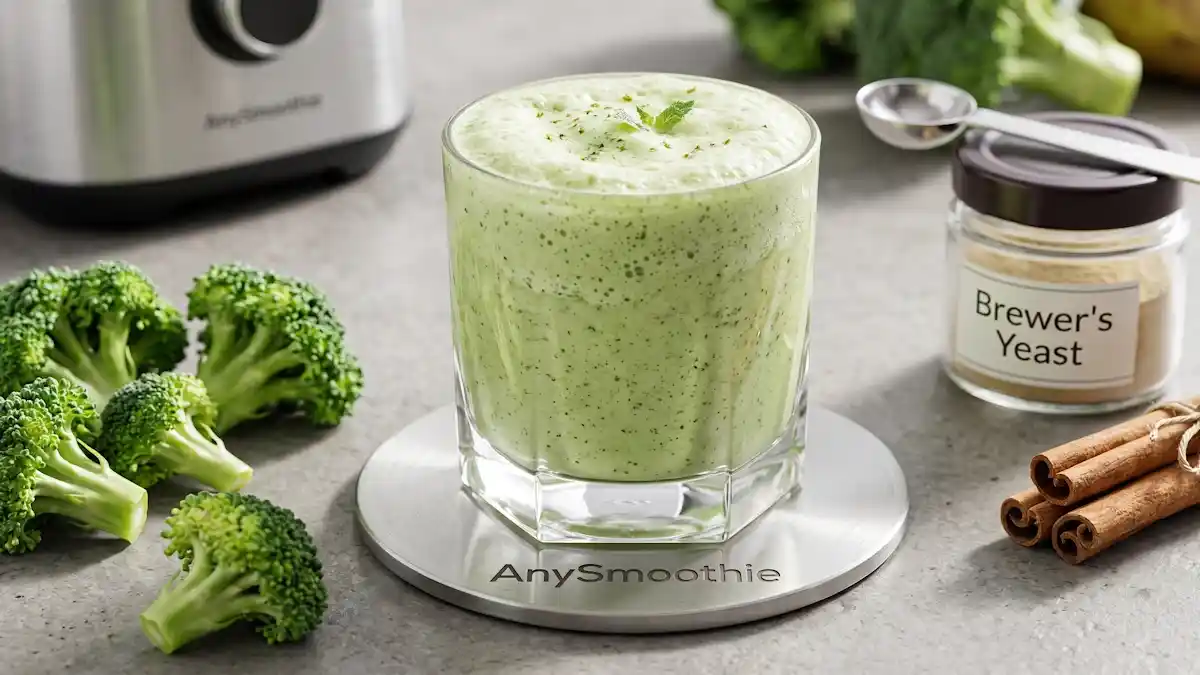
Insulin receptor sensitivity is how well your cells hear insulin’s message. When that signal is clear, glucose moves into cells more smoothly, energy stays steadier, and cravings are easier to manage.
A chromium smoothie for insulin receptor sensitivity can fit a food-first plan without pretending to be a treatment. Chromium matters because it supports chromomodulin, a small helper tied to insulin signaling. Build the smoothie with fiber, protein, and low-glycemic produce, and you get a drink that is easier on glucose handling and more useful for daily metabolic efficiency.
The Insulin Lock: How Chromium Facilitates Receptor Binding
Insulin is the key, but the receptor is the lock. When insulin binds, the cell starts a chain of signals that helps glucose move inside. Chromium does not replace insulin. It helps the signal work better by supporting receptor-related activity, including insulin receptor tyrosine kinase function. A classic paper on chromium oligopeptide and insulin receptor activity points in that direction.
Chromium also appears in a binding complex tied to chromomodulin. That matters because the complex helps amplify the insulin message after insulin arrives. The effect is small, but small matters in metabolism.
Chromomodulin: The Biochemical Key to Glucose Entry
Chromomodulin is best seen as a helper protein, not a magic switch. When chromium is available, it helps activate this complex, and that supports cleaner insulin signaling inside the cell. In plain terms, the cell may respond with less resistance.
That can support normal glucose entry and better nutrient partitioning after meals. It is one reason chromium gets attention in food-first blood sugar support.
Why receptor sensitivity matters more than just lowering sugar
Receptor sensitivity matters more than raw insulin output. If cells respond well, the body can handle the same meal with less strain. If they do not, energy can spike and crash, hunger can return fast, and fuel is more likely to be stored when it is not needed.
That is where a smoothie can help. It slows absorption, softens the glucose curve, and gives the body a cleaner post-meal signal.
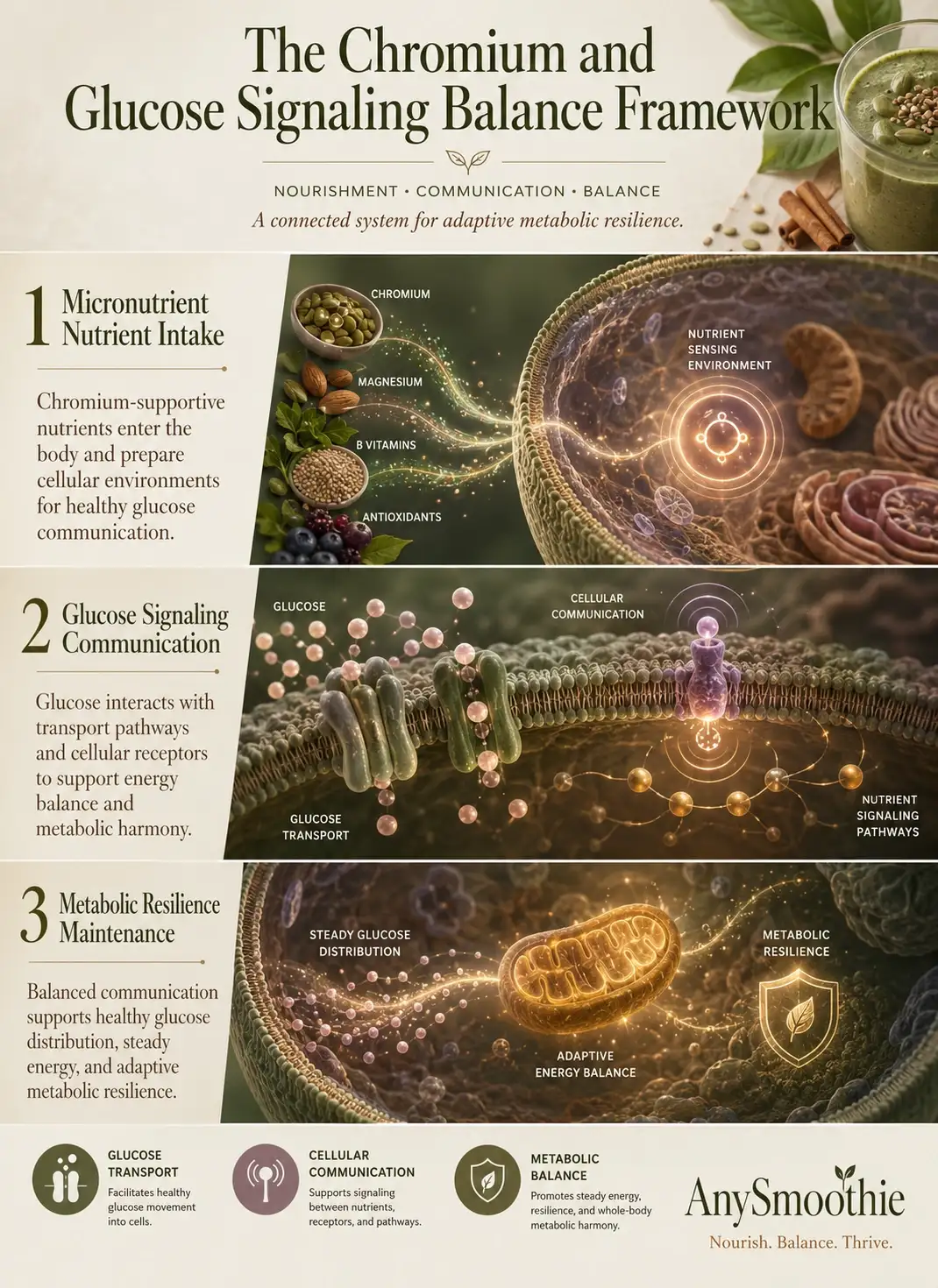
Glycemic Precision: Reducing Systemic Insulin Resistance
A smoothie works best when it behaves like a balanced meal. Chromium-rich ingredients help, but they do not carry the whole drink. Fiber slows glucose uptake. Protein supports satiety and muscle repair. Fat softens the speed of digestion. Low-glycemic fruit keeps the flavor bright without a big sugar hit.
For a food-source overview, the NIH chromium fact sheet notes that chromium appears in many foods, but the amount varies a lot.
The best glucose-support smoothie is built for the meal after, not the sugar rush in the first ten minutes.
Signal transduction: optimizing the post-receptor cascade
Good smoothie design helps the post-receptor cascade work with less friction. That means fewer sharp glucose swings and a steadier rise in blood sugar after the meal.
Best chromium-friendly ingredients include broccoli, brewer’s yeast, cinnamon, leafy greens, chia, flax, Greek yogurt or protein alternatives, and berries. Chromium content varies by food source, so the goal is a smart blend, not one magic ingredient.
Fiber, protein, and fat change the glucose curve in simple ways. Fiber slows digestion. Protein helps the drink feel like food, not dessert. Fat makes the texture richer and slows absorption a bit more. Together, they help the smoothie land with less drama and more steady energy.
3 “Insulin-Sensi” Chromium Focus Smoothie Recipes
These blends keep flavor realistic and ingredients easy to find. Each one supports a different goal, so you can match the smoothie to your day.
Metabolic Synergies: Combining Chromium with Vanadium and Fiber
Chromium is useful, but it does not work in a vacuum. Magnesium supports insulin action, fiber slows absorption, and vanadium has its own insulin-like research history. Chromium is the one tied to chromomodulin activation, while vanadium and magnesium act through different routes.
For a closer look at chromium and magnesium together, see the chromium and magnesium co-supplementation study.
| Agent | Physiological Mechanism | Primary Target Tissue | Best Smoothie Pairing | Synergistic Bio-enhancer |
|---|---|---|---|---|
| Chromium picolinate | Supports insulin receptor signaling through chromomodulin and receptor kinase activity | Skeletal muscle and liver | Broccoli, brewer’s yeast, cinnamon, berries | Fiber and vitamin C |
| Vanadyl sulfate | Can mimic parts of insulin signaling and affect phosphatases | Muscle and liver | Cacao, spinach, plain yogurt | Magnesium and protein |
| Magnesium | Supports insulin action, ATP use, and glucose transport | Muscle, liver, and cells overall | Leafy greens, chia, flax, unsweetened milk | Fiber and chromium |
The takeaway is simple. Chromium fits best when receptor signaling is the goal. Magnesium helps when mineral density is low. Fiber matters in every case because it slows the glucose rise before it gets too sharp.
Nutrient Partitioning: Directing Fuel to Muscle, Not Adipose
Use chromium alone when you want a cleaner morning blend or a lower-sugar snack. Pair it with magnesium when recovery or satiety matters more. Add vanadium only if you understand the ingredient and tolerate it well.
More is not better here. The best smoothie is the one you can repeat without GI stress or flavor fatigue. That is what makes the plan work.
Conclusion
A chromium smoothie can be a smart food-first way to support insulin receptor sensitivity, steady energy, and nutrient partitioning. The strongest blends keep it simple, with chromium-rich broccoli or brewer’s yeast, berries for flavor, protein for satiety, fiber from chia or flax, and a little cinnamon for balance.
You do not need a perfect formula. Pick one recipe, try it on a normal morning, and adjust the fruit, greens, and texture until it fits your routine. Consistency matters more than complexity, and the right blend is the one you will keep making.
🛡️ Safety Notes & Contraindications: Chromium smoothie recipes
Hypoglycemia risk: chromium significantly enhances insulin sensitivity; if you are using insulin or anti-diabetic medications (e.g., Glipizide, Metformin), monitor blood sugar closely to avoid severe hypoglycemia.
Renal function: individuals with pre-existing kidney disease or chronic renal failure should avoid high doses of supplemental chromium, as it is primarily excreted through the kidneys and may cause further stress.
NSAID interaction: taking non-steroidal anti-inflammatory drugs (e.g., Ibuprofen, Naproxen, Aspirin) can increase the absorption and blood levels of chromium, potentially raising it to toxic levels.
Iron competition: chromium uses transferrin (the same transport protein as iron) for systemic delivery; excessive chromium intake can theoretically interfere with iron binding and transport, which is a concern for those with iron-deficiency anemia.
Psychiatric conditions: some reports suggest that high-dose chromium may affect neurotransmitter balance; individuals with bipolar disorder or anxiety should use it under professional supervision as it may trigger mood shifts.
FAQ
How does Chromium facilitate “Signal Amplification” via Chromomodulin?
Chromium is an essential trace mineral that supports the physiological systems of insulin signaling. Biochemically, it binds to a low-molecular-weight protein called chromomodulin. Once activated by chromium, chromomodulin binds to the insulin receptor, amplifying its tyrosine kinase activity. Supporting this natural pathway through chromium-rich smoothies optimizes the biochemical mechanics of “signal transduction,” ensuring that cells can effectively “hear” the insulin message and facilitate glucose entry with less resistance.
Why is the “Tyrosine Kinase” activity of the insulin receptor so important?
The insulin receptor is a tyrosine kinase-linked receptor. When insulin binds to it, the receptor must phosphorylate itself to trigger the downstream cascade that moves glucose into the cell. Biochemically, chromium supports this specific enzymatic step. Supporting this physiological system through targeted nutrition ensures that the “lock” (the receptor) responds efficiently to the “key” (insulin), optimizing the natural pathways of nutrient partitioning and preventing metabolic drag.
How does “Post-Receptor Cascade” optimization affect daily energy levels?
A clear and efficient post-receptor signal ensures that glucose is cleared from the bloodstream and moved into cells for energy production in a timely manner. Biochemically, this prevents prolonged elevations in insulin, which can lead to energy crashes and cravings. Supporting these physiological systems through chromium, fiber, and protein-balanced smoothies facilitates a steadier glucose curve, ensuring that the biochemical mechanics of fuel handling remain smooth and consistent throughout the day.
What is the synergy between Chromium and Magnesium in glucose handling?
While chromium supports the initial binding and signaling at the receptor, magnesium is a critical cofactor for over 300 enzymatic reactions, including those involved in glucose transport and ATP use. Biochemically, magnesium is required for the actual function of the GLUT4 transporter. Supporting these physiological systems simultaneously through leafy greens and chromium-rich foods optimizes the natural pathways of metabolic flow, providing a dual-action approach to intracellular energy management.
Why is “Nutrient Partitioning” the ultimate goal of insulin sensitivity?
Nutrient partitioning refers to how the body directs fuel—either toward muscle for energy and repair or toward adipose tissue for storage. Biochemically, high insulin receptor sensitivity ensures that fuel is primarily routed to insulin-sensitive tissues like skeletal muscle. Supporting this physiological system through a chromium-focused routine optimizes the natural pathways of energy use. This strategy facilitates better metabolic efficiency, ensuring that the biochemical mechanics of the body favor performance and resilience over unnecessary fat storage.

Medical Disclaimer: AnySmoothie content is for educational purposes only and is not a substitute for professional medical advice. Consult a healthcare provider for personalized guidance. See our full Disclaimer & Terms of Use. AI Transparency: AnySmoothie may use AI to support content development. All content undergoes human editorial review for accuracy, clarity, and editorial quality. See our full AI Transparency.