
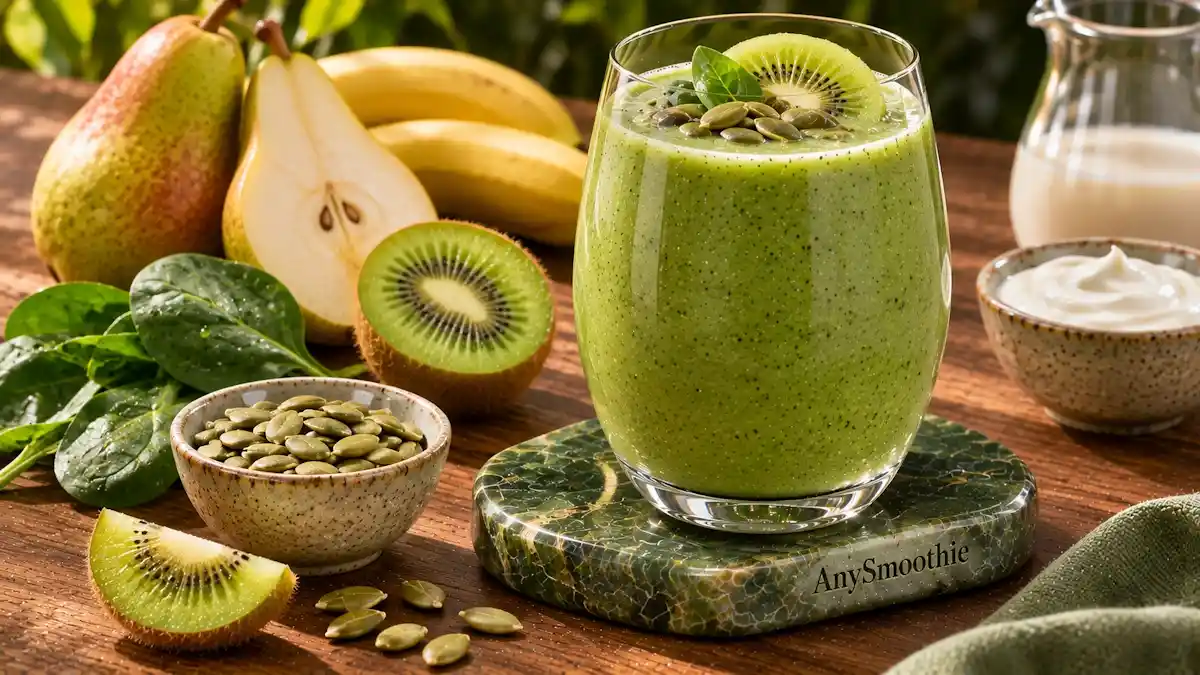
Smoothies can combine sulfur-containing vegetables with fruit and yogurt in an easy-to-drink format. However, eating these foods doesn’t directly or predictably control hydrogen sulfide (H2S) levels.
The body makes H2S and uses it as a signaling molecule in normal physiology. Sulfur-containing foods provide nutrients for normal body processes, but a smoothie can’t promise a particular signaling effect. Start with the basic biology, then choose among three recipes that balance earthy vegetables with familiar flavors.
Black garlic is another food source of organosulfur compounds, explored in black garlic smoothies for healthy aging.
How Food Sulfur Relates to H2S Signaling
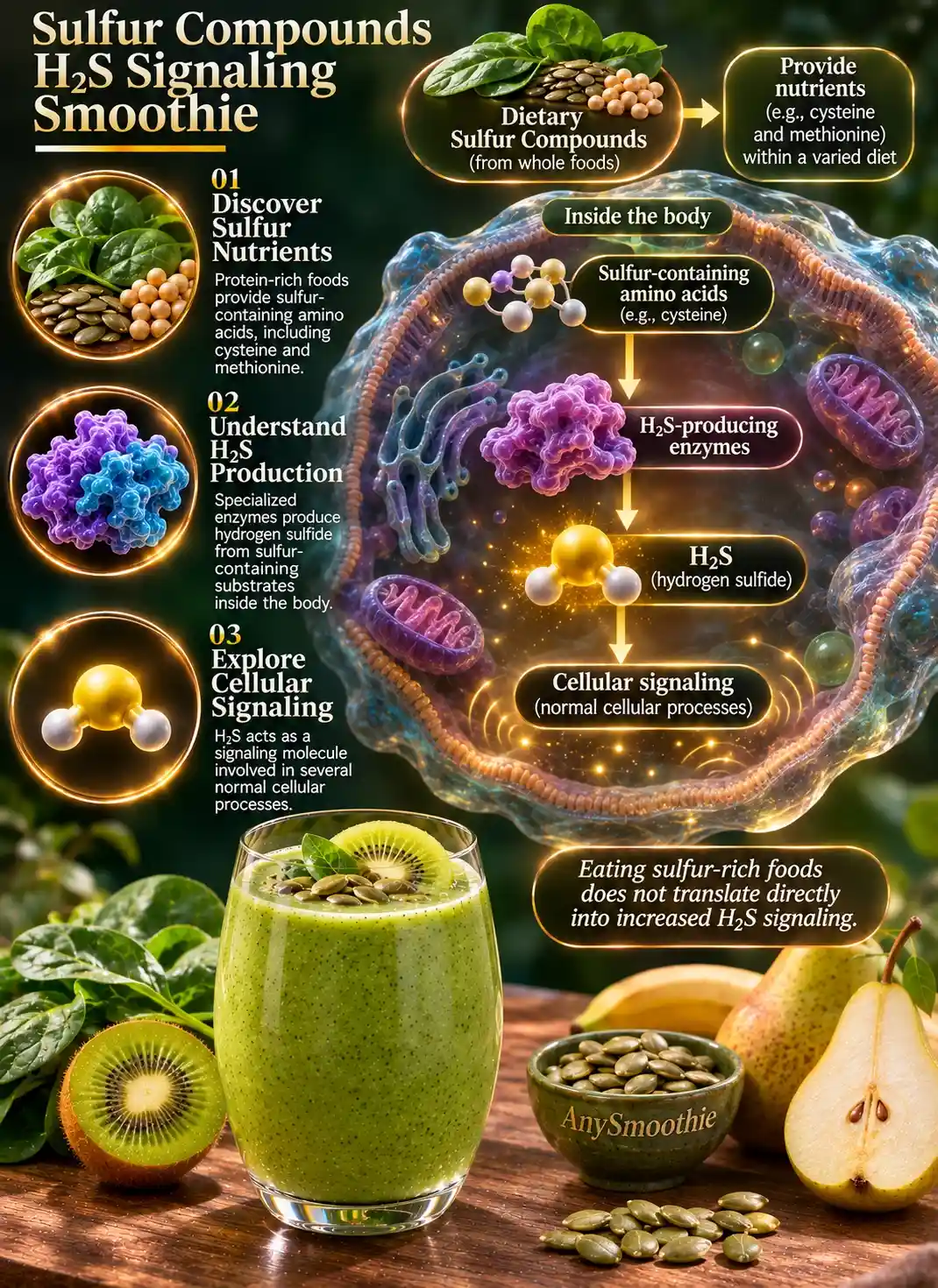
Hydrogen sulfide is a gas that cells produce in small amounts. It participates in chemical communication, including processes involving blood vessels and the nervous system. Its effects depend on where it forms, its concentration, and how quickly the body removes it.
Another gas involved in vascular signaling is nitric oxide. For a related discussion of dietary ingredients and this pathway, see pine bark extract smoothies for nitric oxide support.
The sulfur-containing amino acid cysteine contributes to several H2S-producing pathways. Two enzymes involved are cystathionine beta-synthase (CBS) and cystathionine gamma-lyase (CSE). Another enzyme, 3-mercaptopyruvate sulfurtransferase (3-MST), works with a compound produced through cysteine metabolism. A review of H2S-producing enzymes describes these pathways and their differences.
Food sulfur arrives in different chemical forms. Broccoli, kale, and red cabbage contain glucosinolates, a group of sulfur-containing plant compounds. Garlic contains organosulfur compounds, while yogurt provides protein containing sulfur-bearing amino acids. These ingredients aren’t interchangeable sources of a measured H2S dose.
Cruciferous vegetables also contain compounds studied in relation to cellular sensing and plant-derived metabolites. For a related topic, see smoothies supporting aryl hydrocarbon receptor function.
Digestion, enzyme activity, gut microbes, and tissue metabolism all affect what happens afterward. Meanwhile, the body also breaks down H2S. A food’s sulfur content alone therefore can’t predict how much H2S a particular tissue will produce or retain. Larger portions don’t establish a stronger or more desirable effect.
For another perspective on the relationship between intestinal function and the gut environment, see intestinal alkaline phosphatase smoothies.
A sulfur-containing ingredient identifies a food’s chemistry; it doesn’t establish that the finished smoothie changes H2S signaling.
The practical goal is dietary variety and enjoyable food, rather than trying to optimize a signaling pathway through a recipe.
3 Sulfur-Rich Smoothies for H2S Signaling
Each recipe makes one serving. Nutrition estimates vary with produce size and dairy brands; they aren’t laboratory measurements.
Broccoli, Garlic, and Green Apple Smoothie
Ingredients
- 1/2 cup steamed broccoli
- 1 small green apple, cored
- 3/4 cup plain nonfat Greek yogurt
- 1/4 small garlic clove
- 1 tablespoon lemon juice
- 1/2 cup cold water
Instructions
Cool the fork-tender broccoli completely. Blend it with the water and yogurt first, then add the remaining ingredients. Blend until smooth; the small garlic portion keeps its flavor mild.
Estimated Nutrition (per serving)
- Calories: ~210 kcal
- Protein: ~20 g
- Carbohydrates: ~32 g
- Fat: ~1 g
- Fiber: ~6 g
- Sugars: ~23 g
Kale, Cucumber, and Lemon Smoothie
Ingredients
- 1 cup chopped kale, stems removed
- 1/2 medium cucumber
- 3/4 cup frozen pineapple
- 1/2 medium banana
- 1 tablespoon lemon juice
- 3/4 cup cold water
Instructions
Blend the kale, cucumber, and water until no leafy pieces remain. Add the pineapple, banana, and lemon juice. Blend again until smooth and pour immediately.
Estimated Nutrition (per serving)
- Calories: ~150 kcal
- Protein: ~3 g
- Carbohydrates: ~36 g
- Fat: ~1 g
- Fiber: ~5 g
- Sugars: ~22 g
Red Cabbage, Berry, and Ginger Smoothie
Ingredients
- 1/2 cup finely shredded red cabbage
- 1 cup unsweetened frozen mixed berries
- 1/2 medium banana
- 3/4 cup plain low-fat kefir
- 1 teaspoon grated fresh ginger
- 1/4 cup cold water
Instructions
Blend the cabbage, kefir, and water first. Add the berries, banana, and ginger, then blend thoroughly. Pause to scrape down the blender if frozen fruit collects above the blades.
Estimated Nutrition (per serving)
- Calories: ~225 kcal
- Protein: ~10 g
- Carbohydrates: ~44 g
- Fat: ~2 g
- Fiber: ~7 g
- Sugars: ~29 g
Compare the Smoothies and Make Them Work for You
Choose by flavor and texture rather than an assumed effect on H2S.
| Smoothie | Nutritional character | Texture | Flavor profile | Best use |
|---|---|---|---|---|
| Broccoli blend | Highest protein of these options | Creamy and substantial | Tart with mild savory notes | A more substantial snack |
| Kale blend | Lowest protein and calories | Light and drinkable | Bright, fresh, tropical | A refreshing accompaniment |
| Cabbage blend | Moderate protein, highest estimated fiber | Thick and slightly seedy | Berry-tart with ginger warmth | A fruit-forward snack |
The main difference is how each fits your preferences and eating pattern. The kale blend is lighter, while the yogurt-based broccoli version provides more protein. However, none is automatically a complete meal, and portion size alone doesn’t establish nutritional balance.
For sweetness, use ripe banana or allow frozen fruit to soften slightly before blending. Taste before adding sweeteners because the fruit and dairy already contribute sugars. Lemon can brighten a grassy flavor, although adding too much makes a tart drink sharper.
To thin a smoothie, add cold water gradually. For a thicker texture, use frozen fruit or reduce the water. Extra ice also thickens the drink at first, but it dilutes the flavor as it melts.
Start with smaller amounts of garlic, kale, cabbage, or ginger if their flavors are unfamiliar. People with food allergies, intolerances, or dietary limits should choose suitable alternatives. Dairy substitutions also change protein, sugars, and texture, so the nutrition estimates won’t remain the same.
Conclusion: Choose the Smoothie You’ll Enjoy
These smoothies offer simple ways to include sulfur-containing foods in a varied diet. Their ingredients contribute nutrients and plant compounds, but they don’t provide reliable control over H2S signaling.
Choose the flavor and texture you enjoy, and adjust strong ingredients to your taste. Keep the purpose practical: a satisfying food choice, not a treatment or a replacement for medical care.
🛡️ Safety Notes & Dietary Interactions
- Cruciferous Tolerance: Broccoli, kale, and red cabbage add fiber and distinctive plant compounds. If cruciferous vegetables are unfamiliar, begin with smaller portions and increase gradually according to digestive comfort.
- Garlic Sensitivity: Even the small garlic portion can produce a strong flavor or digestive discomfort for some people. Start with the stated amount rather than increasing it to pursue a signaling effect.
- Dairy and Allergens: The broccoli and cabbage smoothies contain yogurt or kefir, while garlic, kale, cabbage, and ginger may require individual tolerance. Check labels and use suitable alternatives for allergies.
- Acidic Ingredients: Lemon juice, pineapple, berries, and green apple contribute acidity. If acidic foods commonly cause discomfort, adjust the amount or choose the milder recipe rather than forcing a particular combination.
FAQs
Do sulfur-rich foods directly increase H2S signaling?
No predictable effect can be assumed. Sulfur-containing foods provide different chemical compounds and nutrients, while H2S production depends on enzymes, tissue metabolism, digestion, gut microbes, and breakdown processes. The sulfur content of a smoothie therefore cannot establish how much H2S a particular tissue will produce or retain.
Which smoothie is the highest in protein?
The Broccoli, Garlic, and Green Apple Smoothie provides the highest estimated protein, at approximately 20 grams per serving. The Red Cabbage, Berry, and Ginger Smoothie provides about 10 grams, while the Kale, Cucumber, and Lemon Smoothie provides approximately 3 grams.
Why does the broccoli smoothie use only a small amount of garlic?
The quarter-clove portion keeps the garlic flavor relatively mild while still including an organosulfur-containing food. Increasing the garlic specifically to influence H2S signaling isn’t supported by the article and could also make the smoothie considerably stronger in flavor.
Which smoothie is easiest if I want something light?
The Kale, Cucumber, and Lemon Smoothie is the lightest option in the comparison, with approximately 150 calories and 3 grams of protein. Its cucumber, pineapple, banana, kale, and water base produces a relatively drinkable texture without yogurt or kefir.
Can I replace the yogurt or kefir with a dairy-free option?
Yes. A suitable plant-based alternative can replace the dairy, but the nutritional profile will change. Protein, sugars, fat, and texture depend on the specific product. Choose an unsweetened option when possible and check the label for ingredients relevant to your dietary needs.

Medical Disclaimer: AnySmoothie content is for educational purposes only and is not a substitute for professional medical advice. Consult a healthcare provider for personalized guidance. See our full Disclaimer & Terms of Use. AI Transparency: AnySmoothie may use AI to support content development. All content undergoes human editorial review for accuracy, clarity, and editorial quality. See our full AI Transparency.