
Smoothies are not proven to speed caffeine breakdown or change CYP1A2 activity. If you’re looking for smoothies for caffeine metabolism and CYP1A2, the practical benefit is nutrition and hydration, not faster caffeine clearance.
Your body processes caffeine at its own pace, and several factors influence that timing. These three recipes offer different flavors and textures to fit your routine while keeping the science in perspective.
How CYP1A2 Breaks Down Caffeine, and What Smoothies Can Do
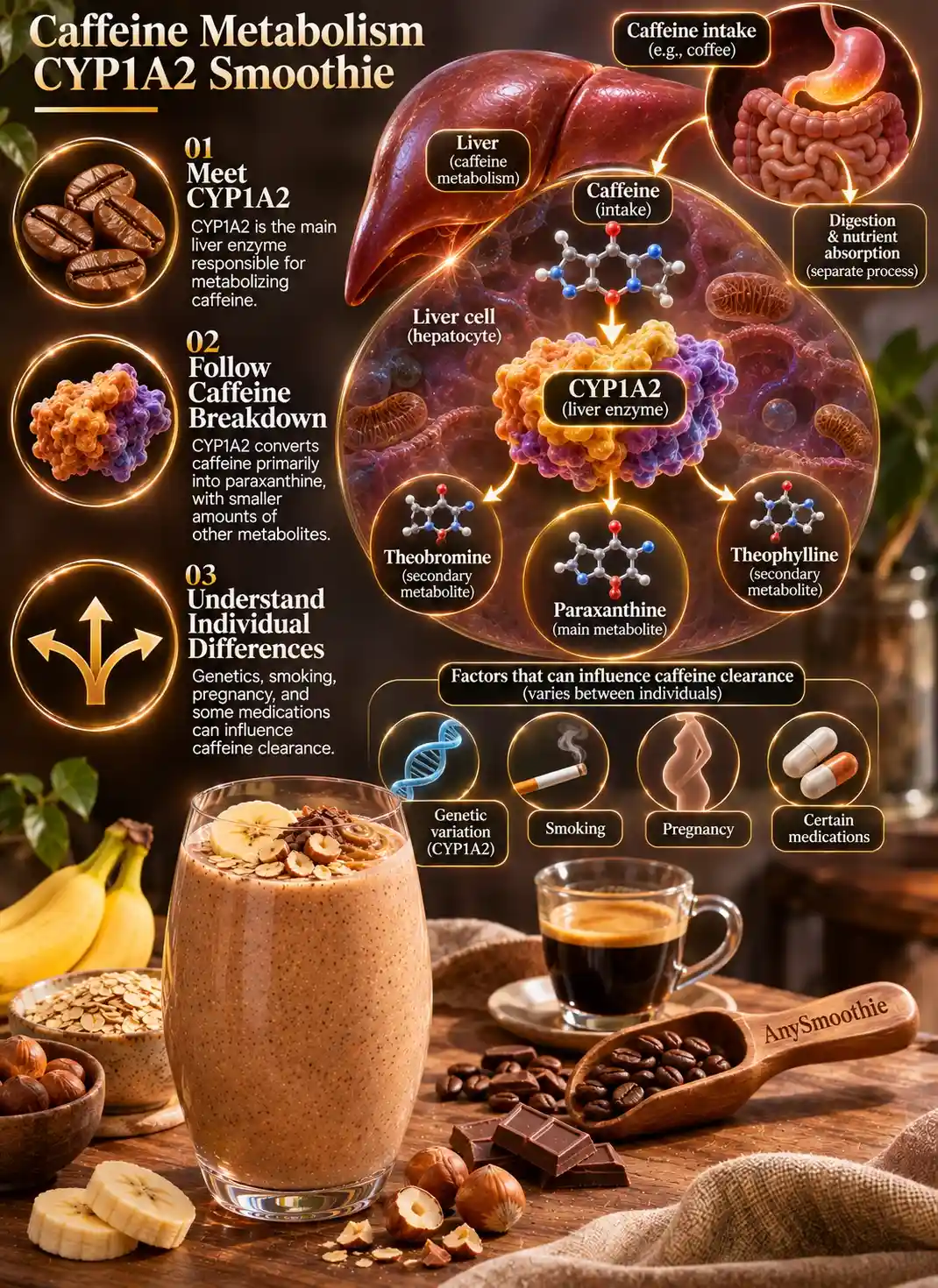
CYP1A2 is an enzyme in the liver that processes most of the caffeine you consume. It helps convert caffeine into other compounds, including paraxanthine, which the body continues to break down. The PharmGKB caffeine pathway summary describes these biochemical steps.
For a broader discussion of liver function and food choices, see milk thistle smoothies for liver support.
The speed of that process varies among people. Genetic differences can affect CYP1A2 activity, according to a review of caffeine genetics. Smoking, pregnancy, certain medicines and other factors can also change how quickly caffeine leaves the body.
Smoking status is particularly relevant to caffeine metabolism. For a related discussion of nutrition and changing routines after quitting, see smoothies after quitting smoking.
A smoothie can’t reliably switch CYP1A2 on or make it process caffeine faster. Although researchers study how foods and other substances interact with enzymes, that doesn’t establish that a particular smoothie changes caffeine clearance in everyday use.
The liver also handles later transport and elimination processes involving foreign compounds. A related topic is phase iii export smoothies for xenobiotic efflux.
Instead, choose a smoothie as food. The recipes below provide carbohydrates and varying amounts of protein, fiber and fat. Their liquids also contribute to your fluid intake. Those are useful nutritional qualities, but they don’t make a smoothie a caffeine antidote or treatment.
Caffeine can remain in your system after its noticeable effects begin to fade. Paying attention to the amount you consume and the time you have it is more useful than relying on a particular food to change how quickly your body processes it.
For a separate example of a liver phase II processing pathway—not a direct measure of caffeine clearance—see calcium d-glucarate smoothie for glucuronidation.
3 Smoothies for Caffeine Metabolism and CYP1A2
Each recipe makes one serving. Nutrition estimates vary with the brands and produce you use.
Berry Oat Yogurt Smoothie
Oats and yogurt give this berry smoothie a thick, filling texture.
Ingredients
- 3/4 cup plain nonfat Greek yogurt
- 1 cup frozen mixed berries
- 1/4 cup dry rolled oats
- 1/2 cup water
Instructions
Blend the yogurt, berries, oats and water until smooth. Add a splash more water if you prefer a thinner drink.
Estimated Nutrition (per serving)
- Calories: ~250 kcal
- Protein: ~21 g
- Carbohydrates: ~37 g
- Fat: ~2 g
- Fiber: ~7 g
- Sugars: ~16 g
Mango Spinach Smoothie
Mango gives this smoothie a sweet flavor, while yogurt adds protein.
Ingredients
- 1 cup frozen mango
- 1 cup fresh spinach
- 3/4 cup plain nonfat Greek yogurt
- 1/2 cup water
Instructions
Blend the spinach with the water first. Add the mango and yogurt, then blend again until the mixture is smooth.
Estimated Nutrition (per serving)
- Calories: ~210 kcal
- Protein: ~18 g
- Carbohydrates: ~32 g
- Fat: ~1 g
- Fiber: ~3 g
- Sugars: ~28 g
Banana Cocoa Peanut Butter Smoothie
Banana and peanut butter make this option creamy, with a chocolate flavor.
Ingredients
- 1 medium banana
- 1 tablespoon unsweetened cocoa powder
- 1 tablespoon peanut butter
- 1 cup nonfat milk
Instructions
Add everything to a blender and blend until creamy. For a colder smoothie, use a frozen banana or add a few ice cubes.
Estimated Nutrition (per serving)
- Calories: ~295 kcal
- Protein: ~14 g
- Carbohydrates: ~45 g
- Fat: ~9 g
- Fiber: ~6 g
- Sugars: ~28 g
Compare the Smoothies and Choose One for Your Routine
The right choice depends on what you enjoy and how substantial you want your smoothie to be.
| Smoothie | Main strength | Nutrition focus | Flavor and texture | Best fit |
|---|---|---|---|---|
| Berry oat yogurt | Filling texture | Higher protein and fiber | Tart, thick | A substantial snack |
| Mango spinach | Lighter consistency | Higher protein | Sweet, smooth | A fruit-forward option |
| Banana cocoa peanut butter | Creamy richness | More fat and fiber | Chocolate, creamy | A richer snack |
The berry oat smoothie has the most estimated protein and fiber of the three. Its thicker texture may appeal if you want something more substantial between meals. The mango option is lighter and sweeter, with a milder spinach flavor.
Choose the banana cocoa smoothie if you prefer a richer drink. Cocoa naturally contains some caffeine, so keep that in mind when considering your total intake, particularly if you’re sensitive to it.
For dietary needs, use a lactose-free yogurt or milk where appropriate. A suitable plant-based alternative can also work, although its protein and other nutrition may differ. If you have a peanut allergy, skip the peanut butter recipe or use an alternative that’s safe for you.
None of these smoothies is shown to alter caffeine metabolism. Choose based on taste and nutrition rather than expecting one to clear caffeine faster.
Conclusion: Choose a Smoothie You Enjoy
CYP1A2 helps your body process caffeine, but no smoothie is proven to change its activity. The recipes are ways to enjoy food and fluids, not shortcuts to faster clearance.
Pick the flavor and texture that suit you. Then pay attention to your own caffeine intake and timing when planning your day.
🛡️ Safety Notes & Dietary Interactions
- Caffeine Awareness: The banana-cocoa smoothie contains cocoa, which naturally contributes some caffeine. Include it in your overall caffeine intake, particularly if you are sensitive to caffeine or consume several caffeinated products.
- Caffeine Timing: A smoothie cannot reliably accelerate CYP1A2 activity or caffeine clearance. Pay attention to the amount and timing of caffeine itself rather than using food as a strategy to shorten its effects.
- Dairy and Allergens: Greek yogurt and milk provide dairy, while the banana-cocoa recipe also contains peanut butter. Use lactose-free or suitable alternatives when needed, and avoid known allergens.
- Individual Metabolism: Genetics, smoking, pregnancy, medicines, and other factors can affect caffeine processing. If caffeine consistently causes unwanted effects, adjusting intake and discussing concerns with a qualified professional is more appropriate than relying on a smoothie.
FAQs
Which smoothie has the most protein and fiber?
The Berry Oat Yogurt Smoothie provides the most estimated protein and fiber, at approximately 21 grams of protein and 7 grams of fiber per serving. Its Greek yogurt and oats also make it the thickest and most substantial option of the three.
Can a smoothie make caffeine leave my body faster?
No. The article states that no smoothie is proven to increase CYP1A2 activity or reliably accelerate caffeine clearance. Food and fluids can provide nutrition and hydration, but they should not be treated as a caffeine antidote or a way to shorten caffeine’s processing time.
Does the banana-cocoa smoothie contain caffeine?
Yes. Cocoa naturally contains some caffeine, although the amount is much smaller than in typical caffeinated beverages. If you’re sensitive to caffeine or already consume coffee, tea, energy drinks, or other sources, include the cocoa smoothie when considering your overall caffeine intake.
Which smoothie is best if I want something lighter?
The Mango Spinach Smoothie is the lowest-calorie option at approximately 210 calories and has a relatively light, smooth texture. It also provides about 18 grams of protein. Its suitability depends on your appetite and dietary needs rather than any effect on caffeine metabolism.
Why can caffeine affect people differently?
Caffeine processing varies among individuals. The article identifies genetic differences, smoking, pregnancy, certain medicines, and other factors as influences on CYP1A2 activity and caffeine metabolism. This variation means two people can experience different durations or intensities of caffeine effects even after consuming similar amounts.

Medical Disclaimer: AnySmoothie content is for educational purposes only and is not a substitute for professional medical advice. Consult a healthcare provider for personalized guidance. See our full Disclaimer & Terms of Use. AI Transparency: AnySmoothie may use AI to support content development. All content undergoes human editorial review for accuracy, clarity, and editorial quality. See our full AI Transparency.