
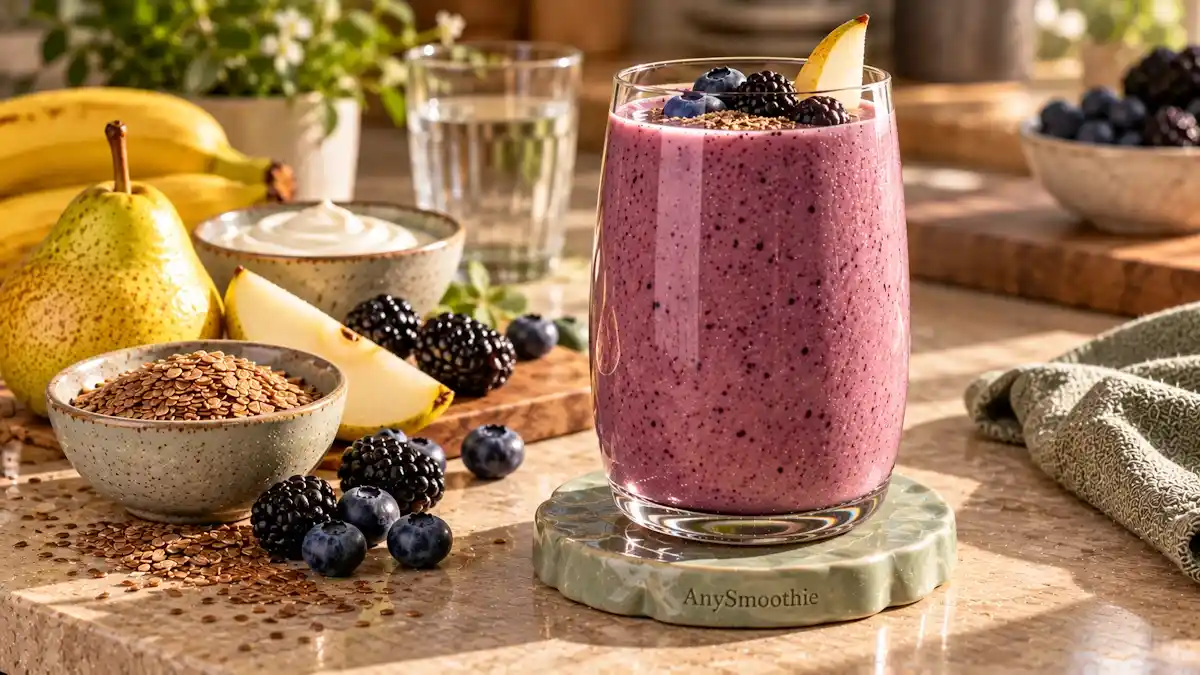
Choose smoothies that fit your everyday oral care routine by favoring whole fruit, unsweetened bases, and reasonable drinking habits. Food can support the body’s normal oral environment, but no smoothie can promise to balance mouth bacteria or replace brushing, flossing, or dental care.
If you’re exploring smoothies for oral microbiome balance, focus on their food qualities rather than promised results. These three recipes offer different flavors and textures, with a quick comparison to help you choose one you’ll enjoy.
How Smoothies Can Support Oral Microbiome Balance
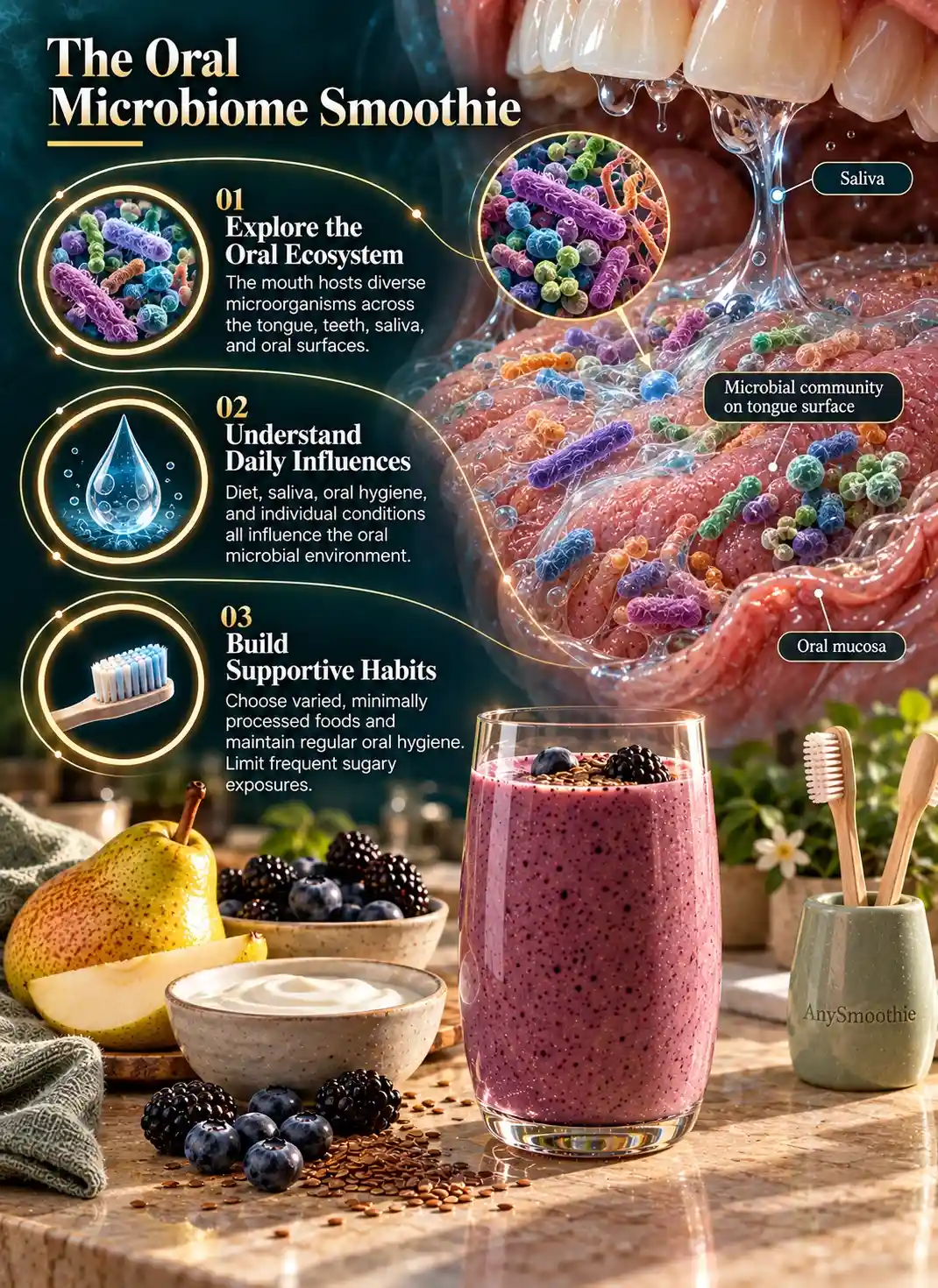
The oral microbiome is the community of microbes living in your mouth, including bacteria and fungi. These organisms inhabit your tongue, teeth, gums, and saliva. Their activity depends on several factors, including diet, saliva flow, and daily oral hygiene.
Some mouth bacteria use sugars for energy and release acids. Those acids can lower plaque pH and contribute to mineral loss from tooth enamel. Research on sugar and the oral microbiome describes this relationship, but it doesn’t establish that a particular smoothie produces a healthier microbial community.
Meanwhile, saliva helps clear food particles, buffer acids, and supply minerals involved in normal enamel maintenance. Supporting these physiological systems starts with consistent care and an overall eating pattern, rather than one ingredient.
Fiber-rich whole foods and plain fermented dairy can fit into a varied diet. Blending whole fruit retains its fiber, unlike straining juice. However, fiber content alone doesn’t tell you how a drink affects oral bacteria.
Kefir is a fermented food, but that description doesn’t establish a treatment effect in the mouth. Likewise, a smoothie with spinach or yogurt hasn’t been shown to guarantee oral microbiome balance.
Fruit still supplies sugars and acids. Favor whole fruit over juice, skip added sweeteners, and avoid stretching one smoothie across hours of sipping. For another lower-sugar smoothie approach, see low-sugar smoothies for reactive hypoglycemia.
3 Smoothies for Oral Microbiome Balance
Each recipe makes one serving. Nutrition values are approximate and can vary by brand and serving size.
Berry Kefir and Chia Smoothie
Ingredients
- 3/4 cup plain unsweetened kefir
- 1/2 cup blueberries
- 1/2 cup strawberries
- 1 tablespoon chia seeds
- 1/4 cup water
Instructions
Blend everything until smooth, adding water as needed. Serve promptly for a thinner texture, since chia thickens as it stands. Kefir is a fermented food, not an oral treatment.
Estimated Nutrition (per serving)
- Calories: ~215 kcal
- Protein: ~10 g
- Carbohydrates: ~30 g
- Fat: ~8 g
- Fiber: ~10 g
- Sugars: ~19 g
Green Kiwi, Spinach, and Flax Smoothie
Ingredients
- 1 cup unsweetened soy milk
- 1/2 small avocado
- 1 cup spinach
- 1/2 kiwi
- 1 tablespoon ground flaxseed
Instructions
Blend everything until creamy and serve promptly. The avocado creates a thick texture, while kiwi adds tartness. Use peeled kiwi and rinse the spinach before blending.
Estimated Nutrition (per serving)
- Calories: ~225 kcal
- Protein: ~11 g
- Carbohydrates: ~17 g
- Fat: ~15 g
- Fiber: ~8 g
- Sugars: ~4 g
Pear, Oat, and Greek Yogurt Smoothie
Ingredients
- 3/4 cup plain low-fat Greek yogurt
- 1/2 medium pear
- 1 tablespoon rolled oats
- 1 tablespoon almond butter
- A pinch of cinnamon
- 1/4 cup water
Instructions
Core the pear, then blend everything until smooth, adding water to reach your preferred texture. Leave the washed pear skin on. Cinnamon complements the pear’s sweetness without added sugar.
Estimated Nutrition (per serving)
- Calories: ~270 kcal
- Protein: ~21 g
- Carbohydrates: ~26 g
- Fat: ~10 g
- Fiber: ~5 g
- Sugars: ~16 g
Compare These Three Smoothies at a Glance
These comparisons describe food qualities and eating preferences, not proven oral health outcomes.
| Smoothie | Supporting features | Fiber and protein | Flavor and texture | Best fit |
|---|---|---|---|---|
| Berry Kefir and Chia | Fermented-food option | Higher fiber; moderate protein | Fruity, tangy; lightly textured | A tangy breakfast companion |
| Green Kiwi, Spinach, and Flax | Plant-based option | Higher fiber; moderate protein | Mildly tart; creamy | Dairy-free eating patterns |
| Pear, Oat, and Greek Yogurt | Protein-forward option | Moderate fiber; highest protein | Gently sweet; thick | A more protein-rich snack |
Choose according to taste, dietary needs, and appetite. The higher-protein option isn’t automatically better for your mouth, and naturally occurring sugar still counts toward total sugars.
Make Smoothies Tooth-Friendly Without Overpromising
Start with plain, unsweetened dairy or plant milk. Flavored versions may contain added sugars, so the ingredient list matters. Keep whole fruit as the source of sweetness instead of adding juice, honey, or table sugar.
“Unsweetened” doesn’t mean sugar-free. Dairy contains naturally occurring lactose, and fruit contributes its own sugars. Although these recipes contain fiber and protein, those nutrients don’t cancel out sugar exposure or fruit acidity.
The American Dental Association’s nutrition and oral health guidance explains the relationship between sugars and tooth decay. Frequency matters because repeated sugar exposure gives bacteria repeated opportunities to produce acids. Acidic foods and drinks can also expose enamel directly to acid.
Enjoy your smoothie in one sitting with a meal, rather than carrying it around for frequent sips. Afterward, rinse your mouth with plain water. This simple routine limits prolonged exposure without requiring you to avoid fruit altogether.
Keep brushing twice daily with fluoride toothpaste and cleaning between your teeth daily. Regular dental visits remain part of oral care, regardless of what you blend. For related smoothie ideas in oral recovery situations, see soft smoothies after tooth extraction and smoothies for jaw surgery recovery.
If you have persistent dry mouth, tooth sensitivity, or other symptoms, seek professional advice instead of trying to manage them through smoothies.
Conclusion: Choose for Taste, Keep Up Daily Care
Smoothies can be a convenient part of a varied eating pattern, especially when you choose unsweetened bases and whole fruit. No single recipe guarantees oral microbiome balance.
Pick an option you enjoy, drink it with a meal, and keep daily oral hygiene consistent. The most useful smoothie is one that fits your routine without creating expectations food can’t fulfill.
🛡️ Safety Notes & Dietary Interactions
- Sugar Exposure: Whole fruit retains fiber but still supplies sugars and acids. Choose unsweetened bases, avoid added sweeteners, and drink the smoothie in one sitting rather than sipping continuously.
- Dental Enamel: Fruit acids can contribute to enamel erosion, while bacterial metabolism of sugars can lower plaque pH. Rinsing with plain water afterward helps limit prolonged exposure.
- Dairy and Allergens: Kefir and Greek yogurt contain dairy, while the green smoothie contains soy and the pear smoothie contains almond butter. Check labels and avoid known allergens.
- Dry Mouth: Reduced saliva flow can affect natural acid clearance and enamel maintenance. If you experience persistent dry mouth or tooth sensitivity, don’t rely on smoothies as a substitute for professional dental assessment.
FAQs
Does kefir actually balance the oral microbiome?
Not necessarily. Kefir is a fermented food and can fit into a varied eating pattern, but its fermented status does not establish a treatment effect in the mouth. The article specifically avoids claiming that kefir, or any smoothie ingredient, can guarantee a healthier oral microbial community.
Which smoothie has the least estimated sugar?
The Green Kiwi, Spinach, and Flax Smoothie has the lowest estimated sugar content, at approximately 4 grams per serving. Its unsweetened soy milk, spinach, avocado, kiwi, and flax provide a less sweet profile than the fruit-forward kefir and pear smoothies.
Why is drinking the smoothie in one sitting recommended?
Repeated sipping extends the time teeth are exposed to sugars and acids. The article recommends enjoying the smoothie in one sitting with a meal rather than slowly consuming it over hours. Rinsing with plain water afterward can further reduce prolonged exposure.
Does blending whole fruit make it better for the oral microbiome?
Blending retains the fiber of whole fruit, unlike straining juice, but this does not establish a specific benefit for the oral microbiome. Fruit still contains naturally occurring sugars and acids, so the overall drinking pattern remains important for oral health.
Can these smoothies replace brushing and flossing?
No. Smoothies are food choices, not substitutes for oral hygiene. The article recommends brushing twice daily with fluoride toothpaste, cleaning between the teeth daily, and maintaining regular dental visits. A smoothie cannot replace those practices or professional assessment when symptoms such as sensitivity or dry mouth persist.

Medical Disclaimer: AnySmoothie content is for educational purposes only and is not a substitute for professional medical advice. Consult a healthcare provider for personalized guidance. See our full Disclaimer & Terms of Use. AI Transparency: AnySmoothie may use AI to support content development. All content undergoes human editorial review for accuracy, clarity, and editorial quality. See our full AI Transparency.