
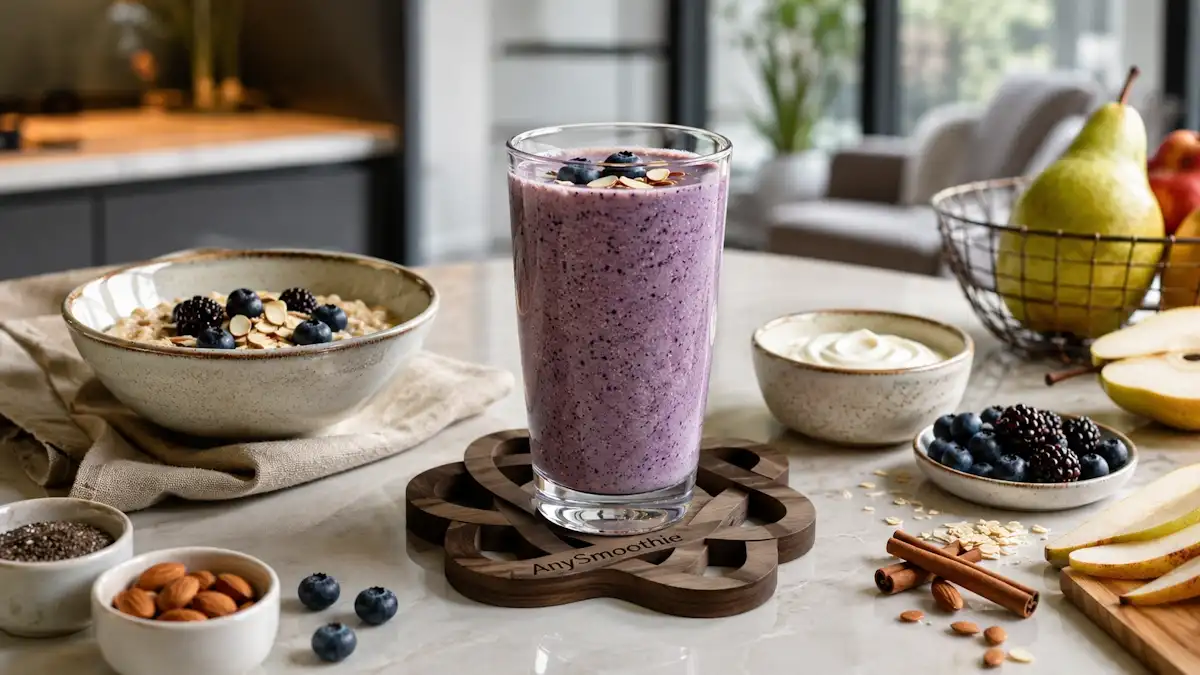
A smoothie can feel light, then leave you shaky an hour later. For people with reactive hypoglycemia, that swing matters more than the ingredient count. The goal is steady energy, not a quick rise followed by a drop.
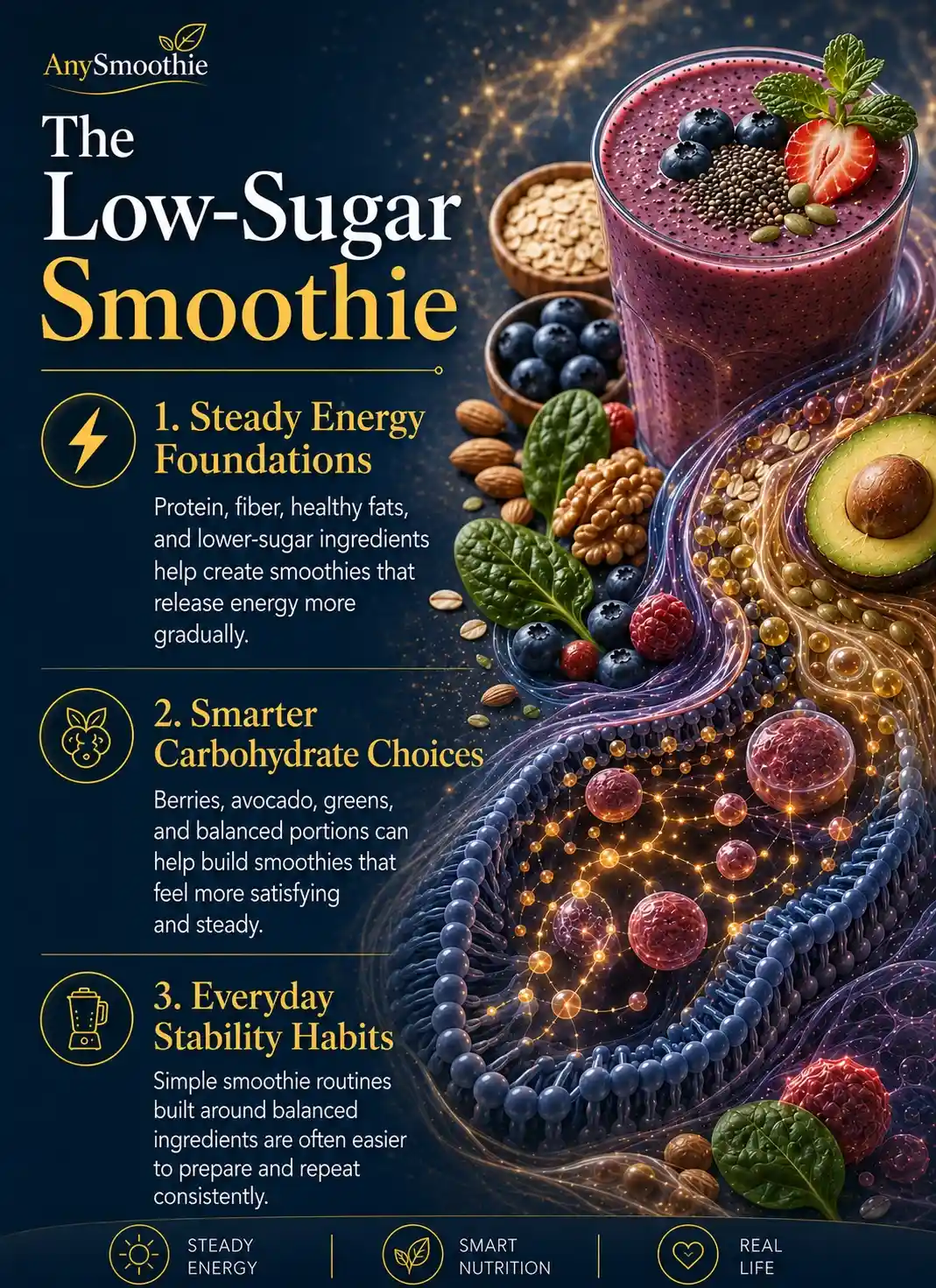
The best low sugar smoothies for reactive hypoglycemia pair protein, fiber, and healthy fats with low-glycemic carbs. That mix slows digestion and gives your body a smoother fuel curve. Start with the structure, then build the flavor.
How to build low-sugar smoothies for reactive hypoglycemia that keep you steady
The simplest formula is this: low-sugar fruit + protein + fiber + fat + unsweetened liquid. Each piece changes how fast the smoothie moves through your system.
Protein helps take the edge off the carb load. Fiber adds bulk and slows absorption. Fat stretches the release of energy even more. Together, they keep the smoothie from acting like a sugar shot.
A review in the NIH’s PMC archive on hypoglycemia nutrition points to the same pattern, with protein and fat built into meals and snacks. That structure fits smoothie-making well, because it keeps the drink from disappearing too fast.
A smoothie works best when sugar has a brake. Protein, fiber, and fat are that brake.
Choose fruits that add flavor without a big sugar hit
Berries are the easiest win. Strawberries, raspberries, and blueberries give color and taste without much sugar pressure. Kiwi also works well, and avocado adds creaminess with almost no sweetness.
Banana can fit, but keep it small. Half a banana is enough in many blends. Large amounts of very ripe banana, mango, pineapple, or orange juice can push the sugar load up fast.
Whole fruit is better than juice because the fiber stays in the mix. Juice strips that out, so the carbs absorb faster. If you want a sweeter taste, use more berries before you reach for a pour of fruit juice.
Add protein and healthy fats to slow digestion
Protein is the anchor. Greek yogurt, kefir, cottage cheese, and protein powder all work well in smoothie bases. They help the drink feel like a meal instead of a snack that vanishes in ten minutes.
Healthy fats do similar work. Nut butter, chia seeds, flaxseed, and avocado give the smoothie more staying power. They also improve texture, which makes a low-sugar blend feel richer without added sweeteners.
A useful guide from the NHS reactive hypoglycaemia handout points to unsaturated fats and steady portions. That advice fits smoothies well, especially when the drink needs more structure.
Use fiber-rich boosters and low-sugar liquids
Spinach and cucumber add volume with very little sugar. Chia and flax add fiber plus thickness. Oats can work in small amounts if you want a fuller smoothie, but keep the portion modest.
Psyllium can thicken a blend, although it is best used carefully. It can make texture too dense if you overdo it. Start small if you use it at all.
For liquid, choose unsweetened almond milk, unsweetened coconut milk, or water. Flavored milks, sweetened yogurt, and fruit juice change the sugar load too much. Plain liquids keep the smoothie in control.
What to avoid in low sugar smoothies if you are prone to blood sugar drops
The fastest way to build a shaky smoothie is to stack sweet ingredients without a brake. A lot of people do this by accident. The drink tastes healthy, yet it acts more like dessert.
| Ingredient choice | Sugar pressure | Why it matters | Better swap | Best use |
|---|---|---|---|---|
| Fruit juice | High | Absorbs fast and lacks fiber | Water or unsweetened almond milk | Skip in most blends |
| Honey, maple syrup, dates | High | Adds quick sugar with little balance | Cinnamon, vanilla, berries | Rarely needed |
| Sweetened yogurt or flavored milk | Medium to high | Hidden sugar raises the total load | Plain Greek yogurt | Daily smoothie base |
| Large amounts of ripe banana or tropical fruit | Medium to high | Sugar adds up fast | Smaller fruit portions with avocado | Use in measured amounts |
The takeaway is simple. A smoothie can be sweet without becoming sugar-heavy. The rest of the ingredients need to do some work.
Ingredients that can push sugar up too fast
Fruit juice, honey, maple syrup, dates, sorbet, sweetened nut milks, and sweetened yogurt all raise the sugar load. Large servings of very ripe fruit can do the same.
These ingredients are harder to balance when the smoothie has little protein or fat. That is where trouble starts. The drink goes down fast, then the blood sugar response can feel just as fast.
The Cleveland Clinic’s guidance on reactive hypoglycemia also points to pairing carbs with protein and fat. That pairing keeps the formula more even from the start.
Common smoothie mistakes that cause an energy crash
One mistake is making the smoothie mostly fruit. Another is drinking it too fast. A third is using it as a meal without enough protein.
A very small smoothie can also backfire. It may not hold you for long, so hunger returns quickly. Then the next snack is often another quick carb.
Build the smoothie so it can stand on its own, or pair it with a balanced meal. That gives your body a slower, more predictable fuel pattern.
3 Low-sugar smoothie recipes for reactive hypoglycemia
Low sugar smoothies work best when they are built, not thrown together. Protein, fiber, healthy fats, and low-sugar produce keep the carb load calmer and the energy curve smoother.
Start with small changes, then notice how each version feels an hour later. That timing tells you more than the label ever will.
Pick one recipe, test your portion size, and adjust from there. A steadier smoothie is easier to enjoy, and much easier on the day that follows.
🛡️ Safety Notes & Dietary Interactions
- Balanced Fuel Delivery: Reactive hypoglycemia routines often benefit from combining protein, fiber, healthy fats, and moderate carbohydrates. This structure may help create a steadier energy pattern after meals and snacks.
- Sweetness Needs Structure: Even naturally sweet ingredients can add up quickly. Pairing fruit with protein and fat helps create a more balanced smoothie than relying on fruit alone.
- Portion Size Still Matters: Large smoothies can increase carbohydrate intake even when ingredients are nutritious. Moderate portions are often easier to fit into a consistent daily routine.
- Observe Personal Responses: Individual tolerance varies. Paying attention to hunger, energy, and comfort one to two hours after a smoothie may provide useful feedback for future adjustments.
FAQ
What makes a smoothie more suitable for reactive hypoglycemia?
The article emphasizes balance rather than simply lowering sugar. A smoothie designed for reactive hypoglycemia includes protein, fiber, healthy fats, and controlled portions of carbohydrates. This combination helps slow digestion and creates a steadier release of energy compared with smoothies made primarily from fruit juice or large amounts of sweet fruit.
Why are protein and healthy fats so important in these recipes?
Protein and healthy fats help slow the rate at which carbohydrates move through digestion. Ingredients such as Greek yogurt, kefir, protein powder, nut butter, chia seeds, flaxseed, and avocado contribute texture, satiety, and meal structure. According to the article, these components act as a nutritional “brake” that helps prevent a smoothie from behaving like a quick sugar source.
Which fruits work best in low-sugar smoothies for reactive hypoglycemia?
Berries are highlighted throughout the article because they provide flavor, color, and fiber while keeping sugar levels relatively moderate. Kiwi and small portions of banana can also fit into balanced recipes. The article generally favors whole fruit over fruit juice because the natural fiber remains intact and supports a steadier digestive response.
What ingredients are most likely to contribute to an energy crash?
Fruit juice, honey, maple syrup, dates, sweetened yogurt, flavored milks, sorbet, and large servings of ripe tropical fruit are identified as common contributors. These ingredients can increase the smoothie’s sugar load rapidly, especially when protein, fiber, and healthy fats are not present in adequate amounts to balance the meal.
What is the most important takeaway from the article?
The article repeatedly returns to the concept of structure. A successful reactive hypoglycemia smoothie is built around protein, fiber, healthy fats, and modest amounts of low-sugar fruit. Rather than focusing on individual ingredients, the goal is creating a smoothie that provides steadier fuel, greater satiety, and a more predictable energy pattern throughout the day.

Medical Disclaimer: AnySmoothie content is for educational purposes only and is not a substitute for professional medical advice. Consult a healthcare provider for personalized guidance. See our full Disclaimer & Terms of Use. AI Transparency: AnySmoothie may use AI to support content development. All content undergoes human editorial review for accuracy, clarity, and editorial quality. See our full AI Transparency.