
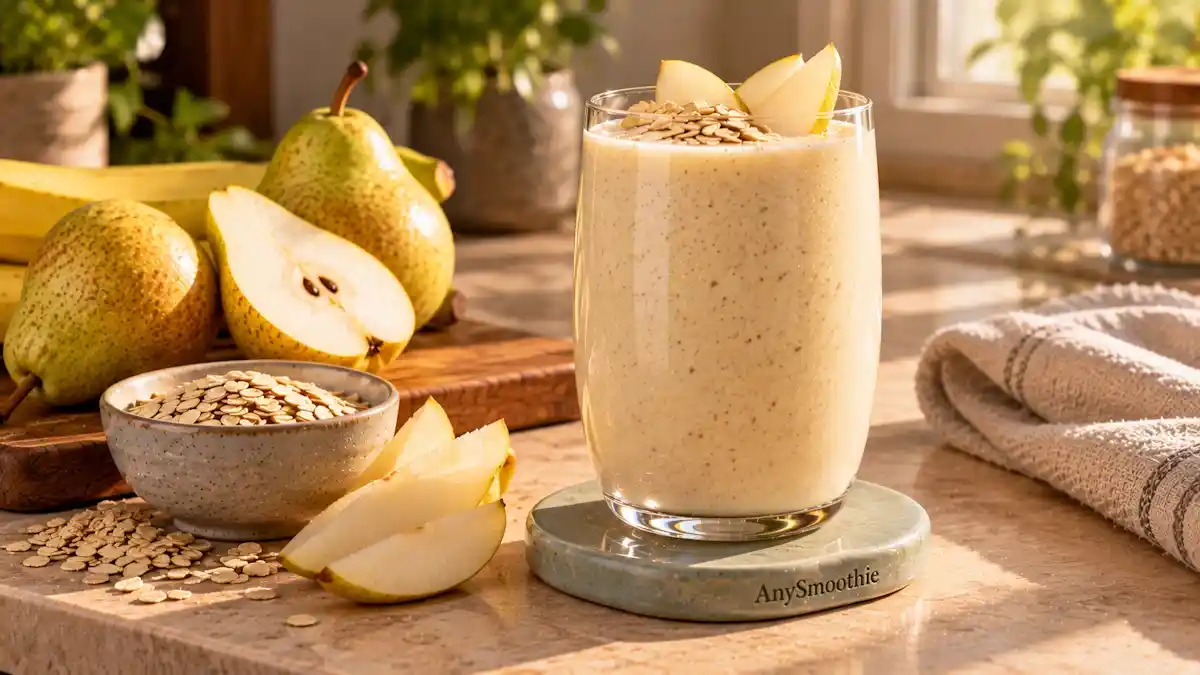
Smoothies for silent reflux, also called laryngopharyngeal reflux (LPR), need to fit your own food tolerance. A blend that works for someone else may bother you because personal triggers vary.
Mild ingredients and modest portions offer a practical starting point, but no smoothie can promise symptom prevention or relief. Start with ingredient choices, then try one of these three recipes as food, not a treatment plan.
For a broader food-focused discussion of digestive nutrition, see ancient grains and smoothies for gut repair.
Smoothies for Silent Reflux (LPR): An Ingredient Guide
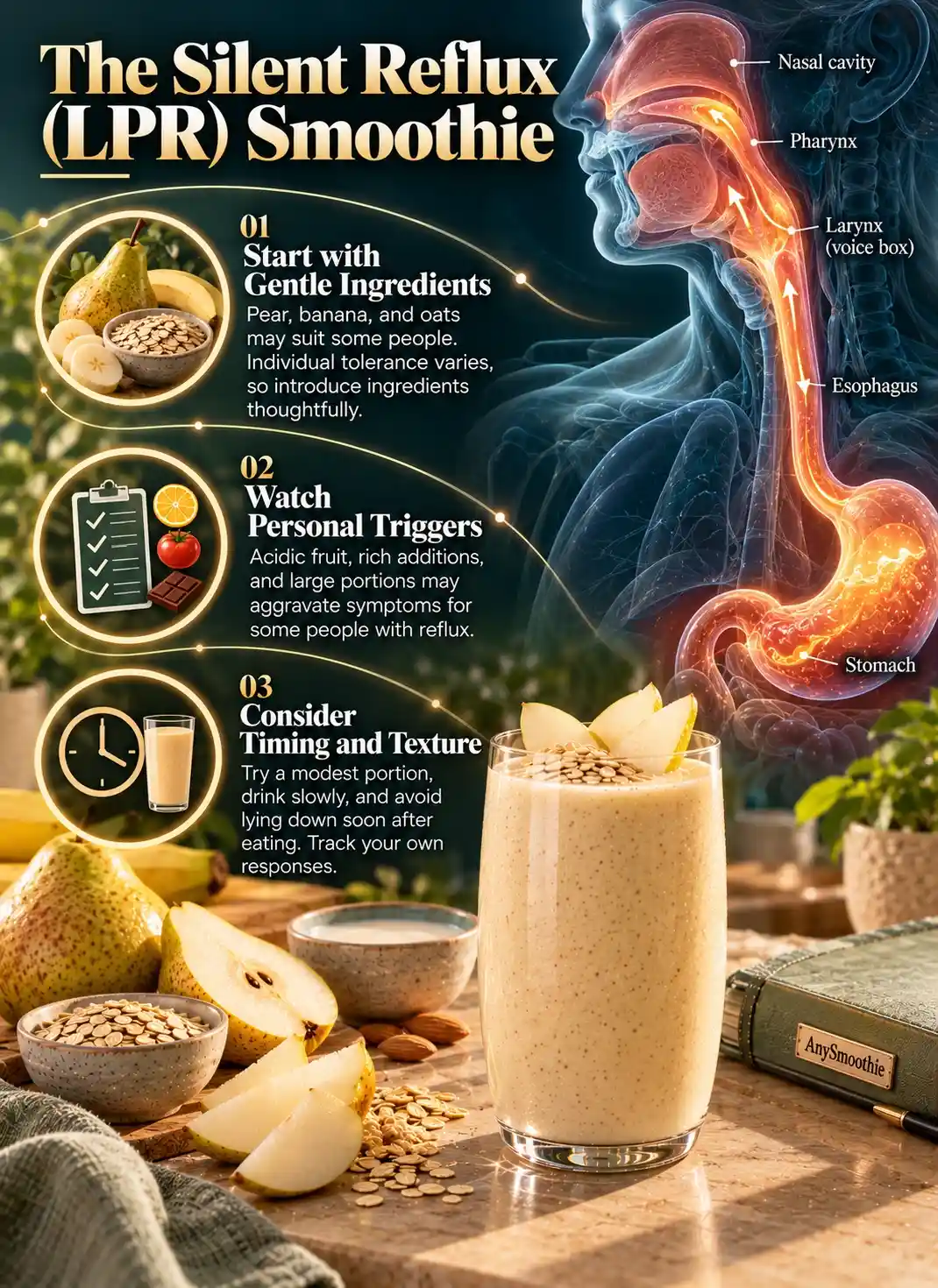
Build a simple blend with a mild fruit, a plain liquid, and an optional filling ingredient. Less-acidic choices aren’t automatically comfortable for everyone, so keep your usual tolerances in mind.
Choose mild fruits, simple liquids, and filling add-ins
Ripe banana, pear, and melon are useful starting points instead of sharper-tasting fruits. Use water or an unsweetened milk alternative for the liquid. Low-fat plain yogurt or soy milk can also work if you tolerate them.
Oats and chia seeds add fiber, while Greek yogurt, soy milk, and tofu contribute protein. Fiber and protein can make a smoothie more filling, although the amount depends on your ingredients. Blending whole fruit retains its fiber; it doesn’t remove the fruit’s naturally occurring sugars.
For another perspective on adapting fiber intake to individual digestive tolerance, see fiber-rich smoothies for ibs meal routines.
Watch for personal triggers and oversized servings
Citrus, pineapple, mint, chocolate, rich add-ins, and some dairy products bother some people, but not everyone. University Hospitals Plymouth’s guidance on managing LPR recommends paying attention to foods that trigger your own reflux.
A related ingredient-focused topic is slippery elm smoothie for gi barrier maintenance.
Start with a modest amount rather than finishing a large blenderful. Check labels for lemon juice, citrus concentrates, and other acidic additions, even in plain-looking products.
Also, record the ingredients, portion, timing, and your response. Drinking a smoothie close to lying down may not suit you, regardless of what it contains.
For a related discussion of digestive motility and meal patterns, see smoothies for migrating motor complex function.
3 Smoothies for Silent Reflux (LPR)
Each recipe makes one serving, though you can start with less. Nutrition figures are estimates, not laboratory measurements. Values vary by brand, fruit size, and portion size, especially for oat milk, yogurt, and tofu. Sugars listed include those naturally present in the ingredients.
Creamy Pear, Oat, and Chia Smoothie
Ingredients
- 1 cup unsweetened oat milk
- 1/2 ripe pear, cored
- 1/3 cup rolled oats
- 1 teaspoon chia seeds
- Water, if needed for thinning
Instructions
Wash the pear and leave the skin on if you tolerate its texture. Add the oat milk, pear, oats, and chia seeds to a blender. Blend until smooth, then add a little water if needed. The oats and chia thicken as they stand, so stir before drinking. Expect a mild, oat-forward flavor with gentle sweetness from the pear.
Estimated Nutrition (per serving)
- Calories: ~290 kcal
- Protein: ~7 g
- Carbohydrates: ~48 g
- Fat: ~8 g
- Fiber: ~10 g
- Sugars: ~12 g
Banana and Melon Yogurt Smoothie
Ingredients
- 3/4 cup low-fat plain Greek yogurt
- 1/2 ripe banana
- 1 cup honeydew melon, cubed
- 1/2 cup water
Instructions
Use this option only if you tolerate dairy. Place the yogurt, banana, honeydew, and water in a blender, then blend until smooth. Scrape down the sides if any yogurt remains above the mixture. The melon gives this blend a lighter texture than the oat recipe. Use plain yogurt rather than a flavored variety to keep the ingredient list simple.
Estimated Nutrition (per serving)
- Calories: ~220 kcal
- Protein: ~18 g
- Carbohydrates: ~34 g
- Fat: ~2 g
- Fiber: ~3 g
- Sugars: ~25 g
Banana, Spinach, and Silken Tofu Smoothie
Ingredients
- 1/2 ripe banana
- 1 cup baby spinach
- 1/2 cup silken tofu
- 1 cup unsweetened soy milk
Instructions
Rinse the spinach, then add it to a blender with the soy milk, tofu, and banana. Blend until smooth, allowing enough time for the leaves to break down. Silken tofu gives this smoothie a softer texture than firm tofu would. The banana adds sweetness, while the spinach contributes a mild leafy flavor. Choose this recipe only if you tolerate soy.
Estimated Nutrition (per serving)
- Calories: ~220 kcal
- Protein: ~16 g
- Carbohydrates: ~22 g
- Fat: ~8 g
- Fiber: ~4 g
- Sugars: ~10 g
Compare the Smoothies and Choose One to Try
Choose according to familiar foods, preferred texture, and appetite rather than expecting any recipe to control symptoms.
| Smoothie | Flavor profile | Texture | Nutritional standout | Best fit |
|---|---|---|---|---|
| Creamy Pear, Oat, and Chia | Mild, gently sweet | Thick and hearty | Most fiber | A more substantial snack |
| Banana and Melon Yogurt | Fruity, lightly tangy | Smooth and lighter | Most protein | People who tolerate dairy |
| Banana, Spinach, and Silken Tofu | Mild, slightly leafy | Soft and creamy | Plant-based protein | People who tolerate soy |
Try one option at a time, and change only one ingredient when adjusting a recipe. That makes your observations easier to interpret. If an ingredient already bothers you, skip that option rather than testing it because it appears here.
Portion size also matters. University Hospitals Coventry and Warwickshire’s silent reflux dietary guidance recommends smaller meals. A recipe’s full yield doesn’t have to be the amount you drink at once. Adjust the portion and timing based on your own tolerance.
Conclusion: Keep Your Choices Personal
Simple ingredients give you more control over what goes into your smoothie. Adapt these recipes around foods you already tolerate, and keep portions comfortable.
Smoothies are food choices, not a substitute for medical care. Speak with a health professional about ongoing symptoms or difficulty swallowing rather than relying on dietary changes alone. No recipe replaces an assessment of persistent symptoms.
🛡️ Safety Notes & Dietary Interactions
- Trigger Awareness: LPR triggers vary considerably. Citrus, pineapple, mint, chocolate, rich ingredients, and some dairy products may be problematic for certain people, so rely on observed tolerance.
- Dairy and Soy: The yogurt smoothie contains dairy, while the tofu and soy-milk option contains soy. Check ingredient labels and avoid either recipe if you have a known allergy or intolerance.
- Fiber and Texture: Oats and chia make the pear smoothie particularly fiber-rich and increasingly thick as it stands. Start with a smaller portion if higher-fiber drinks feel uncomfortable.
- Timing and Portions: Even mild ingredients may feel uncomfortable in a large serving or close to lying down. Start modestly, drink slowly, and adjust timing based on your individual response.
FAQs
Which smoothie is the best starting point for a mild, simple flavor?
The Banana and Melon Yogurt Smoothie offers a relatively simple ingredient list and a light, smooth texture, provided you tolerate dairy. If dairy is unsuitable, the tofu and soy-milk option provides a plant-based alternative. Neither recipe is inherently better for LPR; familiar tolerance should guide the choice.
Why does the Pear, Oat, and Chia Smoothie become thicker after blending?
Oats and chia absorb liquid, so the smoothie continues thickening after preparation. The recipe specifically recommends adding water if needed and stirring before drinking. This texture may be useful when a more substantial snack is desired, but a smaller portion may be preferable if thick drinks feel uncomfortable.
Can I use these smoothies if dairy or soy bothers me?
Choose according to your known tolerance rather than testing a potentially problematic ingredient because it appears in the recipe. The yogurt smoothie contains dairy, while the tofu smoothie contains both tofu and soy milk. The pear-oat option avoids both, although individual oat-milk ingredients and additives should still be checked.
Is the highest-protein smoothie necessarily the best choice for LPR?
No. The Banana and Melon Yogurt Smoothie provides the most estimated protein at about 18 grams, but protein content does not determine reflux tolerance. Portion size, familiar ingredients, texture, timing, and personal triggers are more relevant when deciding which smoothie to try.
Should I drink a full serving if I am testing a new smoothie?
Not necessarily. The article recommends starting with a modest amount because portion size can influence comfort. Try one recipe at a time and record ingredients, quantity, timing, and your response. If it feels uncomfortable, reduce the portion or change one ingredient rather than testing several variables simultaneously.

Medical Disclaimer: AnySmoothie content is for educational purposes only and is not a substitute for professional medical advice. Consult a healthcare provider for personalized guidance. See our full Disclaimer & Terms of Use. AI Transparency: AnySmoothie may use AI to support content development. All content undergoes human editorial review for accuracy, clarity, and editorial quality. See our full AI Transparency.