
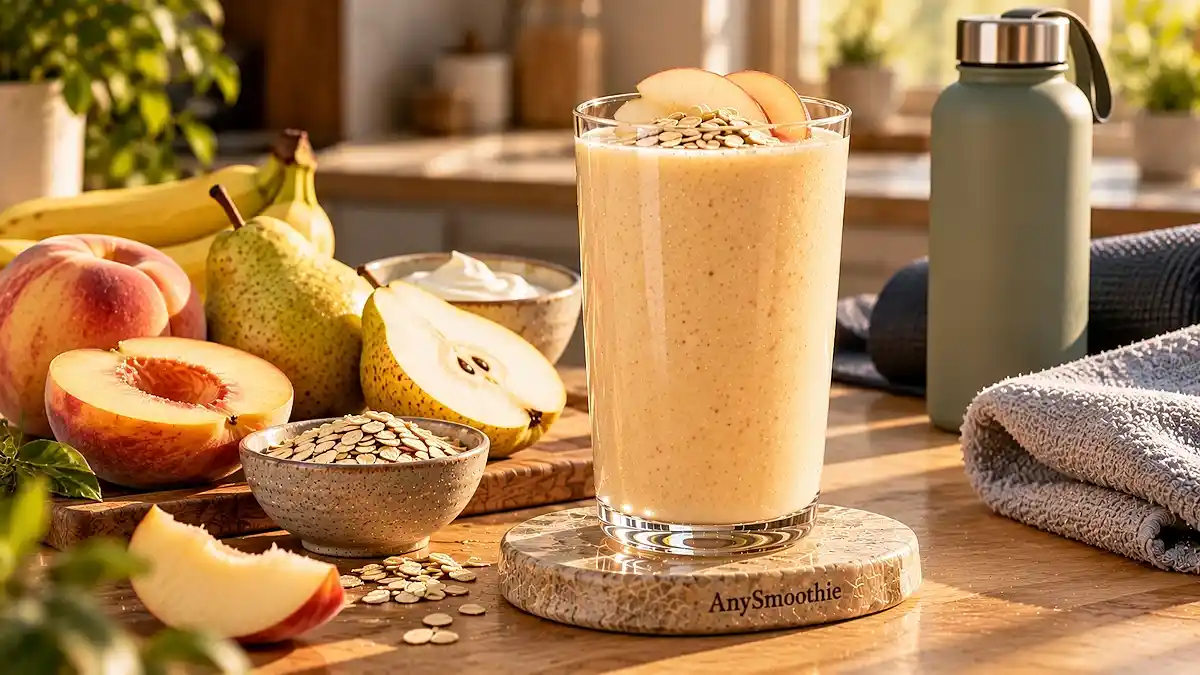
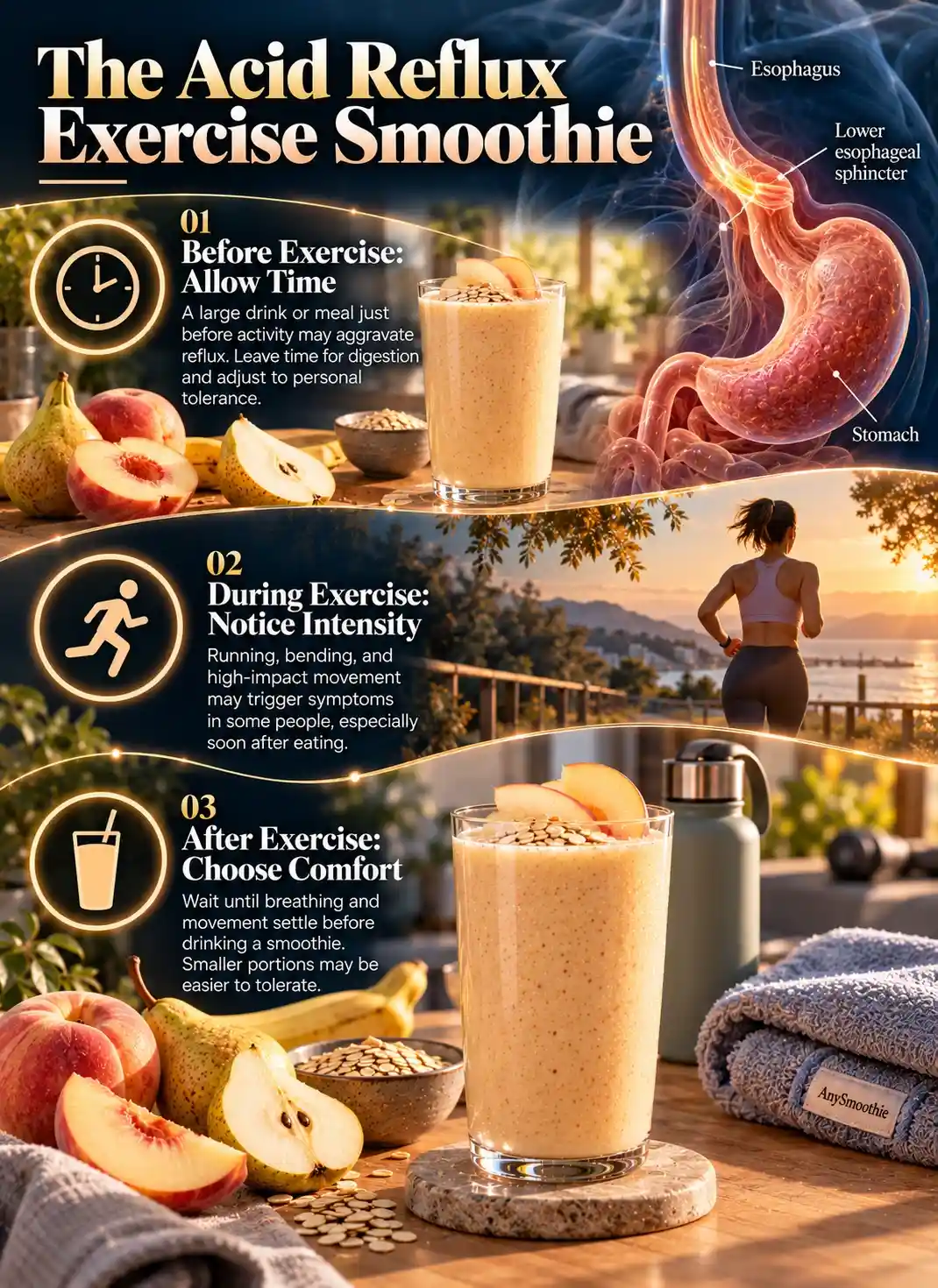
If acid reflux and exercise complicate your routine, try a small smoothie one to two hours before your workout. Afterward, wait until your breathing settles, then sip slowly rather than drinking a full glass at once.
A useful starting point is portion size, because even mild ingredients can feel uncomfortable in a large drink. Timing also depends on your workout, personal triggers, and how much you drink. Start with a modest serving and simple ingredients, then consider the three smoothie options below.
For a related discussion of evening serving size and timing, see smoothies for nighttime acid reflux: timing & portions.
Finding the Right Time for a Smoothie
Reflux happens when stomach contents move back into the esophagus. A full stomach, bending, and vigorous movement may make symptoms more likely for some people. Running and jumping can also feel different from a relaxed walk.
For a broader introduction to planning movement, see exercise routines for beginners and neuro priming smoothie.
Orlando Health’s exercise guidance recommends allowing one to two hours after eating before exercising. Treat that interval as a starting point for a small smoothie, rather than a guarantee of comfort.
Choose a Small Portion and Give It Time to Settle
Start with a modest serving, such as one recipe below, rather than a large blender bottle. Allow more time after a larger drink, especially before running, jumping, or repeated bending.
Avoid chugging a smoothie immediately before activity. Even a drink that feels comfortable on a rest day may feel different during a vigorous session.
For ingredient and timing considerations specific to pregnancy, see smoothies for pregnancy heartburn: ingredients & timing.
After your workout, let your breathing and movement settle before drinking slowly. If you still feel overly full, wait longer instead of finishing the serving on schedule.
Use Simple Ingredients and Watch Your Personal Triggers
Citrus, chocolate, mint, and high-fat dairy may bother some people, but triggers differ. Very large amounts of fiber can also cause digestive discomfort during activity.
Choose mild flavors, lower-fat options, and a short ingredient list while learning your preferences. Adding several powders, seeds, and fruits at once makes it harder to identify an ingredient that bothers you.
For a related food-focused discussion of the stomach lining and ingredient tolerance, see zinc carnosine smoothie for gastric mucosal support.
Track the drink, portion, timing, workout type, and any symptoms. Change one factor at a time so you can recognize useful patterns.
3 Acid Reflux Smoothies for Before or After a Workout
Each recipe makes one modest serving. Individual triggers vary, and these drinks don’t prevent or treat reflux. Nutrition estimates vary by brand and produce size.
Banana-Oat Smoothie
Ingredients
- 1/2 medium banana
- 1/2 cup low-fat milk (1%)
- 1 tablespoon rolled oats
Instructions
Blend until smooth. The modest portion and lightly thick texture may suit a lighter pre-workout drink, provided you leave time for it to settle.
Estimated Nutrition (per serving)
- Calories: ~135 kcal
- Protein: ~5 g
- Carbohydrates: ~23 g
- Fat: ~2 g
- Fiber: ~2 g
- Sugars: ~13 g
Pear and Yogurt Smoothie
Ingredients
- 1/2 cup chopped ripe pear
- 1/4 medium banana
- 1/3 cup plain low-fat Greek yogurt
- 1/4 cup water
Instructions
Blend until creamy, pausing to scrape down the blender if needed. Keep this as one modest serving. Dairy may not suit everyone, even in lower-fat forms.
Estimated Nutrition (per serving)
- Calories: ~125 kcal
- Protein: ~9 g
- Carbohydrates: ~20 g
- Fat: ~2 g
- Fiber: ~3 g
- Sugars: ~13 g
Blend the pear, banana, Greek yogurt, and water until smooth and creamy. Add a little more water if needed. Serve fresh.
Melon-Oat Smoothie
Ingredients
- 1/2 cup diced cantaloupe
- 1/2 cup unsweetened soy milk
- 1 tablespoon rolled oats
Instructions
Blend thoroughly until the oats are finely dispersed. Expect a lighter-tasting, less creamy drink than the yogurt version; let any blender foam settle before sipping.
Estimated Nutrition (per serving)
- Calories: ~90 kcal
- Protein: ~5 g
- Carbohydrates: ~12 g
- Fat: ~3 g
- Fiber: ~2 g
- Sugars: ~7 g
Compare Smoothie Options by Nutrition, Texture, and Workout Timing
These are small snacks, so their nutrition profiles differ from a full meal. The yogurt option supplies the most protein, while the banana version contains the most carbohydrates. Neither difference predicts how comfortably you’ll tolerate a drink during exercise.
Use these comparisons to choose a starting option.
| Smoothie | Flavor and texture | Nutritional profile | Potential ingredient considerations | Best workout timing |
|---|---|---|---|---|
| Banana-Oat | Mild, lightly thick | Highest carbohydrates | Dairy tolerance | Before lighter activity, with settling time |
| Pear and Yogurt | Gently sweet, creamy | Highest protein and fiber | Dairy and pear tolerance | After movement and breathing settle |
| Melon-Oat | Light, less creamy | Lowest calories and sugars | Soy tolerance | Before or after, according to comfort |
Personal tolerance matters more than ranking. The lowest-calorie choice isn’t automatically the most comfortable, and the highest-protein option isn’t necessary for every workout. Choose based on what you tolerate and what you plan to eat afterward.
Timing also changes with serving size. For larger meals, RMG Gastroenterology’s exercise advice recommends waiting two to three hours before exercising. That longer interval helps distinguish a small smoothie snack from a substantial meal or oversized drink.
If a recipe feels uncomfortable, don’t force yourself to finish it. Try a smaller portion or a longer interval on another occasion, rather than changing everything at once.
Seek advice from a health professional for frequent, severe, or worsening symptoms. Chest pain during exercise needs prompt medical attention, especially with shortness of breath or pain spreading to your arm or jaw.
Conclusion: Find a Smoothie Routine That Feels Comfortable
Keep portions modest, leave time before exercise, and choose ingredients according to your tolerance. A smoothie that works before walking may need different timing before running or a bending-heavy workout.
Use a brief food-and-activity record to adjust one detail at a time. The goal is a comfortable routine that fits your eating and exercise habits, without expecting a smoothie to prevent or treat reflux.
🛡️ Safety Notes & Dietary Interactions
- Exercise Timing: Reflux symptoms may increase with vigorous movement, bending, or a full stomach. Start with modest portions and allow adequate settling time before running, jumping, or similar activity.
- Personal Triggers: Citrus, chocolate, mint, and higher-fat dairy can bother some people, while pear, banana, melon, oats, or soy may be better tolerated individually.
- Dairy and Soy: The recipes include low-fat milk, Greek yogurt, and soy milk. Check tolerance and labels carefully if dairy or soy causes digestive symptoms or is excluded from your diet.
- Exercise Warning Signs: Frequent or worsening reflux deserves professional assessment. Chest pain during exercise, especially with shortness of breath or pain spreading to the arm or jaw, needs prompt medical attention.
FAQs
How long should I wait after drinking a smoothie before exercising?
The article suggests one to two hours as a starting interval for a small smoothie, particularly before exercise. Larger portions may require longer. Running, jumping, and repeated bending can feel less comfortable than gentle movement, so use portion size, workout intensity, and personal tolerance to adjust timing.
Which of these smoothies is the lightest before a workout?
The melon-oat smoothie has the lowest estimated calories and sugars, at about 90 calories and 7 grams of sugar per serving. Its lighter texture may make it a useful starting option, but calorie content does not guarantee better reflux tolerance. Individual response and workout intensity remain more important.
Should I drink a smoothie immediately after exercising?
It may be more comfortable to let your breathing and movement settle first, then sip slowly. The article specifically recommends avoiding a full glass immediately after activity if you still feel overly full. There is no requirement to finish the serving on schedule; waiting longer can be reasonable.
Why does the article recommend changing one ingredient or timing factor at a time?
Changing one variable makes patterns easier to recognize. You can record the smoothie, portion, timing, workout type, and symptoms, then adjust only one detail on another occasion. This helps distinguish whether discomfort relates to a particular ingredient, serving size, exercise intensity, or the interval before movement.
Can a smoothie prevent acid reflux during exercise?
No. The article explicitly frames these smoothies as modest snacks rather than treatments or preventive measures. Their purpose is to provide options that may fit more comfortably around exercise when portions and timing are appropriate. Frequent, severe, or worsening reflux should be discussed with a health professional.

Medical Disclaimer: AnySmoothie content is for educational purposes only and is not a substitute for professional medical advice. Consult a healthcare provider for personalized guidance. See our full Disclaimer & Terms of Use. AI Transparency: AnySmoothie may use AI to support content development. All content undergoes human editorial review for accuracy, clarity, and editorial quality. See our full AI Transparency.