
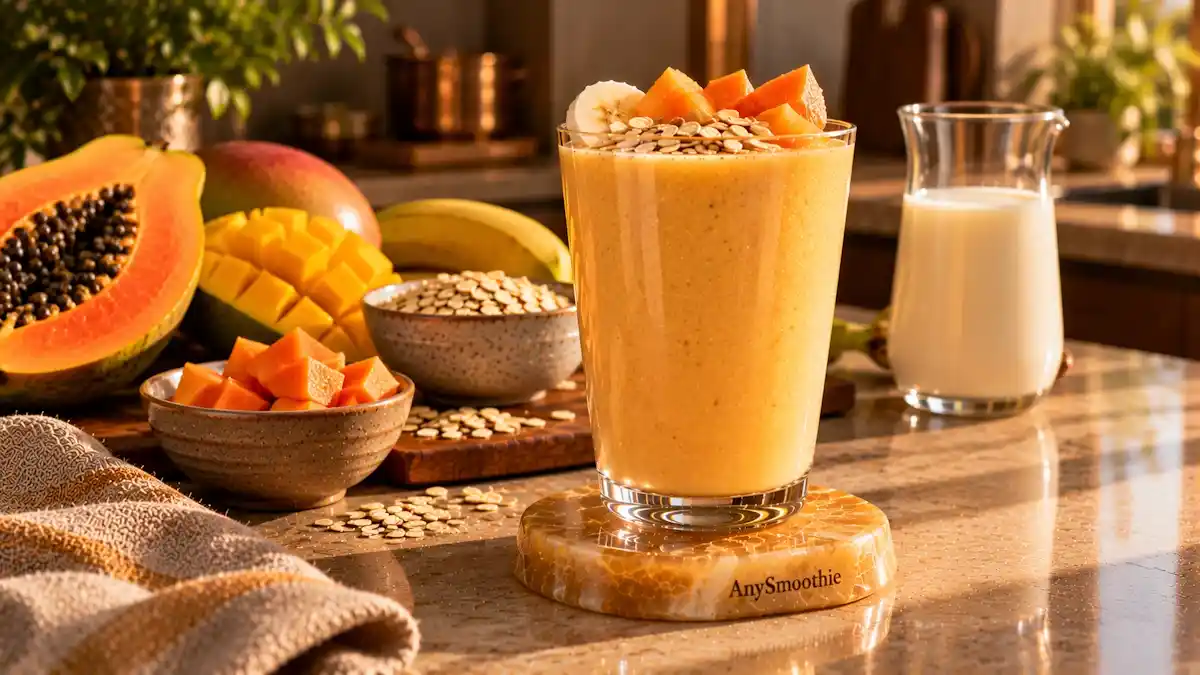
Food supplies nutrients your cells use, but smoothies for glycosylation and glycoprotein synthesis aren’t proven to change either process. Glycosylation happens normally inside cells; no smoothie can switch it on, target it directly, or guarantee a result.
You can still choose ingredients that support balanced everyday nutrition without expecting a particular biochemical effect. Start with what your cells do, then put that knowledge into perspective with three practical smoothie recipes.
What glycosylation does, and what nutrition can realistically support
Glycosylation is the process of attaching sugar chains, called glycans, to proteins or other molecules. When proteins carry these chains, they’re called glycoproteins. The attached sugars can influence how proteins fold, where they travel, and how cells recognize them.
Secretory IgA provides a related example of an immune glycoprotein, explored in smoothies to promote secretory iga production.
Cells build and modify these structures through multiple steps. Enzymes manage individual reactions, and much of this work happens in the endoplasmic reticulum and Golgi apparatus. The textbook Essentials of Glycobiology describes this cellular organization of glycosylation.
The broader topic of protein folding and quality control is also explored in smoothies for proteostasis support.
Dietary carbohydrate enters broader metabolic pathways rather than moving directly onto a protein as a finished sugar chain. Cells produce activated sugar building blocks and use enzymes to assemble them. Eating more sugar therefore doesn’t reliably increase glycoprotein synthesis.
Meanwhile, protein-containing foods provide amino acids used throughout the body. A varied diet also supplies energy, vitamins, and minerals that support physiological systems.
For a related look at immunoglobulins and digestive balance, see bovine immunoglobulin smoothies for digestive balance.
These relationships don’t establish a smoothie-specific effect. Evidence doesn’t show that a particular blend improves glycosylation or glycoprotein synthesis, and a drink’s nutrient content can’t predict changes in either process.
Cell-barrier proteins provide another related topic in smoothies supporting tight junction integrity.
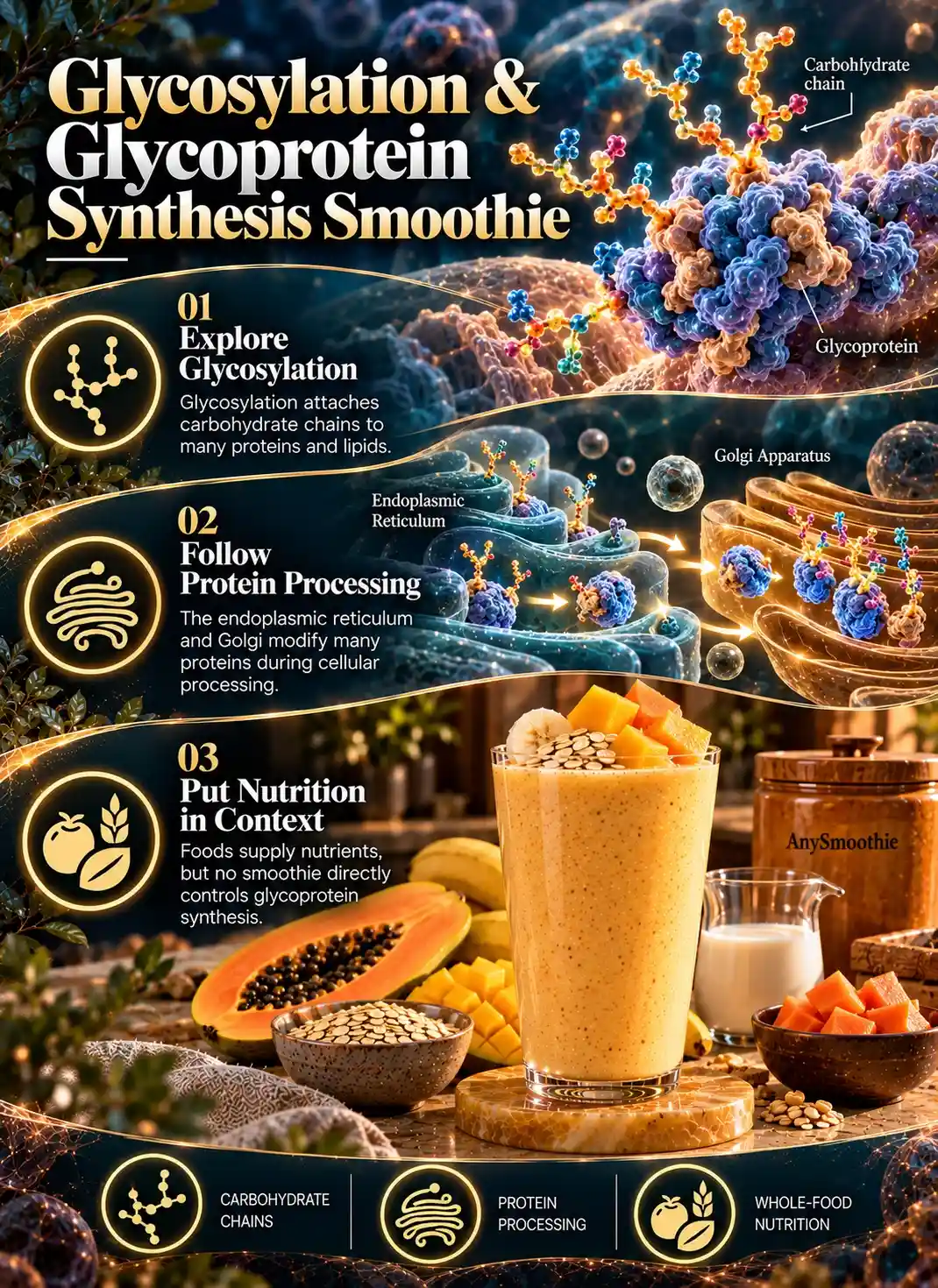
3 Smoothies for Glycosylation and Glycoprotein Synthesis
These are balanced food ideas, not treatments or proven ways to change glycosylation. Each recipe makes one serving. Nutrition figures are approximate and vary by brand and ingredient choices.
Berry-Oat Yogurt Smoothie
Ingredients
3/4 cup plain Greek yogurt
1/2 cup mixed berries
1/4 cup rolled oats
1/2 cup milk
1 teaspoon chia seeds
Instructions
Blend everything until smooth, adding a little water if needed. Let the oats soften briefly before blending for a smoother texture.
Estimated Nutrition (per serving)
Calories: ~360 kcal
Protein: ~25 g
Carbohydrates: ~48 g
Fat: ~9 g
Fiber: ~11 g
Sugars: ~20 g
Mango-Spinach Soy Smoothie
Ingredients
1 cup unsweetened fortified soy milk
1/2 cup silken tofu
1/2 cup mango
1/2 medium banana
1/2 cup spinach
Instructions
Add the soy milk first, followed by the remaining ingredients. Blend until creamy, stopping to scrape the blender sides if needed.
Estimated Nutrition (per serving)
Calories: ~285 kcal
Protein: ~14 g
Carbohydrates: ~44 g
Fat: ~8 g
Fiber: ~5 g
Sugars: ~29 g
Cocoa-Banana Peanut Butter Smoothie
Ingredients
1 cup plain kefir
1 medium banana
1 tablespoon peanut butter
1 tablespoon unsweetened cocoa powder
1/4 cup rolled oats
Instructions
Combine all ingredients and blend until smooth. Scrape down any cocoa powder clinging to the sides, then blend again briefly.
Estimated Nutrition (per serving)
Calories: ~395 kcal
Protein: ~18 g
Carbohydrates: ~53 g
Fat: ~15 g
Fiber: ~9 g
Sugars: ~28 g
Compare the three smoothies and choose one that fits your day
Choose by flavor, texture, and dietary preferences rather than an expected effect on cellular sugar processing.
| Smoothie | Nutritional emphasis | Texture | Flavor profile | Best fit |
|---|---|---|---|---|
| Berry-Oat Yogurt | Higher estimated protein | Thick and spoonable | Tart, fruity, mildly sweet | A protein-focused breakfast option |
| Mango-Spinach Soy | Dairy-free protein variety | Creamy and light | Tropical and gently sweet | A dairy-free eating pattern |
| Cocoa-Banana Peanut Butter | More estimated fat and energy | Rich and substantial | Chocolatey, nutty, tangy | A more substantial snack |
Adjust serving size and ingredients to personal taste and dietary needs. Substitutions also change nutrition estimates, so treat the figures as broad guides rather than exact totals.
For example, a smaller portion may suit a snack alongside other food. A larger serving can take a different place in your day, depending on what else you’re eating.
Keep that wider eating pattern in view. MyPlate food-group guidance emphasizes variety across food groups; a smoothie can contribute to that variety without replacing every other kind of meal.
Choose smoothie ingredients for balanced, everyday nutrition
Build a smoothie around produce, a protein source, a fiber-rich ingredient, and enough liquid to blend comfortably. This combination gives you a useful way to compare recipes without assigning special biochemical properties to individual foods.
Greek yogurt, kefir, milk, soy milk, and tofu contribute protein in different amounts. Dairy ingredients also change thickness and tartness, while silken tofu blends into a mild, creamy base. Unsweetened fortified soy milk is a practical dairy-free option.
Oats add body, and nuts or seeds contribute fat alongside other nutrients. Because peanut butter and chia seeds thicken a drink, modest portions usually blend more easily. Frozen produce can create a colder, thicker texture without requiring much ice.
Choose whole fruit more often than juice. Whole fruit adds fiber, whereas juice supplies sugars without as much fiber, a distinction explained in the Dietary Guidelines for Americans. Blending fruit retains its fiber when you keep the pulp.
Finally, choose a liquid that suits the rest of the recipe. Milk and soy milk contribute nutrients, while water mainly adjusts consistency. Start with the measured amount, then add a little more only if the blender needs it.
Conclusion: Keep the focus on food you enjoy
Glycosylation is a complex cellular process, and a drink can’t reliably control its outcome. The useful choice is a smoothie that fits your preferences and contributes to a varied eating pattern.
Enjoy berries and yogurt, a dairy-free mango blend, or cocoa and peanut butter for their flavor and nutritional contribution. None needs a promise about glycoprotein synthesis to earn a place in your day.
🛡️ Safety Notes & Dietary Interactions
- Allergen awareness: The recipes include dairy, soy, tofu, peanut butter, and chia seeds. Check ingredient labels and use substitutions that match known allergies, intolerances, and dietary restrictions.
- Fiber and fullness: Oats, chia, berries, spinach, banana, and legumes or seeds can increase fiber and thickness. Adjust portions or liquid if a smoothie feels excessively dense or filling.
- Added sugars: Whole fruit retains its fiber when blended, while juice provides sugars with less fiber. Prefer whole fruit when practical and avoid unnecessary syrups or sweetened ingredients.
- Biochemical expectations: Carbohydrates and protein supply materials used throughout cellular metabolism, but eating more sugar or protein does not reliably increase glycosylation or glycoprotein synthesis.
FAQs
Which smoothie has the highest estimated protein?
The Berry-Oat Yogurt Smoothie provides the most estimated protein at approximately 25 grams per serving. The Cocoa-Banana Peanut Butter Smoothie provides about 18 grams, while the Mango-Spinach Soy Smoothie provides approximately 14 grams. Actual values can change with brands, ingredient substitutions, and serving sizes.
Does eating more sugar increase glycosylation?
Not reliably. Dietary carbohydrate enters broader metabolic pathways rather than being transferred directly onto proteins as finished glycans. Cells produce activated sugar building blocks and use enzyme-controlled processes to assemble glycans. Therefore, increasing sugar in a smoothie doesn’t establish a predictable increase in glycosylation or glycoprotein synthesis.
Which smoothie is best for a dairy-free eating pattern?
The Mango-Spinach Soy Smoothie is the most suitable of the three because it uses unsweetened fortified soy milk and silken tofu rather than dairy ingredients. It provides approximately 14 grams of protein per serving. Always check packaged products for ingredients that may conflict with individual allergies or dietary restrictions.
Why do oats and chia seeds make these smoothies thicker?
Both ingredients absorb and retain water, increasing the smoothie’s body and making it more substantial. The Berry-Oat Yogurt Smoothie combines oats and chia for a particularly thick texture, while the other recipes use different combinations of oats, fruit, tofu, or peanut butter.
Can these smoothies directly improve glycoprotein synthesis?
No. The article describes glycosylation as a complex cellular process involving enzymes, activated sugar building blocks, and structures such as the endoplasmic reticulum and Golgi apparatus. A smoothie provides nutrients used in normal physiology, but the article does not establish that any particular recipe changes glycosylation or glycoprotein synthesis.

Medical Disclaimer: AnySmoothie content is for educational purposes only and is not a substitute for professional medical advice. Consult a healthcare provider for personalized guidance. See our full Disclaimer & Terms of Use. AI Transparency: AnySmoothie may use AI to support content development. All content undergoes human editorial review for accuracy, clarity, and editorial quality. See our full AI Transparency.