
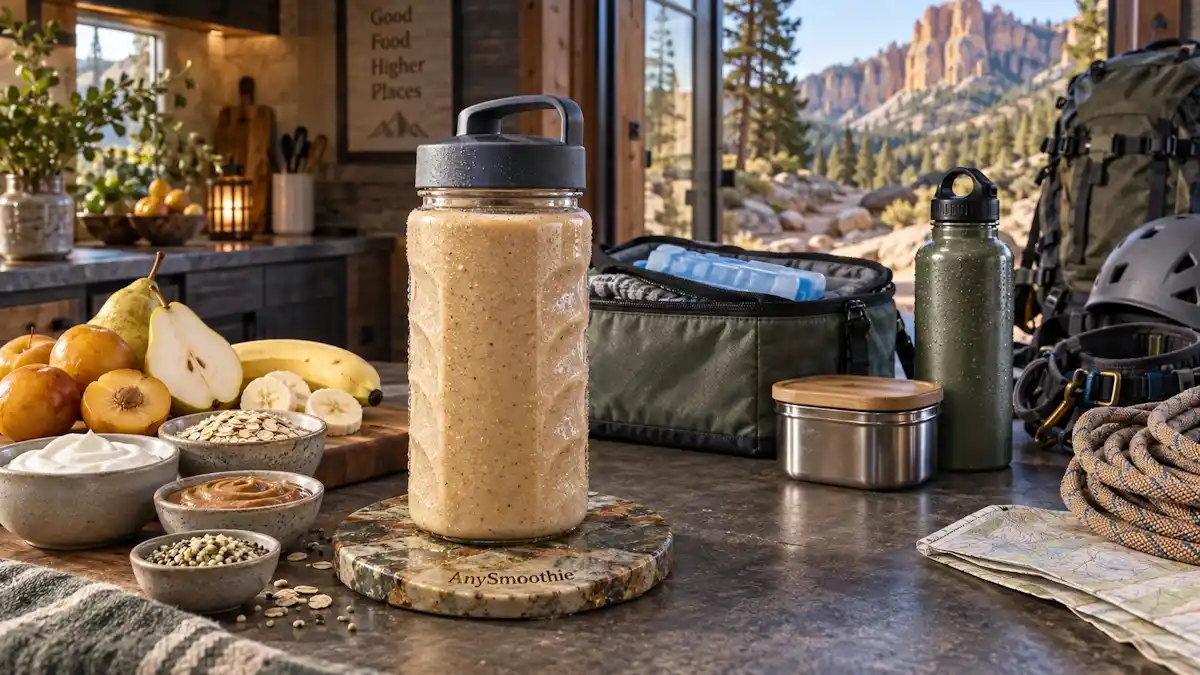
A long climbing day can drain your momentum before you even tie in, especially when breakfast is rushed or snacks get crushed in a pack. A well-timed smoothie gives you a portable mix of carbohydrate, protein, fluid, and minerals without feeling like a full meal.
These smoothies for weekend rock climbing fit different moments of the day, from a pre-crag breakfast to a lighter warm-weather option. The right recipe depends on when you drink it, how hard you plan to climb, and what your stomach handles well.
For another outdoor activity where long sessions require portable food planning, portable smoothies for long cycling days offers a useful comparison.
How Smoothies Support a Stronger Climbing Day
Carbohydrates break down into glucose, which working muscles can use during repeated approaches, bouldering attempts, and long routes. Your body also stores carbohydrate as glycogen, so a smoothie with fruit, oats, or honey can support those natural energy pathways before activity.
For a full breakfast-style smoothie, drink it about one to two hours before climbing. That window gives you time to digest a larger serving with oats, yogurt, or protein. If you only have 30 to 60 minutes, use a smaller smoothie with less fiber and fat.
After climbing, a lighter blend with carbohydrate and protein can fit alongside a real meal. Protein supplies amino acids, while carbohydrate helps replenish glycogen used during the session. General sports nutrition guidance also recommends adjusting carbohydrate intake to match exercise demands.
A scientific review of nutrition in sport climbing also notes that carbohydrate and overall energy intake can be inadequate among climbers, while climbing-specific nutrition research remains limited.
Test a recipe on a regular training day, not before a big outdoor objective or a long drive to the crag.
Tolerance varies widely. Some climbers do fine with oats and chia seeds before a session, while others prefer fruit, milk, and yogurt only.
For similar packable nutrition around approaches and extended outdoor activity, portable smoothies for day hikers provides another practical context.
3 Smoothies for Weekend Rock Climbing
These three smoothies for weekend rock climbing use familiar ingredients that pack easily and can be adjusted for dietary needs. Blend them cold, then carry them in an insulated bottle.
| Smoothie | Best time | Main carbohydrate | Protein option | Easy adjustment |
|---|---|---|---|---|
| Banana oat | 1 to 2 hours before climbing | Banana and oats | Greek yogurt or plant protein | Use certified gluten-free oats |
| Berry yogurt | After climbing | Berries and honey | Greek or dairy-free yogurt | Use oat or soy milk |
| Mango coconut | Warm-day snack | Mango | Yogurt or silken tofu | Skip chia for lower fiber |
The banana oat version is the most filling. Berry yogurt works well when the session ends, while mango coconut feels lighter when heat makes dense food less appealing.
Banana Oat Smoothie for Long Sessions
Ingredients
- 1 banana
- 1/3 cup rolled oats
- 1 cup low-fat milk
- 1/2 cup plain Greek yogurt
- A pinch of cinnamon
Steps
Add the milk and Greek yogurt first, followed by the banana, oats, and cinnamon. Blend until completely smooth.
Banana and oats provide carbohydrate sources, while yogurt adds protein and a thicker texture.
Blend the oats fully so the drink isn’t gritty. If fiber bothers you before climbing, reduce the oats to two tablespoons or save this smoothie for a longer lead-climbing day. Use certified gluten-free oats when needed, and choose soy milk or pea-protein milk for a dairy-free version.
Estimated Nutrition per Serving
- Calories: ~375 kcal
- Protein: ~24 g
- Carbohydrates: ~61 g
- Fat: ~5 g
- Fiber: ~5 g
- Sugars: ~27 g
Estimate uses low-fat dairy milk and plain nonfat Greek yogurt.
If I wanted this before a harder session, I’d test the full oat portion on an ordinary climbing day before relying on it for a long outdoor objective.
Berry Yogurt Smoothie for Recovery
Ingredients
- 1 cup mixed berries
- 3/4 cup plain Greek yogurt
- 3/4 cup low-fat milk
- 1 teaspoon honey
Steps
Add the milk and Greek yogurt first, followed by the berries and honey. Blend until smooth.
Frozen berries are convenient, keep the smoothie cold, and reduce the need for ice.
This blend fits after climbing because it combines carbohydrate with protein in one drink. The berries and honey provide readily available carbohydrate, while yogurt supplies protein for normal muscle repair processes. For a dairy-free version, use a soy or coconut yogurt with a protein level that suits your needs, plus soy milk or another preferred alternative.
Estimated Nutrition per Serving
- Calories: ~270 kcal
- Protein: ~24 g
- Carbohydrates: ~39 g
- Fat: ~3 g
- Fiber: ~5 g
- Sugars: ~29 g
Estimate uses plain nonfat Greek yogurt, low-fat dairy milk, and honey.
A recent review of post-exercise recovery nutrition describes carbohydrate, protein, and fluids as central parts of recovery nutrition, particularly when another exercise session follows within a limited recovery period.
Mango Coconut Smoothie for Warm Crag Days
Ingredients
- 1 cup mango
- 3/4 cup coconut water
- Juice from half a lime
- 1/2 cup plain yogurt
- 1 teaspoon chia seeds, optional
Steps
Add the coconut water and yogurt first, followed by the mango and lime juice. Blend until smooth. Add the chia seeds only if desired and well tolerated before activity.
Mango gives the smoothie its carbohydrate base, while coconut water creates a fluid-rich texture and lime keeps the flavor bright. This is a refreshing option for hot conditions, but it doesn’t replace a full hydration plan. Climbers who sweat heavily may still need plain water and a salty food because this smoothie may not provide enough sodium.
Estimated Nutrition per Serving
- Calories: ~210 kcal
- Protein: ~7 g
- Carbohydrates: ~41 g
- Fat: ~2 g
- Fiber: ~3 g
- Sugars: ~34 g
Estimate uses plain low-fat yogurt and excludes the optional chia seeds.
For more food-focused ideas around warm conditions, hydration-focused smoothies for summer fatigue covers another heat-related situation.
Make Climbing Smoothies Work in Real Weekend Plans
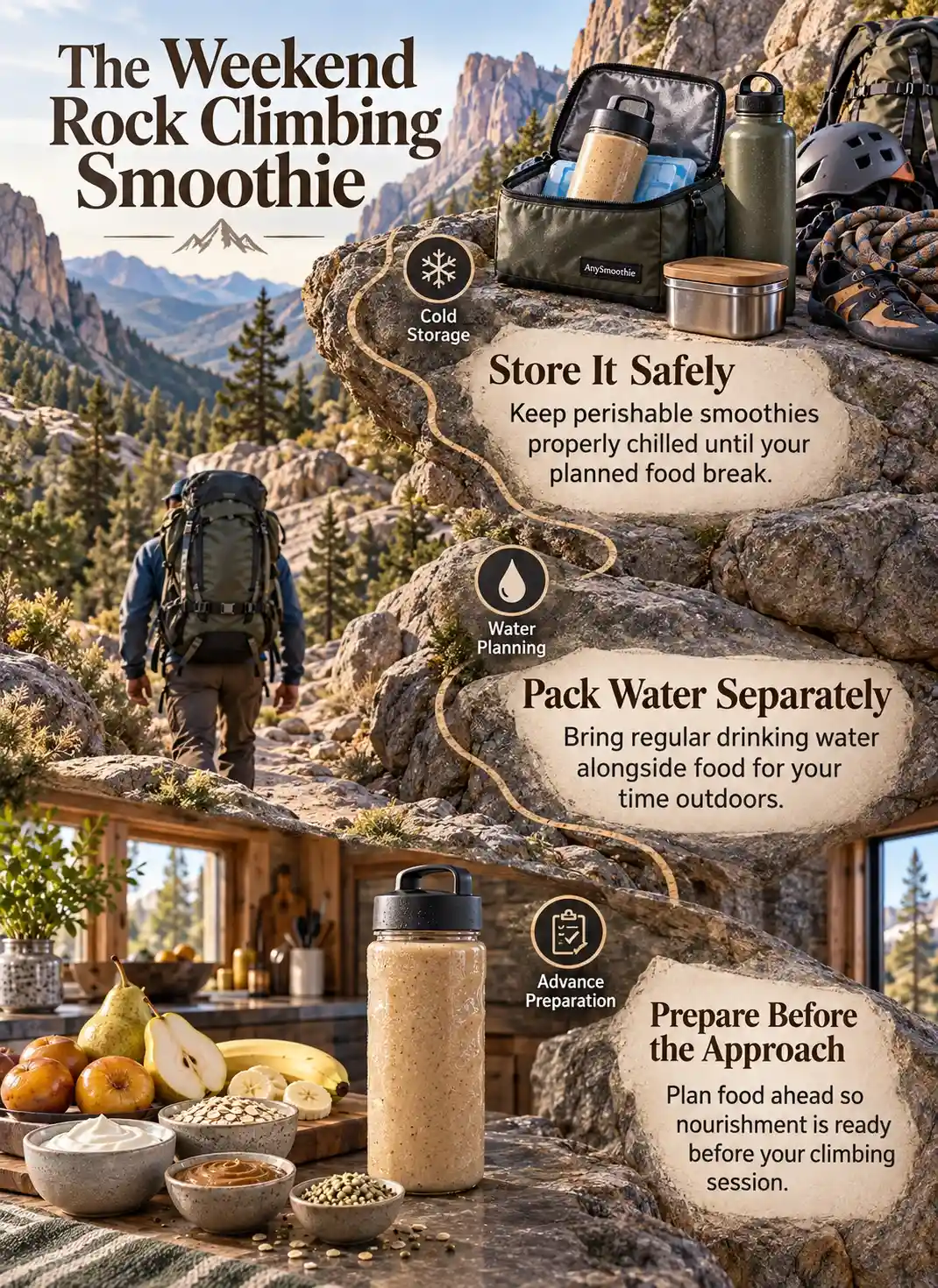
Prepare ingredients the night before. Freeze fruit in measured bags, portion oats into a container, and keep yogurt cold until you blend. If you make the smoothie ahead, use an insulated bottle with an ice pack and drink it within a few hours.
Portion size should match the day. Choose a larger banana oat smoothie when it replaces breakfast before a long session. A half-size mango blend makes more sense before a short bouldering session or during a hot approach. Weather matters too, since heat increases the importance of carrying water and salty foods.
Common problems usually come from treating a smoothie like the entire plan:
- Too much nut butter, coconut cream, or seed butter can make a pre-climb smoothie sit heavily.
- Large amounts of oats, chia, and raw greens may add more fiber than your stomach wants before hard climbing.
- A smoothie alone rarely covers an all-day trip, especially if you hike in, belay, or climb multiple pitches.
- Forgetting water can leave you thirsty even when the smoothie feels substantial.
Pack a smoothie alongside water, then add solid food such as sandwiches, fruit, pretzels, and trail mix.
Weekend paddling creates some of the same challenges around cold storage, outdoor transport, and longer sessions, so cooler-friendly smoothies for weekend kayaking provides additional packing ideas.
Conclusion: A Better Blend for Your Next Climbing Day
The three smoothies for weekend rock climbing cover distinct needs: banana oat for longer-lasting pre-climb fuel, berry yogurt for carbohydrate and protein after climbing, and mango coconut for warm conditions. Each supports normal physiological systems through familiar food sources.
Adjust ingredients and serving sizes around your digestion, schedule, weather, and dietary needs. Prepare one recipe the night before your next climbing trip, then pair it with water and enough solid food to stay ready for another route.
🛡️ Safety Notes & Dietary Interactions
- Climbing Safety Comes First: Drink only while securely positioned on the ground or at a safe rest point. Avoid handling bottles while belaying, scrambling, climbing, or managing ropes and gear where distraction could compromise safety.
- Pre-Climb Digestion: Oats, chia, yogurt, and larger smoothie portions may feel heavy during steep approaches or hard climbing. Test recipes on ordinary sessions first and reduce fiber, fat, or serving size if fullness, reflux, or cramping develops.
- Heat and Hydration: A smoothie contributes fluid, but it should not replace regular water during long approaches or warm crag days. Heat, sun exposure, altitude, exertion, and individual sweat losses can all increase fluid and sodium needs.
- Cold Storage at the Crag: Yogurt, milk, tofu, and prepared smoothies require dependable chilling. Keep bottles in an insulated cooler or bag with adequate ice packs, especially when they will sit in a parked vehicle or exposed pack for several hours.
FAQs
Which smoothie is best before a long climbing session?
The Banana Oat Smoothie is the most substantial pre-climb option because it combines banana, oats, milk, and yogurt or another protein source. It works best when you have enough time to digest it before activity. If you are leaving for the approach soon, reduce the oat portion or serving size.
Which smoothie is best after climbing?
The Berry Yogurt Smoothie is the strongest post-climb choice because it combines carbohydrate from berries and optional honey with protein from yogurt and milk. It can be useful when a regular meal is not immediately available, but it should still leave room for solid food later, especially after a long day outside.
Which recipe is best for hot weather?
The Mango Coconut Smoothie is the lightest and most fluid-forward option. Mango provides carbohydrate, coconut water adds fluid, and yogurt or tofu can provide some protein. It can work well in warm conditions, but plain water and salty foods may still be needed if the day is long or sweat losses are high.
How long before climbing should I drink a smoothie?
A larger smoothie with oats, yogurt, or other dense ingredients may feel more comfortable one to two hours before climbing. A smaller, lower-fiber smoothie may work closer to 30–60 minutes beforehand. Personal digestion, intensity, and portion size matter more than a rigid timing rule.
Can a smoothie replace food for an entire climbing day?
Usually not. Climbing days can include approaches, belaying, repeated attempts, hiking, and long periods away from food stops. A smoothie can cover breakfast or one snack, but pack solid foods as well, such as sandwiches, fruit, pretzels, or trail mix, plus enough water for the full outing.

Medical Disclaimer: AnySmoothie content is for educational purposes only and is not a substitute for professional medical advice. Consult a healthcare provider for personalized guidance. See our full Disclaimer & Terms of Use. AI Transparency: AnySmoothie may use AI to support content development. All content undergoes human editorial review for accuracy, clarity, and editorial quality. See our full AI Transparency.