
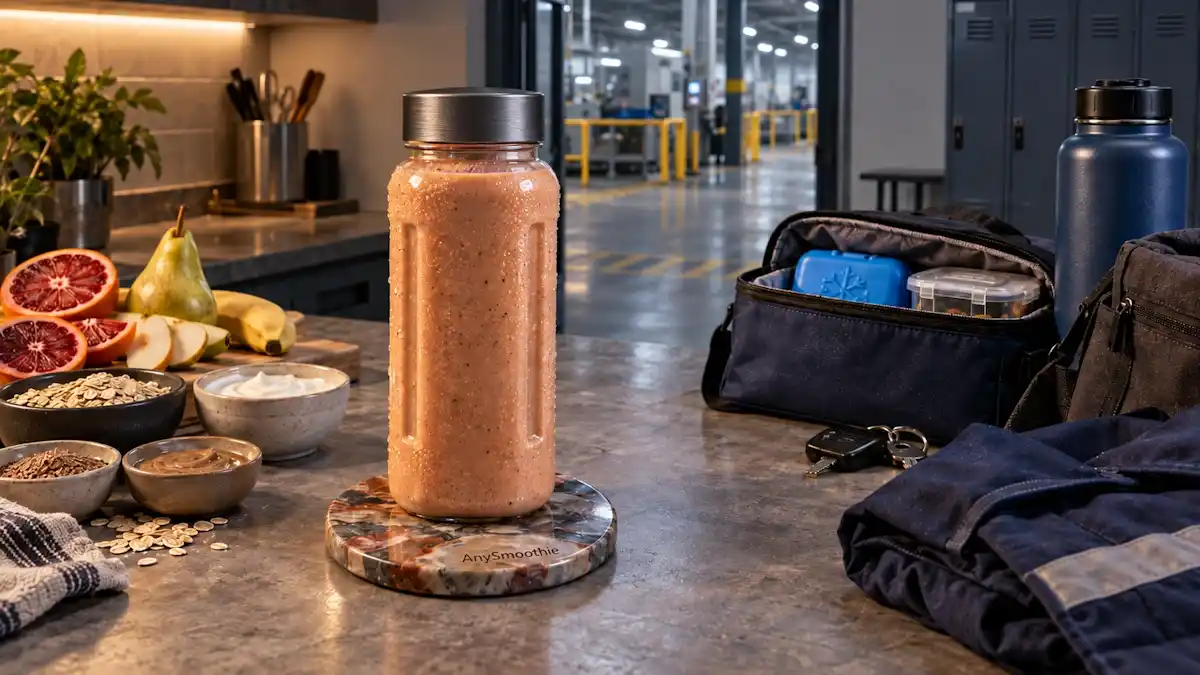
A factory break can disappear fast. Heat, noise, physical work, and limited seating make a full meal impractical, especially when you need something you can carry and finish quickly.
Smoothies for factory workers can combine fluids, carbohydrates, protein, fiber, and fats in one portable drink. They support normal energy metabolism and hydration needs, but they don’t replace balanced meals, water, or workplace safety procedures. These three recipes fit a 10 to 15 minute break and are easy to prepare ahead.
Why Smoothies Fit a Fast Factory Break
A smoothie can travel in a sealed bottle, require no utensils, and work for a short break when solid food feels inconvenient. You can also control the portion, keeping it light before active work or making it more substantial for a longer shift.
Workers managing similarly short meal windows may also find useful ideas in break smoothies for retail workers.
Carbohydrates and fluids work together
Fruit, oats, and milk provide carbohydrates, which the body breaks down into glucose for normal cellular energy pathways. Meanwhile, water, milk, and ice add fluid that supports normal hydration. A banana and oat blend is often easier to drink than eating separate foods in a noisy break room.
Still, a smoothie isn’t a substitute for water access. Follow your employer’s hydration rules, especially around heat, protective equipment, or physically demanding tasks.
Research on occupational hydration also emphasizes maintaining fluid intake before, during, and after physically demanding work, with individual needs varying by heat exposure, workload, and protective clothing. A recent peer-reviewed review on worker hydration discusses these factors.
For hotter work environments, smoothies for hot weather fatigue provides a separate food-focused approach to fluid-rich blends.
Protein and fats can improve staying power
Yogurt, milk, soy milk, and peanut butter add protein, which supports normal tissue maintenance. Peanut butter and other nut butters also add fat, which slows stomach emptying and can make a moderate serving feel more satisfying.
Choose ingredients that sit comfortably during your shift. Check for allergies, lactose intolerance, nut restrictions, and rules about shared refrigerators, blenders, or spill-prone work areas.
A smaller smoothie plus water is often more comfortable during active work than a large, heavy drink.
3 Quick-Break Smoothies for Factory Workers
These smoothies for factory workers use ordinary grocery-store ingredients. Blend them the night before, then shake the bottle before drinking because oats and fruit naturally settle.
| Smoothie | Main ingredients | Prep time | Best use | Key nutrition focus |
|---|---|---|---|---|
| Banana Oat Builder | Banana, oats, milk, peanut butter | 5 minutes | Longer or more physical shifts | Carbohydrates, protein, fats |
| Berry Yogurt Cooler | Frozen berries, yogurt, milk | 5 minutes | Warm work areas | Fluids, carbohydrates, protein |
| Green Banana Blend | Banana, spinach, yogurt, milk | 5 minutes | A lighter early-shift break | Fiber, protein, carbohydrates |
The table makes portion choice simple: use a lighter blend when your appetite is low and a more filling option when your break is farther from your next meal.
Banana Oat Builder
Ingredients
- 1 medium banana
- 1/3 cup rolled oats
- 1 tablespoon peanut butter
- 1 cup milk
- A few ice cubes, optional
Steps
Add the milk first, followed by the banana, oats, and peanut butter. Blend until smooth. Add a few ice cubes if you’re drinking it right away.
The banana and oats supply carbohydrates for normal energy pathways. Peanut butter adds fat and protein, while milk contributes fluid. For a thinner texture, add 1/4 cup water before blending.
Estimated Nutrition per Serving
- Calories: ~420 kcal
- Protein: ~17 g
- Carbohydrates: ~60 g
- Fat: ~14 g
- Fiber: ~7 g
- Sugars: ~27 g
Estimate uses low-fat dairy milk.
For another physically active workplace context, smoothies for warehouse workers covers portable blends designed around long shifts and break-room storage.
Berry Yogurt Cooler
Ingredients
- 1 cup frozen mixed berries
- 3/4 cup plain Greek yogurt
- 3/4 cup milk
Steps
Add the milk and Greek yogurt first, followed by the frozen berries. Blend until smooth.
Frozen fruit chills the drink without requiring much ice.
Berries add flavor and fiber, while yogurt supplies protein. If the blend tastes too tart, use half a banana instead of sweetened juice. That keeps added sugar lower while adding carbohydrates.
Estimated Nutrition per Serving
- Calories: ~260 kcal
- Protein: ~24 g
- Carbohydrates: ~35 g
- Fat: ~4 g
- Fiber: ~5 g
- Sugars: ~25 g
Estimate uses plain nonfat Greek yogurt and low-fat dairy milk.
If I wanted this for a particularly warm shift, I’d keep the smoothie cold and still carry separate water rather than making the smoothie itself much larger.
Green Banana Blend
Ingredients
- 1 banana
- 1 packed cup baby spinach
- 1/2 cup plain yogurt
- 3/4 cup milk
Steps
Blend the spinach with the milk first. Add the banana and yogurt, then blend again until smooth.
Blend the spinach with the liquid first if your blender struggles with leafy greens.
Spinach adds fiber and micronutrients, while the banana keeps the flavor familiar. This option works well when you want a moderate portion that doesn’t feel overly rich.
Estimated Nutrition per Serving
- Calories: ~280 kcal
- Protein: ~15 g
- Carbohydrates: ~41 g
- Fat: ~6 g
- Fiber: ~4 g
- Sugars: ~27 g
Estimate uses plain low-fat yogurt and low-fat dairy milk.
How to Prep, Pack, and Choose Smoothies for Shift Work
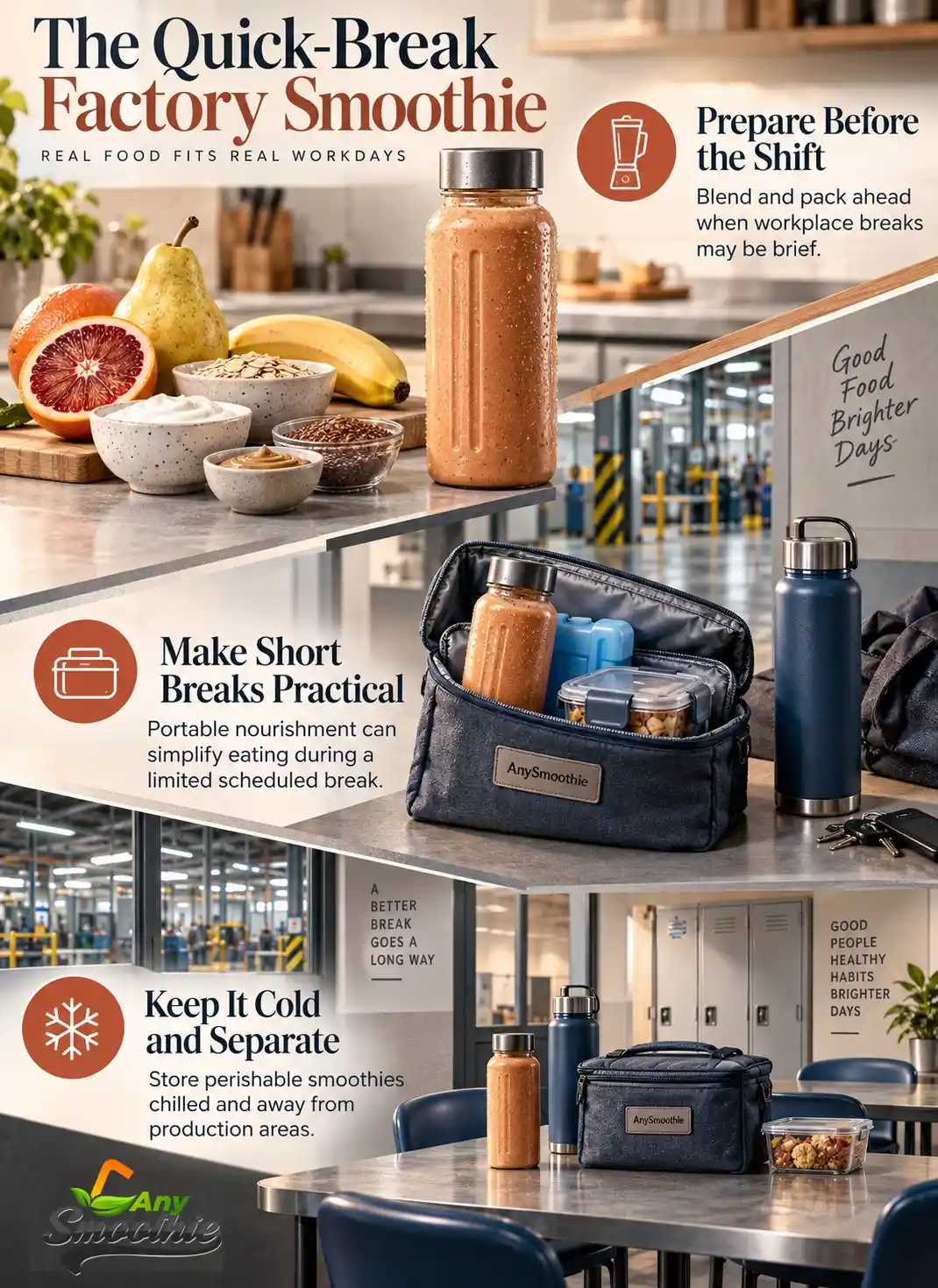
Make the smoothie the night before and refrigerate it promptly in a clean, leakproof bottle. Leave a little empty space at the top, since shaking a full bottle can force liquid through the lid. Wash the bottle, lid, and gasket soon after use so dried residue doesn’t collect in the threads.
Dairy, yogurt, and cut fruit are perishable. The USDA recommends an insulated lunch bag and at least two cold sources for packed perishable foods in its bag lunch safety guidance. An ice pack plus a frozen water bottle can keep the drink cold while also giving you drinking water later.
Match the portion to the shift
For a short break or active job, start with 12 to 16 ounces. Larger smoothies can feel uncomfortable when you return to lifting, walking, or standing. Add oats, yogurt, or nut butter when you need more substance. Use more milk, water, or ice when heat and thirst are the bigger concerns.
Workers whose shifts involve sustained lifting, carrying, or outdoor-style physical demands may also find job site smoothies for construction workers relevant for portion and packing ideas.
Check labels on protein powders, flavored yogurts, milks, and nut butters. Added sugar, milk proteins, soy, peanuts, and other allergens can hide in products that appear simple.
Fix common smoothie problems
- If the drink is too thick, blend in water or milk one tablespoon at a time.
- If it is too sweet, choose plain yogurt and use unsweetened milk.
- If it isn’t filling enough, add 2 tablespoons of oats or an extra spoonful of yogurt.
- If it may spill, use a screw-top bottle and keep it upright inside your lunch bag.
USDA also advises against relying on a paper bag for cold foods because it can tear and leak as items thaw. Its food safety reminder for packed lunches reinforces the value of insulated storage.
Key Takeaways for a Better Break
The most practical smoothie is one you can finish comfortably, carry without leaking, and keep cold until break time. Banana oats provide more staying power, berry yogurt offers a cold fruit-based choice, and the green blend keeps the portion lighter.
Keep water separate from your smoothie, and follow workplace food, hydration, and equipment policies. Small adjustments make the recipes fit your appetite, budget, and dietary needs.
Conclusion: A Simple Shift-Ready Option
Good smoothies for factory workers are simple, portable, and prepared safely. Choose ingredients that provide fluids, carbohydrates, protein, and fats without making the serving too large for physical work.
Adjust each recipe for allergies, dietary preferences, and workplace rules. Then pack one recipe the night before, test the portion on your next shift, and keep water available throughout the day.
🛡️ Safety Notes & Dietary Interactions
- Heat and Hydration: Factory work in warm environments or protective gear can increase fluid needs. A smoothie contributes fluid but should not replace regular water access, scheduled hydration opportunities, or workplace heat-safety procedures.
- Cold Storage: Yogurt, milk, soy milk, and prepared smoothies require dependable refrigeration. Keep bottles in an insulated lunch bag with adequate cold sources, especially when break-room refrigeration is unavailable or shifts run for several hours.
- Allergens and Shared Areas: Dairy, soy, peanuts, and other common smoothie ingredients may matter in shared factory spaces. Label bottles clearly, follow workplace allergen policies, and avoid leaving open drinks near production surfaces, machinery, or communal equipment.
- Active-Work Digestion: Oats, peanut butter, yogurt, and larger smoothie portions can feel heavy before lifting, bending, or fast-paced work. Use a smaller serving or thinner texture if fullness, reflux, or stomach discomfort interferes with your shift.
FAQs
Which smoothie is best for a physically demanding factory shift?
The Banana Oat Builder is the most substantial option because it combines banana, oats, milk, and peanut butter. That gives it carbohydrate, protein, fat, and fiber in one bottle. If you return directly to heavy activity after break, reduce the portion or add more liquid if a dense smoothie feels uncomfortable.
Which smoothie is easiest to finish during a 10-minute break?
The Green Banana Blend is the lightest of the three and can be thinned easily with additional milk or water. It avoids oats and peanut butter, which make the other options more filling. A smaller, drinkable portion is usually more practical than rushing through a thick smoothie before returning to the floor.
How should I keep a smoothie cold during a factory shift?
Use an insulated lunch bag with adequate frozen gel packs or another reliable cold source, then refrigerate the bottle if workplace facilities are available. Do not assume a locker, break room, or insulated bottle alone will keep a dairy- or soy-based smoothie safely chilled for an entire shift.
Can a smoothie replace a meal during a long factory shift?
A substantial smoothie can cover part of a meal, but it should not automatically replace regular food throughout a long or physically demanding shift. Hunger, workload, heat, and break timing all matter. Bring a familiar solid snack or meal as backup when the next eating opportunity may be delayed.
What should I do if a smoothie feels too heavy at work?
Reduce the portion first, then simplify the recipe by cutting back on oats, peanut butter, or other dense ingredients. Add more liquid for a thinner texture and avoid drinking it quickly. If discomfort repeatedly occurs during active work, a lighter smoothie plus solid food later may fit your shift better.

Medical Disclaimer: AnySmoothie content is for educational purposes only and is not a substitute for professional medical advice. Consult a healthcare provider for personalized guidance. See our full Disclaimer & Terms of Use. AI Transparency: AnySmoothie may use AI to support content development. All content undergoes human editorial review for accuracy, clarity, and editorial quality. See our full AI Transparency.