
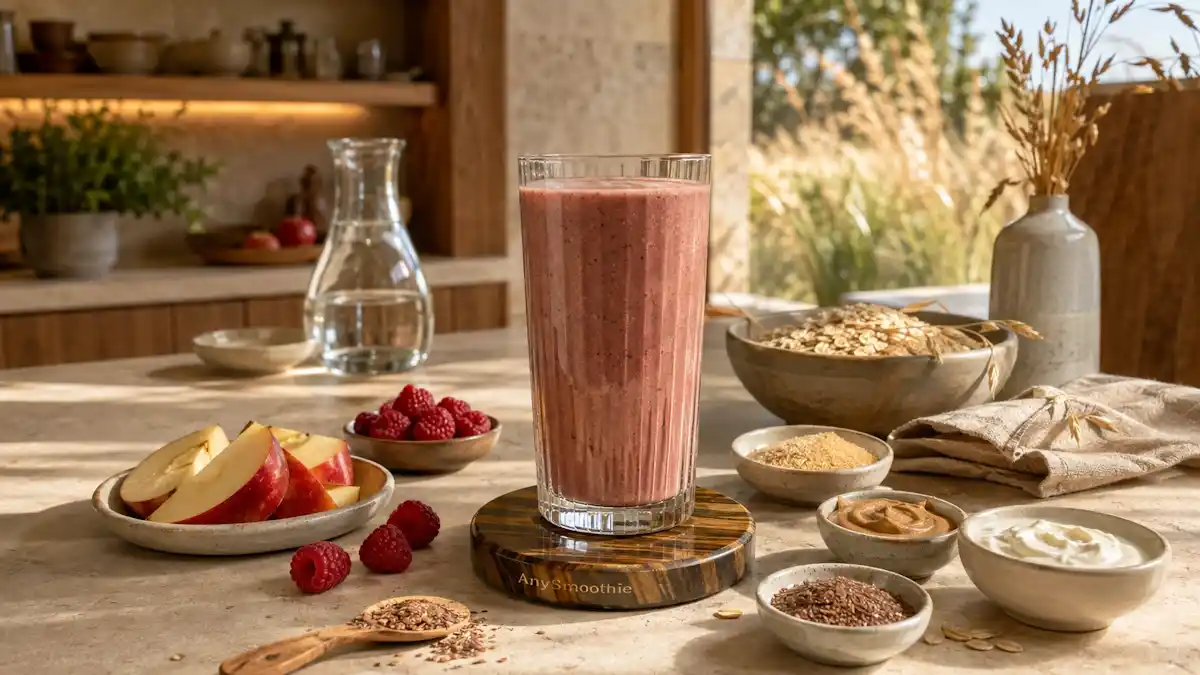
Hard training, short sleep, and meals short on produce can increase the oxidative load your cells handle each day. Food can’t erase that pressure, but regular plant foods supply compounds involved in normal antioxidant activity.
A ferulic acid smoothie for cellular defense combines foods like oats, apples, citrus, tomatoes, and seeds with vitamin C, fiber, and healthy fats. It supports normal cellular maintenance, but it isn’t a treatment or cure. These recipes make it easier to build that pattern into breakfast or a snack.
How Ferulic Acid Fits Into Natural Antioxidant Defense
Ferulic acid is a phenolic compound found in plant cell walls. It occurs in many foods, although whole grains are among its more concentrated dietary sources. A review of polyphenol food sources identifies ferulic acid as the most abundant phenolic acid in cereal grains.
Once you eat plant foods, digestion and metabolism break down, absorb, and transform their compounds. Ferulic acid is one part of that larger process. Your body also has its own antioxidant systems, which depend on adequate energy, protein, micronutrients, sleep, and recovery.
A smoothie works best when it includes several plants rather than chasing one compound. Fiber supports digestion, vitamin C contributes to normal antioxidant function, and colorful produce adds carotenoids and other polyphenols. The overall dietary pattern matters more than trying to achieve a precise amount of ferulic acid in one drink.
For another food-first approach to cellular wellness, ergothioneine smoothies for cellular defense explores a different dietary compound found naturally in foods.
Where Ferulic Acid Comes From in Everyday Foods
Oats and other whole grains are particularly relevant dietary sources of ferulic acid, while fruits, vegetables, and seeds contribute their own mixtures of phenolic compounds and other phytochemicals.
Oats make an easy smoothie base because they add soluble fiber and a mild flavor. Apples blend well with their skins, while carrots, tomatoes, citrus, berries, and seeds increase plant variety across the recipes.
The practical target is plant variety across the week, not a measured ferulic acid dose in one glass.
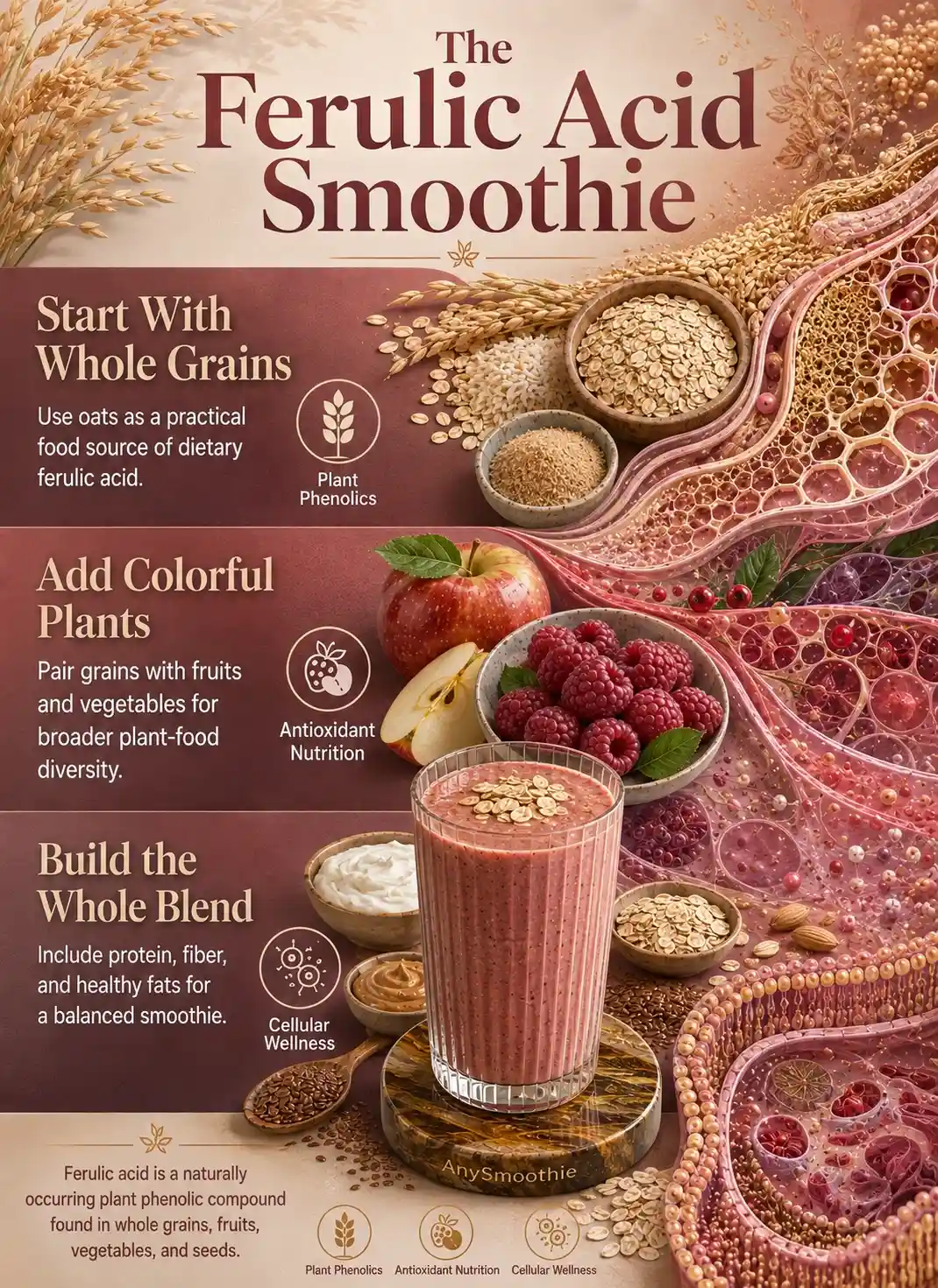
Why Pairing Ingredients Matters for Cellular Support
Vitamin C-rich citrus and berries pair well with oats and apples. Carrots and spinach provide carotenoids, while chia, flax, pumpkin seeds, and nut butter add unsaturated fats. Dietary fat can also help with the absorption of fat-soluble carotenoids from foods such as carrots and spinach.
Meanwhile, fiber from oats, fruit, vegetables, and seeds can make a smoothie more substantial. Use those ingredients to build a varied drink rather than relying on isolated antioxidant supplements. A review of antioxidants bound to food matrices discusses the digestion and physiological relevance of food-bound antioxidants and their interactions with soluble antioxidant compounds.
3 Ferulic Acid Smoothies for Cellular Defense
Each recipe makes one large serving. Use a high-speed blender when possible, especially for oats, seeds, and raw carrot.
| Recipe | Key Plant Ingredients | Supporting Nutrients | Flavor Profile | Best Use |
|---|---|---|---|---|
| Apple, Oat, and Berry | Apple, oats, berries | Fiber, protein, polyphenols | Creamy and lightly spiced | Breakfast |
| Citrus, Carrot, and Seed | Orange, carrot, chia or flax | Vitamin C, carotenoids, fiber | Bright and tropical | Snack |
| Tomato, Apple, and Spinach | Tomato, apple, spinach, pumpkin seeds | Vitamin C, unsaturated fats, plant pigments | Savory and fresh | Light lunch |
Apple, Oat, and Berry Defense Smoothie
Ingredients
- 1 small apple, cored, with skin
- 1/4 cup rolled oats
- 3/4 cup frozen mixed berries
- 3/4 cup plain Greek yogurt or dairy-free yogurt
- 3/4 cup unsweetened milk
- 1/2 teaspoon cinnamon
- Ice, optional
Steps
Blend all ingredients until completely smooth. Add ice if you prefer a colder, thicker drink.
Apples and oats provide fiber and plant compounds, while berries add colorful polyphenols. Blend the oats thoroughly before serving for a smoother texture. For more combinations built around these staples, try these high-fiber smoothie recipes.
Estimated Nutrition per Serving
Estimated with plain nonfat Greek yogurt and unsweetened soy milk.
- Calories: ~390 kcal
- Protein: ~25 g
- Carbohydrates: ~65 g
- Fat: ~6 g
- Fiber: ~12 g
- Sugars: ~34 g
Leaving the apple skin on adds both texture and plant material, but it also makes blending quality more noticeable. If I wanted this especially smooth, I’d blend the apple, milk, and oats first before adding the frozen berries and yogurt.
Citrus, Carrot, and Seed Smoothie
Ingredients
- 1 medium orange, peeled
- 1/2 cup shredded carrot
- 1/2 cup frozen mango
- 1 teaspoon grated fresh ginger
- 1 tablespoon chia seeds or ground flaxseed
- 3/4 cup water or unsweetened coconut water
Steps
Blend until completely smooth. If using chia, allow the smoothie to sit briefly before drinking if you prefer a slightly thicker texture.
This blend combines vitamin C, carotenoids, fiber, and plant-based fats in one glass. Use grapefruit in place of orange only if it fits your medication plan. Grapefruit can interact with some prescription medicines, so check with a pharmacist or clinician first.
Estimated Nutrition per Serving
Estimated with chia seeds and plain water.
- Calories: ~210 kcal
- Protein: ~5 g
- Carbohydrates: ~43 g
- Fat: ~5 g
- Fiber: ~11 g
- Sugars: ~27 g
Fresh ginger can quickly dominate the orange and mango in a relatively light smoothie. Starting with less than a teaspoon is an easy way to keep the citrus and carrot flavors noticeable, then more can be added after tasting.
Tomato, Apple, and Spinach Savory Smoothie
Ingredients
- 1 cup low-sodium tomato juice
- 1 small apple, cored
- 1 packed cup baby spinach
- 1/2 cup chopped cucumber
- 1 tablespoon lemon juice
- 1 tablespoon pumpkin seeds
- A few grinds of black pepper
- Water and ice as needed
Steps
Blend until smooth, adding water and ice as needed to reach your preferred consistency.
Tomatoes and leafy greens bring different plant pigments, while pumpkin seeds add unsaturated fats and a subtle nutty texture. Adjust the lemon and pepper to taste. If sodium is a concern, replace the tomato juice with water and use fresh tomato for body.
For another approach centered on colorful plant compounds, plant exosome smoothies provides a natural companion topic.
Estimated Nutrition per Serving
Estimated with low-sodium tomato juice and approximately 1 tablespoon of pumpkin seeds.
- Calories: ~200 kcal
- Protein: ~7 g
- Carbohydrates: ~36 g
- Fat: ~6 g
- Fiber: ~7 g
- Sugars: ~24 g
This is intentionally much less dessert-like than the first two recipes. Serving it very cold and adding the lemon gradually can make the tomato, cucumber, and apple combination feel fresher without needing extra sweetness.
How to Blend, Customize, and Use These Smoothies Safely
Start with whole foods and keep added sugar low. Water, dairy milk, soy milk, and unsweetened plant milks all work well. Add yogurt or silken tofu for more protein, then use oats, seeds, or nut butter to increase calories and thickness.
Increase fiber gradually if your usual diet is low in beans, whole grains, fruits, and vegetables. Large amounts of chia, flax, oats, or raw greens may cause digestive discomfort for some people. Check ingredients carefully if you have food allergies, and follow your clinician’s advice for medical conditions or prescribed diets.
A smoothie can complement meals built around whole foods, movement, hydration, and consistent sleep. It shouldn’t replace every meal or become a dessert-like drink with multiple sweeteners.
For a broader smoothie approach to oxidative balance, smoothies for intracellular redox balance can provide additional ingredient combinations without centering the recipe on ferulic acid alone.
A Simple Formula for Better-Balanced Smoothies
Start with a whole-grain ingredient such as oats when you specifically want to emphasize dietary ferulic acid, then add one or two colorful fruits or vegetables. Include a protein source and, when appropriate, a modest source of unsaturated fat.
Whole fruit and unsweetened liquids help control added sweetness. Adjust the total portion according to whether the smoothie is being used as a snack or as part of a meal. A review of natural antioxidants in fruits, seeds, and foods provides broader context for obtaining antioxidant compounds from varied plant foods.
Conclusion: Build Cellular Support Around Food Variety
A ferulic acid smoothie for cellular defense is a practical way to combine oats, fruit, vegetables, and seeds in one meal or snack. No single ingredient creates cellular protection on its own.
Choose the recipe that fits your taste and dietary needs, then rotate ingredients over time. Consistent food, sleep, movement, and hydration habits matter more than chasing one so-called superfood.
🛡️ Safety Notes & Dietary Interactions
- Grapefruit Interactions: Grapefruit can alter how certain prescription medicines are metabolized, sometimes substantially changing medication exposure. Use orange instead unless grapefruit is compatible with your medications, and ask a pharmacist when you are uncertain about an interaction.
- Fiber Adjustment: Oats, apples with skin, chia, flax, raw vegetables, and leafy greens can create a fiber-dense smoothie. Increase these ingredients gradually if your usual fiber intake is low, particularly if larger servings cause bloating or digestive discomfort.
- Sodium Considerations: Packaged tomato juice can contain substantial sodium even when used in an otherwise whole-food smoothie. Compare labels, choose lower-sodium varieties when appropriate, or blend fresh tomato with water when sodium intake needs closer management.
- Antioxidant Expectations: Ferulic acid is one of many plant compounds in these recipes, but a smoothie cannot guarantee protection against cellular damage. Avoid replacing varied foods, adequate recovery, or appropriate medical care with isolated antioxidants or concentrated supplements.
FAQs
Which smoothie is likely to provide the most ferulic acid?
The article does not establish precise ferulic acid amounts for individual recipes, so they cannot be reliably ranked by dose. The apple, oat, and berry smoothie includes oats, a particularly relevant cereal source, alongside apple and berries. Actual concentrations vary with food variety, processing, preparation, and other factors, making plant diversity more practical than calculating one smoothie’s intake.
Does blending oats and fruit destroy their ferulic acid?
Ordinary smoothie blending does not justify assuming that ferulic acid disappears from oats, apples, or other plant ingredients. Processing can influence the food matrix and accessibility of phenolic compounds, but a home blender does not turn these foods nutritionally worthless. Using whole ingredients also retains fiber that would largely be lost if they were replaced with clarified juices.
Why include a small amount of fat in these smoothies?
Seeds, avocado, yogurt, or other fat-containing ingredients can make a smoothie more satisfying and provide unsaturated fats. Dietary fat can also assist absorption of fat-soluble carotenoids found in ingredients such as carrots and spinach. This does not mean adding large quantities is necessary; a modest portion can complement an otherwise balanced whole-food blend.
Is a ferulic acid supplement better than getting it from smoothies?
These recipes intentionally emphasize whole foods rather than trying to reproduce supplemental doses. Foods containing ferulic acid also provide fiber, vitamins, minerals, and numerous other plant compounds within their natural food matrices. Supplement concentrations and effects are different questions, so evidence about isolated ferulic acid should not automatically be applied to oats, fruit, vegetables, or smoothies.
Can I drink a ferulic acid smoothie every day for cellular protection?
A balanced smoothie can be eaten regularly if it fits your nutritional needs, but daily consumption should not be viewed as a measurable cellular-protection strategy. Rotating fruits, vegetables, whole grains, seeds, and protein sources provides greater dietary variety. Overall eating patterns, physical activity, sleep, hydration, and recovery remain more meaningful than repeatedly targeting one phytochemical.

Medical Disclaimer: AnySmoothie content is for educational purposes only and is not a substitute for professional medical advice. Consult a healthcare provider for personalized guidance. See our full Disclaimer & Terms of Use. AI Transparency: AnySmoothie may use AI to support content development. All content undergoes human editorial review for accuracy, clarity, and editorial quality. See our full AI Transparency.