
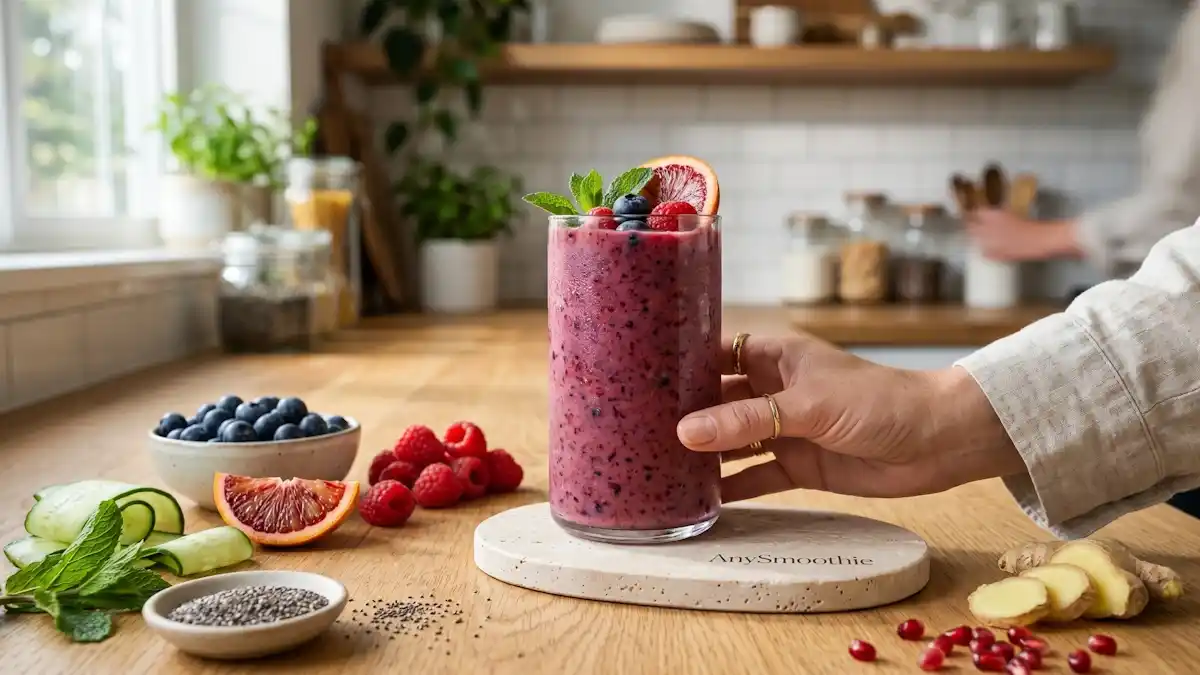
Plant exosome smoothies sound technical, but the idea is simple. You’re blending plant foods that may support how cells talk to each other, while also making a drink that fits real life.
That matters if you want cleaner recovery nutrition, lighter meals, or a smarter daily routine. The best versions are colorful, easy to digest, and built from whole ingredients that work well together. Here’s how plant exosomes fit into that picture, and how to turn the idea into a usable smoothie habit.
What plant exosomes are and why they matter for cellular communication
Plant exosomes are tiny, membrane-bound cargo packets found in plants. A review in plant-derived exosome-like nanovesicles describes how these particles are being studied for transport and signaling roles inside plant systems.
They are not the same as standard nutrients. Fiber, vitamins, and polyphenols feed the body in direct ways, while exosome-like particles are being explored for how they may carry lipids, proteins, and RNA-related material. That makes them interesting in cellular communication, but the research is still developing.
The simple science behind exosomes in plants
Picture a message bubble with a small load inside it. That is close to how exosomes are often described. They are vesicle-like structures that can move biological material from one place to another.
In plants, these particles may help move signals across tissues. The details are still under study, so the safest way to read the science is as active exploration, not a finished answer.
Why people connect them with nutrient partitioning and recovery support
The appeal is practical. When a smoothie brings fruit, fats, and herbs together, people often see that as support for nutrient partitioning and metabolic efficiency. The drink feels organized, not scattered.
Plant exosome smoothies work best as food-first blends, not as medical promises.
That is why the topic keeps showing up in recovery nutrition conversations. The mix can feel lighter than a heavy meal, yet still give you a broad plant profile.
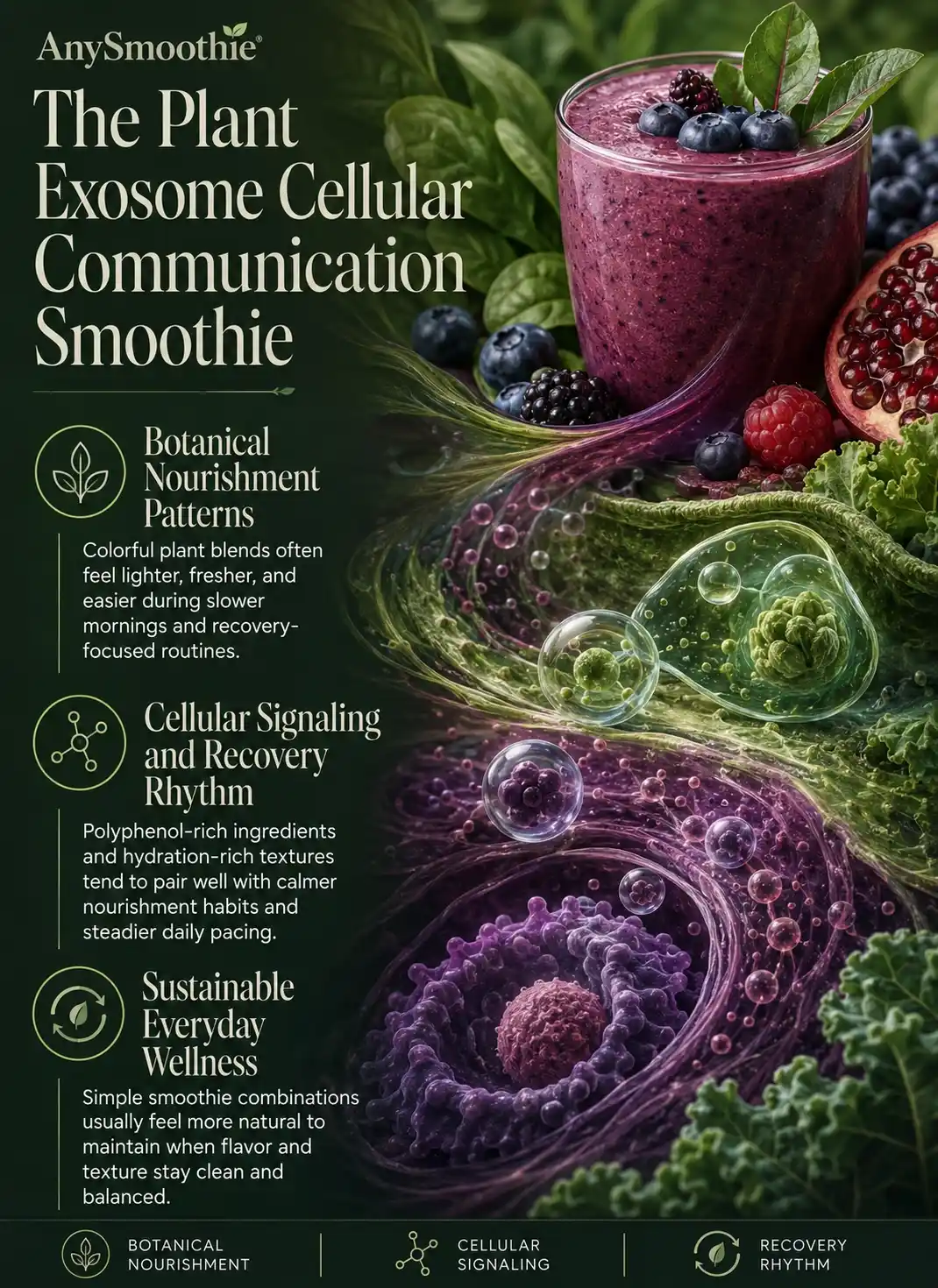
How smoothies can support the delivery of plant compounds
Smoothies are useful because they hold a lot of plant material in one glass. That matters when you want a routine that is easy to repeat. It also matters because blending changes texture, which can make certain plant compounds feel easier to consume.
A useful way to think about this is liposomal transport, where fats help move compounds through a system. Smoothies do not copy that process exactly, but they can use a similar logic. Add a little fat, keep the acid balanced, and the blend often feels smoother and more stable. A recent review on advancements in plant-derived exosome-like vesicles also points to their role in moving biological cargo, which is why the format gets so much attention.
Which ingredients work well together in a plant-forward blend
Bright fruits bring color and polyphenols. Hemp hearts add creaminess and help soften sharp citrus notes. Herbs like basil keep the flavor clean instead of syrupy.
That mix also gives the smoothie a better mouthfeel. A thinner blend may feel refreshing, while a richer one can support a more balanced finish.
What to look for in texture, freshness, and flavor balance
Start with acidity, sweetness, and creaminess. If the smoothie tastes too sharp, add more fruit or hemp hearts. If it feels too heavy, use frozen fruit, citrus, or more water.
Fresh herbs need special care. Basil can lift the whole drink, but old leaves make the flavor flat fast. Good texture usually comes from frozen fruit, a small amount of fat, and a short ingredient list.
Botanical Blends and Everyday Recovery
The ingredients below show how color, texture, and botanical flavor can line up in one glass. A newer paper on mechanistic insights into plant-derived exosomes adds more context to the communication angle.
| Functional Ingredient | Nutrition Context | Wellness Role | Ingredient Source | Everyday Use |
|---|---|---|---|---|
| Dragon Fruit | Bright phytonutrient density | Adds lighter texture | Tropical fruit | Common in colorful blends |
| Blood Orange | Citrus polyphenols | Brings sharper freshness | Whole citrus | Pairs well with berries |
| Passionfruit | Aromatic fruit acids | Creates brighter flavor contrast | Tropical pulp | Often used in lighter smoothies |
| Hemp Hearts | Creamier nutrient density | Softens fruit acidity | Seed-based fats | Adds smoother texture |
| Basil Leaves | Fresh herbal notes | Lifts botanical flavor profile | Fresh herbs | Used in refreshing blends |
Used together, these ingredients make the smoothie feel more complete. The fruit brings color and acid, the seeds add balance, and the herbs keep the finish bright.
3 Plant exosome smoothies
Tropical Signal Smoothie with Dragon Fruit and Hemp Hearts
Ingredients
- 1 cup dragon fruit, cubed
- 1/2 cup frozen mango
- 2 tablespoons hemp hearts
- 1 tablespoon fresh lime juice
- 3/4 cup cold water
Blend until smooth. The result is bright, light, and easy to drink.
Dragon fruit gives the color a clean look, while hemp hearts add a creamy edge. The lime note keeps the blend sharp enough to feel fresh.
Estimated Nutrition per Serving
Estimated with 1 cup dragon fruit, 1/2 cup frozen mango, 2 tablespoons hemp hearts, and 1 tablespoon lime juice.
- Calories: ~260 kcal
- Protein: ~9 g
- Carbohydrates: ~40 g
- Fat: ~10 g
- Fiber: ~8 g
- Sugars: ~27 g
Hemp hearts soften the tropical sharpness without making the smoothie heavy. Blend them with the water first if you prefer a more uniform, less seed-like texture.
Citrus Berry Communication Blend with Blood Orange
Ingredients
- 1 medium blood orange, peeled
- 1 cup mixed berries
- 3/4 cup plain low-fat kefir or coconut yogurt
- 1/2 cup ice
- 2–4 tablespoons water, as needed
Blend until smooth.
This blend feels vivid and crisp. It works well when you want a sharper fruit profile and a polyphenol-rich mix from whole foods.
Estimated Nutrition per Serving
Estimated with 1 blood orange, 1 cup mixed berries, and 3/4 cup plain low-fat kefir.
- Calories: ~285 kcal
- Protein: ~12 g
- Carbohydrates: ~50 g
- Fat: ~5 g
- Fiber: ~10 g
- Sugars: ~33 g
Blood oranges vary noticeably in sweetness and acidity. Taste the fruit before adding extra water, because a particularly juicy orange may already provide enough liquid for the berries.
Herbal Passionfruit Smoothie with Basil and Tropical Fruit
Ingredients
- 1/2 cup passionfruit pulp
- 1 cup pineapple chunks
- 6 fresh basil leaves
- 3/4 cup unsweetened coconut water
- 1/2 cup ice, optional
Combine and blend until smooth. Add ice if you want a lighter finish.
The basil lifts the aroma and keeps the drink from turning overly sweet. Passionfruit gives the acidity, so the smoothie stays lively.
Estimated Nutrition per Serving
Estimated with 1/2 cup passionfruit pulp, 1 cup pineapple, 6 basil leaves, and 3/4 cup unsweetened coconut water.
- Calories: ~210 kcal
- Protein: ~4 g
- Carbohydrates: ~50 g
- Fat: ~2 g
- Fiber: ~12 g
- Sugars: ~32 g
How to make your smoothie routine more consistent
Keep the process simple. Frozen fruit saves time, and a short shopping list makes the habit easier to keep. Rotate your fruit each week, but keep the base formula steady.
Batch prep also helps. Portion fruit into freezer bags, wash herbs ahead of time, and keep hemp hearts within reach. Many people use smoothies at breakfast or after training because they fit busy schedules without much cleanup.
Conclusion
Plant exosome smoothies are best understood as a plant-forward way to combine colorful ingredients, cellular communication themes, and practical recovery nutrition. The science around exosome-like particles is still developing, but the food pattern is easy to use.
Start with one balanced recipe. Keep the texture light, the flavors clean, and the ingredients fresh. That simple habit is easier to repeat, and repetition is what makes the routine worth keeping.
🛡️ Safety Notes & Dietary Interactions
- Botanical Diversity and Cellular Signaling Support: Plant-based smoothies work best when they combine multiple ingredient categories instead of relying on one “superfood.” Greens, berries, seeds, herbs, and roots each contribute different phytonutrients, fibers, and minerals that help create a broader nutritional environment associated with steadier cellular communication and metabolic balance.
- Hydration Stability and Nutrient Delivery Dynamics: Smoothies naturally combine fluids with fiber-rich foods, which may support smoother digestion and steadier nutrient pacing across the day. Chia, flax, fruit fiber, and balanced liquid bases help slow sugar release and create a more sustained energy curve compared to juice-heavy blends that digest rapidly.
- Polyphenol Density and Oxidative Balance Coordination: Blueberries, broccoli sprouts, spinach, ginger, and colorful plant compounds are commonly discussed in relation to antioxidant activity and broader oxidative balance pathways. Rotating these foods through repeatable smoothie routines may help support a steadier nutritional pattern without depending on extreme ingredient stacking or overly sweet formulas.
- Balanced Texture and Satiety Communication Patterns: Pairing fruit with yogurt, seeds, nut butters, or healthy fats generally creates a more stable and satisfying smoothie structure than fruit alone. This slower digestive profile may help support steadier satiety and more predictable energy pacing while also improving texture and flavor balance.
FAQ
What does “plant exosome smoothies” actually mean in simple terms?
The phrase refers to smoothies built around whole plant foods connected to discussions about cellular communication and plant-derived vesicle research. In practical wellness terms, the idea is less about “activating exosomes” directly and more about supporting the body with layered nutrients, hydration, fiber, and diverse phytonutrients through consistent whole-food habits.
Why are broccoli sprouts and blueberries used so often in these blends?
Broccoli sprouts provide sulfur-rich plant compounds tied to cellular defense discussions, while blueberries contribute polyphenols associated with oxidative balance and recovery-oriented nutrition patterns. Together, they create a nutrient-dense combination that supports both flavor and broader plant diversity without making the smoothie excessively sweet.
How do chia seeds improve a plant-based wellness smoothie?
Chia seeds absorb liquid and form a thicker gel-like texture that helps slow digestion and improve satiety. They also contribute fiber and healthy fats that may support steadier energy pacing and smoother nutrient delivery compared to thinner fruit-only smoothies that digest quickly and often feel less filling.
Why is simplicity emphasized instead of using dozens of ingredients?
The article repeatedly stresses that realistic routines matter more than chasing perfect formulas. Overloading smoothies with too many ingredients can flatten flavor, complicate digestion, and make the habit harder to maintain consistently. Simple blends built around greens, berries, hydration, and a few supportive additions usually feel easier to repeat long term.
Why do smoothies work better alongside sleep, movement, and regular meals?
Smoothies are presented as supportive tools rather than standalone solutions. Sleep quality, stress load, hydration, movement, and overall meal structure all influence how the body handles nutrients and energy. A balanced smoothie fits best inside a broader lifestyle rhythm where recovery, nourishment, and consistency work together across the full day.

Medical Disclaimer: AnySmoothie content is for educational purposes only and is not a substitute for professional medical advice. Consult a healthcare provider for personalized guidance. See our full Disclaimer & Terms of Use. AI Transparency: AnySmoothie may use AI to support content development. All content undergoes human editorial review for accuracy, clarity, and editorial quality. See our full AI Transparency.