
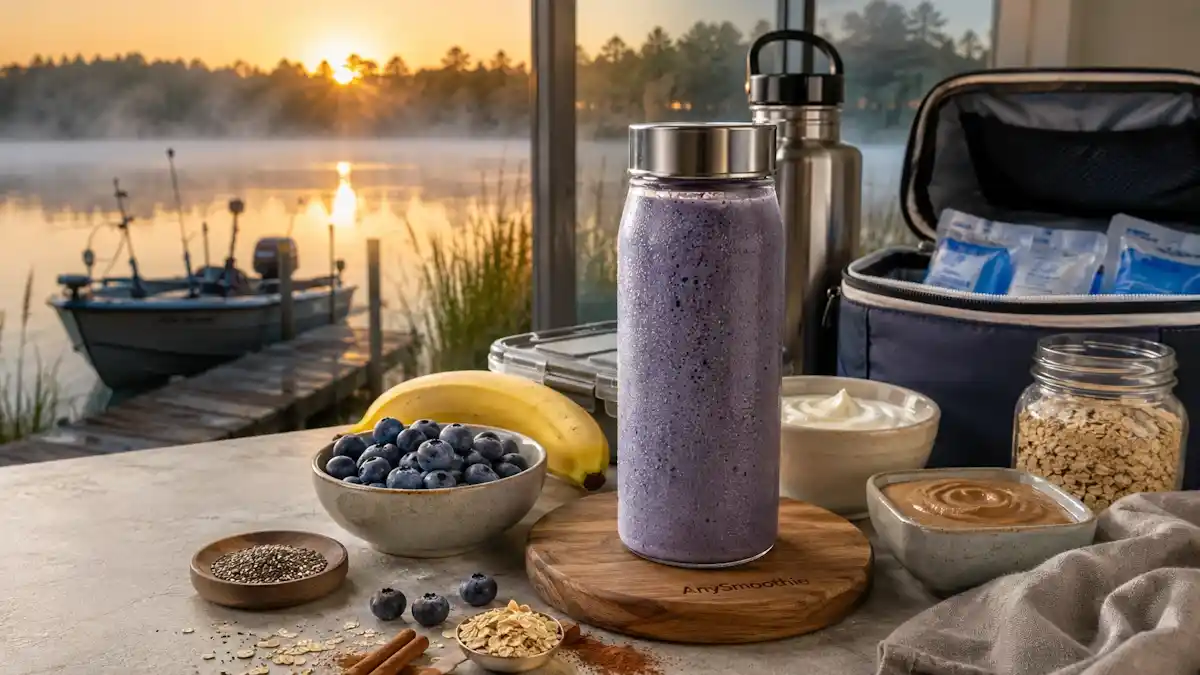
A predawn launch and a full tackle box don’t leave much room for a proper breakfast. Smoothies for fishing trips give you a cold, portable meal that you can drink between casts, without a stove or messy prep on the boat.
When you blend ahead, each bottle can bring carbohydrates, protein, fluids, and fats in a portion that fits your day. The trick is choosing ingredients that stay tasty in a cooler and packing them safely.
How to Make and Pack Smoothies for a Fishing Trip
Blend smoothies the night before and pour them into clean, leakproof bottles. Leave about an inch of space at the top if you plan to freeze them, since liquid expands. Label each bottle with the flavor and date, especially if several people are fishing together.
A frozen smoothie can thaw gradually in a well-packed cooler. If you prefer a fresher texture, refrigerate the bottles overnight instead. Keep dairy-based smoothies at 40 F or below with plenty of ice packs. The USDA’s food safety temperature guidance explains why cold storage matters for perishable foods.
Discard perishable smoothies after two hours at room temperature, or after one hour when temperatures rise above 90 F. Keep the cooler closed between drinks and place bottles directly against ice packs.
Choose Ingredients That Travel Well
Frozen fruit, oats, yogurt, nut or seed butter, shelf-stable milk, and coconut water hold up well after chilling or thawing. Freeze fruit instead of relying on ice cubes, because melting ice can leave a smoothie thin and bland.
Fresh leafy greens can darken overnight, although they remain usable when properly chilled. Pack granola, toasted seeds, or other crunchy toppings separately so they don’t soften in the bottle. Also check packaged ingredients for added sugar, sodium, and allergens before loading the cooler.
This quick comparison helps match your smoothie to the day’s conditions.
| Smoothie | Main Ingredients | Best For | Approximate Protein | Packing Notes |
|---|---|---|---|---|
| Berry Oat | Berries, banana, oats, Greek yogurt | Early morning fuel | Est. 15 to 18 g | Thickens overnight, pack extra milk |
| Tropical Coconut | Mango, banana, coconut water, yogurt or tofu | Warm, active days | Est. 10 to 16 g | Freeze partially for a colder drink |
| Peanut Butter Banana | Banana, peanut butter, milk, Greek yogurt | Longer trips and bigger appetites | Est. 18 to 22 g | Shake well after thawing |
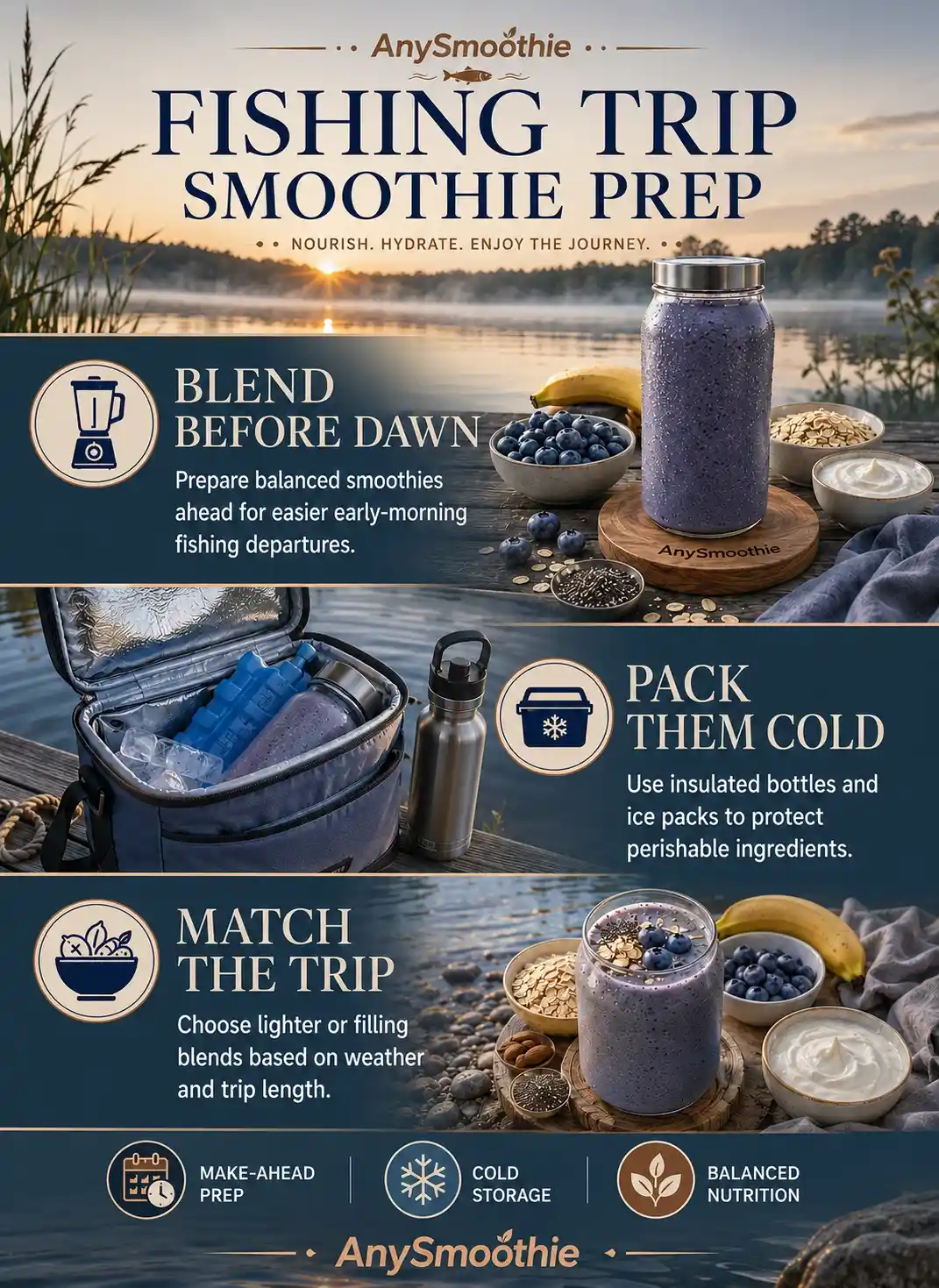
3 Smoothies for Fishing Trips
These three smoothies use familiar grocery-store ingredients and make about one 16-ounce serving each. Berry oat works well for early starts, tropical coconut suits warm weather, and peanut butter banana has more staying power when lunch is hours away.
Berry Oat Smoothie for Steady Morning Fuel
Ingredients:
- 1 cup frozen mixed berries
- 1 small banana
- 1/3 cup rolled oats
- 1/2 cup plain Greek yogurt
- 3/4 cup milk
- 1 teaspoon chia seeds, if desired
Blend for 45 to 60 seconds, then add a splash of milk if the mix is too thick.
Fruit and oats provide carbohydrates, which your body breaks down into glucose for normal energy production. Greek yogurt adds protein, helping make the smoothie more substantial for an early breakfast. For a silkier drink, blend the oats with milk first, then add the remaining ingredients. For easier predawn preparation, these smoothie storage tips for meal prep can help streamline the night-before routine.
Estimated Nutrition per Serving
Estimated with 2% milk, plain nonfat Greek yogurt, and the optional chia seeds.
- Calories: ~440 kcal
- Protein: ~22 g
- Carbohydrates: ~75 g
- Fat: ~9 g
- Fiber: ~12 g
- Sugars: ~36 g
This blend gets noticeably thicker after sitting because both oats and chia continue absorbing liquid. If you’re packing it for later, make it slightly thinner than you normally would so it’s still easy to drink when you open the bottle.
Tropical Coconut Smoothie for Warm, Active Days
Ingredients:
- 1 cup frozen mango or pineapple
- 1 small banana
- 3/4 cup coconut water
- 1/2 cup Greek yogurt or silken tofu
- 1 teaspoon fresh lime juice
Add 1/4 cup water if your blender needs more liquid.
The fruit supplies carbohydrates, while coconut water adds fluid plus electrolytes such as potassium. Those minerals participate in normal fluid balance and muscle function. Skip sweetened yogurt or extra honey because ripe fruit already brings plenty of sweetness. This lighter option is easy to sip after several hours in the sun, especially when a heavy breakfast doesn’t sound appealing. For another fruit-forward variation, try this tropical mango coconut smoothie.
Estimated Nutrition per Serving
Estimated with frozen mango, plain nonfat Greek yogurt, and unsweetened coconut water.
- Calories: ~310 kcal
- Protein: ~13 g
- Carbohydrates: ~67 g
- Fat: ~1 g
- Fiber: ~6 g
- Sugars: ~49 g
Peanut Butter Banana Smoothie for a More Filling Option
Ingredients:
- 1 large banana
- 2 tablespoons peanut butter
- 3/4 cup milk
- 1/2 cup Greek yogurt or protein-rich tofu
- 1/4 teaspoon cinnamon
Add 1 teaspoon unsweetened cocoa powder or ground flaxseed for a deeper flavor.
Banana provides carbohydrates, while peanut butter and Greek yogurt add fat and protein that make the smoothie more substantial. That combination may suit a long ride to a fishing spot or a day when meals are spread out. Use sunflower seed butter instead of peanut butter when sharing a cooler with someone who has a nut allergy.
Estimated Nutrition per Serving
Estimated with 2% milk, plain nonfat Greek yogurt, and without the optional cocoa or flaxseed.
- Calories: ~455 kcal
- Protein: ~25 g
- Carbohydrates: ~53 g
- Fat: ~19 g
- Fiber: ~6 g
- Sugars: ~31 g
Peanut butter and yogurt make this one naturally dense, especially after refrigeration. If you’re taking it on a long trip, packing a little extra milk separately makes it easy to loosen the texture without watering down the flavor.
A smoothie with more fat or oats usually thickens as it chills, so pack a little extra milk or coconut water for easy sipping later.
Simple Ways to Customize Fishing Trip Smoothies
For a short morning trip, use a 10- to 12-ounce bottle and keep the recipe lighter. On a long day, pair your smoothie with whole-grain crackers, boiled eggs, trail mix, or fresh fruit. A drink alone may not cover every meal break.
Add more oats, yogurt, or nut butter when you want a thicker, more filling bottle. In contrast, extra milk, water, or coconut water makes a smoothie easier to drink while standing on a dock or working a rod.
Smoothies for fishing trips should complement regular water intake, not replace it. For another warm-weather option, these hydration smoothies for summer fatigue offer additional fruit-and-fluid combinations. On hot days, pack plain water separately and drink it throughout the trip.
Conclusion: A Better Boat Breakfast Starts Before You Leave
Berry oat, tropical coconut, and peanut butter banana smoothies each fit a different kind of fishing day. Prepare bottles ahead, use leakproof containers, and keep every perishable ingredient cold until you’re ready to drink it.
Make one test batch before your trip. You can then adjust the texture, sweetness, and portion size before the cooler goes in the truck.

Medical Disclaimer: AnySmoothie content is for educational purposes only and is not a substitute for professional medical advice. Consult a healthcare provider for personalized guidance. See our full Disclaimer & Terms of Use. AI Transparency: AnySmoothie may use AI to support content development. All content undergoes human editorial review for accuracy, clarity, and editorial quality. See our full AI Transparency.