
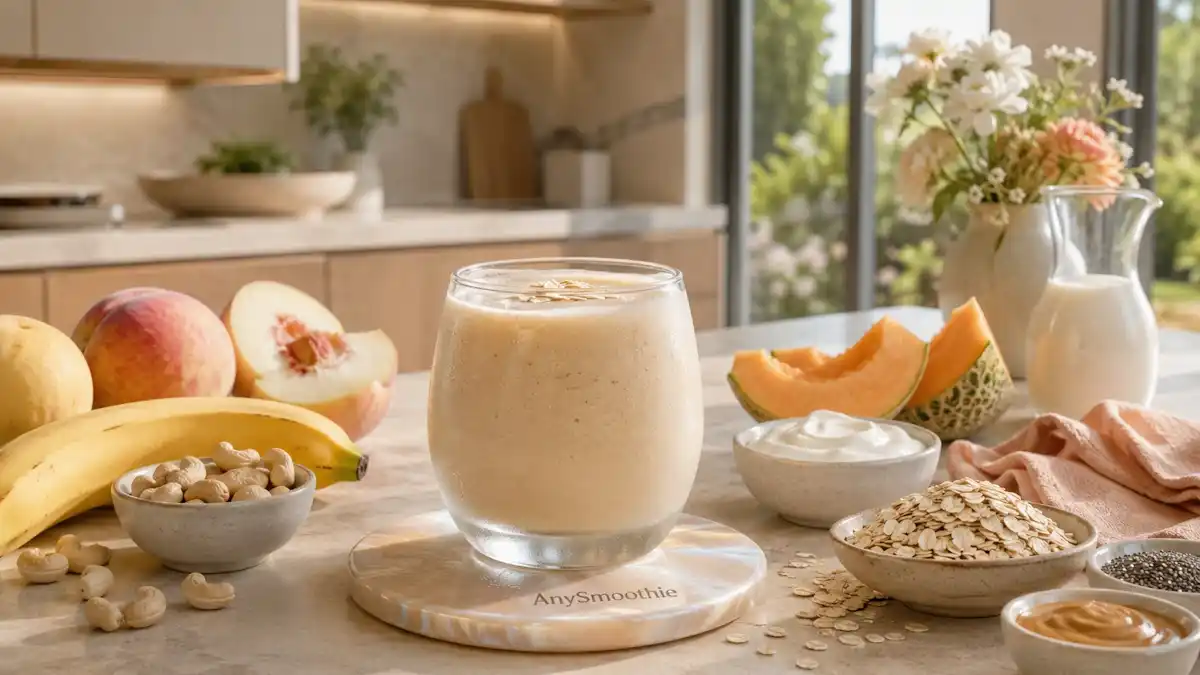
A smoothie can make a supplement routine easier to keep, especially when it also delivers protein, fiber, and produce. An inositol smoothie for brain wellness is a practical breakfast or snack option for people who want steady energy and nutrient-dense ingredients in one glass.
Inositol supports normal cellular signaling, but it does not treat a medical condition or replace professional care. These recipes keep expectations realistic while covering smart ingredient choices, blending methods, and supplement safety.
How an Inositol Smoothie Supports Brain Wellness
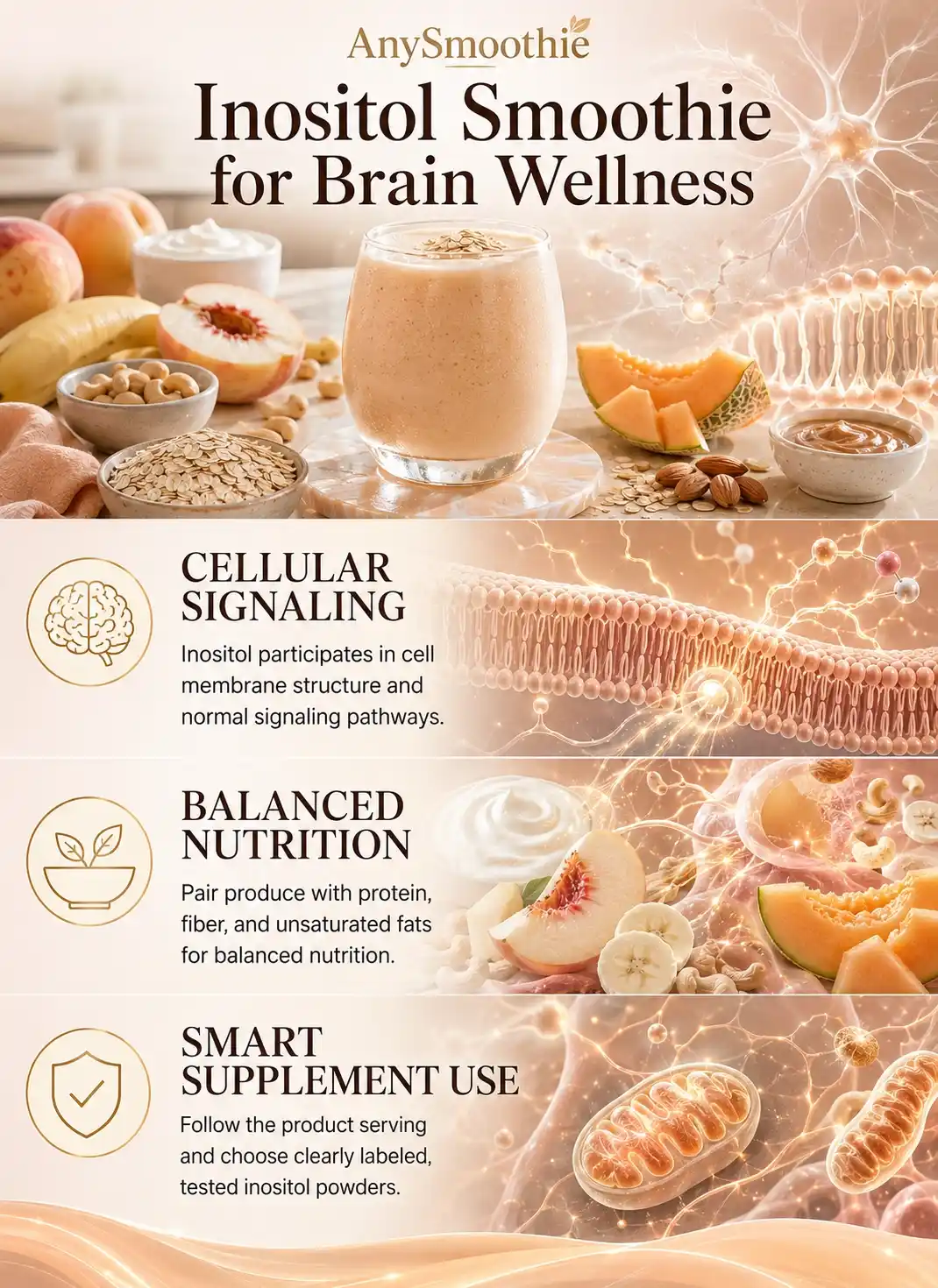
Inositol is a naturally occurring carbohydrate-like compound found in the body and in foods such as beans, grains, fruits, and nuts. It contributes to cell membrane structure and cellular signaling, including pathways involving chemical messengers in the brain. Cleveland Clinic’s overview of inositol explains its role in normal cell growth and function.
An inositol smoothie for brain wellness combines a labeled serving of powder with foods that support overall nutrition. Protein, fiber, and fats can make the drink more satisfying than fruit and juice alone. Research on distinct brain-related outcomes varies, so treat the smoothie as food-first support rather than a medical formula.
Choose a plain powder with a clear Supplement Facts panel, preferably with credible independent third-party testing. Check whether it contains myo-inositol alone or a blend of forms before adding it to your routine.
Choose ingredients that support steady focus and energy
Build the smoothie around whole ingredients. Berries and leafy greens provide plant compounds, while plain Greek yogurt or unsweetened soy milk add protein. Chia seeds and ground flax contribute fiber and unsaturated fats. Cinnamon or unsweetened cocoa adds flavor without syrup.
Pairing carbohydrate-containing fruit with protein and fiber may slow the pace of digestion and help the drink feel more filling. For more ideas, use these fruit and vegetable smoothie combinations as a flexible starting point.
A reliable formula is:
- Liquid, such as unsweetened milk, soy milk, water, or coconut water.
- Produce, including berries, citrus, spinach, cucumber, or avocado.
- Protein, healthy fat, and one labeled serving of inositol powder.
How much inositol belongs in a smoothie?
Follow the product label instead of copying high-dose protocols intended for unrelated purposes. Powders vary by serving size, and myo-inositol products may differ from blends that include other forms.
Start with the labeled serving. First mix the powder into a small amount of liquid, then blend it with the remaining ingredients. Stop if you develop digestive discomfort.
People who are pregnant, breastfeeding, managing a health condition, or taking medication should ask a qualified healthcare professional before using an inositol supplement.
3 Inositol Smoothies for Brain Wellness
These recipes are flexible nutrition ideas, not medical formulas. Add more liquid for a thinner drink, or use frozen produce and ice for a thicker one.
Berry, Spinach, and Yogurt Inositol Smoothie
This protein-rich option has a fresh berry flavor and a creamy finish.
Ingredients:
- 3/4 cup unsweetened milk
- 1 packed cup baby spinach
- 1 cup frozen blueberries or mixed berries
- 1/2 cup plain Greek yogurt
- 1 teaspoon chia seeds
- 1 labeled serving of inositol powder
Blend the greens with the liquid first, then add the remaining ingredients.
Frozen fruit creates a thick texture without ice. Yogurt also gives the smoothie more staying power. For other protein-focused combinations, these protein-rich smoothie recipes offer additional ways to pair fruit with satisfying protein sources. For a dairy-free version, use unsweetened soy yogurt and soy milk.
Estimated Nutrition per Serving
Estimated with unsweetened 2% dairy milk, plain nonfat Greek yogurt, mixed berries, and chia seeds. Inositol calories may vary by product and labeled serving.
- Calories: ~290 kcal
- Protein: ~20 g
- Carbohydrates: ~40 g
- Fat: ~7 g
- Fiber: ~8 g
- Sugars: ~24 g
Frozen berries can make this considerably thicker than expected once the Greek yogurt is added. Blending the spinach and milk first really does help here—it keeps stray pieces of greens from showing up in an otherwise creamy drink.
Cocoa, Banana, and Almond Butter Inositol Smoothie
Ingredients:
- 3/4 cup unsweetened milk
- 1/2 frozen banana
- 1 tablespoon unsweetened cocoa powder
- 1 tablespoon almond butter
- 1/2 cup plain yogurt or silken tofu
- 1 labeled serving of inositol powder
Cocoa and banana bring flavor without flavored syrups. Almond butter adds richness and fat, while tofu is a useful dairy-free protein choice. Add ice or frozen cauliflower for extra thickness. Check flavored milks and nut butters for added sugar before buying.
Estimated Nutrition per Serving
Estimated with unsweetened 2% dairy milk, plain low-fat yogurt, and regular unsweetened almond butter. Inositol calories may vary by product and labeled serving.
- Calories: ~330 kcal
- Protein: ~17 g
- Carbohydrates: ~36 g
- Fat: ~15 g
- Fiber: ~6 g
- Sugars: ~20 g
Citrus, Avocado, and Flax Inositol Smoothie
Ingredients:
- 1 peeled orange
- 1/4 avocado
- 1 tablespoon ground flaxseed
- 1/2 cup cucumber or spinach
- 3/4 cup unsweetened coconut water or water
- Fresh ginger, to taste
- 1 labeled serving of inositol powder
Avocado and flax give this inositol smoothie for brain wellness a silky texture and more fiber. Citrus keeps the flavor bright, while ginger adds a sharp, fresh note.
Estimated Nutrition per Serving
Estimated with cucumber and unsweetened coconut water. Inositol calories may vary by product and labeled serving.
- Calories: ~235 kcal
- Protein: ~5 g
- Carbohydrates: ~37 g
- Fat: ~9 g
- Fiber: ~10 g
- Sugars: ~21 g
Fresh ginger changes this smoothie quickly, so a small piece is enough for the first blend. Taste before adding more—the orange should still be the first flavor you notice, with the ginger staying in the background.
Grapefruit can interact with some prescription medicines. Choose orange or another fruit unless a healthcare professional confirms grapefruit is appropriate for you.
How to Choose, Use, and Compare an Inositol Smoothie
Each recipe has a different texture and nutrition profile, so rotate them based on appetite and available ingredients.
| Smoothie | Main nutrition strengths | Best texture | Approximate sweetness | Easy substitution |
|---|---|---|---|---|
| Berry, spinach, and yogurt | Protein, fiber, berries | Thick and creamy | Mild | Use soy yogurt |
| Cocoa, banana, and almond butter | Protein, healthy fats | Milkshake-like | Medium | Use silken tofu |
| Citrus, avocado, and flax | Fiber, unsaturated fats | Light and silky | Mild to medium | Use berries for citrus |
The berry blend works well when you want more protein. Choose cocoa-banana when a richer flavor helps you skip added sweeteners. Citrus-avocado suits people who prefer a fresher, less dessert-like drink.
Simple preparation and storage tips
Blend and drink your smoothie soon after making it. If you save leftovers, refrigerate them in a sealed container and drink within a day. Shake or re-blend after storage because separation is normal.
Avoid using smoothies to replace every meal unless a professional has advised it. Common issues include adding too much powder, relying on excess fruit, skipping protein, or overlooking food allergies and sensitivities.
Who should use extra caution with inositol supplements?
Check with a healthcare professional before supplementation during pregnancy or breastfeeding, for children, with kidney or liver concerns, or when taking prescription medication. Mild side effects can include nausea, diarrhea, abdominal discomfort, headache, fatigue, or dizziness.
A review of myo-inositol safety data describes mild gastrointestinal effects at higher intakes. Choose reputable products with clear ingredient and testing information.
Conclusion: A Balanced Way to Use Inositol
An inositol smoothie for brain wellness can pair a labeled supplement serving with produce, protein, fiber, and healthy fats. Start with one recipe, keep added sugar low, and pay attention to how the blend fits your regular meals. For a broader approach to balancing produce, protein, fiber, and liquids, see the functional smoothie guide.
Supplements do not replace sleep, hydration, movement, balanced eating, or medical care. A simple smoothie with a solid protein source is a sensible place to begin.
🛡️ Safety Notes & Dietary Interactions
- Supplement Dosing: Inositol powders vary in concentration, form, and suggested serving size. Use the amount specified on your product rather than borrowing doses from clinical studies or combining multiple inositol-containing supplements without professional guidance.
- Digestive Tolerance: Inositol can cause nausea, diarrhea, or abdominal discomfort in some people, particularly at higher intakes. Begin according to label directions and stop or reassess use if gastrointestinal symptoms become persistent.
- Medication and Health Conditions: Regular inositol supplementation deserves additional caution when prescription medications or existing health conditions are involved. Discuss supplementation with a qualified clinician or pharmacist rather than assuming a food-based smoothie prevents potential interactions.
- Pregnancy and Breastfeeding: Inositol has been studied in pregnancy-related contexts, but that does not make unsupervised supplementation appropriate for everyone. Pregnancy and breastfeeding warrant individualized advice about the specific product, form, dose, and duration of use.
FAQs
What type of inositol should I use in a smoothie?
Myo-inositol is commonly available as a plain powder, while some supplements combine it with other inositol forms. Rather than assuming the products are interchangeable, read the Supplement Facts panel and follow its directions. Choose a clearly labeled product from a reputable manufacturer, preferably with credible independent testing and without unnecessary sweeteners or proprietary blends.
Does blending inositol with food reduce its effectiveness?
The article does not establish that ordinary smoothie blending makes inositol ineffective. Powder can be dissolved in a small amount of liquid before adding the remaining ingredients, which helps distribute it evenly. More importantly, follow the individual product’s preparation instructions if they specify how the supplement should be mixed or taken with food.
Which of these inositol smoothies is best for breakfast?
The berry, spinach, and yogurt version provides the clearest breakfast-style balance because Greek yogurt contributes protein while berries, spinach, and chia add produce and fiber. If you need a more substantial breakfast, adjust the overall meal rather than increasing the inositol dose. The supplement serving should remain based on its label directions.
Can I put inositol in a smoothie every day?
Daily use depends on the specific supplement, its labeled directions, your diet, and individual circumstances. Using inositol in a smoothie does not automatically make long-term supplementation necessary or appropriate. If you intend to take it regularly—particularly alongside medication or for a specific health objective—discuss the routine with an appropriate healthcare professional.
Will an inositol smoothie improve focus or brain performance?
There is not enough evidence to promise that adding inositol to a smoothie will noticeably improve focus, memory, or cognitive performance in a healthy person. Inositol participates in normal cellular signaling, but that biochemical role should not be translated into a guaranteed brain benefit. Sleep, nutrition, hydration, activity, and overall health remain important foundations.

Medical Disclaimer: AnySmoothie content is for educational purposes only and is not a substitute for professional medical advice. Consult a healthcare provider for personalized guidance. See our full Disclaimer & Terms of Use. AI Transparency: AnySmoothie may use AI to support content development. All content undergoes human editorial review for accuracy, clarity, and editorial quality. See our full AI Transparency.