
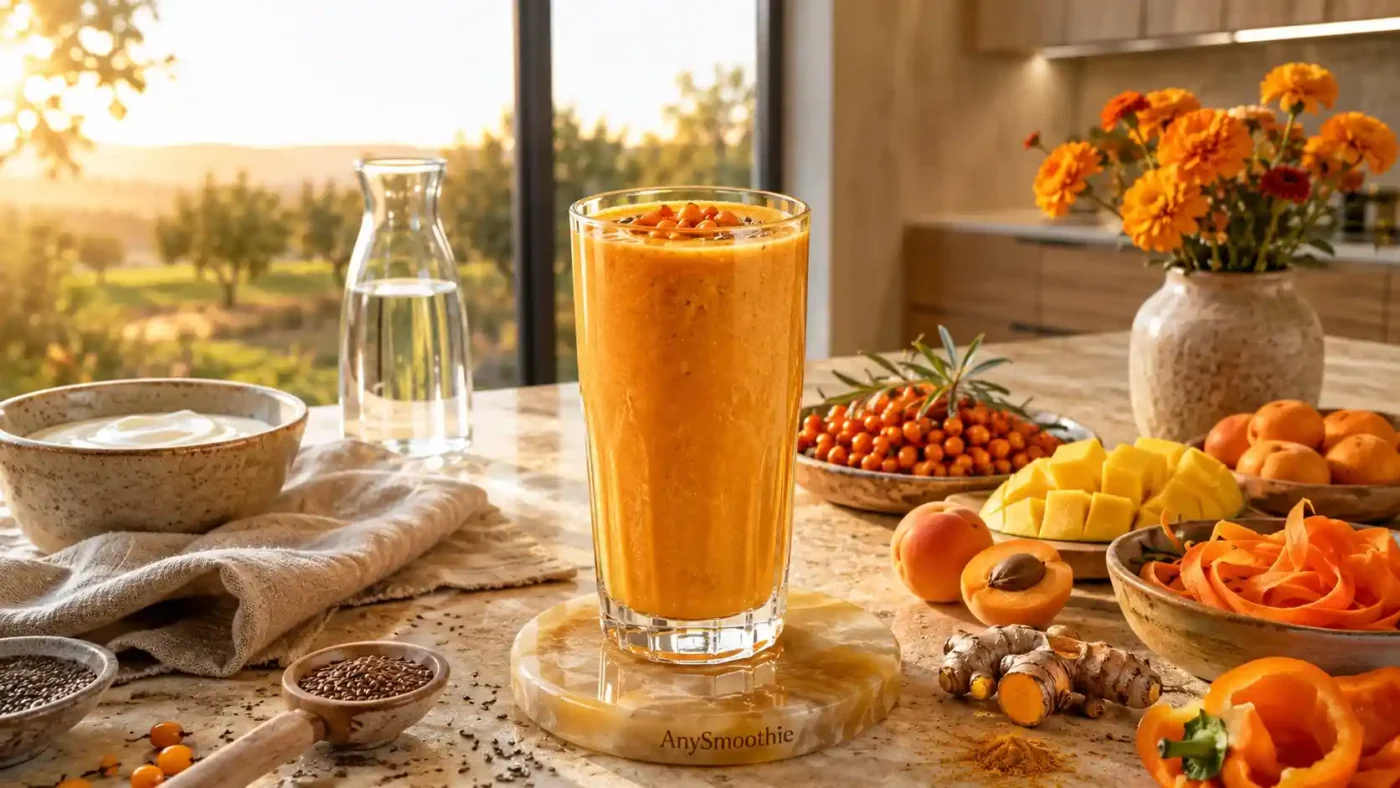
Sea buckthorn berries bring a vivid orange color and sharp, citrus-like flavor to smoothies. They also provide nutrients that fit a skin-supportive eating pattern, including vitamin C, carotenoids, polyphenols, and fatty acids.
Sea buckthorn smoothies for skin wellness can support hydration, antioxidant defenses, the skin barrier, and normal collagen formation. They won’t treat acne, eczema, dryness, or wrinkles, and they can’t replace a varied diet, sleep, sun protection, or daily skin care. Still, the right blend can make nutrient-dense eating easier.
The three recipes below show how to balance sea buckthorn’s tartness with creamy ingredients, fiber, protein, and naturally sweet produce.
How Sea Buckthorn Supports Skin Wellness From the Inside
Sea buckthorn berries and their oils contain several compounds linked with normal physiological functions. Their exact profile depends on the plant variety, growing conditions, processing method, and product format. A Research review of sea buckthorn nutrition describes its range of vitamins, carotenoids, polyphenols, fatty acids, and phytosterols.
Vitamin C supports collagen formation and normal immune function. Since the body uses collagen in connective tissue, getting enough vitamin C helps maintain the biochemical pathways involved in normal skin structure. Carotenoids act as plant pigments and antioxidants. Some can also contribute to vitamin A activity, depending on the specific compound and how the body converts it.
Vitamin E and certain Fatty acids support cell membranes and the skin barrier. A healthy barrier helps limit excessive water loss and keeps the outer layer functioning properly. Polyphenols add more antioxidant compounds to the diet, although the body doesn’t treat a smoothie as a direct shield against environmental stress.
The form you choose matters. Whole berries and purees keep more of the fruit’s structure, while juice usually contains less fiber. Oil contains concentrated fat-soluble compounds, but it doesn’t provide the same full-food profile as the berry. Research on oral sea buckthorn oil is still developing, so use it as a labeled product rather than a casual replacement for fruit. A 2024 study on oral sea buckthorn oil illustrates why product form and dose matter when interpreting research.
Sea buckthorn has an intensely tart flavor. Mango, yogurt, avocado, and unsweetened plant milk help create a smoother, more balanced blend.
Whole Berries, Juice, Puree, or Oil: Which Form Fits a Smoothie?
Whole berries offer fiber and a fuller food profile, but they may include seeds and astringent skin. Puree blends easily and gives a bold flavor with some fiber intact.
Juice is convenient, though it can contain less fiber and added sugar. Check the label for terms such as “unsweetened” and compare the ingredient list across brands.
Oil is highly concentrated. Follow the package directions, measure carefully, and don’t assume more is better. Color, acidity, consistency, and nutrient levels can vary between products, so start with a small amount of puree or berries until you know what your palate prefers.
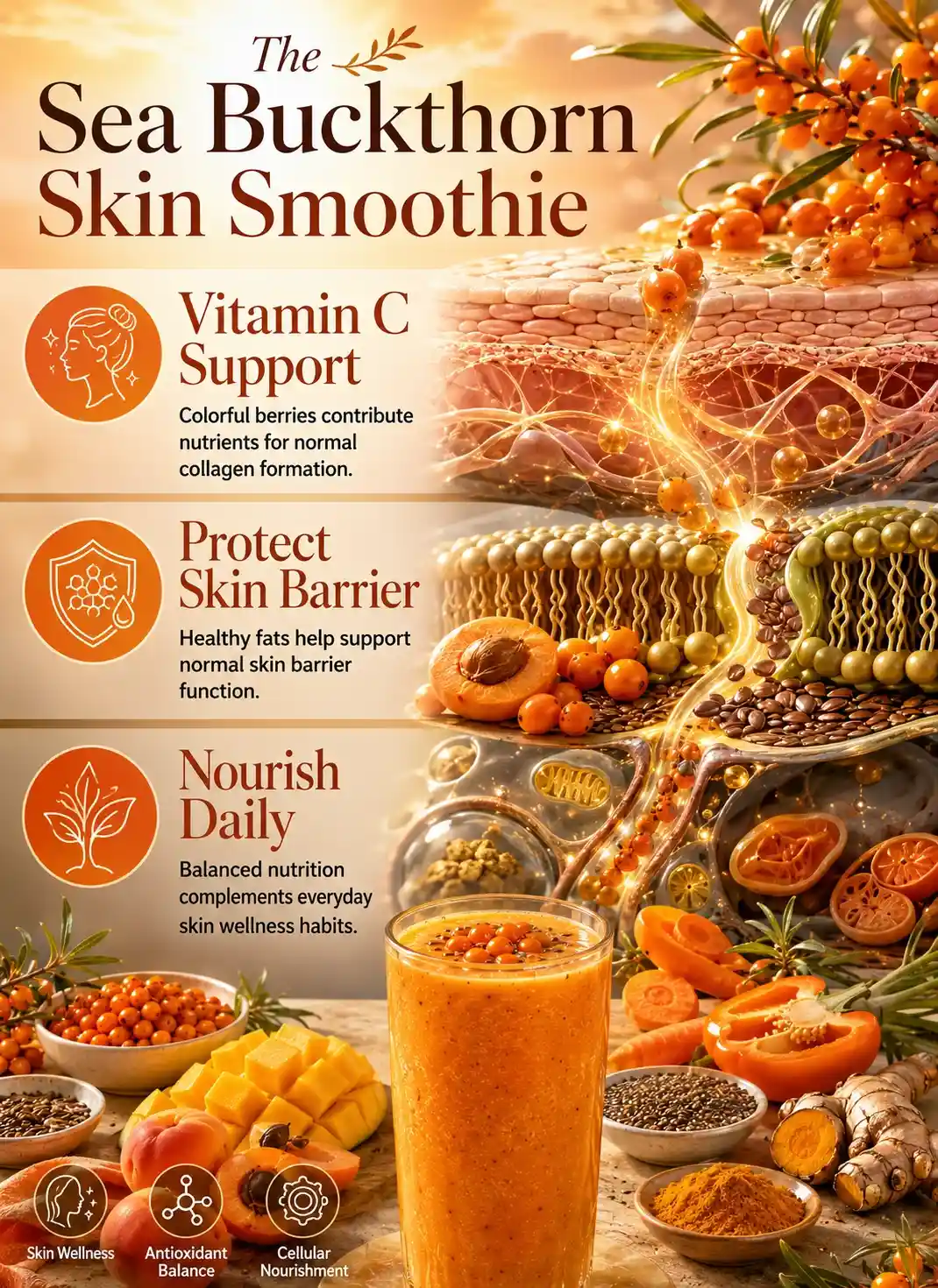
3 Sea Buckthorn Smoothies for Skin Wellness
These recipes add sea buckthorn to a balanced meal pattern. They aren’t medical treatments or substitutes for meals. For another recipe built around carotenoids, healthy fats, and protein, try this Best smoothie for glowing skin naturally.
| Smoothie | Main Ingredients | Flavor | Skin Wellness Nutrients | Best For |
|---|---|---|---|---|
| Mango Cream | Sea buckthorn, mango, yogurt, chia | Sweet, creamy, tart | Vitamin C, carotenoids, protein, fiber | First-time users |
| Berry Spinach | Sea buckthorn, berries, spinach, avocado | Fruity, fresh, lightly tart | Polyphenols, vitamin C, leafy-green nutrients, fats | Berry lovers |
| Golden Carrot Ginger | Sea buckthorn, carrot, orange, ginger, yogurt | Bright, warm, citrusy | Carotenoids, vitamin C, protein | A savory-leaning breakfast |
How to Choose Ingredients and Build a Skin-Friendly Smoothie Routine
Use a simple formula: one sea buckthorn component, one protein source, one fiber-rich ingredient, one fruit or vegetable, and a liquid without added sugar. Yogurt, soy milk, tofu, chia, flaxseed, oats, avocado, berries, and leafy greens all fit easily into that structure. Explore our Smoothies with fruits and vegetables guide for more balanced ingredient combinations.
Protein and fiber can make a smoothie more filling and support steadier energy after eating. Healthy fats also slow digestion and help create a richer texture. However, a smoothie with several juices and little protein may leave you hungry soon afterward.
Start with one serving a few times per week. If the acidity bothers your stomach, drink it with or after a meal rather than on an empty stomach. Rotate fruits, vegetables, seeds, and protein sources instead of relying on sea buckthorn every day.
Blend fresh when possible. If you save leftovers, pour them into a sealed container, refrigerate them promptly, and drink them within a short period. Separation is normal, so stir or shake before drinking.
Safety, Portion Size, and Common Smoothie Mistakes
Sea buckthorn has a sharp flavor and may cause stomach discomfort for some people, especially in large amounts. Begin with a small serving and stop if it doesn’t agree with you.
Follow package directions for sea buckthorn oils and supplements. Don’t treat oil as a casual substitute for whole fruit, since it lacks the berry’s fiber and may deliver concentrated compounds. Ask a qualified health professional about possible medication interactions, pregnancy, breastfeeding, allergies, or ongoing digestive concerns.
Common mistakes include adding too much puree, combining several sweet juices, skipping protein, and assuming one Smoothie can replace varied meals. A balanced blend supports your routine best when it complements ordinary food.
Conclusion
Sea buckthorn smoothies can add vitamin C, carotenoids, polyphenols, fiber, and supportive fats to an overall nourishing diet. Skin wellness depends on the full pattern, including hydration, sleep, sun protection, balanced meals, and daily care.
Start with the creamy mango version, then adjust the sea buckthorn amount to suit your taste. Choose whole-food ingredients with little added sugar, and rotate the berry, spinach, and golden carrot recipes through your routine.
🛡️ Safety Notes & Dietary Interactions
- Support Skin Nutrition, Not Skin Treatment: These smoothies provide vitamin C, carotenoids, healthy fats, protein, fiber, and plant compounds that support normal skin structure and overall nutrition. They are not treatments for acne, eczema, psoriasis, wrinkles, or other skin conditions.
- Choose the Right Sea Buckthorn Product: Whole berries and unsweetened purees provide fiber, while oils are concentrated products with different nutrient profiles. Follow package directions for sea buckthorn oils or supplements, and avoid assuming that larger amounts provide greater benefits.
- Adapt Recipes to Your Health Needs: If you have diabetes, kidney disease, food allergies, digestive disorders, are pregnant or breastfeeding, or take medications that may interact with supplements, discuss regular sea buckthorn products with a qualified healthcare professional before using them routinely.
- Start Slowly and Monitor Tolerance: Sea buckthorn has a naturally tart flavor and may cause digestive discomfort in some people. Begin with a small amount, increase gradually if well tolerated, and discontinue use if you experience persistent stomach upset or signs of an allergic reaction.
FAQs
What nutrients does sea buckthorn provide?
Sea buckthorn naturally contains vitamin C, carotenoids, vitamin E, polyphenols, healthy fatty acids, and other plant compounds. The exact nutrient profile varies depending on whether you use whole berries, puree, juice, or oil, as well as the growing conditions and processing methods.
Can sea buckthorn smoothies improve skin health?
Sea buckthorn smoothies can contribute nutrients involved in normal collagen formation, antioxidant defenses, and skin barrier function as part of a balanced diet. However, no smoothie has been proven to treat skin conditions or prevent visible skin aging on its own.
Should I use sea buckthorn berries, puree, juice, or oil?
Whole berries and unsweetened puree generally provide a more complete whole-food profile, including fiber. Juice is convenient but often contains less fiber, while oil delivers concentrated fat-soluble compounds and should be used according to the manufacturer’s recommended serving size.
Why combine sea buckthorn with protein and healthy fats?
Adding yogurt, soy yogurt, tofu, chia seeds, flaxseed, avocado, or other healthy fat and protein sources creates a more balanced smoothie. These ingredients improve texture, increase satiety, and help the smoothie function as part of a satisfying, nutrient-dense meal or snack.
Can I drink a sea buckthorn smoothie every day?
Yes. Sea buckthorn smoothies can be enjoyed regularly as part of a varied eating pattern. Rotating fruits, vegetables, protein sources, and healthy fats throughout the week helps promote dietary diversity and avoids relying too heavily on any single ingredient.

Medical Disclaimer: AnySmoothie content is for educational purposes only and is not a substitute for professional medical advice. Consult a healthcare provider for personalized guidance. See our full Disclaimer & Terms of Use. AI Transparency: AnySmoothie may use AI to support content development. All content undergoes human editorial review for accuracy, clarity, and editorial quality. See our full AI Transparency.