
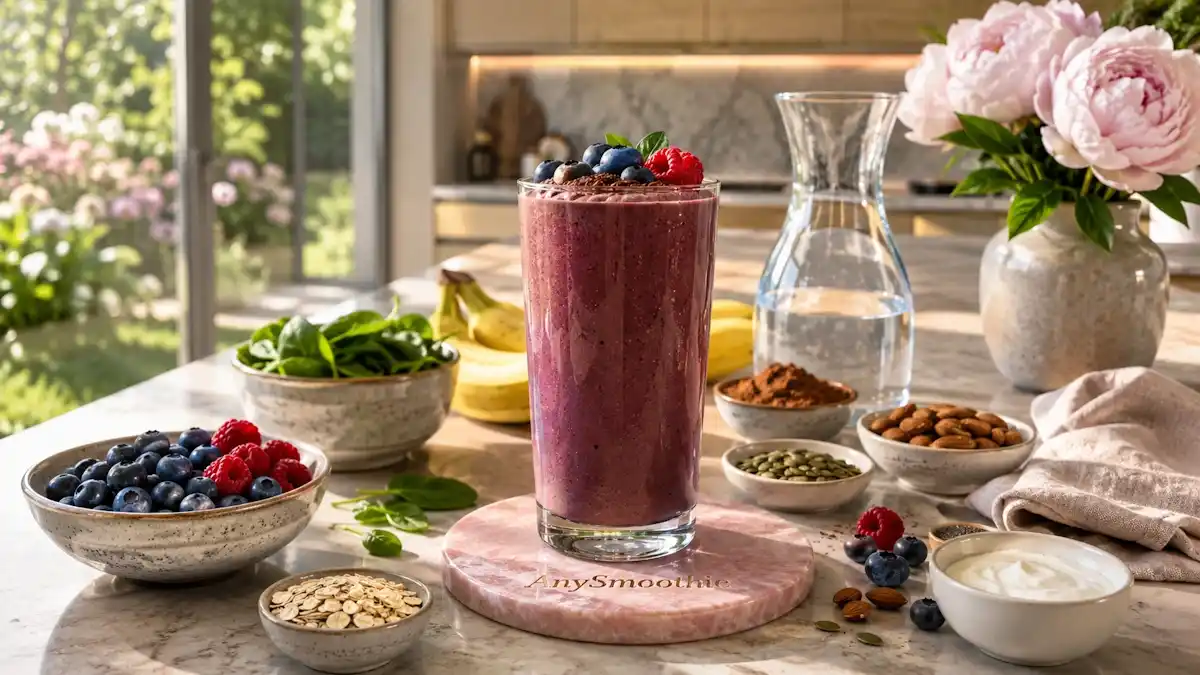
Cravings, bloating, low energy, mood shifts, and a sensitive stomach can make the days before a period feel unpredictable. Smoothies for PMS support give you a practical way to combine filling foods when cooking or eating a large meal sounds unappealing.
A blend won’t treat or cure PMS. However, ingredients such as fiber-rich fruit, protein, fluids, and mineral-containing seeds can support hydration, digestion, steady energy, and normal hormone-related body processes. Start with a recipe that sounds good enough to drink consistently.
How to Build Smoothies for PMS Support That Fit Your Body
A useful formula includes liquid, produce, protein, a fiber-rich carbohydrate, healthy fat, and optional flavor add-ins. For more flexible combinations, this Functional smoothie guide can help you adjust thickness and ingredients around what you have.
Use whole fruit more often than juice, and treat sweeteners as optional. A 12 to 18-ounce smoothie works well as a snack or breakfast for many people, although appetite and activity levels differ.
| Smoothie focus | Key ingredients | Main nutrients | Best time to try it | Simple swap |
|---|---|---|---|---|
| Fiber and minerals | Berries, spinach, chia | Fiber, magnesium, calcium | Breakfast or afternoon | Pumpkin seeds for chia |
| Fluids and produce | Cucumber, kiwi, avocado | Fluids, potassium, vitamin C | When appetite is light | Orange for kiwi |
| Balanced energy | Banana, oats, yogurt, cocoa | Carbohydrates, protein, fiber | Breakfast or snack | Tofu for yogurt |
Individual food responses vary. Keep a brief note on fullness, digestion, and flavor preferences, then change one ingredient at a time.
A smoothie with protein, fiber, and fat usually digests differently than one made mostly from juice and fruit.
Choose Ingredients That Support Normal Physiological Pathways
Seeds, leafy greens, oats, and beans supply magnesium, iron, and fiber. Magnesium supports normal muscle and nervous system function, while iron helps with normal oxygen transport and energy metabolism.
Potassium-rich foods such as avocado, kiwi, and bananas contribute to normal fluid balance and support normal muscle function. Yogurt and fortified milk can provide calcium and protein. Fiber feeds normal digestive function, while protein supplies Amino acids used throughout the body.
Building meals around a variety of nutrient-rich foods is one of the most effective ways to support overall health throughout the menstrual cycle. The Dietary guidelines for americans provide practical recommendations for creating balanced eating patterns.
Omega-3 fats from chia, hemp, or ground flaxseed are components of Cell membranes. Fluids matter too, since adequate hydration supports circulation and digestion.
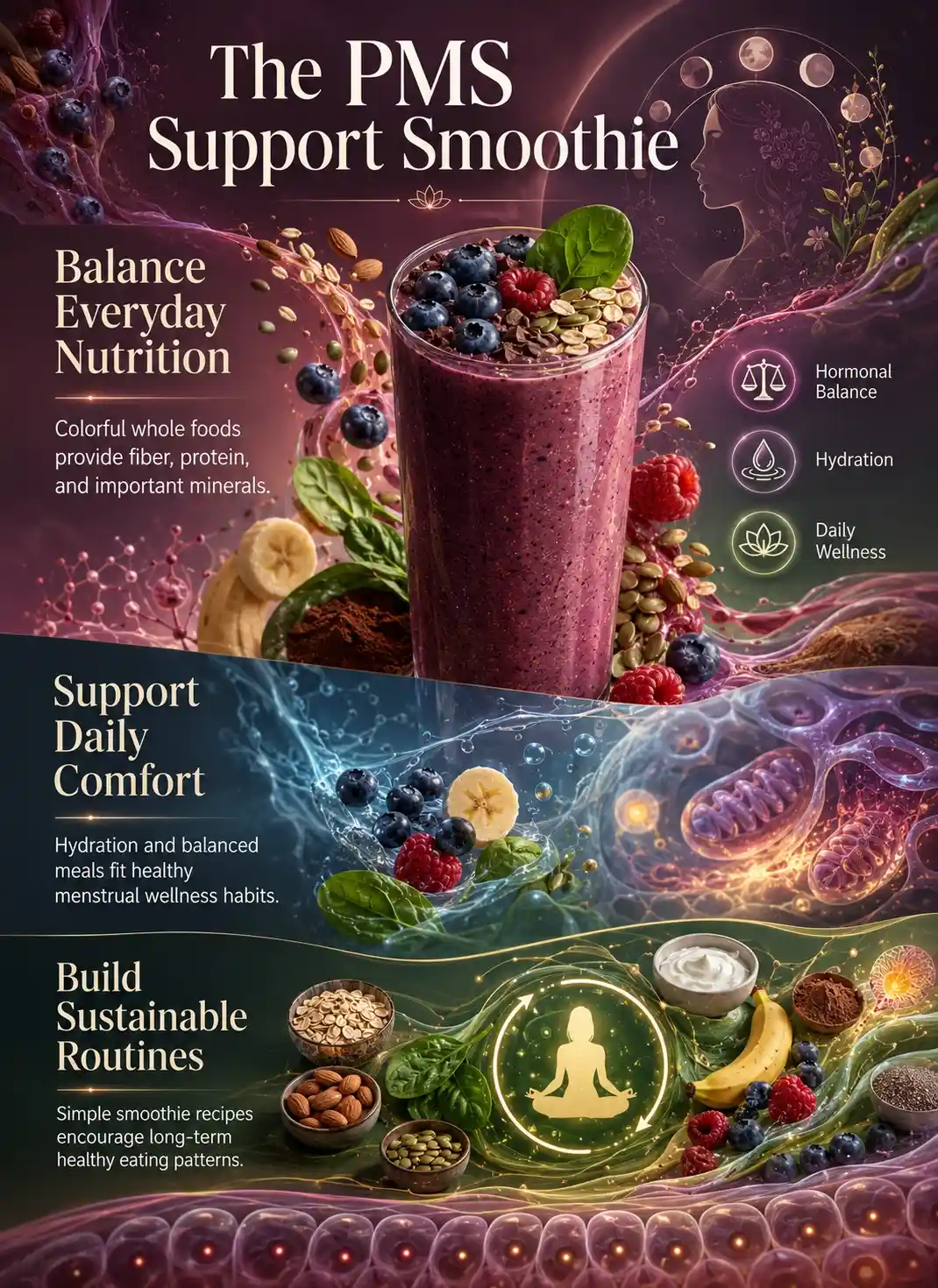
Common Smoothie Mistakes That Can Make PMS Eating Harder
Fruit juice, multiple sweeteners, and oversized portions can turn a smoothie into a quick sugar-heavy drink. Skip the protein, and you may feel hungry again sooner. Start with whole fruit, unsweetened liquid, and a smaller serving if your stomach feels sensitive.
Also, don’t assume every powder is harmless. Fortified products and supplements can contain high amounts of vitamins, minerals, caffeine, or herbs. Check labels carefully, especially if you take medication or manage a health condition.
Food sensitivities count as well. Dairy, large amounts of raw greens, sugar alcohols, and certain protein powders can bother some people. Adjust based on your own digestion rather than forcing a trendy ingredient.
3 Smoothies for PMS Support
Each recipe makes about one 14 to 18-ounce serving. Blend until smooth, then add more liquid if your blender needs help. Frozen produce creates a thicker drink without ice.
Berry Seed Smoothie for Fiber and Magnesium Support
Ingredients
- 1 cup frozen mixed berries
- 3/4 cup plain Greek yogurt, or unsweetened soy yogurt
- 1 packed cup baby spinach
- 1 tablespoon chia seeds or pumpkin seeds
- 3/4 cup unsweetened dairy or soy milk
Blend all ingredients for 30 to 45 seconds. Let it sit for five minutes if you use chia seeds, since they thicken as they absorb liquid.
Whole berries and spinach provide fiber, which supports regular digestion. Seeds contribute magnesium, a mineral involved in normal muscle and nervous system function. Greek yogurt adds protein and calcium, while fortified soy yogurt can offer a dairy-free alternative.
Keep added sugar low by choosing plain yogurt and unsweetened milk. If berries taste too tart, add a few slices of banana rather than honey or syrup.
Estimated Nutrition per Serving
Estimated with plain nonfat Greek yogurt, chia seeds, unsweetened soy milk, mixed berries, and spinach.
- Calories: ~370 kcal
- Protein: ~29 g
- Carbohydrates: ~46 g
- Fat: ~10 g
- Fiber: ~14 g
- Sugars: ~24 g
Chia and pumpkin seeds change this smoothie in different ways: chia makes it progressively thicker, while pumpkin seeds leave a slightly nuttier texture. If using pumpkin seeds, give the blender a little longer to break them down before adding extra liquid.
Green Ginger Smoothie for Hydration and Digestive Comfort
Ingredients
- 1/2 cup chopped cucumber
- 1 cup spinach or baby kale
- 1 peeled kiwi, or 1/2 peeled orange
- 1/4 avocado
- 1/2 teaspoon grated fresh ginger
- 3/4 cup cold water or unsweetened coconut water
Blend until creamy and bright green. Use water if you want a lower-sugar option, or choose coconut water when you prefer a little more potassium.
Cucumber, leafy greens, and liquid build fluid into the smoothie. Kiwi and citrus provide vitamin C, while avocado supplies potassium and unsaturated fat. Fresh ginger brings a sharp flavor and fits well into a food-based approach to digestive comfort.
If ginger feels too intense, begin with a small slice. A handful of ice can also soften the flavor without adding sweetness.
Estimated Nutrition per Serving
Estimated with spinach, kiwi, 1/4 medium avocado, cucumber, fresh ginger, and plain water.
- Calories: ~145 kcal
- Protein: ~4 g
- Carbohydrates: ~21 g
- Fat: ~8 g
- Fiber: ~8 g
- Sugars: ~9 g
Cocoa Banana Smoothie for Steady Energy and Craving Support
Ingredients
- 1 small banana
- 1 tablespoon unsweetened cocoa powder
- 1/4 cup rolled oats
- 1 tablespoon peanut, almond, sunflower seed, or tahini butter
- 3/4 cup Greek yogurt, soy yogurt, or soft tofu
- 3/4 cup unsweetened milk
Blend until the oats disappear into the mixture. For a nut-free version, use sunflower seed butter or tahini. Soft tofu makes the recipe dairy-free and adds a mild, creamy texture.
Banana and oats provide carbohydrates, while yogurt or tofu adds protein. Seed or nut butter contributes fat, and oats add fiber. Together, those components may make the smoothie feel more balanced than a fruit-only blend.
Check cocoa labels before buying. Some cocoa drink mixes contain significant added sugar, while plain unsweetened cocoa powder does not.
Estimated Nutrition per Serving
Estimated with a small banana, unsweetened cocoa, rolled oats, natural peanut butter, plain nonfat Greek yogurt, and unsweetened soy milk.
- Calories: ~500 kcal
- Protein: ~33 g
- Carbohydrates: ~68 g
- Fat: ~14 g
- Fiber: ~10 g
- Sugars: ~27 g
Oats and cocoa both benefit from a thorough blend here. Let the blender run until the oat texture disappears before judging the consistency; stopping too early can make the smoothie seem grainier and thicker than it actually needs to be.
When Smoothies Are Helpful, and When to Get Extra Support
Smoothies can be useful when low appetite, fatigue, or limited prep time makes regular meals harder. Pair one with breakfast, or use it as a snack between meals. Solid foods still matter because varied meals offer different textures, nutrients, and eating satisfaction.
Severe, sudden, or worsening cycle-related symptoms need medical attention. Very heavy bleeding, fainting, persistent vomiting, or symptoms that disrupt daily life deserve a conversation with a qualified healthcare professional.
Check with a clinician or registered dietitian before major diet changes if you are pregnant, have diabetes or kidney disease, live with food allergies, or take medications that may interact with supplements or fortified products.
Conclusion: A Practical PMS Smoothie Routine
Berry and seed blends emphasize fiber and magnesium-containing foods. Green ginger smoothies bring fluids and produce variety, while cocoa banana blends pair carbohydrates with protein, fat, and fiber for a more balanced snack. Looking for more everyday wellness ideas? Browse our Breakfast smoothies for additional balanced recipes to start your morning.
There is no single perfect PMS smoothie for everyone. The best choice fits your nutrition needs, digestion, budget, and taste. Try one recipe first, change one ingredient at a time, and notice how your body responds.
🛡️ Safety Notes & Dietary Interactions
- Support Overall Wellness, Not PMS Treatment: These smoothies can contribute protein, fiber, fluids, vitamins, and minerals that support balanced nutrition during the menstrual cycle. They are not intended to treat premenstrual syndrome or replace medical evaluation for persistent or severe symptoms.
- Personalize Ingredients to Your Needs: If you have diabetes, kidney disease, food allergies, digestive disorders, pregnancy, or follow a medically prescribed diet, adjust ingredients such as dairy, soy, fruit, seeds, oats, and nut butters with guidance from a qualified healthcare professional.
- Choose Supplements Carefully: Fortified products, protein powders, herbal blends, and other supplements may contain concentrated vitamins, minerals, caffeine, or botanicals. Read labels carefully and discuss regular supplement use with your healthcare provider if you take prescription medications.
- Seek Medical Advice for Severe Symptoms: Heavy menstrual bleeding, severe pelvic pain, fainting, persistent vomiting, symptoms that interfere with daily life, or significant changes in your menstrual cycle should be evaluated by a qualified healthcare professional rather than managed with dietary changes alone.
FAQs
Can smoothies help with PMS symptoms?
Smoothies cannot treat PMS, but they can provide balanced nutrition when appetite, energy, or meal preparation become more challenging. Including protein, fiber, healthy fats, fluids, and nutrient-rich fruits and vegetables may support overall well-being during the premenstrual phase.
Which ingredients are good for PMS-supportive smoothies?
Whole berries, leafy greens, bananas, kiwi, avocado, oats, chia seeds, pumpkin seeds, Greek yogurt, fortified soy yogurt, tofu, and unsweetened dairy or plant-based milks create balanced smoothies that provide protein, fiber, vitamins, minerals, and healthy fats.
Why include protein and fiber together?
Protein and fiber help create a more satisfying smoothie than fruit alone. Combining them with healthy fats may promote steadier energy, reduce hunger between meals, and make smoothies feel more substantial as part of a balanced eating pattern.
Are cocoa and bananas good additions to PMS smoothies?
Unsweetened cocoa powder adds rich flavor without added sugar, while bananas provide carbohydrates and potassium. Together with protein and fiber-rich ingredients, they create a balanced smoothie that many people enjoy when cravings increase before menstruation.
Can I drink these smoothies every day?
Yes. These smoothies can be included as part of a varied, balanced diet throughout the menstrual cycle. Rotating fruits, vegetables, protein sources, seeds, and healthy fats helps broaden nutrient intake while keeping meals interesting and nutritionally diverse.

Medical Disclaimer: AnySmoothie content is for educational purposes only and is not a substitute for professional medical advice. Consult a healthcare provider for personalized guidance. See our full Disclaimer & Terms of Use. AI Transparency: AnySmoothie may use AI to support content development. All content undergoes human editorial review for accuracy, clarity, and editorial quality. See our full AI Transparency.