
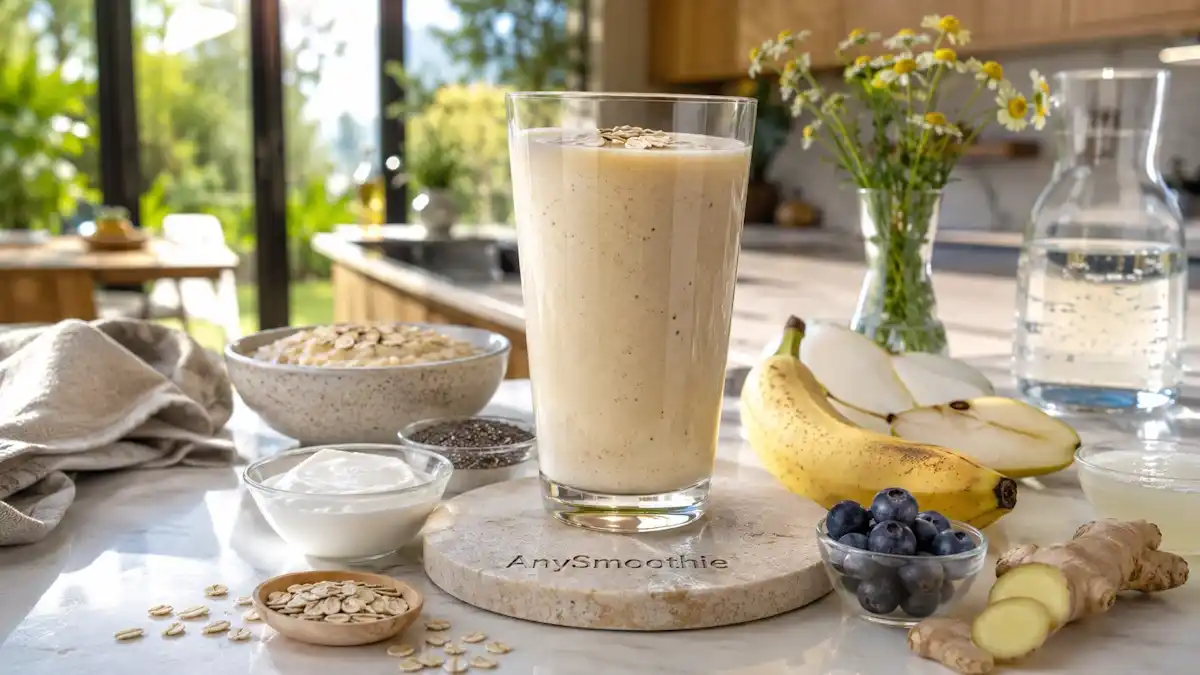
Are smoothies after food poisoning a good idea? They can be, but timing matters. Your stomach and intestines may remain sensitive after vomiting or diarrhea, so fluids and simple foods should come first.
Once you can keep liquids down and nausea starts to ease, a small, thin smoothie may offer an easier way to reintroduce mild carbohydrates. These recipes use simple ingredients, gentle flavors, and thin textures to ease reintroduction.
When Smoothies After Food Poisoning Are Safe to Try
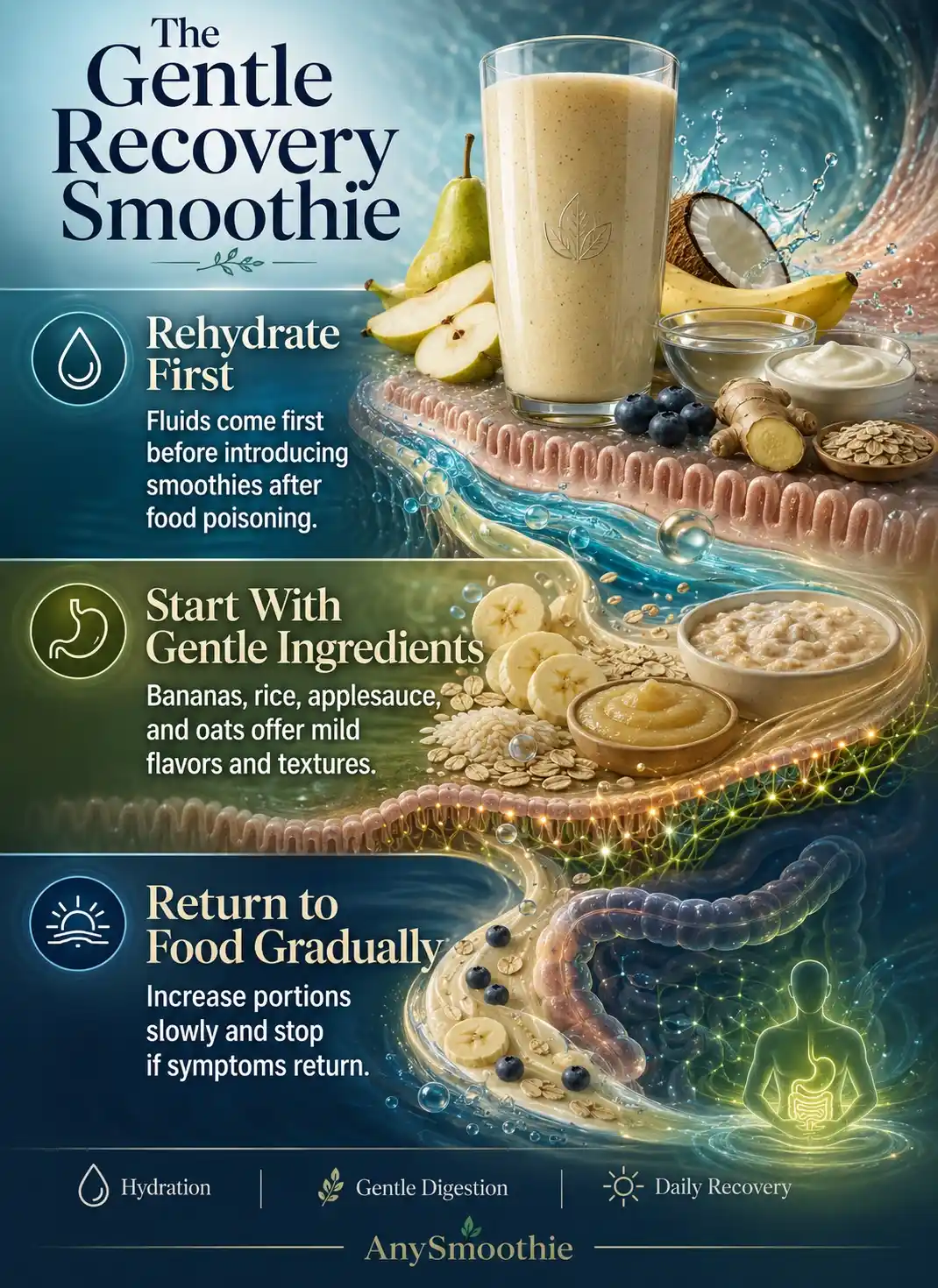
While vomiting or diarrhea is still active, focus on small, frequent sips of water or an oral rehydration drink. Large drinks can feel difficult to manage, especially when your stomach is unsettled. Take a few sips, pause, and continue only if they stay down.
Wait until you can keep fluids down and nausea begins to settle before testing a smoothie. Start with about one-half cup rather than a full glass. Blend it until thin, serve it at a comfortable temperature, and sip it slowly over several minutes.
A smoothie can support a gradual return to food, but an oral rehydration solution is the better choice when dehydration is a concern.
Stop if a smoothie brings back vomiting, worsening cramps, or diarrhea. Contact a health professional for signs of severe dehydration, bloody stool, high fever, severe belly pain, confusion, fainting, or symptoms that don’t improve. Children, older adults, pregnant people, and anyone with a weakened Immune system may need medical advice sooner.
Food poisoning recovery begins with adequate hydration and a gradual return to eating. Learn more about Treatment for food poisoning.
3 Smoothies After Food Poisoning
These gentle smoothie recipes aren’t guaranteed treatments. Each one uses low-fat ingredients, mild flavors, and a thin consistency. Avoid protein powders, large amounts of fiber, spicy ingredients, alcohol, and sugar alcohols while your digestion is recovering.
The table gives a quick comparison before you choose a recipe.
| Smoothie | Key ingredients | Texture | Best time to try | Ingredients to adjust |
|---|---|---|---|---|
| Banana and rice | Banana, cooked white rice, water or lactose-free milk | Creamy and mild | After fluids stay down | Use water if milk feels uncomfortable |
| Applesauce and oat | Unsweetened applesauce, softened quick oats, water | Soft and slightly thicker | When small amounts of fruit feel manageable | Skip oats if fiber worsens symptoms |
| Coconut water and banana | Banana, plain coconut water, water | Thin and drinkable | When you want a light, mild blend | Replace coconut water with plain water if needed |
Banana and Rice Smoothie for a Mild, Creamy Start
Ingredients
- 1 ripe banana
- 1/2 cup cooked white rice, cooled
- 1 cup water or suitable lactose-free milk
- 1–2 tablespoons additional liquid, if needed
Add everything to a blender and process until smooth. Add another tablespoon or two of liquid if the mixture seems thick.
Pour one-half cup for your first serving and sip it slowly. The banana provides carbohydrates, while cooked white rice creates a mild, low-fiber base. Both ingredients have a soft texture and a gentle flavor.
Milk can make the smoothie creamier, but water is a good choice if dairy feels difficult to tolerate. Keep the first serving small, then wait to see how your stomach responds before having more.
Estimated Nutrition per Serving
Estimated for the full recipe with one medium banana, cooked white rice, and water.
- Calories: ~225 kcal
- Protein: ~4 g
- Carbohydrates: ~52 g
- Fat: ~1 g
- Fiber: ~4 g
- Sugars: ~14 g
Cooled rice can form small soft clumps, especially after refrigeration. Blend the rice with the liquid first before adding the banana; this makes it easier to get the uniformly smooth texture intended for this gentle, simple drink.
Applesauce and Oat Smoothie for a Soft, Simple Blend
Ingredients
- 1/2 cup unsweetened applesauce
- 1 tablespoon quick oats
- 2 tablespoons water, for softening the oats
- 1 cup water
Soften the oats in two tablespoons of water, then combine with the applesauce and remaining water. Blend thoroughly for 30 to 45 seconds. If the texture remains too thick or grainy, strain it before serving.
Start with one-half cup because both fruit and oats add some fiber. Unsweetened applesauce offers a mild flavor and smooth consistency. Softened oats add body without requiring you to chew, although they may feel harder to tolerate if your digestion remains sensitive.
Skip this option if fiber seems to worsen bloating or loose stools. You can return to it later, after simpler liquids and low-fiber foods feel comfortable.
Estimated Nutrition per Serving
Estimated for the full recipe with unsweetened applesauce, quick oats, and water.
- Calories: ~105 kcal
- Protein: ~2 g
- Carbohydrates: ~24 g
- Fat: ~1 g
- Fiber: ~3 g
- Sugars: ~12 g
Coconut Water and Banana Smoothie for Gentle Hydration
Ingredients
- 1 small ripe banana
- 3/4 cup plain coconut water
- 1/4 cup water
Blend until thin. Serve it immediately, and begin with one-half cup.
Coconut water adds fluid and some electrolytes, but it shouldn’t replace an oral rehydration solution when dehydration is a concern. Choose plain coconut water without added sugar. If coconut products cause stomach upset, use water instead.
The banana supplies a mild carbohydrate source and helps soften the drink’s texture. Keep this blend thin rather than adding ice, seeds, greens, nut butter, or other dense ingredients.
Estimated Nutrition per Serving
Estimated for the full recipe with one small banana, plain unsweetened coconut water, and water.
- Calories: ~135 kcal
- Protein: ~2 g
- Carbohydrates: ~33 g
- Fat: ~1 g
- Fiber: ~3 g
- Sugars: ~20 g
Banana ripeness makes a noticeable difference in both sweetness and thickness here. A well-ripened banana blends more smoothly, while the full amount of liquid should be retained rather than reduced—the goal is a thin, easy-to-sip consistency rather than a thick smoothie.
How to Make a Recovery Smoothie Easier on Your Stomach
Keep each test simple. Use fruits without skins or seeds, and choose cooked or softened ingredients when possible. A short ingredient list makes it easier to identify what your body tolerates.
At first, high-fat dairy, heavy cream, large amounts of raw greens, citrus, and berries with many seeds may feel harsh. Caffeine and very sweet add-ins can also be poor choices while your stomach is unsettled. Avoid oversized portions, and drink slowly instead of finishing the glass quickly.
Wait before adding yogurt, nut butter, chia seeds, or protein powder. Reintroduce one ingredient at a time after your usual foods feel comfortable. When you’re ready for more variety, try our How to make the easiest smoothie.
Drink a recovery smoothie fresh when possible. If you save leftovers, refrigerate them promptly in a sealed container and use them soon. Discard any portion that sat out for an extended period.
What to Eat and Drink Before Returning to Your Usual Diet
Return to regular foods in stages. Begin with water or an oral rehydration drink. If those stay down, try small portions of bland foods such as toast, crackers, rice, bananas, potatoes, broth, or applesauce. Oral rehydration solutions are often recommended when vomiting or diarrhea causes significant fluid loss. Principles and practice of oral rehydration explains why replacing fluids and electrolytes is an important first step.
Your appetite and digestion may return at different speeds. A food that seems acceptable one morning may feel too heavy later, so keep portions modest and pause between meals. Stop a smoothie if it brings back vomiting, worsening cramps, or diarrhea.
Conclusion
The best smoothies after food poisoning are small, thin, mild, and made with ingredients you already know you can tolerate. The Banana and Rice Smoothie, Applesauce and Oat Smoothie, and Coconut Water and Banana Smoothie each offer a simple starting point.
Prioritize fluids first, reintroduce foods gradually, and let your symptoms guide the pace of recovery. Seek medical advice for serious or lasting symptoms, especially when dehydration or severe pain is present. If your stomach remains sensitive after recovery, you may also find our Smoothies for gastritis and acid sensitivity guide helpful.
🛡️ Safety Notes & Dietary Interactions
- Rehydrate Before Eating: If vomiting or diarrhea is still active, prioritize small, frequent sips of water or an oral rehydration solution before introducing smoothies. A smoothie should only be tried once you can comfortably keep fluids down and nausea has started to improve.
- Reintroduce Foods Gradually: Begin with a small serving of a thin, mild smoothie and add ingredients one at a time as your digestion recovers. Avoid high-fat foods, alcohol, caffeine, spicy ingredients, protein powders, and high-fiber additions until they are well tolerated.
- Adjust Recipes to Your Individual Needs: People with diabetes, kidney disease, lactose intolerance, food allergies, pregnancy, digestive disorders, or medically prescribed diets should modify ingredients with guidance from a qualified healthcare professional, particularly after significant gastrointestinal illness.
- Know When to Seek Medical Care: Contact a healthcare professional promptly if you develop signs of dehydration, persistent vomiting, bloody diarrhea, high fever, severe abdominal pain, confusion, fainting, or symptoms that worsen or do not improve. Young children, older adults, pregnant people, and individuals with weakened immune systems may require earlier medical evaluation.
FAQs
When is it safe to drink a smoothie after food poisoning?
Wait until you can comfortably keep fluids down and your nausea has begun to improve. Start with a small, thin smoothie made from mild ingredients, sip it slowly, and stop if it causes renewed vomiting, diarrhea, abdominal pain, or worsening stomach discomfort.
What ingredients are easiest to tolerate?
Simple ingredients such as ripe bananas, cooked white rice, unsweetened applesauce, softened oats, plain water, lactose-free milk, or plain coconut water are often easier to tolerate than rich, spicy, or high-fiber foods during the early stages of recovery.
Should I use an oral rehydration solution instead of a smoothie?
If dehydration is a concern, an oral rehydration solution is the preferred choice because it is specifically formulated to replace fluids and electrolytes. Smoothies are better introduced later, once hydration has improved and you are ready to gradually return to solid foods.
What ingredients should I avoid while recovering?
Avoid alcohol, caffeine, spicy foods, large amounts of fat, high-fiber ingredients, protein powders, sugar alcohols, and oversized portions until your digestion has recovered. Introducing too many ingredients at once can make it difficult to identify foods that your stomach tolerates well.
Can smoothies replace meals after food poisoning?
Not at first. During recovery, smoothies should serve as a temporary bridge between fluids and regular meals rather than replacing a balanced diet. As your appetite returns and symptoms resolve, gradually resume eating a variety of well-tolerated foods while maintaining adequate hydration.

Medical Disclaimer: AnySmoothie content is for educational purposes only and is not a substitute for professional medical advice. Consult a healthcare provider for personalized guidance. See our full Disclaimer & Terms of Use. AI Transparency: AnySmoothie may use AI to support content development. All content undergoes human editorial review for accuracy, clarity, and editorial quality. See our full AI Transparency.