
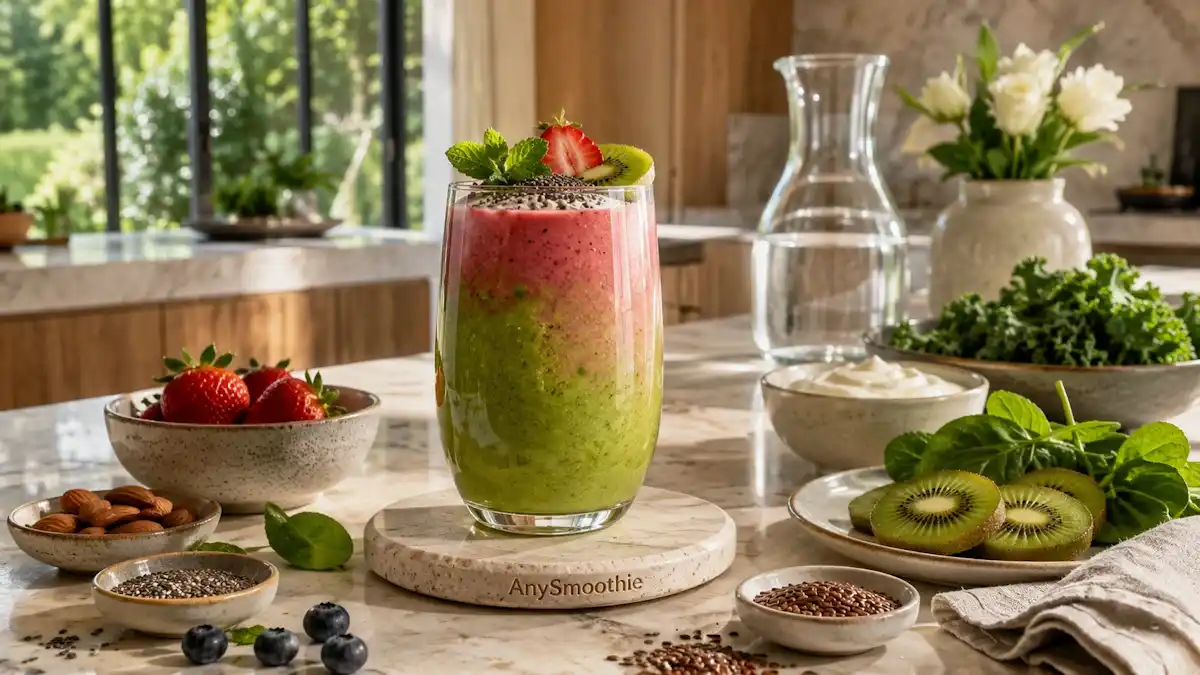
A smoothie can support your mouth when it delivers useful nutrients without a heavy load of added sugar. The right blend may provide vitamin C for collagen production, calcium and phosphorus for tooth mineral balance, and fiber that makes the drink more satisfying.
Still, smoothies are food, not dental treatment. They don’t replace brushing with fluoride toothpaste, cleaning between teeth, dental visits, or care for bleeding and swollen gums.
Healthy teeth and gums depend on your overall eating pattern rather than any single smoothie. Choose nutrient-dense ingredients, drink the smoothie in one sitting, and follow it with habits that reduce acid and sugar contact.
How the Right Smoothie Ingredients Support Healthy Gums and Teeth
Gum tissue needs nutrients for normal maintenance and repair. Vitamin C helps the body produce collagen, a structural protein found in Connective tissue, including the gums. Strawberries, blueberries, kiwi, and citrus can provide vitamin C, although acidic fruits may need moderation if they cause dental discomfort.
Calcium and phosphorus take part in the mineral structure of teeth. Plain yogurt, kefir, and unsweetened fortified milk can add these nutrients, along with protein. Vitamin A from mango and leafy greens supports normal tissue maintenance. Fiber, protein, and water also make a smoothie more filling, which can reduce the urge to add sugar.
Whole fruit is usually a better choice than fruit juice. It retains fiber and generally provides less concentrated sugar. However, blending doesn’t remove natural sugar. Acidic ingredients and frequent sipping can still expose enamel to acid and sugar for longer periods.
Diet plays an important role in oral health alongside good hygiene habits. Learn more about Oral health and healthy eating and how nutrition fits into everyday dental care.
For additional products and resources related to everyday oral wellness, explore our Dental health collection.
| Ingredient or food | Key nutrient | How it supports oral structures | Best smoothie use | Important caution |
|---|---|---|---|---|
| Plain yogurt | Calcium, phosphorus, protein | Supplies minerals used in tooth structure | Creamy base | Choose unsweetened |
| Leafy greens | Vitamin A, fiber | Supports normal tissue maintenance | Green smoothies | Wash well |
| Strawberries | Vitamin C, fiber | Supports collagen production and gum tissue | Berry flavor | Natural acidity |
| Kiwi | Vitamin C, fiber | Adds vitamin C for collagen pathways | Bright fruit flavor | Use a modest portion |
| Chia seeds | Fiber, calcium | Adds texture, fiber, and some minerals | Thickener | Drink water afterward |
| Unsweetened milk | Calcium, vitamin D if fortified | Contributes to tooth mineral intake | Liquid base | Check the label |
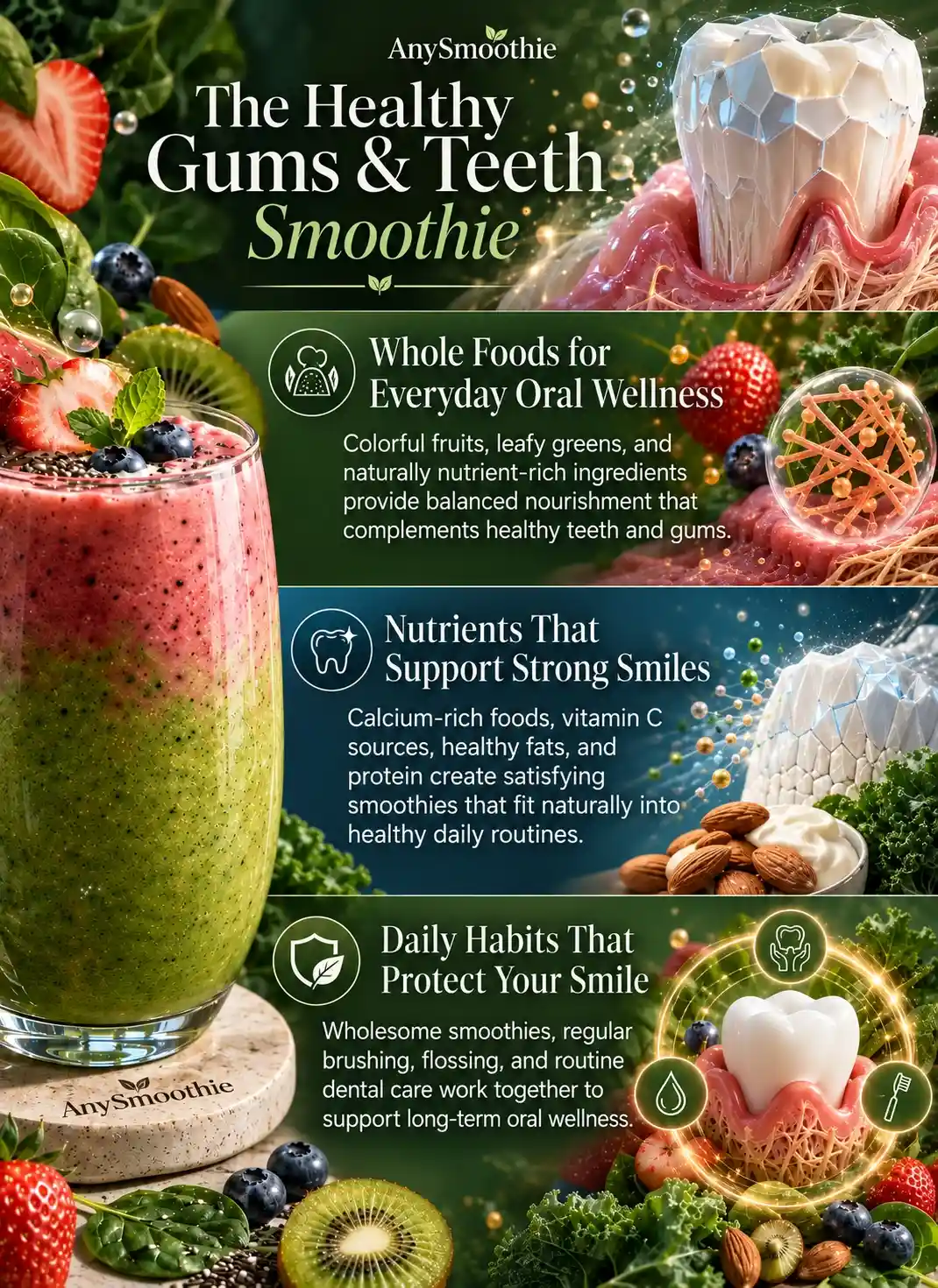
3 Smoothies for Healthy Gums and Strong Teeth
These recipes make one serving and use whole fruit instead of juice. Blend until smooth, then rinse your mouth with water after drinking.
Choose Ingredients That Are Kind to Enamel
Use whole fruits instead of juice, and choose unsweetened yogurt, milk, or fortified alternatives instead of sweetened products. Keep highly acidic ingredients, such as citrus and kiwi, to modest portions when you notice dental discomfort.
Portion size and frequency still matter. A small smoothie consumed with breakfast creates less repeated exposure than a large drink sipped throughout the morning. Blending makes fruit easier to drink, but it doesn’t remove its natural sugars.
You can also pair a smoothie with a meal rather than treating it as a drink that lasts for hours. This keeps it within a defined eating period and limits repeated acid contact.
Make Each Smoothie More Filling Without Adding Much Sugar
Plain yogurt adds protein and creaminess, while chia seeds, ground flaxseed, or oats add fiber. A small spoonful of nut butter adds fat and protein, which can improve fullness without syrup or extra fruit.
For more flavor, try cinnamon, vanilla extract, or unsweetened cocoa. These additions can make a low-sugar smoothie taste richer. Check allergy labels before using nut butter, seeds, or dairy alternatives.
Large amounts of dried fruit aren’t ideal additions because their sticky texture can cling to teeth. Fresh or frozen fruit gives the blend sweetness with more water and a less concentrated texture.
Simple Habits That Protect Your Teeth After Smoothies
Drink your smoothie in one sitting instead of sipping it for hours. When practical, use a straw and position it toward the back of your mouth, so less liquid washes over your front teeth.
Next, rinse with plain water. Water is the best follow-up drink because it helps clear remaining smoothie residue without adding sugar or acid. Don’t brush immediately after an Acidic smoothie. Wait about 30 minutes, because brushing while enamel is softened by acid may create more mechanical wear.
Dentists generally recommend waiting before brushing after acidic foods or drinks because enamel can be temporarily softened. Tooth brushing and oral health provide additional guidance on everyday dental care.
Keep the rest of your routine consistent. Brush twice daily with fluoride toothpaste, clean between your teeth every day, and attend regular dental appointments. Smoothies can support a balanced diet, but they can’t replace fluoride exposure, professional cleanings, or dental treatment.
Prompt evaluation helps identify the underlying cause and the most appropriate treatment. Changing smoothie ingredients may improve comfort, but it shouldn’t delay an examination.
Conclusion
Nutrient-dense smoothies can support normal gum tissue and tooth function when they include whole fruit, plain yogurt, fortified milk, leafy greens, or seeds. Limit added sugar and highly acidic ingredients, drink each smoothie in one sitting, and rinse with water afterward.
The strongest routine combines food with daily oral care. Fluoride toothpaste, cleaning between teeth, professional visits, and prescribed treatment remain essential. Start with one recipe, then adjust the fruit, liquid, and texture to suit your taste, dietary needs, and dentist’s guidance. For another nutrition-focused approach to everyday wellness, see our Smoothies for gut microbiome modulation guide.

Medical Disclaimer: AnySmoothie content is for educational purposes only and is not a substitute for professional medical advice. Consult a healthcare provider for personalized guidance. See our full Disclaimer & Terms of Use. AI Transparency: AnySmoothie may use AI to support content development. All content undergoes human editorial review for accuracy, clarity, and editorial quality. See our full AI Transparency.