

Irregular meal times, short break windows, low appetite overnight, and vending machine food can make shift work nutrition difficult. A well-built smoothie gives you portable protein, carbohydrates, fiber, healthy fats, and fluids in one easy-to-carry drink. It can also feel more appealing than a full plate when your appetite drops at 2 a.m.
These smoothies for shift work nutrition include three practical recipes, timing suggestions, and preparation tips for day, evening, and overnight schedules. Start with the ingredients your body handles comfortably, then adjust the portion to match your shift.
Why Smoothies Work Well for Shift Work Nutrition
Shift work often separates hunger from convenient mealtimes. A smoothie can fit into a 10-minute break, travel in an insulated bottle, and provide more structure than a pastry or candy bar.
The basic nutrition is straightforward. Protein provides Amino acids that help make a meal more filling and support normal tissue maintenance. Carbohydrates supply glucose, which the brain and working muscles use for fuel. Fiber can slow digestion and support normal gut function. Healthy fats add flavor and help a drink satisfy you for longer.
Health organizations recommend planning balanced meals and snacks in advance for shift work whenever possible, emphasizing protein, fiber-rich carbohydrates, and regular hydration rather than relying on convenience foods alone. Learn more in the study on Nutrition and well-being of healthcare shift workers.
A balanced smoothie works best when it contains several of these nutrients rather than a large amount of fruit alone. Fruit juice, sweetened yogurt, and syrup can push added or concentrated sugar higher without adding much protein or fiber. Whole fruit, oats, plain dairy, soy milk, seeds, and nut butter usually create a more substantial blend.
Portion size matters, especially during evening and overnight work. A larger smoothie may suit the start of a physically demanding shift, while a smaller serving may feel better during a late break. Liquid meals can help when solid food feels unappealing, but smoothies shouldn’t replace every meal. A varied eating pattern still includes whole grains, vegetables, fruit, protein foods, and other solid foods.
Build a Balanced Smoothie With Four Core Ingredients
Use one choice from each category:
- Protein: Greek yogurt, cottage cheese, silken tofu, or protein powder.
- High-fiber carbohydrate or fruit: Berries, banana, oats, or a few dates.
- Healthy fat: Chia seeds, ground flaxseed, nut butter, or avocado.
- Liquid base: Milk, soy milk, or water.
Dairy milk and soy milk usually provide more protein than many low-protein plant milks. Check labels for added sugar, protein content, and serving sizes. If you use protein powder, follow the product’s serving guidance rather than adding several scoops automatically.
Choose Ingredients Based on Your Shift and Appetite
A pre-shift smoothie can be thicker and more filling because you have time to digest it before work. A mid-shift blend may need fewer ingredients and a lighter texture, especially when you have limited break time.
For late-night eating, try a smaller portion and avoid large amounts of caffeine, very sweet ingredients, or heavy quantities of fat close to planned sleep. Personal comfort matters more than a fixed schedule. Workload, hunger, and your usual sleep timing should guide the final choice. If you’re looking for additional balanced recipes, explore our Smoothies for enhanced energy density.
3 Smoothies for Shift Work Nutrition
The recipes below use common ingredients and make roughly one serving. Nutrition ranges vary with brand, portion size, and the choice between dairy and plant-based ingredients.
| Smoothie | Best shift timing | Main protein source | Key ingredients | Approximate nutrition |
|---|---|---|---|---|
| Berry Oat Protein | Before a long or active shift | Greek yogurt or protein powder | Berries, oats, milk, chia | 350 to 470 calories, 25 to 32 grams protein |
| Green Banana | Mid-shift break | Greek yogurt or silken tofu | Banana, spinach, nut butter, milk | 320 to 420 calories, 18 to 25 grams protein |
| Cherry Cocoa | Overnight shift | Plain yogurt or tofu | Cherries, cocoa, oats, soy milk | 250 to 340 calories, 15 to 22 grams protein |
Berry Oat Protein Smoothie for the Start of a Shift
Ingredients
- 1 cup frozen berries
- 1/2 cup rolled oats
- 3/4 cup plain Greek yogurt or one serving of protein powder
- 3/4 cup milk or unsweetened soy milk
- 1 tablespoon chia seeds, optional
Blend until smooth, adding a splash of liquid if needed.
The berries provide carbohydrates and fiber, while oats add a slower-digesting carbohydrate source. Greek yogurt or protein powder supplies the main protein, which helps the drink feel more like a meal. This is a strong option before a long shift or physically demanding work.
For another thick, creamy base, try this High-protein yogurt smoothie recipe. To make this version dairy-free, use unsweetened soy yogurt or a plant-based protein powder with soy milk.
Estimated Nutrition per Serving
Estimated with mixed frozen berries, rolled oats, plain nonfat Greek yogurt, unsweetened soy milk, and without optional chia seeds.
- Calories: ~470 kcal
- Protein: ~31 g
- Carbohydrates: ~68 g
- Fat: ~9 g
- Fiber: ~12 g
- Sugars: ~24 g
Half a cup of oats makes this one substantially thicker than a typical fruit smoothie. If you’re preparing it before leaving for work, blend it slightly looser than you normally would; the oats will continue absorbing liquid while it sits before your shift.
Green Banana Smoothie for a Mid-Shift Break
Ingredients
- 1 medium banana
- 1 packed cup baby spinach
- 1/2 cup plain Greek yogurt or about 4 ounces silken tofu
- 1 tablespoon peanut or almond butter
- 3/4 cup milk or unsweetened soy milk
- Ice, optional
- 1 tablespoon ground flaxseed, optional
Blend until smooth. Add ice for a lighter, colder texture.
Banana offers easy-to-blend carbohydrates, while nut butter adds fat and a roasted flavor. Spinach contributes micronutrients without making the drink taste strongly like vegetables. The yogurt or tofu adds protein, so the smoothie has more staying power than a fruit-only blend.
Use a smaller banana or less nut butter when you need a lighter mid-shift drink. You can also blend in 1 tablespoon of ground flaxseed if the extra texture suits you.
Estimated Nutrition per Serving
Estimated with one medium banana, spinach, plain nonfat Greek yogurt, natural peanut butter, unsweetened soy milk, and without optional flaxseed or ice.
- Calories: ~390 kcal
- Protein: ~24 g
- Carbohydrates: ~45 g
- Fat: ~14 g
- Fiber: ~6 g
- Sugars: ~25 g
Cherry Cocoa Smoothie for an Overnight Shift
Ingredients
- 1 cup frozen cherries
- 1 tablespoon unsweetened cocoa powder
- 1/4 cup rolled oats
- 1/2 cup plain yogurt or silken tofu
- 3/4 cup milk or unsweetened soy milk
- 1/2 small banana, optional alternative to oats
- Ice, optional
Blend until smooth. Use the banana instead of oats if you prefer a fruitier texture. Add ice only if the mixture needs more volume.
Cherries bring flavor and carbohydrates, while cocoa creates a dessert-like taste without syrup. Oats add fiber, and yogurt or tofu provides protein. Keep the cocoa unsweetened, then taste before adding anything else.
Choose a smaller serving if you eat close to bedtime. Cocoa and cherries add flavor, but this smoothie isn’t a sleep treatment. It is a modest, lower-sugar option for an overnight break.
Estimated Nutrition per Serving
Estimated with frozen cherries, unsweetened cocoa, rolled oats, plain low-fat yogurt, unsweetened soy milk, and without optional banana or ice.
- Calories: ~390 kcal
- Protein: ~19 g
- Carbohydrates: ~59 g
- Fat: ~10 g
- Fiber: ~9 g
- Sugars: ~31 g
For an overnight shift, texture can matter as much as flavor when you’re drinking during a short break. Let the frozen cherries soften for a few minutes before blending; this produces a smoother, easier-to-drink consistency without increasing the serving with extra liquid.
How to Prep, Pack, and Time Smoothies for Night Shifts
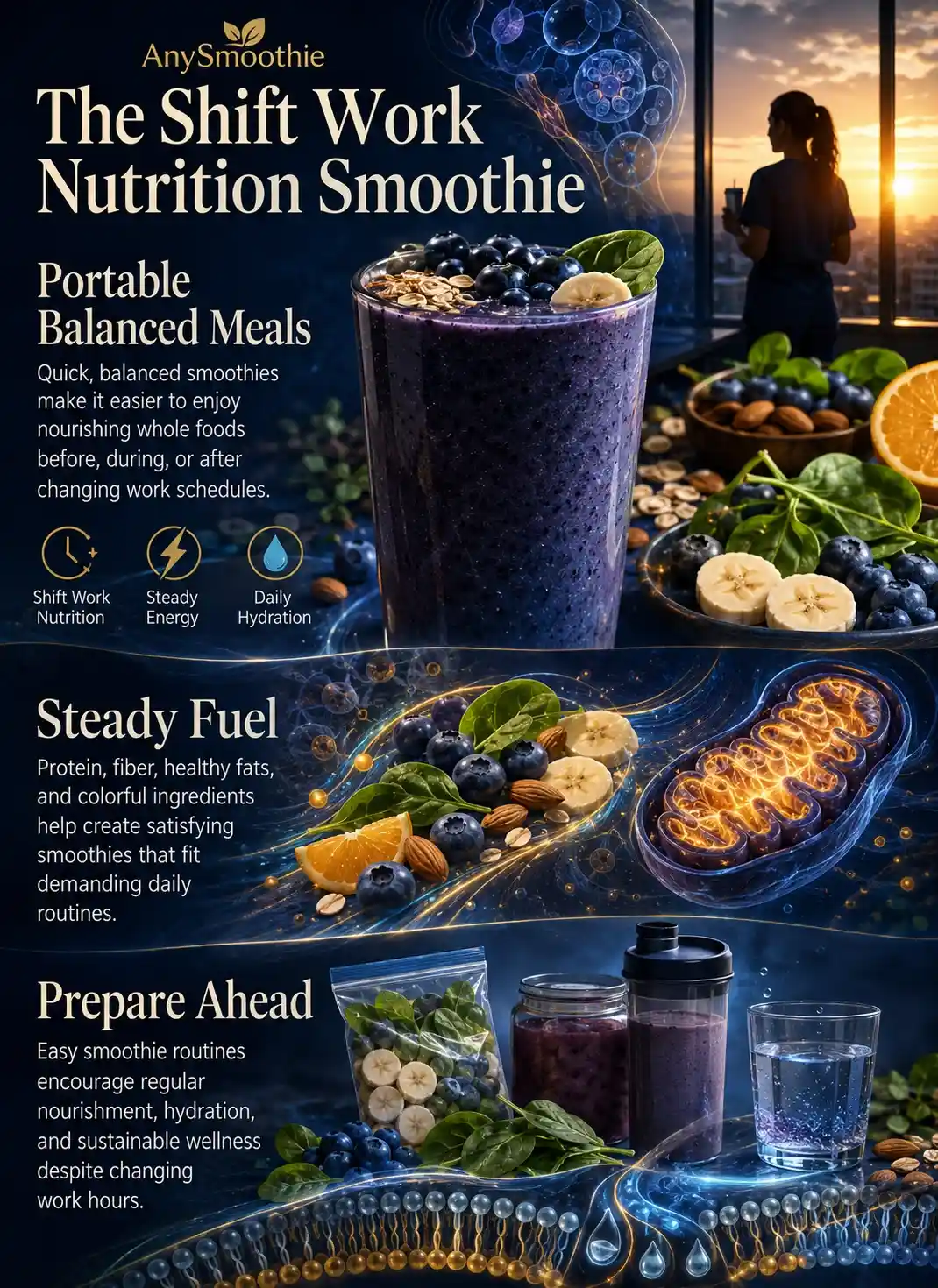
Rotating schedules become easier when the preparation happens before your workweek starts. Portion oats, seeds, cocoa, and protein powder into labeled containers. Freeze measured bags of berries, banana pieces, spinach, or cherries. Store liquids separately when possible, then blend at home or add them to a blender bottle if the texture allows.
Keep prepared smoothies cold. Use an insulated lunch bag with ice packs, and don’t leave dairy, tofu, or other perishable ingredients at room temperature for long periods. A leakproof bottle helps prevent problems in a work bag, but it doesn’t replace refrigeration. Proper refrigeration helps reduce the risk of foodborne illness. Perishable smoothies containing dairy or soy products should be kept cold until they’re consumed. Explore the full Food safety recommendations for detailed guidelines.
Drink a smoothie at the start of a shift, during a planned break, or after work based on hunger and sleep timing. If one drink doesn’t satisfy you, pair it with whole-grain toast, a boiled egg, nuts, or a piece of fruit.
Common mistakes include:
- Using too much fruit juice instead of whole fruit and milk.
- Skipping protein and ending up hungry soon after.
- Making a portion so large that it feels uncomfortable.
- Relying on smoothies instead of eating varied whole foods.
A Simple Smoothie Schedule for Day, Evening, and Overnight Workers
A day worker might drink the Berry Oat Protein Smoothie before leaving home. An evening worker could use the Green Banana Smoothie during a mid-shift break. Someone nearing the end of an overnight shift may prefer half a serving of the Cherry Cocoa Smoothie.
These examples are starting points, not fixed rules. Hunger, workload, break access, and personal sleep timing should guide your final choice.
Keep the Routine Affordable and Easy to Repeat
Frozen produce often costs less than fresh berries and lasts longer. Store-brand oats, seasonal bananas, bulk seeds, and plain yogurt also keep the routine affordable. Prepare two or three flavor combinations instead of making a different recipe every day.
A basic blender, leakproof bottle, and insulated lunch bag are enough to begin. You don’t need specialized equipment or expensive supplements.
Conclusion
The most useful shift work smoothie combines a protein source, fiber-rich carbohydrates, healthy fats, and a suitable liquid base. Match the portion and timing to your workload, appetite, and sleep schedule. Start with one recipe, prepare its ingredients ahead of time, and adjust the flavor or size as needed. Smoothies can support a balanced eating pattern, but they work best alongside varied whole foods rather than replacing every meal.
🛡️ Safety Notes & Dietary Interactions
- Match Portions to Your Shift: Choose smoothie portions based on your workload, appetite, and break schedule. A larger smoothie may suit the start of a demanding shift, while a smaller serving may feel more comfortable during overnight hours or before sleep.
- Keep Food Safety in Mind: Refrigerate prepared smoothies promptly and transport them in an insulated bag with ice packs. Dairy products, tofu, and other perishable ingredients should not remain at room temperature for extended periods.
- Adapt Recipes to Your Health Needs: If you have diabetes, kidney disease, food allergies, digestive disorders, or follow a medically prescribed diet, adjust ingredients such as fruit, dairy, soy, seeds, oats, and protein powders with guidance from a qualified healthcare professional.
- Support Your Whole Routine: Smoothies can make balanced nutrition more convenient during shift work, but they work best alongside regular hydration, adequate sleep, physical activity, and a varied diet rather than replacing every meal.
FAQs
Why are smoothies useful for shift workers?
Smoothies are portable, quick to prepare, and easy to consume during short breaks. A balanced recipe can provide protein, carbohydrates, healthy fats, fiber, and fluids in one convenient meal or snack when traditional meals are difficult to fit into a changing work schedule.
What should I include in a balanced shift work smoothie?
A practical formula includes a protein source such as Greek yogurt or tofu, fiber-rich carbohydrates like berries or oats, a healthy fat such as chia seeds or nut butter, and an unsweetened liquid like milk or fortified soy milk. This combination supports balanced nutrition and satiety.
Should I drink a smoothie before or during my shift?
That depends on your schedule and appetite. A larger smoothie often works well before a long or physically demanding shift, while a lighter smoothie may be more comfortable during a short break or later in an overnight shift when appetite is reduced.
Can I prepare shift work smoothies in advance?
Yes. Freeze measured portions of fruit and vegetables, pre-portion dry ingredients, and store liquids separately until you’re ready to blend. Keep prepared smoothies refrigerated and transport them in an insulated container to help maintain food safety and quality.
Are smoothies enough to replace meals during shift work?
Smoothies can occasionally serve as a convenient meal when time is limited, but they should not replace every meal. A varied eating pattern that includes vegetables, whole grains, fruit, protein-rich foods, and adequate hydration remains the best approach for supporting long-term health during shift work.

Medical Disclaimer: AnySmoothie content is for educational purposes only and is not a substitute for professional medical advice. Consult a healthcare provider for personalized guidance. See our full Disclaimer & Terms of Use. AI Transparency: AnySmoothie may use AI to support content development. All content undergoes human editorial review for accuracy, clarity, and editorial quality. See our full AI Transparency.