
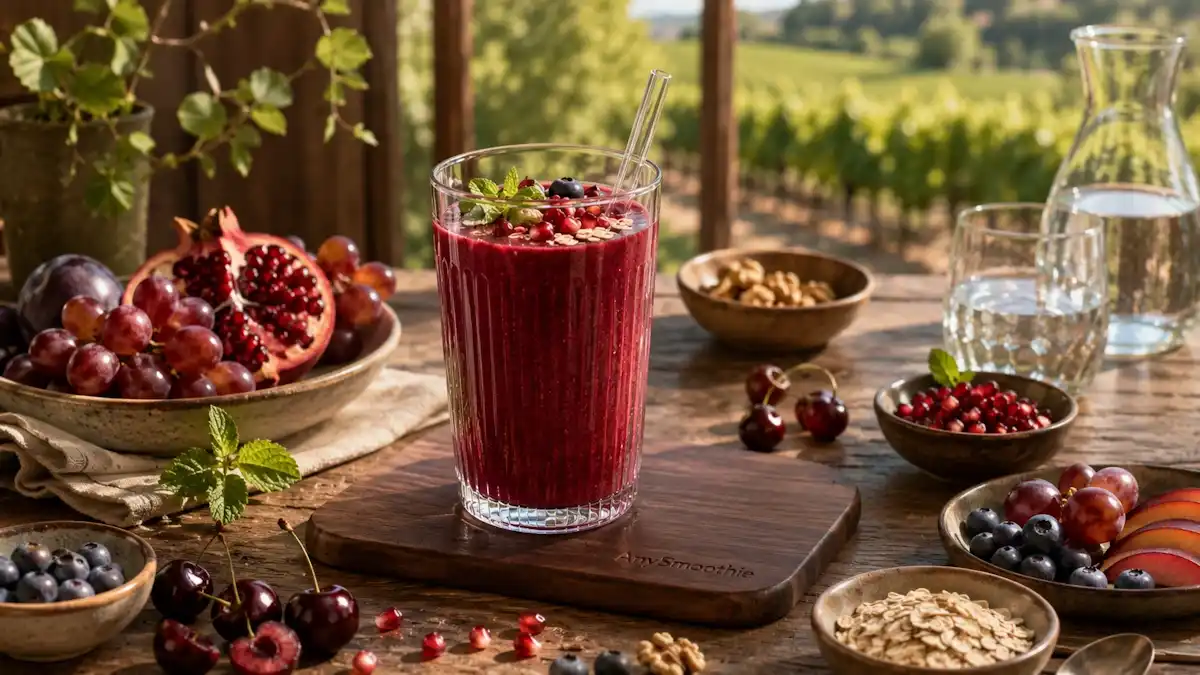
Resveratrol is a plant compound found in grapes, berries, peanuts, and cocoa. In a smoothie, it fits easily into a drink you can build for real nourishment, not just flavor.
That matters because balanced nutrition is about the whole mix. Fiber, protein, healthy fats, and smart carbs all shape how a smoothie feels and how long it keeps you satisfied.
When those pieces work together, a smoothie can be bright, filling, and easy to repeat. That is the sweet spot for resveratrol smoothies for balanced nutrition.
What resveratrol does in a smoothie, and why the pairing matters
Resveratrol is a polyphenol, a plant compound that gets attention for its antioxidant potential. A review in PMC discusses that activity in more detail, but food sources still offer modest amounts, not mega doses.
That is why the rest of the smoothie matters so much. A glass built around grapes or berries works better when it also has fiber, protein, and a little fat. The result is steadier digestion, better satiety, and a drink that feels like part of a meal.
Food matrix matters here, too. In plain terms, ingredients affect one another. Fruit alone digests fast, while fruit plus yogurt, seeds, or nut butter tends to settle more evenly.
Best food sources of resveratrol you can actually blend
The most practical smoothie ingredients are red grapes, blueberries, raspberries, blackberries, peanuts or peanut butter, and cacao. Grape skins usually carry more of the compound than the pulp, so whole grapes are a smarter choice than juice.
Fresh foods usually provide modest amounts, so the goal is supportive nutrition, not a high-dose effect.
Why balanced macros keep the smoothie from becoming a sugar bomb
Protein slows the pace of digestion. Fiber does the same, while also feeding fullness signals. Healthy fats help the drink feel more complete.
Without those pieces, a fruit-heavy smoothie can act more like dessert. With them, the energy curve is smoother, and the drink works better as breakfast, a snack, or a recovery option.
A smoothie works best when it behaves like a meal, not a dessert.
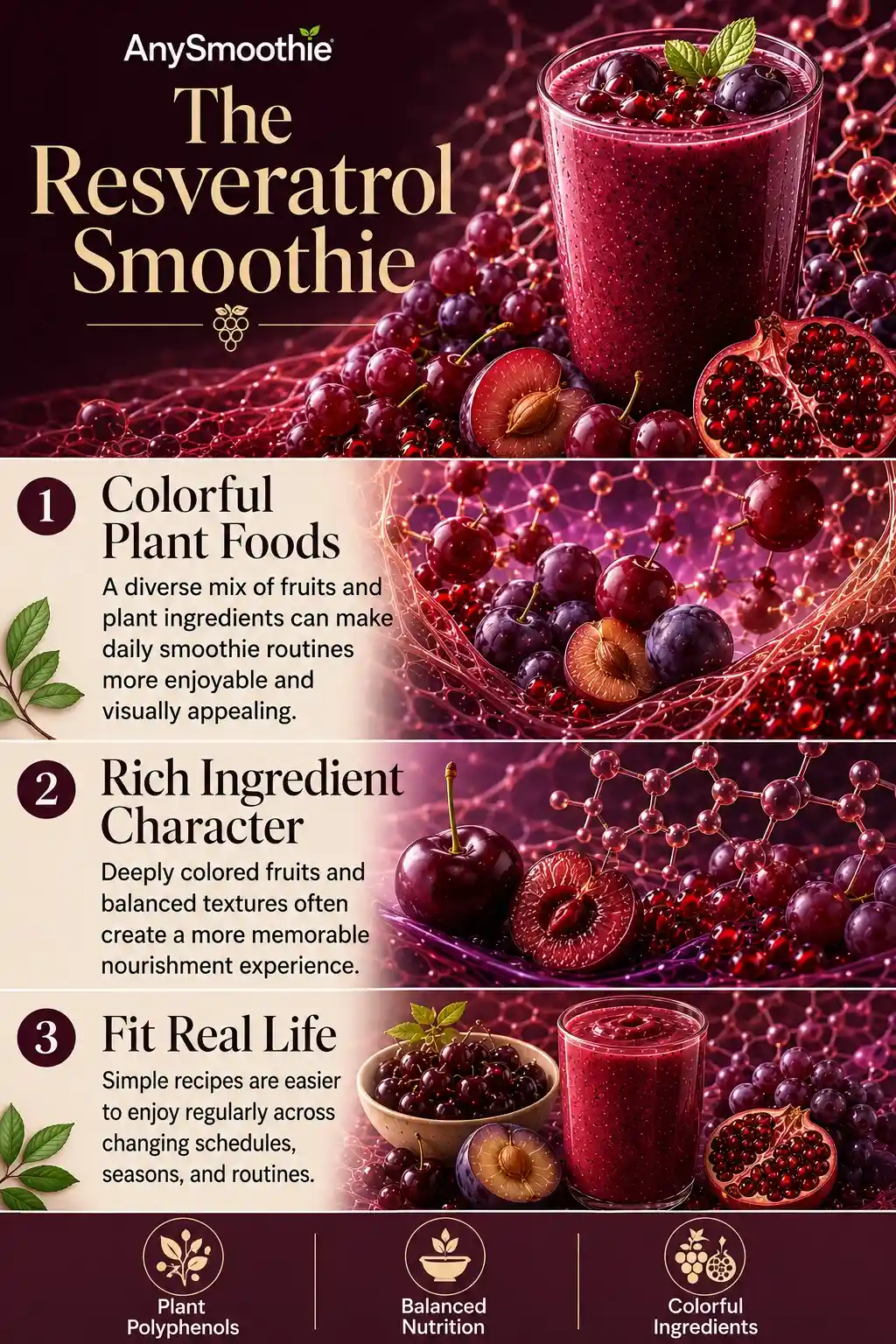
How to build a resveratrol smoothie that feels balanced and actually tastes good
Start with a liquid base, then add one fruit source, one protein source, one fat source, and one fiber boost. That simple structure keeps the flavor clean and the texture smooth.
The best smoothie is the one you will make again. Fancy add-ins do not help much if the drink tastes odd or leaves you hungry an hour later.
Use this easy smoothie formula as a starting point
A good template looks like this:
- Liquid base: unsweetened almond milk, oat milk, kefir, or plain water.
- Resveratrol-rich core: red grapes, mixed berries, or cacao.
- Protein: Greek yogurt, cottage cheese, pea protein, or whey protein.
- Healthy fat: chia, flax, nut butter, or avocado.
- Flavor support: cinnamon, vanilla, lemon, or a small pinch of salt.
Keep the fruit portion reasonable, then let the protein and fat round it out. That gives you a smoothie that tastes bright but still feels like food.
Ingredients that improve absorption, texture, and satiety
Avocado makes a smoothie creamy without much sweetness. Chia and flax add thickness plus fiber. Nut butter helps the drink stay satisfying longer.
Yogurt and protein powder are useful when you want a more stable breakfast or post-workout blend. In the full meal context, fat also helps the body use fat-soluble nutrients from the rest of the diet. That keeps the smoothie practical, not just pretty.
3 Resveratrol smoothie recipes for balanced nutrition
Here’s a quick side-by-side look at three easy blends.
| Smoothie | Main flavor | Protein | Fat/fiber | Best time |
|---|---|---|---|---|
| Berry grape breakfast | sweet and tart | Greek yogurt or pea protein | chia or flax | morning |
| Cocoa cherry recovery | rich and dark | protein powder | nut butter | after training |
| Green grape avocado | fresh and creamy | kefir or soft tofu | avocado and spinach | afternoon |
Small mistakes that can throw off a healthy smoothie routine
The most common issue is too much fruit and not enough protein. Juice, sweetened yogurt, and flavored nut milks can push sugar higher than you expect.
Simple swaps help a lot. Use unsweetened milk, plain yogurt, or unflavored protein, then keep fruit portions moderate. That gives you a smoother energy curve and less chance of a quick crash.
For a plain-English primer on the compound itself, WebMD’s resveratrol overview gives a quick summary of its common food sources and general role in nutrition.
Watch out for hidden sugar and low protein
If your smoothie tastes like fruit punch, it probably needs balance. Add yogurt, protein powder, chia, or nut butter before you add more fruit.
Also, watch flavored add-ins. A little honey is fine, but it can tip the drink into dessert territory fast.
Choose quality ingredients and realistic portions
Fresh or frozen whole foods are a better base than bottled blends. They give you more control over sweetness, texture, and fiber.
Portion size matters, too. A 12- to 16-ounce smoothie is usually enough for most people. Supplements and extracts are a different category, while this approach keeps the focus on food-first nutrition.
Conclusion
Resveratrol smoothies work best when balance comes first. The compound matters, but the blend matters more.
Choose whole foods, pair fruit with protein and healthy fats, and keep the recipe simple enough to repeat. Start with one smoothie that fits your routine, then adjust the fruit, texture, and sweetness until it feels right for you.

Medical Disclaimer: AnySmoothie content is for educational purposes only and is not a substitute for professional medical advice. Consult a healthcare provider for personalized guidance. See our full Disclaimer & Terms of Use. AI Transparency: AnySmoothie may use AI to support content development. All content undergoes human editorial review for accuracy, clarity, and editorial quality. See our full AI Transparency.