
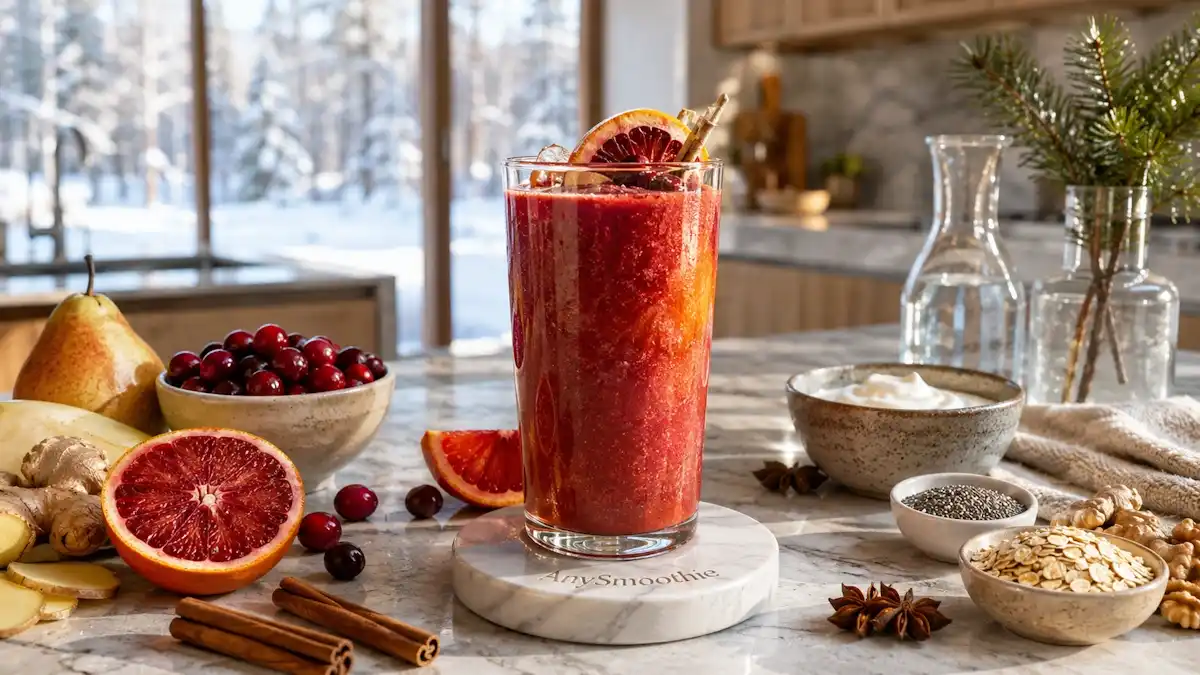
Cold weather can make breakfast feel like an afterthought. A blender full of fruit and ice sounds fresh, but it often falls short when you need steady energy, hydration, digestion support, and better nutrient intake.
Balanced winter wellness smoothies solve that gap. The formula is simple, protein, fiber, healthy fats, and winter-friendly produce, all working together in one glass. When those parts are in place, the smoothie feels more like a real meal and less like a sugary snack. That balance matters when appetite shifts and meal timing gets messy.
What makes balanced winter wellness smoothies different from regular smoothies?
A regular smoothie often leans on fruit first. That works on a hot day, but winter calls for more staying power and a richer texture. Cold mornings also change how people eat, drink, and crave food. You may want something warmer in flavor, more filling, and less likely to spike and crash your energy.
If immune support is one of your winter priorities, explore our guide to winter wellness smoothie ideas for immune health.
The winter nutrition formula that keeps smoothies satisfying
Protein gives a smoothie its backbone. Greek yogurt, kefir, soy milk, cottage cheese, or protein powder help it feel like breakfast instead of a drink. Fiber comes next, with oats, chia, flax, pears, apples, and berries helping slow the pace of digestion.
Healthy fats matter too. Nut butter, tahini, avocado, and hemp seeds improve mouthfeel and help the blend feel complete. Carbs still belong in the mix, because fruit, oats, and sweet potato give quick fuel without needing a long ingredient list. Utah State University Extension has a straightforward guide on smoothies as part of a balanced diet, and that idea fits here.
Why seasonal ingredients work better in colder months
Winter produce and pantry staples keep flavors brighter. Citrus wakes up richer ingredients. Apples and pears add gentle sweetness without making the smoothie taste flat. Pumpkin and sweet potato bring body, while cinnamon, ginger, cacao, and vanilla add warmth.
Chia and flax also earn their place in winter blends. They thicken the drink, add fiber, and help round out the texture. The result is a smoothie that feels seasonal instead of like a summer recipe with a sweater on.
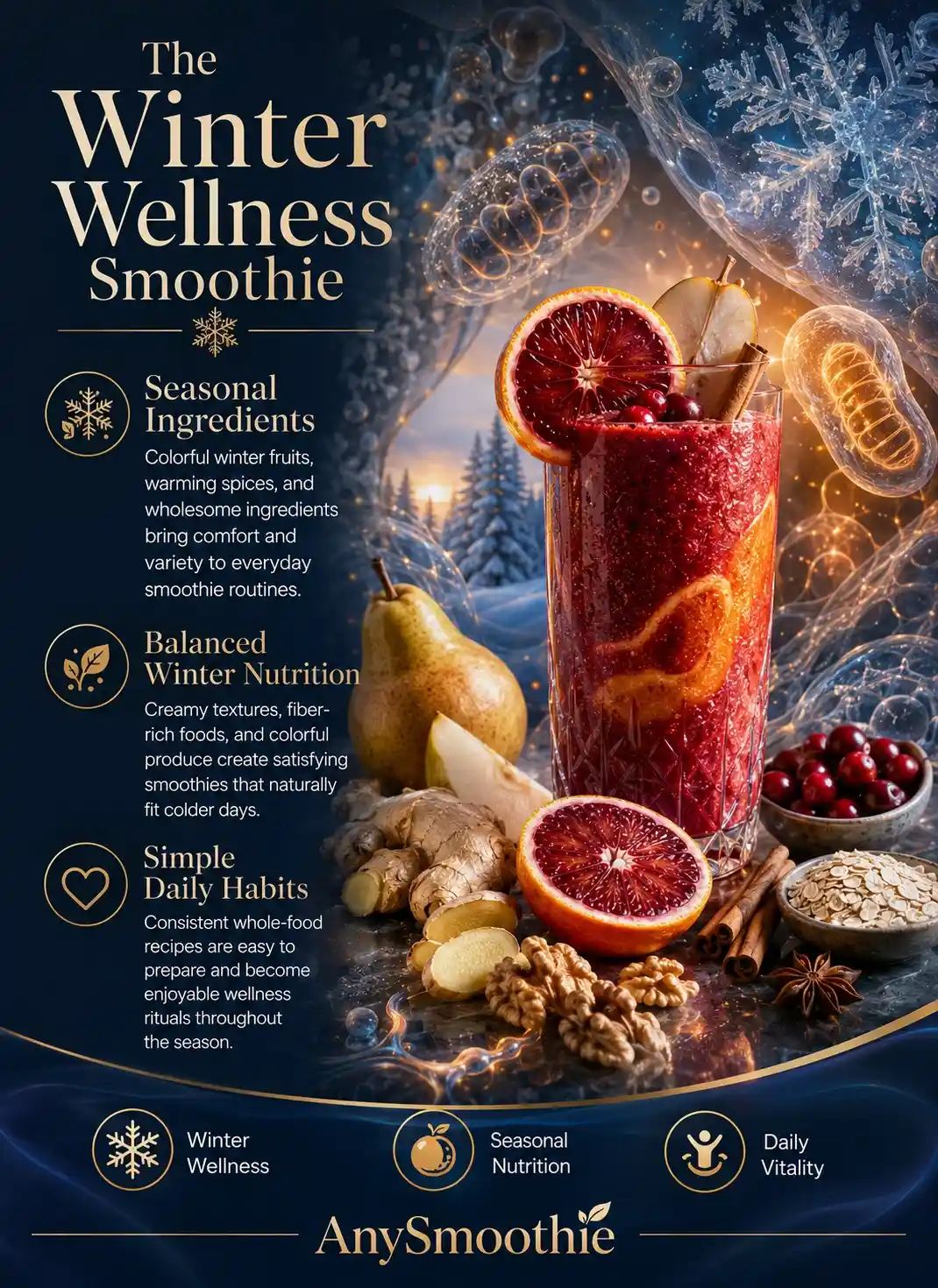
How to build balanced winter wellness smoothies that actually taste good
A good winter smoothie starts with a simple structure. Use a creamy liquid, add a protein source, then fold in fiber, one healthy fat, and one or two flavor builders. That order matters because it keeps the final blend smooth and satisfying.
A winter smoothie should feel like breakfast or a real snack, not a glass of fruit juice.
Flavor balance matters as much as nutrition balance. Too much sweet fruit can make a smoothie thin and one-note. A little acid from citrus, a little spice from ginger, and a little fat from nut butter or tahini make the whole drink taste finished.
Start with a creamy base, then layer in protein and fiber
Milk, kefir, yogurt, soy milk, oat milk, and blended cottage cheese all work well. Each one changes the texture in a different way. Yogurt gives tang and body. Soy milk adds protein with a clean finish. Oat milk softens sharper flavors.
Once the base is set, add fiber without making the smoothie gritty or heavy. Oats, chia, flax, and frozen fruit are the easiest places to start. They thicken the blend and help it feel rich enough for colder weather.
Use healthy fats and spices to make winter flavors feel complete
Nut butter, tahini, avocado, hemp seeds, vanilla, cinnamon, nutmeg, turmeric, and ginger do more than add flavor. They soften sharp edges, improve mouthfeel, and make the smoothie taste deliberate instead of random.
A spoonful of almond butter in an apple blend or tahini in a citrus smoothie changes the whole experience. Spices matter too. Cinnamon and ginger make winter flavors feel natural, while cacao adds depth without needing extra sugar.
3 Balanced winter wellness smoothies
These three blends cover different needs, morning energy, a brighter reset, and a cozy afternoon lift.
| Smoothie | Main goal | Key ingredients | Texture | Best time |
|---|---|---|---|---|
| Apple cinnamon oat | Steady morning energy | Apple, oats, Greek yogurt or soy milk, nut butter, cinnamon | Thick and breakfast-like | First meal |
| Citrus ginger | Bright reset and hydration | Orange, lemon, ginger, banana or mango, kefir or protein powder | Light and silky | Midmorning |
| Cacao berry | Cozy afternoon support | Frozen berries, cacao, Greek yogurt or plant protein, chia, milk | Rich and dessert-like | Afternoon |
Each recipe keeps the same basic structure, but the flavor changes enough to keep winter smoothie fatigue away.
Smart swaps, common mistakes, and simple prep tricks
Dairy-free versions work best with unsweetened soy milk, oat milk, or a mix of plant milk and chia. For more protein, use Greek yogurt, kefir, cottage cheese, or protein powder. If you want less sugar, cut back on fruit and add avocado, cauliflower, or extra ice for body.
The most common mistakes are easy to spot. Too much fruit makes the smoothie taste like juice. Skipping protein leaves you hungry again soon. Making it too thin also hurts the texture, which matters more in winter than many people think.
Freeze banana slices, berries, and chopped apples in advance. Batch smoothie packs with oats, chia, cinnamon, and ginger. Keep nut butter, cacao, and vanilla close by so you can adjust flavor fast.
Conclusion
Balanced winter wellness smoothies work because they combine comfort with structure. Protein, fiber, healthy fats, and seasonal produce turn a quick blend into something steady and useful.
Mix and match the formula based on what’s in your kitchen and what winter produce looks good that week. Once you know the pattern, your next smoothie can be simple, satisfying, and ready for the season.
🛡️ Safety Notes & Dietary Interactions
- Adjust Portions to Your Needs: Even balanced smoothies can become calorie-dense when multiple sources of fruit, oats, nut butters, and seeds are combined. Match portion sizes to your activity level, appetite, and whether the smoothie is replacing a meal or serving as a snack.
- Choose Ingredients for Your Health Needs: Winter smoothies can be adapted for dairy-free, gluten-free, or lower-sugar eating patterns. If you have diabetes, kidney disease, digestive conditions, or food allergies, adjust ingredients with guidance from a qualified healthcare professional.
- Increase Fiber Gradually: Oats, chia seeds, flaxseed, berries, and other fiber-rich ingredients support digestive health, but introducing large amounts too quickly may lead to bloating or discomfort. Build fiber intake gradually while maintaining good daily hydration.
- A Smoothie Supports—It Doesn’t Replace—Healthy Habits: Winter wellness depends on the overall pattern of nutrition, regular movement, quality sleep, hydration, and stress management. A balanced smoothie works best as one consistent part of that broader lifestyle rather than as a stand-alone solution.
FAQ
What makes a winter smoothie different from a regular smoothie?
Winter smoothies usually contain more protein, fiber, and healthy fats than lighter summer versions. Ingredients like oats, Greek yogurt, nut butter, chia seeds, cinnamon, ginger, and seasonal fruits create a thicker, more satisfying drink that supports steady energy and helps you stay full longer during colder months.
Can I drink a smoothie every day during winter?
Yes. For most healthy adults, a balanced smoothie can fit comfortably into a daily winter routine when it includes a variety of whole-food ingredients. Rotating fruits, vegetables, protein sources, healthy fats, and spices throughout the week helps provide a wider range of nutrients while keeping breakfasts interesting and enjoyable.
Which fruits work best in winter wellness smoothies?
Seasonal fruits such as apples, pears, oranges, mandarins, grapefruit, kiwi, and frozen berries are excellent choices. They pair well with warming spices like cinnamon or ginger while contributing vitamins, fiber, and natural sweetness. Using seasonal produce also adds variety without relying heavily on tropical fruits or added sugars.
How can I make a winter smoothie more filling?
The easiest way is to include a complete source of protein together with fiber and healthy fats. Greek yogurt, kefir, cottage cheese, soy protein, oats, chia seeds, flaxseed, avocado, or nut butter all increase satiety. Combining these ingredients creates a smoothie that feels much more like a complete breakfast than a simple fruit drink.
Are warm spices useful in winter smoothies?
Absolutely. Cinnamon, ginger, nutmeg, vanilla, cardamom, and cocoa add rich seasonal flavor without adding much sugar. Besides improving taste, these ingredients help create the comforting profile many people prefer during colder months, making it easier to enjoy nutritious smoothies consistently throughout the winter season.

Medical Disclaimer: AnySmoothie content is for educational purposes only and is not a substitute for professional medical advice. Consult a healthcare provider for personalized guidance. See our full Disclaimer & Terms of Use. AI Transparency: AnySmoothie may use AI to support content development. All content undergoes human editorial review for accuracy, clarity, and editorial quality. See our full AI Transparency.