
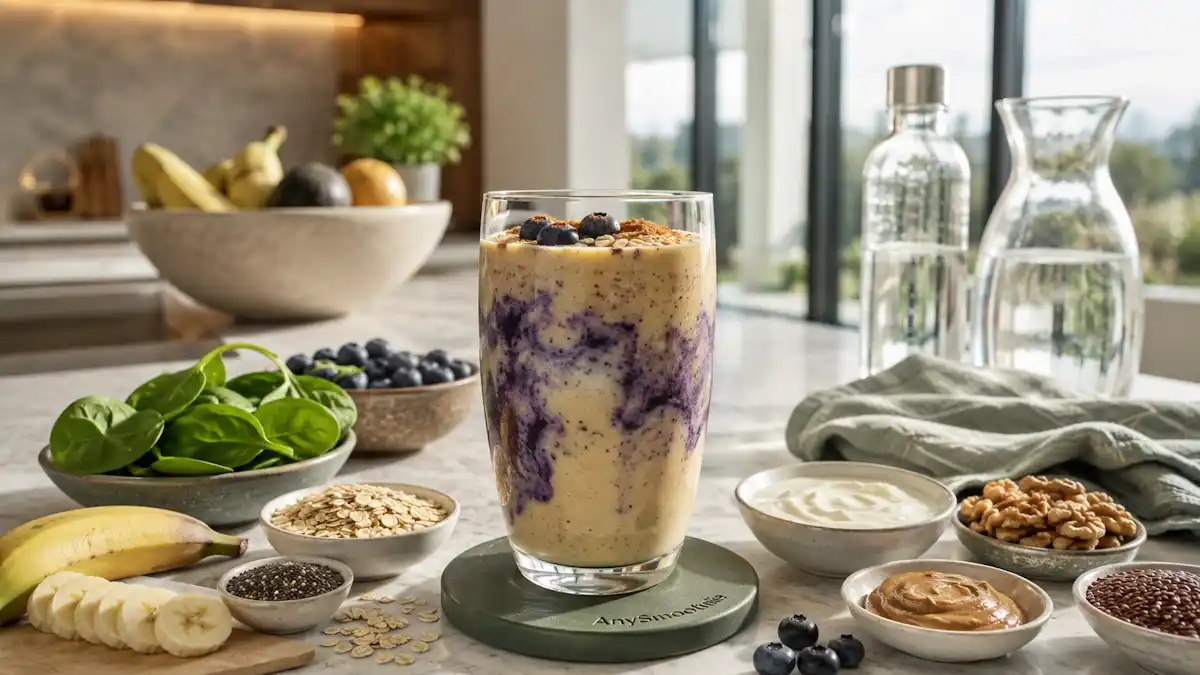
GLUT4 is one of the main transporters that helps glucose move from your blood into muscle cells. After training, that system matters because active muscles are more ready to take up fuel, and the right smoothie can support that process without feeling heavy.
If you’re using GLUT4 smoothies for muscle glucose uptake, the goal is simple, match the ingredients to the moment. That means choosing carbs, protein, and fiber based on whether you need quick recovery, steadier energy, or easier digestion.
What GLUT4 does and why smoothie ingredients can matter
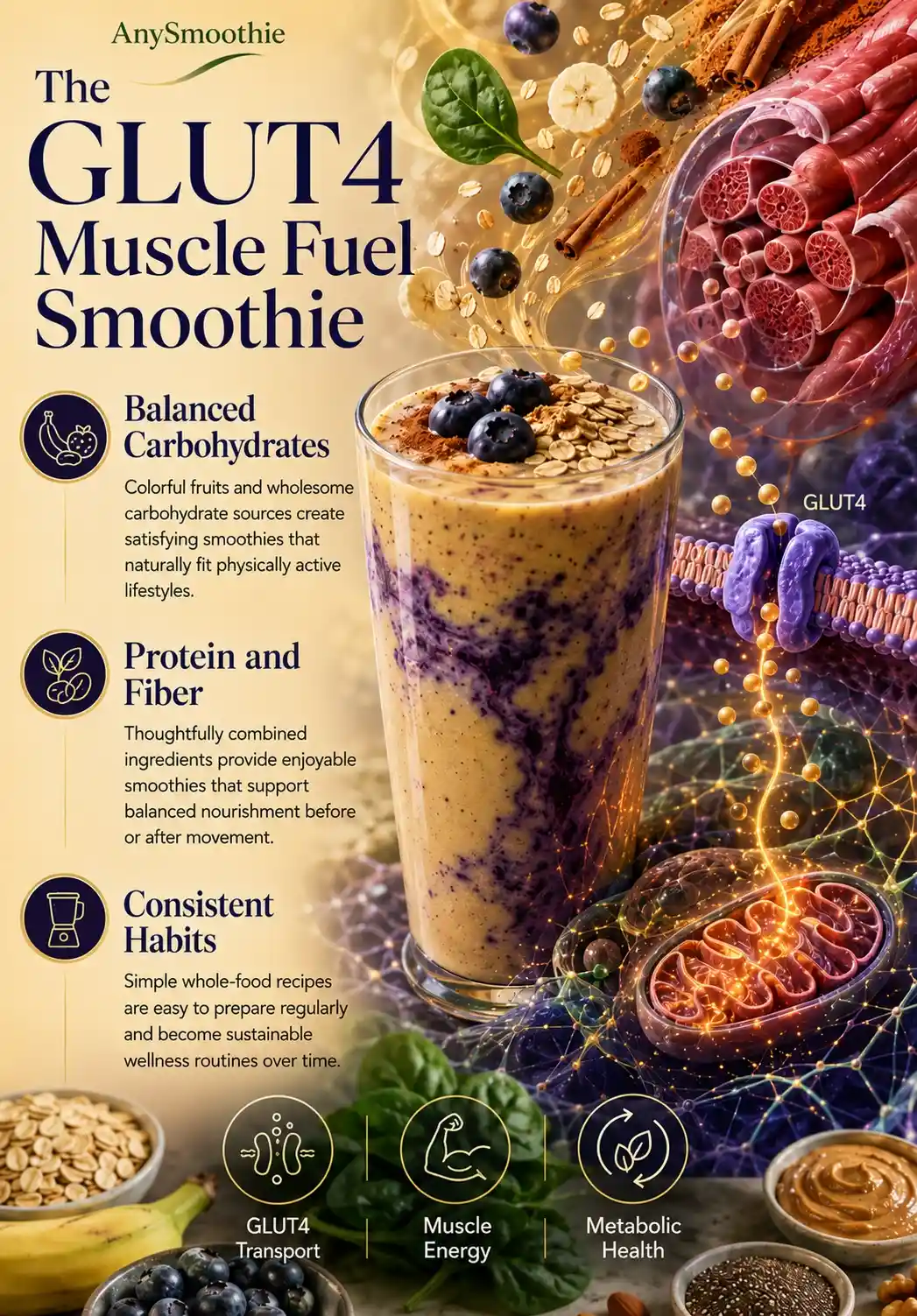
GLUT4 sits inside muscle and fat cells until insulin and muscle contraction signal it to move to the cell surface. Once it’s there, glucose can enter the muscle more easily. For a concise physiology reference, see the NCBI’s GLUT4 physiology summary.
How muscle contraction helps move GLUT4
Exercise acts like a signal flare for muscle tissue. During and after activity, GLUT4 activity rises, and muscles are more prepared to absorb glucose. That is one reason the post-workout window gets so much attention.
Research on exercise and GLUT4 in skeletal muscle shows that contraction supports glucose uptake through pathways that do not rely on insulin alone. In plain terms, trained muscles are primed for refueling.
Why carb quality, protein, and fiber change the response
A smoothie with fast carbs moves through the stomach more quickly and can raise blood glucose faster. Banana, pineapple, or a little honey can fit that role. Protein slows the curve a bit, while fiber and fat slow digestion more.
That is useful when you want a calmer rise, but it can work against you if you want fast refueling. The blend should match the job.
What to put in GLUT4 smoothies for better muscle fuel support
The best formulas keep the ingredient list short and deliberate. Carbs refill fuel, protein supports recovery, and a few extras can help the blend fit your training day.
Best carb sources for quick but steady glucose delivery
Ripe banana is a classic because it blends well and digests fast. Dates, pineapple, and a spoon of honey work the same way when you want quick fuel.
Berries and oats add more fiber, so they slow the rise a bit. That makes them better for a meal smoothie or a lighter training day. Yogurt also adds carbs plus protein, which helps round out the blend.
Protein add-ins that support recovery
Whey protein is the fastest and easiest option for many people. Greek yogurt, kefir, cottage cheese, and plant protein blends also work well.
If you want more recipe ideas built around recovery, protein smoothies for muscle recovery gives you useful starting points. The main goal is simple, enough protein to make the smoothie more complete, without turning it into a chalky shake.
Helpful extras, like creatine, cinnamon, and greens
Creatine fits well in a performance smoothie if you already use it. Cinnamon can add flavor with almost no extra volume. Spinach, chia, and flax bring micronutrients and texture, but they also thicken the blend.
That last point matters. More texture can be helpful on rest days, but not right before hard training.
3 GLUT4 Smoothies for muscle glucose uptake
These three formulas cover fast recovery, daily balance, and easy digestion. Choose the one that matches the workout, not the one with the most ingredients.
| Recipe | Main purpose | Best timing | Key ingredients | Who it suits best |
|---|---|---|---|---|
| Fast post-workout recovery | Quick carb refill | Right after training | Banana, pineapple, whey, milk or water, pinch of salt | People who want simple recovery |
| Balanced everyday smoothie | Steadier energy | Breakfast or lunch | Greek yogurt, berries, oats, chia, cinnamon | Non-training days or meal replacement |
| Low-fiber workout smoothie | Easy digestion | Before or after training | Banana, kefir, whey or plant protein, honey | People with a sensitive stomach |
The first blend is the fastest. The second is the most balanced. The third keeps the stomach load lighter.
How to time your smoothie for the best training window
A smoothie works best when it matches the moment. Small adjustments in timing and composition can make the same ingredients fit very different training goals.
Before training: when a smoothie helps and when it does not
A pre-workout smoothie works best when it is small and easy to digest. If you drink it 30 to 90 minutes before exercise, keep the fiber and fat low.
A huge blend can backfire because it stays in the stomach longer. When speed matters, a simpler mix usually wins.
After training: the easiest window for muscle glucose uptake support
After lifting, intervals, or long cardio, muscles are more ready to take in glucose. That is the easiest time to use a smoothie for refueling.
The best post-workout blends are the ones you can tolerate and repeat. Consistency matters more than exotic ingredients.
Refueling is only one part of post-workout nutrition. If muscle soreness is also part of your recovery routine, explore our guide to smoothies for post-workout DOMS, which focuses on anthocyanin-rich ingredients such as tart cherries and berries.
Common mistakes that make GLUT4 smoothies less effective
Even a well-chosen smoothie can miss the mark if the ingredients or timing don’t match your training goal. A few common mistakes can make the drink less effective for supporting muscle glucose uptake and post-exercise recovery.
Overloading on fruit without enough protein
A fruit-only smoothie can taste good, but it leaves the recovery job unfinished. Protein helps balance the blend and supports muscle repair after training.
That does not mean you need a huge scoop. It means the smoothie should have enough protein to match the carb load.
Using too much fat or fiber right before training
Nut butter, lots of chia, and big handfuls of flax can slow digestion a lot. That is fine for a meal smoothie, but it is less useful near a workout.
If your goal is fast fuel, keep the heavy add-ins for another time.
Conclusion
The best smoothie for GLUT4 support is the one that matches your training window. Quick carbs and enough protein work well after exercise, while fiber and fat make more sense when you want slower energy.
Choose ingredients for the job in front of you, not for hype. A simple blend that you digest well will usually beat a complicated one you never want to drink again.
🛡️ Safety Notes & Dietary Interactions
- Match the Workout: Adjust carbohydrate, protein, and fiber to the type and timing of your exercise. A recovery smoothie after training should be different from one consumed before a workout or as a regular meal.
- Digestive Comfort: If you experience stomach discomfort around exercise, keep pre-workout smoothies lower in fiber and fat, introduce new ingredients gradually, and choose serving sizes that match your personal tolerance.
- Medical Considerations: People with diabetes, kidney disease, digestive disorders, or those taking medications that affect blood glucose should discuss individualized nutrition strategies with a qualified healthcare professional before making major dietary changes.
- Recovery Is Multifactorial: Muscle glucose uptake depends on more than nutrition alone. Regular physical activity, adequate recovery, hydration, sleep, and an overall balanced diet all contribute to healthy glucose metabolism and muscle recovery.
FAQ
What is GLUT4 and why is it important after exercise?
GLUT4 is a glucose transporter found mainly in skeletal muscle and fat tissue. During and after exercise, muscle contractions help move GLUT4 to the surface of muscle cells, making it easier for glucose to enter and support normal glycogen replenishment. This natural response is one reason post-workout nutrition receives so much attention.
What should a GLUT4-friendly smoothie contain?
A balanced recovery smoothie usually combines carbohydrate-rich ingredients such as banana, berries, or pineapple with a quality protein source like Greek yogurt, kefir, whey, or a plant-based protein. The exact balance depends on whether the smoothie is intended for rapid post-workout recovery, a meal replacement, or a lighter snack between meals.
Is it better to drink a smoothie before or after training?
Both options can work, but they serve different purposes. A lighter smoothie before exercise provides readily available fuel without excessive fullness, while a post-workout smoothie focuses on replacing carbohydrates, supporting muscle recovery, and helping replenish glycogen stores after physical activity. The best timing depends on your training schedule and personal tolerance.
Should I avoid fiber and fat in every workout smoothie?
Not necessarily. Fiber and healthy fats are valuable parts of a balanced diet, but larger amounts may slow digestion before or immediately after intense exercise. Many people benefit from lighter, easier-to-digest smoothies around workouts while choosing more fiber-rich, satisfying blends for breakfast, lunch, or recovery meals later in the day.
Can a smoothie improve muscle glucose uptake by itself?
No single smoothie can directly increase GLUT4 activity on its own. Exercise is the primary stimulus that promotes muscle glucose uptake through GLUT4. A well-balanced smoothie simply complements that natural physiological process by supplying carbohydrates, protein, fluids, and other nutrients that support normal recovery after training as part of an overall healthy lifestyle.

Medical Disclaimer: AnySmoothie content is for educational purposes only and is not a substitute for professional medical advice. Consult a healthcare provider for personalized guidance. See our full Disclaimer & Terms of Use. AI Transparency: AnySmoothie may use AI to support content development. All content undergoes human editorial review for accuracy, clarity, and editorial quality. See our full AI Transparency.