
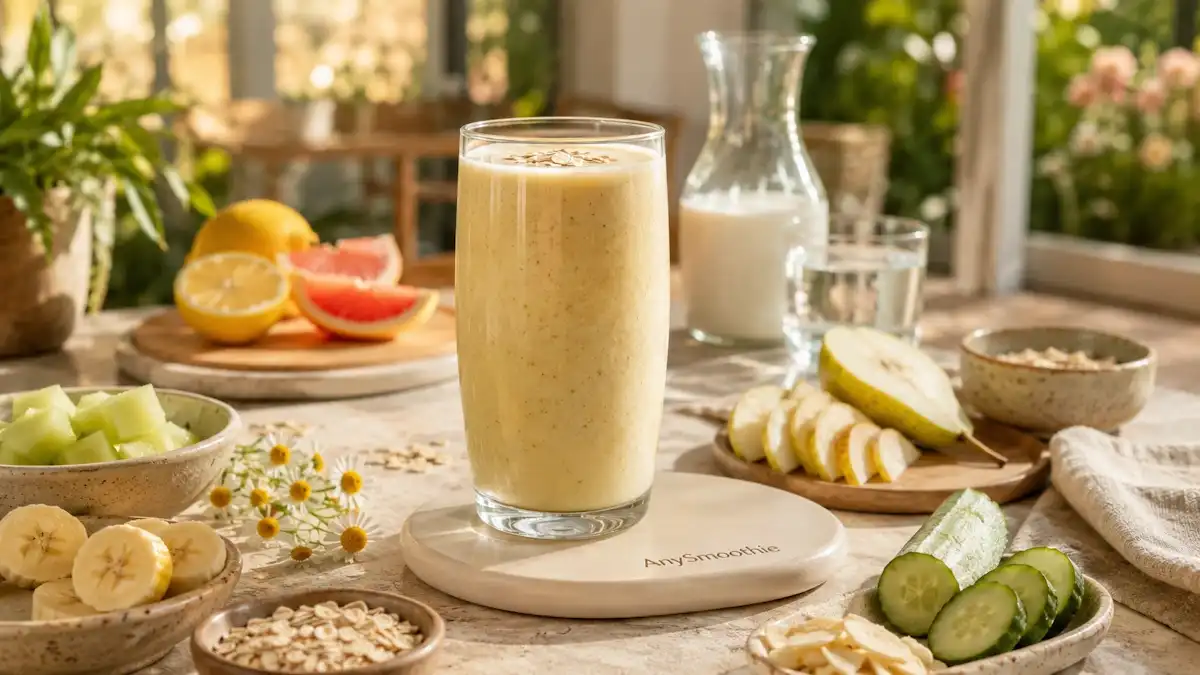
Are smoothies good for acid reflux? Sometimes, yes, but the wrong blend can turn a simple drink into a trigger. The issue is usually not smoothies themselves. It’s the mix of acid, fat, sugar, portion size, and timing.
If you build them with gentle ingredients, smoothies can fit into a reflux-aware routine. This guide shows what helps, what often backfires, and how to make a better option at home without overthinking it.
Why some smoothies help acid reflux while others trigger it
Smoothies can go either way because they hit the stomach fast. A blend with citrus, lots of sugar, and rich add-ins can raise pressure in the stomach and slow gastric emptying. That keeps the contents sitting longer, which can make reflux more likely.
Acidity matters too. Lower-acid ingredients are usually easier on the upper digestive tract, while sharp fruit can feel rough when symptoms are already active. Fiber helps in moderation, because it adds structure without making the drink heavy. Temperature matters as well, since very cold drinks can feel intense for some people.
Here’s a quick way to compare common choices.
| Ingredient or habit | Likely effect | Why it matters | Better swap | Easy example |
|---|---|---|---|---|
| Citrus or pineapple | Often irritating | Higher acidity can sting | Banana or melon | Orange juice -> banana base |
| Heavy add-ins | Can worsen reflux | Fat slows digestion | Water, oat milk, light yogurt | Nut butter -> oats |
| Mint, chocolate, coffee | Common triggers | Can relax the lower esophageal sphincter | Ginger or mild fruit | Peppermint -> pear |
| Large, icy smoothies | Harder to tolerate | Volume and cold can feel heavy | Smaller, slower sips | Full glass -> half glass |
A smoothie can be reflux-friendly when it stays low-acid, modest in fat, and small enough to digest well.
If citrus is the biggest problem, the acid reflux smoothies without citrus guide gives more fruit options that stay gentle.
The ingredients most likely to calm or irritate your stomach
Bananas, oats, melon, ginger, and spinach are common starting points. They bring texture and flavor without much acid. If dairy works for you, low-fat yogurt can add protein without the heaviness of richer bases.
On the other side, citrus, pineapple, chocolate, mint, coffee, and large amounts of nut butter are common troublemakers. They can irritate the stomach, add pressure, or relax the valve that keeps acid down. If you want a fruit-first approach, keep the profile soft and mild.
How smoothie texture, size, and timing affect reflux
A large smoothie can act like a meal and a drink at the same time. That can stretch the stomach and increase pressure. Thick blends can also sit heavier than many people expect.
Smaller portions usually work better than oversized cups. Slower sipping helps too, because it gives the stomach more time to handle the load. Very cold smoothies may also feel harsher, so room temperature or lightly chilled can be easier on some days. Don’t drink one right before lying down, either.
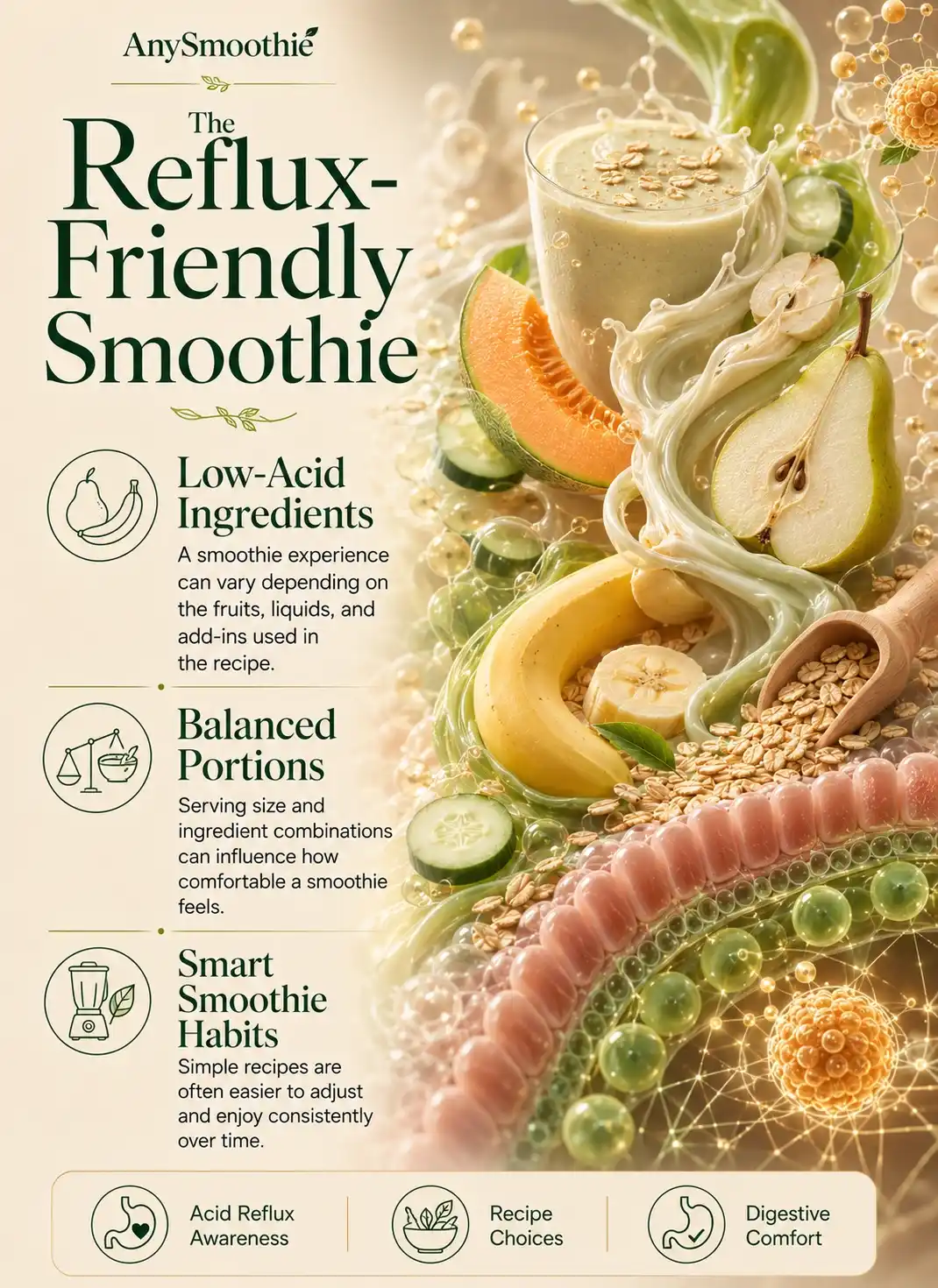
How to build a reflux-friendly smoothie that still tastes good
The best formula is simple. Start with a low-acid liquid, add gentle fruit, then layer in a little fiber or protein. That keeps the drink balanced without making it dense.
A good smoothie usually tastes calm, not sharp. It should also feel light enough that your stomach doesn’t have to work overtime.
Use a low-acid base, then add gentle fiber and balanced protein
Water, oat milk, and low-fat dairy you already tolerate are solid bases. From there, add banana, pear, melon, or a small handful of spinach. Oats can thicken the texture and help the blend feel steady.
For protein, keep it plain and simple. A little yogurt or a clean protein powder can work, as long as the add-in doesn’t bring a lot of sugar or flavoring. Good pairings include banana with oat milk, pear with spinach, and melon with yogurt.
Watch the extras that quietly make reflux worse
Some add-ins look healthy but backfire fast. Cocoa, peppermint, sweet syrups, and acidic juices are common examples. Large spoonfuls of nut butter can also make a smoothie much heavier.
A simple filter helps:
- Skip peppermint and cocoa when symptoms are active.
- Use nut butter in a small amount, if at all.
- Choose whole fruit over juice.
- Keep protein powders plain and low in extras.
3 Smoothies that may work well for acid reflux
These are starting points, not fixed rules. If you want more ingredient ideas, GERD-Friendly smoothies for everyday digestion offers a practical overview.
Banana oats smoothie for a gentle morning start
Ingredients
- 1 medium ripe banana
- 1/4 cup rolled oats
- 1 cup unsweetened oat milk or water
- 1/4 cup plain yogurt, optional
Blend until smooth. The flavor stays soft, and the acidity stays low.
This is the kind of smoothie that works well when your stomach wants something filling but calm. It’s also easy to adjust. Make it thinner if thick drinks bother you.
A dedicated banana smoothie for acid reflux recipe can also give you a few simple variations built around the same low-acid foundation.
Estimated Nutrition per Serving
Estimated with unsweetened oat milk and without optional yogurt.
- Calories: ~300 kcal
- Protein: ~7 g
- Carbohydrates: ~59 g
- Fat: ~5 g
- Fiber: ~7 g
- Sugars: ~20 g
For a particularly soft texture, let the oats soak in the oat milk for five minutes before blending. They integrate more smoothly with the banana and make the drink feel less grainy.
Melon cucumber smoothie for a light, low-acid option
Ingredients
- 1 cup cantaloupe or honeydew
- 1/2 cucumber
- 1 small handful spinach, optional
- 3/4 cup water or unsweetened oat milk
Blend until smooth.
This mix is useful on warmer days or when you want something less sweet. It’s not a cure, but it is a practical test recipe. Start small and see how your body responds.
Estimated Nutrition per Serving
Estimated with cantaloupe, water, and without optional spinach.
- Calories: ~75 kcal
- Protein: ~2 g
- Carbohydrates: ~18 g
- Fat: ~0.5 g
- Fiber: ~2 g
- Sugars: ~14 g
Cucumber releases plenty of liquid once blended, especially alongside juicy melon. Start with only part of the water and add more afterward if needed to avoid an unnecessarily thin smoothie.
Ginger pear smoothie for calm flavor and easy digestion
Ingredients
- 1 medium ripe pear
- 1 cup water or unsweetened oat milk
- 1/4 teaspoon finely grated fresh ginger
Blend until smooth.
Pear gives sweetness without much sharpness. A small piece of ginger adds a warm edge that some people find comfortable. Use water, oat milk, or another neutral base.
Keep the ginger mild. Too much can dominate the flavor and feel harsh. A light hand usually works better than a strong one.
Estimated Nutrition per Serving
Estimated with unsweetened oat milk.
- Calories: ~220 kcal
- Protein: ~4 g
- Carbohydrates: ~48 g
- Fat: ~3 g
- Fiber: ~6 g
- Sugars: ~25 g
When smoothies may not be a good idea for acid reflux
Smoothies can be a poor choice during a flare-up, especially if they’re packed with trigger foods. They can also be too much when you’re already feeling full, bloated, or sensitive.
If a smoothie causes repeated symptoms, the recipe needs a reset. A good day for one person may be a bad day for another.
Common signs your smoothie is triggering symptoms
Watch for these after a smoothie:
- Burning in the chest or throat
- Sour taste in the mouth
- Burping or bloating
- Pressure after drinking
- Nighttime symptoms after a late smoothie
If a smoothie causes burning or burping within an hour, the blend is probably too harsh for your current gut state.
Simple swaps if your current smoothie is too harsh
Start by changing one thing at a time. Replace citrus with banana, cut back on nut butter, and skip mint. Then lower the sweetness and shrink the portion.
If the drink still feels off, try a thinner texture and a slower pace. Small changes often reveal the problem fast.
What the best smoothie for acid reflux really comes down to
The best smoothie for acid reflux is the one that fits your body, your timing, and your ingredient tolerance. In most cases, that means low-acid fruit, modest fat, controlled sweetness, and a smaller serving.
Test one change at a time so you know what helped. Your body will usually give clear feedback if you keep the recipe simple.
Conclusion
Smoothies can fit into a reflux-friendly routine when they’re built with care. The wrong blend can trigger burning or fullness, while the right one can feel light and easy.
Start simple, watch your symptoms, and adjust one ingredient at a time. Use the smoothie ideas here as a starting point, then let your own response decide what stays on the menu.
🛡️ Safety Notes & Dietary Interactions
- Personal Triggers: Reflux responses vary from person to person. A smoothie that feels comfortable for one individual may still trigger symptoms in another, so introduce changes gradually.
- Portion Awareness: Even low-acid smoothies can become problematic when servings are too large. Moderate portions often reduce stomach pressure and improve overall comfort.
- Ingredient Testing: When symptoms are active, test only one new ingredient at a time. This makes it easier to identify which foods support comfort and which may contribute to reflux.
- Medical Guidance: Persistent heartburn, frequent reflux, swallowing difficulties, or worsening digestive symptoms should be evaluated by a qualified healthcare professional.
FAQ
Are smoothies generally considered good for acid reflux?
Smoothies can fit into a reflux-friendly eating pattern when they use low-acid fruits, moderate portions, and simple ingredients. The smoothie itself is not usually the problem. The combination of acidic fruits, excess fat, added sugars, and large serving sizes often determines how comfortable it feels.
What fruits are usually easiest to tolerate in reflux-friendly smoothies?
Bananas, pears, melons, and sometimes ripe peaches are commonly used because they tend to have a softer flavor profile and lower acidity than citrus fruits or pineapple. Individual tolerance varies, so testing fruits one at a time is often the most reliable approach.
Can smoothie thickness affect reflux symptoms?
Yes. Very thick smoothies may feel heavier in the stomach and can contribute to pressure after drinking. A thinner texture made with water, oat milk, or almond milk is often easier to tolerate than an extremely dense smoothie.
Is it better to drink a smoothie slowly if you have GERD?
Drinking slowly can help reduce stomach pressure and improve comfort. Rapidly consuming a large smoothie may increase fullness and make reflux symptoms more noticeable. Smaller sips over several minutes are often better tolerated.
What is the simplest reflux-friendly smoothie formula?
A practical starting formula is one low-acid fruit, one gentle liquid, and one optional fiber source. For example, banana, oat milk, and a small amount of oats create a simple smoothie that is easy to adjust based on personal tolerance and preferences.

Medical Disclaimer: AnySmoothie content is for educational purposes only and is not a substitute for professional medical advice. Consult a healthcare provider for personalized guidance. See our full Disclaimer & Terms of Use. AI Transparency: AnySmoothie may use AI to support content development. All content undergoes human editorial review for accuracy, clarity, and editorial quality. See our full AI Transparency.