
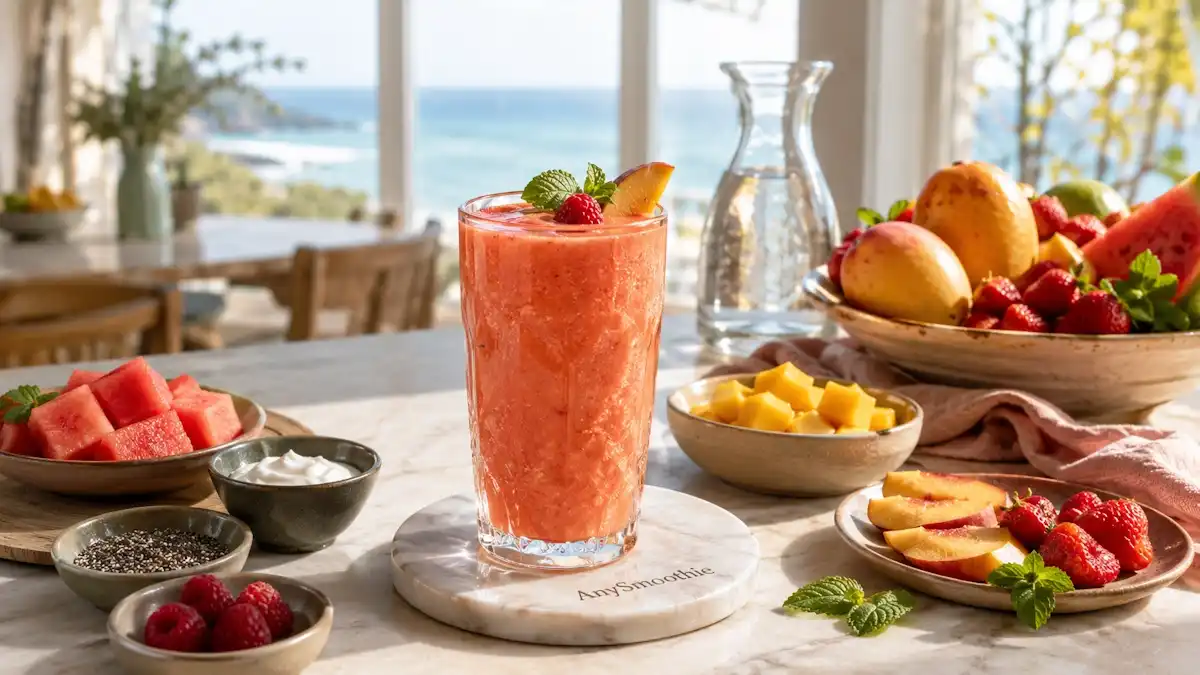
A smoothie won’t replace sleep or sunscreen, but it can support skin from the inside out. That’s why astaxanthin smoothies for skin vitality have caught attention in biohacking and wellness circles.
Astaxanthin is a red carotenoid with antioxidant activity, and it often shows up in conversations about skin appearance, recovery, and daily defense against oxidative stress. In the next sections, you’ll see how it may fit into a skin-focused routine, how to build a better-tasting blend, and how to make a few easy recipes you’ll want to repeat.
What makes astaxanthin interesting for skin support?
Astaxanthin stands out because it’s a naturally occurring pigment found in microalgae, and that’s where many supplement forms begin. It belongs to the carotenoid family, the same group that gives carrots and tomatoes their color, but astaxanthin has a deeper red tone and a stronger antioxidant profile than many common plant pigments.
Research has looked at astaxanthin’s role in skin health, including its relationship to oxidative stress and visible skin changes. A good science summary is available in this NIH review on astaxanthin and skin health. The key point is simple, it may help support the skin’s normal defenses when paired with a steady routine.
Astaxanthin in simple terms
Think of astaxanthin as a naturally red compound that helps the body deal with everyday oxidative load. It doesn’t act like a miracle ingredient, and it shouldn’t be treated that way. Still, its antioxidant activity makes it interesting for people who want to support skin vitality with food and supplements.
How it fits into a skin vitality routine
Astaxanthin works best as part of a bigger picture. Sleep, hydration, balanced meals, and sun protection all matter more than any single smoothie.
Used that way, it becomes one more tool for supporting normal skin physiology. That’s the real appeal. You’re not chasing a quick fix, you’re feeding the systems that keep skin looking healthy over time.
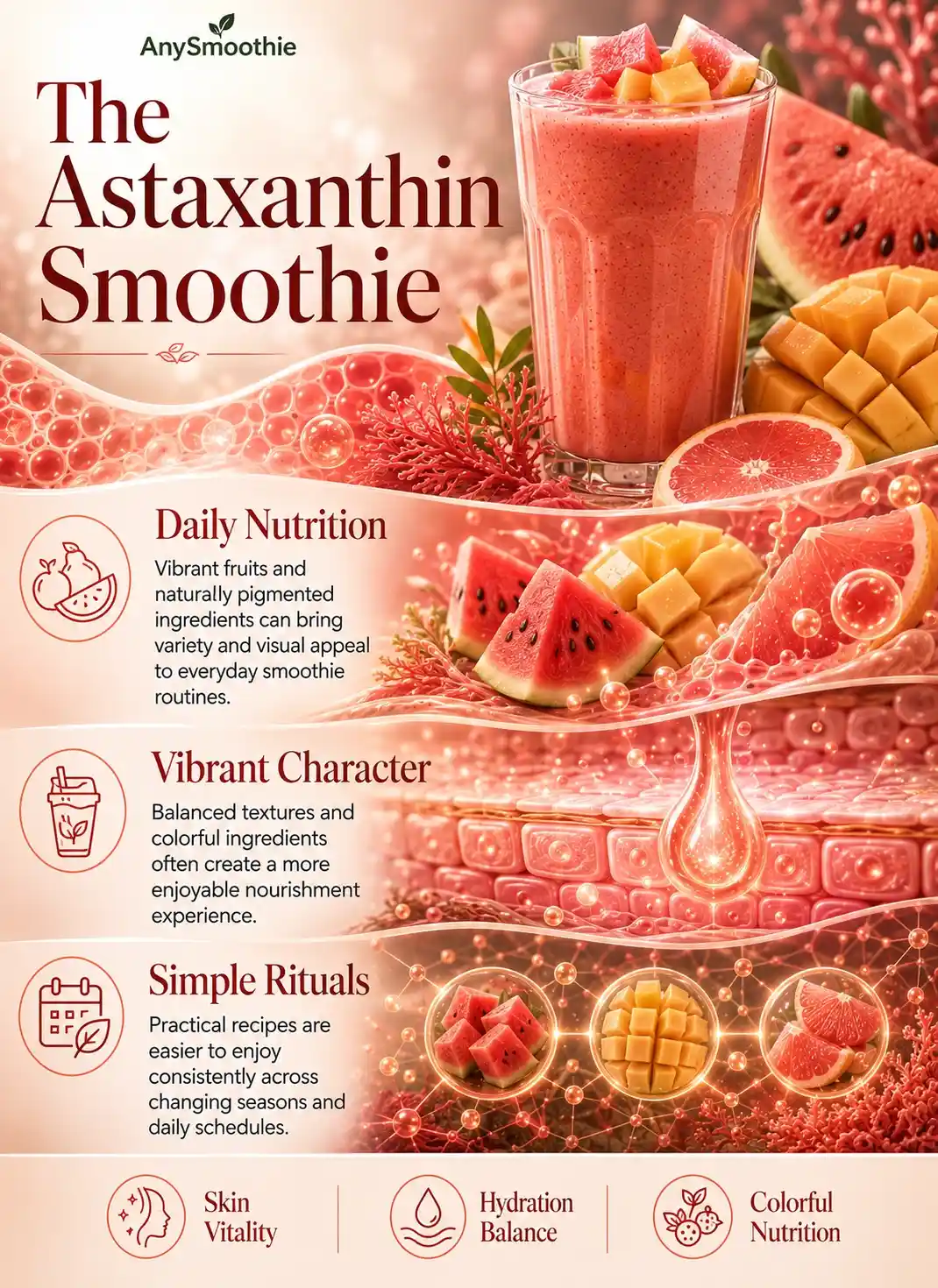
How to build astaxanthin smoothies that actually taste good
The best smoothies balance flavor, texture, and nutrient density. Astaxanthin blends well with fruits, dairy or dairy-free yogurt, seeds, and creamy fats, which also helps the drink feel satisfying.
| Ingredient role | Flavor | Skin-supporting nutrients | Texture impact | Best pairings |
|---|---|---|---|---|
| Berries | Tart-sweet | Vitamin C, polyphenols | Thick and cold | Yogurt, chia, astaxanthin |
| Mango or papaya | Bright, tropical | Vitamin C, carotenoids | Smooth and juicy | Coconut milk, banana |
| Yogurt or kefir | Tangy, creamy | Protein, calcium, probiotics | Adds body | Berries, flax, citrus |
| Avocado or chia | Mild, rich | Healthy fats, fiber | Makes it velvety | Greens, lime, melon |
| Spinach or cucumber | Fresh, light | Folate, water, minerals | Lifts heaviness | Citrus, pear, coconut water |
Healthy fats matter here because astaxanthin is fat-soluble. A little avocado, yogurt, chia, flax, or coconut milk can help the blend taste fuller and feel more balanced.
Small amounts of fat make carotenoid-rich smoothies easier to enjoy and easier to use consistently.
If you want more skin-focused ideas, the best smoothies for glowing skin page has a useful set of flavor combinations.
Best smoothie ingredients to pair with astaxanthin
Berries work well because they add sharp flavor and a deep color that fits the red pigment. Mango and pineapple do the opposite, they soften the taste and make the smoothie feel brighter.
Yogurt, kefir, chia, flax, and avocado bring creaminess. Meanwhile, coconut milk gives a smooth finish without much effort. If you prefer green smoothies, keep the greens mild and use citrus or melon to keep the flavor fresh.
What to avoid if you want better flavor and texture
Too much astaxanthin can make a smoothie taste off, so stick with the label dose. Too little liquid also causes problems, because the blend turns thick and uneven.
Clashing flavors can ruin an otherwise good recipe. Strong kale, bitter cacao, and heavy spice can overpower the fruit. If that happens, add more citrus, banana, or coconut milk. A pinch of salt can help too.
3 Astaxanthin smoothies for skin vitality
These three blends keep the flavors simple and the prep easy. If you already use an astaxanthin supplement, add one label serving to each smoothie.
How to get the most from your smoothie habit
Timing matters less than consistency. Some people like a smoothie at breakfast, while others prefer it after a workout or as an afternoon snack. The best time is the one you can repeat.
A single serving is usually enough. Big smoothies can crowd out other meals, so keep an eye on sugar, protein, and total calories. If you want a fuller skin-support routine, pair your smoothie with protein, water, and a meal that includes colorful plants.
The broader pattern matters too. Sleep supports repair, hydration supports skin feel, and daily antioxidant intake helps you keep a steady baseline.
Smart timing and portion size
Breakfast works well because the smoothie can include fat, fiber, and protein in one glass. Post-workout is another good option, since many people already want something cool and easy to digest.
Keep portions moderate. A smoothie should support your day, not replace every meal. If you feel hungry soon after, add more protein or fat next time.
Small habits that support skin from the inside out
Drink enough water throughout the day. Get enough protein from meals, because skin uses amino acids to stay strong and flexible. Sleep on a steady schedule. Also, keep antioxidants coming from fruits, greens, herbs, and seeds.
Those habits do more than any single ingredient. Astaxanthin simply fits into that wider pattern.
Conclusion
Astaxanthin smoothies are an easy way to support skin vitality without turning your kitchen into a lab. When you pair astaxanthin with fruit, fat, and protein, the result is more than a pretty color, it’s a drink that fits a real routine.
Start with one of the three recipes and keep it simple. Consistency matters more than perfection, and that’s what makes this kind of habit stick.
🛡️ Safety Notes & Dietary Interactions
- Supplement Awareness: Astaxanthin supplements vary in concentration and formulation. Follow label directions carefully and avoid assuming that larger servings provide better results. Consistency and balanced nutrition generally matter more than high-dose approaches.
- Medication Considerations: Individuals taking prescription medications or managing ongoing health conditions should discuss astaxanthin supplementation with a qualified healthcare professional before adding it regularly to smoothies or wellness routines.
- Fat-Soluble Nutrition: Astaxanthin is fat-soluble, which is why many recipes include avocado, yogurt, chia, flax, or coconut milk. Including moderate healthy fats may support a more balanced and satisfying smoothie experience.
- Lifestyle Foundation: Skin vitality depends on multiple factors, including hydration, sleep quality, protein intake, stress management, and sun protection. Smoothies can complement these habits but should not replace foundational lifestyle practices.
FAQ
What is astaxanthin and why is it used in smoothies?
Astaxanthin is a naturally occurring carotenoid pigment commonly sourced from microalgae. It is often included in smoothies because it pairs well with nutrient-dense ingredients and contributes antioxidant activity. Many people use it as part of a broader wellness routine focused on skin appearance, recovery support, and everyday nutritional balance.
Do astaxanthin smoothies need healthy fats?
Including a small amount of healthy fat is often recommended because astaxanthin is a fat-soluble compound. Ingredients such as avocado, chia seeds, flax seeds, yogurt, kefir, or coconut milk can help create a more satisfying smoothie while supporting a balanced nutrient profile and improving overall texture.
Which fruits pair best with astaxanthin?
Mango, pineapple, berries, banana, melon, and pear are among the most popular choices. Berries provide tartness and color, while tropical fruits help soften stronger flavors. Combining different fruits can create a balanced taste profile that makes astaxanthin smoothies easier to enjoy regularly throughout the week.
When is the best time to drink an astaxanthin smoothie?
The best time is usually whenever it fits naturally into your routine. Many people enjoy these smoothies at breakfast, after exercise, or as an afternoon snack. Consistency matters more than timing, especially when the smoothie is part of a broader pattern of balanced nutrition and hydration.
Can astaxanthin smoothies replace a skincare routine?
No. Astaxanthin smoothies can complement healthy lifestyle habits, but they should not replace skincare practices. Daily sun protection, adequate sleep, hydration, balanced nutrition, and appropriate skincare products all play important roles in maintaining healthy-looking skin and supporting long-term skin vitality from multiple angles.

Medical Disclaimer: AnySmoothie content is for educational purposes only and is not a substitute for professional medical advice. Consult a healthcare provider for personalized guidance. See our full Disclaimer & Terms of Use. AI Transparency: AnySmoothie may use AI to support content development. All content undergoes human editorial review for accuracy, clarity, and editorial quality. See our full AI Transparency.