
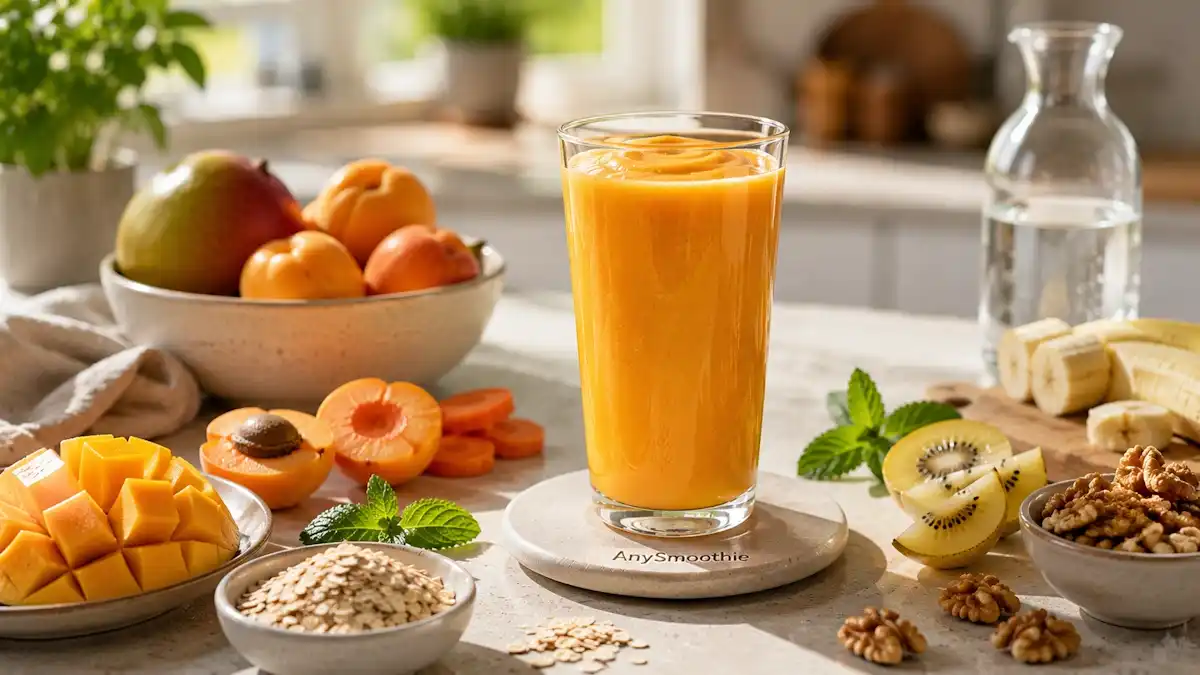
Pyruvate dehydrogenase sits at a busy crossroads inside your cells. It helps turn pyruvate, a product of glucose breakdown, into acetyl-CoA, which can keep energy pathways moving.
That is why people who care about energy support pay attention to it. Pyruvate dehydrogenase support smoothies are a simple food-based way to bring in carbs, protein, fats, and key micronutrients in one glass.
This guide covers the ingredients that make sense, how to build a balanced smoothie, and three ready-to-use blends you can make at home.
What pyruvate dehydrogenase does inside your cells
Pyruvate dehydrogenase complex, often called PDC, is the step that links glycolysis to the citric acid cycle. A review of the pyruvate dehydrogenase complex describes it as a central hub in metabolic flow.
When you eat carbs, your body breaks them down into glucose. Cells then turn glucose into pyruvate. PDC helps move that pyruvate into acetyl-CoA, which can enter the next stage of energy production. A Frontiers review on PDC also places this step at the center of energy metabolism.
The fuel switch from glucose to cellular energy
The process is easy to picture. Food carbs are chopped into smaller pieces, then pyruvate is the handoff point. PDC takes that handoff and passes it along to the cell’s energy machinery.
If the pathway has enough raw fuel and the right cofactors, it runs more smoothly. That is where smoothie design matters. A good blend gives the pathway something useful to work with.
Why certain nutrients matter for this pathway
Thiamine helps PDC do its job, because it acts as a key cofactor. Riboflavin and niacin support the redox steps tied to energy metabolism. Lipoic acid is part of the complex itself.
Magnesium matters because enzymes do not work well when mineral support is low. Protein does not act as a cofactor, but it helps balance the smoothie and supports a steadier response to carbs. In short, the pathway likes adequate fuel plus supportive nutrients, not a sugar rush.
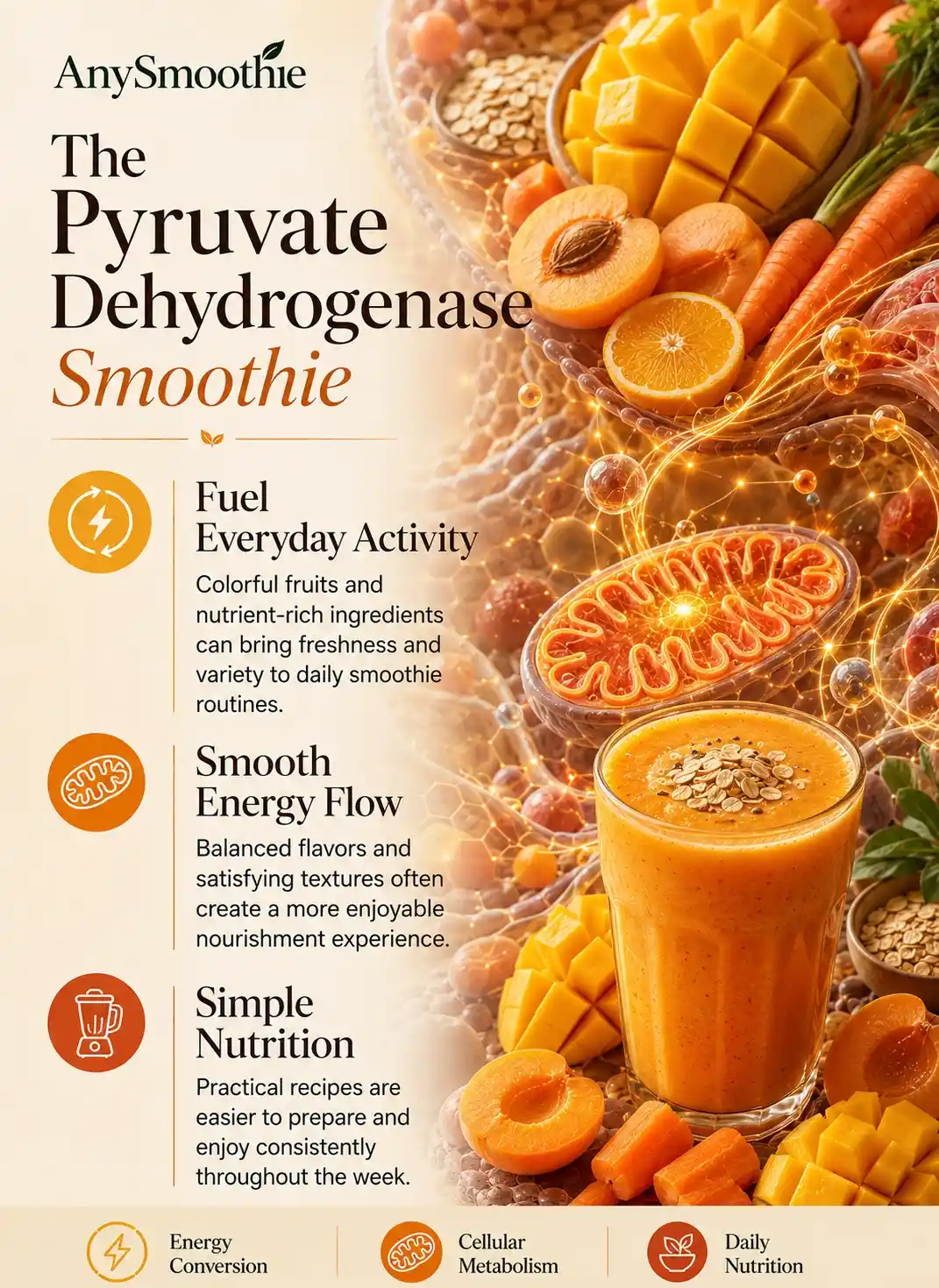
How to build pyruvate dehydrogenase smoothies that actually make sense
The best smoothies for this goal are balanced, not overloaded. If you want more ideas in the same style, healthy smoothie ingredients for steady energy is a useful place to compare ingredient patterns.
Start with a moderate carb base, then add protein, a source of fat, and something rich in minerals or plant compounds. That gives you better texture, better satiety, and fewer spikes from fruit alone.
Choose the right carb base without overloading sugar
Fruit is useful because it brings glucose and flavor. Oats add slower carbs and more body. Yogurt and milk, or fortified plant milks, can also add carbs plus extra protein.
Too much added sugar works against the goal. Fruit juice, sweetened yogurt, and syrup-heavy add-ins make the blend taste good fast, but they also strip away balance. A smoothie should feel like food, not candy in a cup.
Add protein and healthy fats to slow the energy curve
Greek yogurt, kefir, collagen, nut butter, chia, flax, hemp, and avocado all help here. They make the smoothie more filling and help slow the pace of digestion.
That slower curve matters because it gives the body a steadier stream of substrate. You do not need a huge amount of fat, just enough to round out the drink. A spoonful of nut butter or seeds often does the job.
Use micronutrient-rich boosters for deeper metabolic support
Spinach, cacao, pumpkin seeds, walnuts, turmeric, and ginger are all smart add-ins. They are chosen for nutrient density, not miracle effects.
A smoothie works best when it feels balanced in the blender and in your stomach.
Fortified foods can help too, especially when you want more B vitamins or mineral support without a long ingredient list. If the flavor stays pleasant, you are more likely to repeat it.
Comparison table: best smoothie ingredients for pyruvate dehydrogenase support
A few ingredients do most of the heavy lifting. The table below makes it easier to choose based on your goal and flavor preference.
| Ingredient | Key nutrients | Best use | Flavor profile | Main support benefit |
|---|---|---|---|---|
| Banana | Carbs, potassium | Morning blends | Sweet, mellow | Quick fuel with easy texture |
| Oats | Complex carbs, fiber | Breakfast smoothies | Mild, creamy | Slower carb release |
| Greek yogurt | Protein, calcium, B vitamins | Balanced blends | Tangy, rich | Adds protein and body |
| Spinach | Magnesium, folate | Green smoothies | Mild, earthy | Nutrient density without much sugar |
| Pumpkin seeds | Magnesium, zinc, protein | Mineral-rich blends | Nutty, savory | Supports mineral intake |
| Cacao | Magnesium, polyphenols | Chocolate-style smoothies | Deep, bitter | Adds flavor and mineral content |
A good smoothie usually needs only one or two of these anchors. Add more only if the flavor still works.
3 Pyruvate dehydrogenase support smoothies
Smart timing, serving size, and what to avoid
Breakfast is a natural fit for these smoothies, especially when you want something quick. Post-workout is another good window, since the body can use carbs and protein well there.
A busy afternoon can work too, as long as the smoothie is not enormous. If it replaces a meal, keep it balanced. If it is a snack, keep the portion smaller.
Avoid common mistakes like using too much fruit juice, skipping protein, or piling in too many extras. A smoothie that tastes light should still have enough structure to hold you for a while. If you like this style, mitochondrial health smoothie recipes follow a similar balance.
Conclusion
The best pyruvate dehydrogenase support smoothies are simple blends with the right mix of carbs, protein, fats, and micronutrients. That mix gives your cells the ingredients they need without flooding the glass with sugar.
Start with one recipe, then adjust the flavor and texture until it fits your routine. Small changes in balance often make the biggest difference.
🛡️ Safety Notes & Dietary Interactions
- Supplement Use Requires Individual Review: People using metabolic supplements, prescription medications, or specialized nutrition plans should review new ingredients with a qualified healthcare professional before making significant dietary changes.
- Balance Matters More Than Quantity: Adding excessive amounts of powders, seeds, or supplements does not automatically improve results. Balanced recipes are usually easier to digest and more practical for long-term consistency.
- Monitor Individual Tolerance: Ingredients such as dairy, seeds, protein powders, or higher-fiber additions may not suit everyone equally. Start with simple recipes and adjust based on your personal digestive comfort.
- Steady Energy Comes From Overall Habits: Sleep quality, hydration, physical activity, meal timing, and overall nutrition patterns influence energy levels more than any single smoothie ingredient or supplement strategy.
FAQ
What is pyruvate dehydrogenase and why is it important?
Pyruvate dehydrogenase is a group of enzymes that helps convert pyruvate into acetyl-CoA, linking glucose metabolism to the body’s main energy-producing pathways. Because this step sits at a key metabolic crossroads, it plays an important role in how cells use carbohydrates to support normal energy production throughout the day.
Which nutrients support the pyruvate dehydrogenase pathway?
Several nutrients are involved in energy metabolism, including thiamine, riboflavin, niacin, magnesium, and lipoic acid. While smoothies cannot directly control enzyme activity, they can provide foods that naturally contain or support the intake of nutrients commonly associated with these metabolic pathways and overall cellular energy production.
Are these smoothies better for breakfast or after exercise?
Both options can work well depending on your routine. Breakfast smoothies may provide a balanced mix of carbohydrates, protein, and fats to start the day, while post-workout smoothies can help replenish nutrients after activity. The best timing is usually the one that fits comfortably into your daily schedule.
Can I make these smoothies without dairy products?
Yes. Unsweetened almond milk, oat milk, soy milk, coconut milk, pea protein, hemp seeds, and dairy-free yogurts can all replace traditional dairy ingredients. The goal is maintaining a balanced combination of carbohydrates, protein, healthy fats, and micronutrients while choosing ingredients that match your dietary preferences and tolerance.
What is the biggest mistake when making energy-support smoothies?
One of the most common mistakes is relying too heavily on fruit juice, sweetened ingredients, or excessive fruit while skipping protein and healthy fats. This can create a sweeter drink that feels less satisfying. Balanced smoothies generally provide steadier energy and are often easier to incorporate into a consistent routine.

Medical Disclaimer: AnySmoothie content is for educational purposes only and is not a substitute for professional medical advice. Consult a healthcare provider for personalized guidance. See our full Disclaimer & Terms of Use. AI Transparency: AnySmoothie may use AI to support content development. All content undergoes human editorial review for accuracy, clarity, and editorial quality. See our full AI Transparency.