
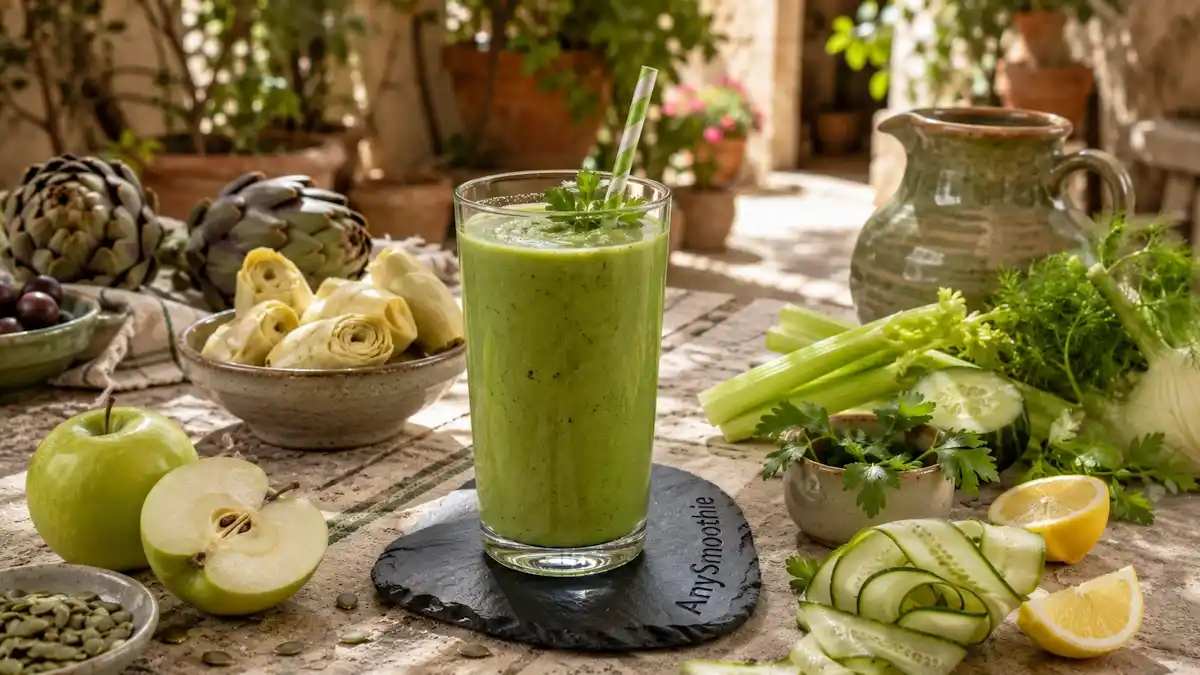
Bile does important work every time you eat fat. It helps break food into smaller droplets so digestion stays smooth and nutrients can move along.
Artichoke smoothies for healthy bile flow fit this idea well because artichoke brings bitterness, fiber, and a clean plant taste. Used in the right amount, it can support normal digestive function without turning your smoothie into medicine.
The trick is balance. A good blend softens artichoke’s edge with citrus, greens, fruit, or a little fat. Below, you’ll see how bile works, why artichoke belongs in a smoothie, what to pair it with, and three simple recipes.
Why bile flow matters for digestion and daily comfort
Bile is a digestive fluid made in the liver and stored in the gallbladder. After a meal, the gallbladder releases it into the small intestine. For a plain-English breakdown, see the Cleveland Clinic’s overview of bile.
Bile matters because it helps the body handle fat. It also helps fat-soluble nutrients move through digestion. When bile flow is steady, meals often feel lighter and more complete.
What bile does after you eat
Bile acts like a mixer for fat. It breaks large fat globules into tiny droplets, which helps digestive enzymes do their work. That process also helps your body absorb vitamins A, D, E, and K.
Bile acids also take part in digestive signaling.
Signs your digestion may need more support
Some people notice a heavy feeling after rich meals. Others feel slow, gassy, or a little bloated after fatty foods. Those signs are common and nonspecific, but they often point to a meal that needs better balance.
A lighter mix of fat, fiber, and bitterness can help meals feel easier to move through. That is where artichoke can fit in well.
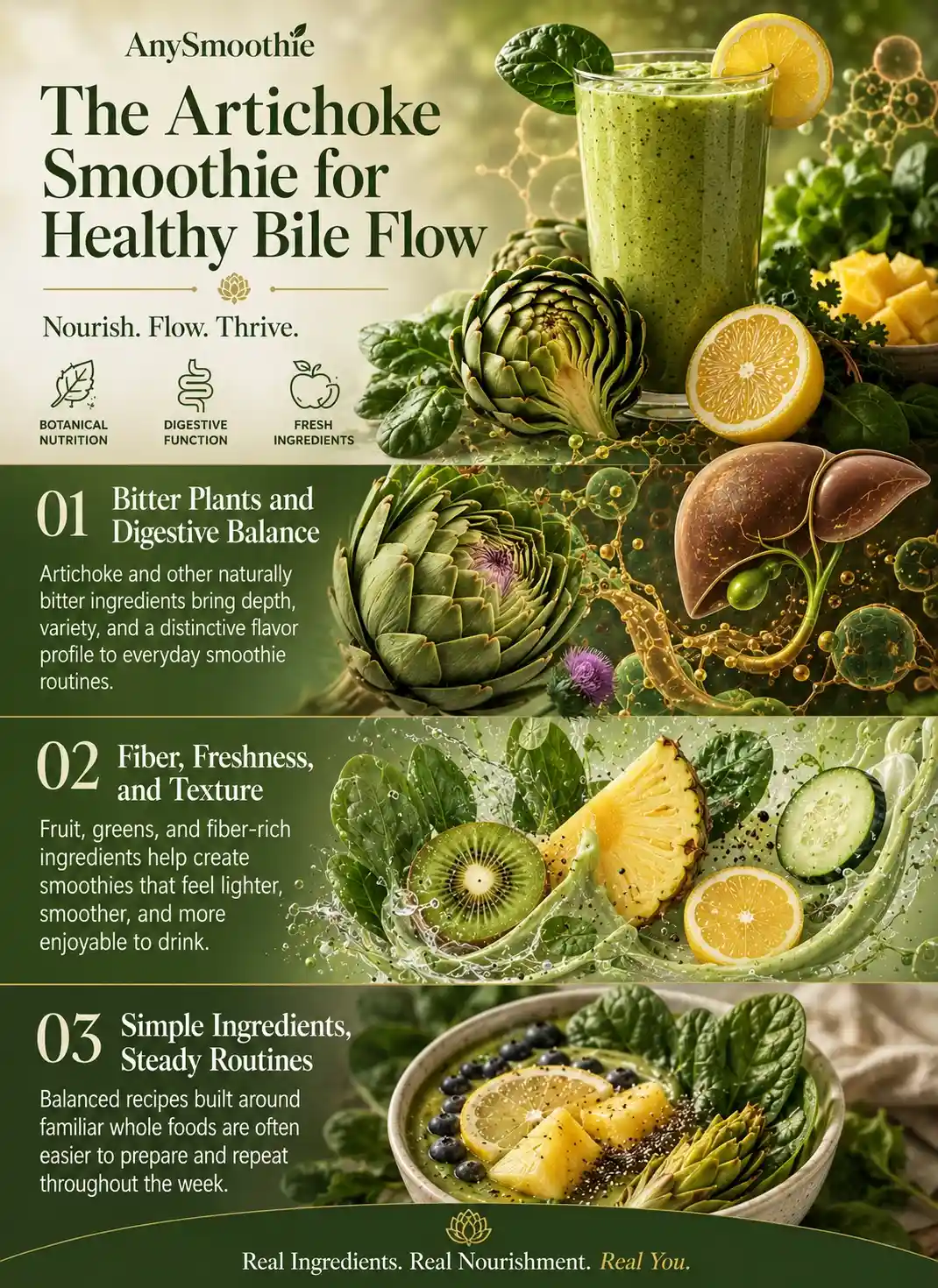
Why artichoke works well in a smoothie
Artichoke has a mild bitter taste that fits this topic well. Bitterness can cue digestive secretions, and that makes it a useful flavor in a food-based routine. It also brings fiber and plant compounds that work better when the smoothie stays simple.
| Ingredient | Main role | Flavor profile | Texture effect | Best use |
|---|---|---|---|---|
| Artichoke | Bitter support | Earthy, savory | Light body | Small amount of cooked hearts |
| Lemon | Brightens flavor | Sharp, fresh | Thins the blend | Balances bitterness |
| Ginger | Adds zip | Warm, spicy | Slight bite | Helps a flat smoothie feel alive |
| Avocado | Adds fat | Mild, creamy | Thick and smooth | Softer texture and staying power |
| Spinach | Adds greens | Mild, grassy | Minimal change | Easy way to add volume |
Artichoke works best as a background note, not the whole drink. The other ingredients carry the flavor, while artichoke adds the digestive edge.
The compounds in artichoke that support bile-related pathways
Artichokes contain cynarin, chlorogenic acid, fiber, and antioxidants. These compounds are often discussed in relation to normal bile-related pathways and liver function support. They do not act like a quick fix, but they do give the plant its useful profile.
The fiber also helps a smoothie feel more satisfying. That matters, because a drink that spikes sugar fast often leaves you hungry again. A better blend keeps the body calmer and the taste more stable.
How to make artichoke taste good in a smoothie
Use cooked artichoke hearts or well-rinsed canned hearts. Small amounts blend better than raw, tough parts. Frozen fruit, citrus, ginger, cucumber, or plain yogurt can smooth out the bitterness.
Bitterness works best in small doses when the rest of the blend is bright and clean.
What to combine with artichoke for a better bile-supporting blend
The best artichoke smoothie has three parts: a bitter note, a fresh acid, and a little fiber or fat. That mix supports bile-related digestion while keeping the drink easy to finish.
Citrus and berries help most with taste. Spinach and cucumber keep the blend light. Avocado, chia, and flax add creaminess and a steadier feel. Pineapple can also soften artichoke’s sharper edge.
Best fruits, greens, and healthy fats to pair with artichoke
Citrus works well because the acid cuts through bitterness. Berries add color and tartness. Pineapple gives sweetness without making the drink heavy.
Spinach blends in without taking over. Cucumber adds a cool, clean note. Avocado, chia, and flax bring fat and texture, which can make the smoothie feel more complete.
Ingredients to limit if you want a lighter digestive feel
Very sugary juices can hide the artichoke but leave the drink too sweet. Heavy cream can make the smoothie feel dense. Too many powders or add-ins can also crowd out the flavor.
Keep the base simple. A cleaner ingredient list often feels better and tastes better too.
3 Artichoke smoothies for healthy bile flow
How to use these smoothies safely and realistically
Start with a small amount of artichoke, then notice how the flavor and texture land. Bitter foods can feel new at first, so one smoothie a few times a week is a good place to begin.
If you have gallbladder concerns, take medication, or deal with ongoing digestive symptoms, get personalized advice before making bigger diet changes. For a closer look at how bile acids fit into digestion, the PMC review on bile acids and digestive signaling offers useful context.
Start small and notice how your body responds
Use artichoke as an accent, not the main event. If the drink feels too sharp, reduce the artichoke and add more citrus, cucumber, or yogurt. If it feels too rich, cut back on avocado or chia.
When to get personalized advice
Ongoing discomfort deserves a closer look. The same is true if fatty meals always leave you uneasy or if a new food pattern feels off. Simple smoothie tweaks are useful, but they are still part of a bigger picture.
Conclusion
Artichoke smoothies can be a simple, food-based way to support bile flow and easier digestion. The best versions stay balanced, with enough bitterness to matter and enough brightness to keep the drink pleasant.
Consistency matters more than perfection. Try one recipe, adjust the taste, and keep the version that feels best in your routine.
🛡️ Safety Notes & Dietary Interactions
- Bitter Flavor Adaptation: Artichoke naturally contributes a mild bitter profile. Starting with smaller amounts may help your palate adapt while keeping the smoothie enjoyable and easier to incorporate consistently.
- Fat and Digestive Balance: Small amounts of avocado, chia, or flax can improve texture and meal satisfaction. Excessively rich additions may make the smoothie feel heavier than intended.
- Ingredient Simplicity Matters: Artichoke blends often work best with a short ingredient list. Citrus, cucumber, berries, or greens usually provide enough flavor balance without excessive powders or sweeteners.
- Personal Digestive Tolerance: Bitter foods affect individuals differently. Gradual experimentation with portion size, texture, and ingredient combinations can help identify a version that fits comfortably into your routine.
FAQ
Why is artichoke associated with bile flow and digestion?
Artichoke is frequently discussed in digestive wellness because it contains compounds such as cynarin, chlorogenic acid, fiber, and various plant antioxidants. The article explains that these compounds are often studied in relation to normal bile-related pathways and digestive function. Rather than acting as a quick solution, artichoke fits into a broader food-first approach to supporting everyday digestive comfort.
What role does bile play after eating a meal?
Bile is produced by the liver and stored in the gallbladder before being released into the small intestine. Its primary role is helping break large fat droplets into smaller particles, allowing digestive enzymes to work more efficiently. The article also notes that bile acids participate in signaling processes that help coordinate normal digestive activity after meals.
Why are citrus fruits commonly paired with artichoke in smoothies?
Artichoke has a naturally earthy and mildly bitter flavor that can become dominant if used alone. Citrus fruits such as orange, lemon, and lime add brightness and acidity that help balance the bitterness. According to the article, this pairing creates a more pleasant flavor profile while keeping the smoothie light and refreshing.
Which ingredients work best alongside artichoke in a digestive-support smoothie?
The article highlights citrus fruits, berries, pineapple, cucumber, spinach, avocado, chia seeds, flaxseed, kefir, and yogurt as useful companions. These ingredients contribute fiber, hydration, texture, healthy fats, or flavor balance. Together, they help create a smoothie that feels more complete while preventing the artichoke from becoming overwhelming.
What is the best way to start using artichoke smoothies?
The article recommends treating artichoke as a supporting ingredient rather than the centerpiece of the recipe. Beginning with smaller amounts allows you to assess both flavor and tolerance. If the smoothie tastes too bitter, adding more citrus, cucumber, berries, or yogurt often creates a smoother balance while preserving the overall digestive-friendly structure.

Medical Disclaimer: AnySmoothie content is for educational purposes only and is not a substitute for professional medical advice. Consult a healthcare provider for personalized guidance. See our full Disclaimer & Terms of Use. AI Transparency: AnySmoothie may use AI to support content development. All content undergoes human editorial review for accuracy, clarity, and editorial quality. See our full AI Transparency.