
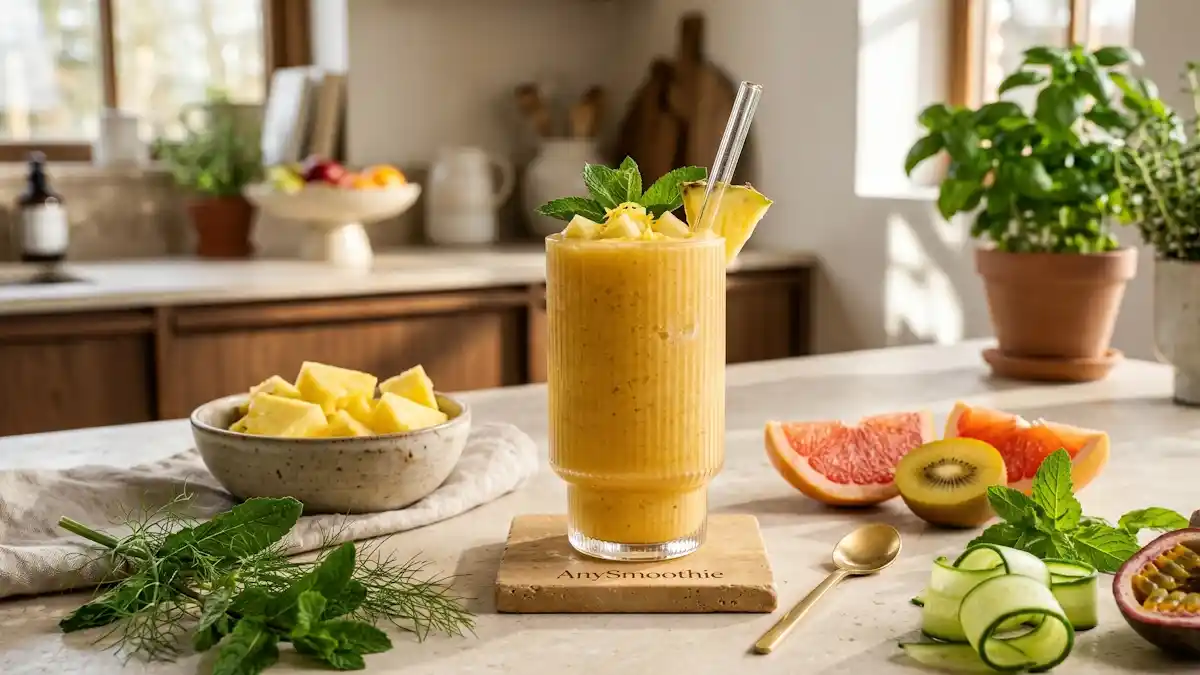
Xenobiotic efflux sounds technical, but the idea is simple. Your body has transport systems that move outside compounds out of cells and into normal exit routes.
These smoothies are not medicine. They are food-based blends that may support normal detox and transport pathways through hydration, fiber, antioxidants, and plant compounds. The recipes stay practical, and the ingredient table below gives you an easy way to build a blend that fits your day.
What Phase III export means in the body
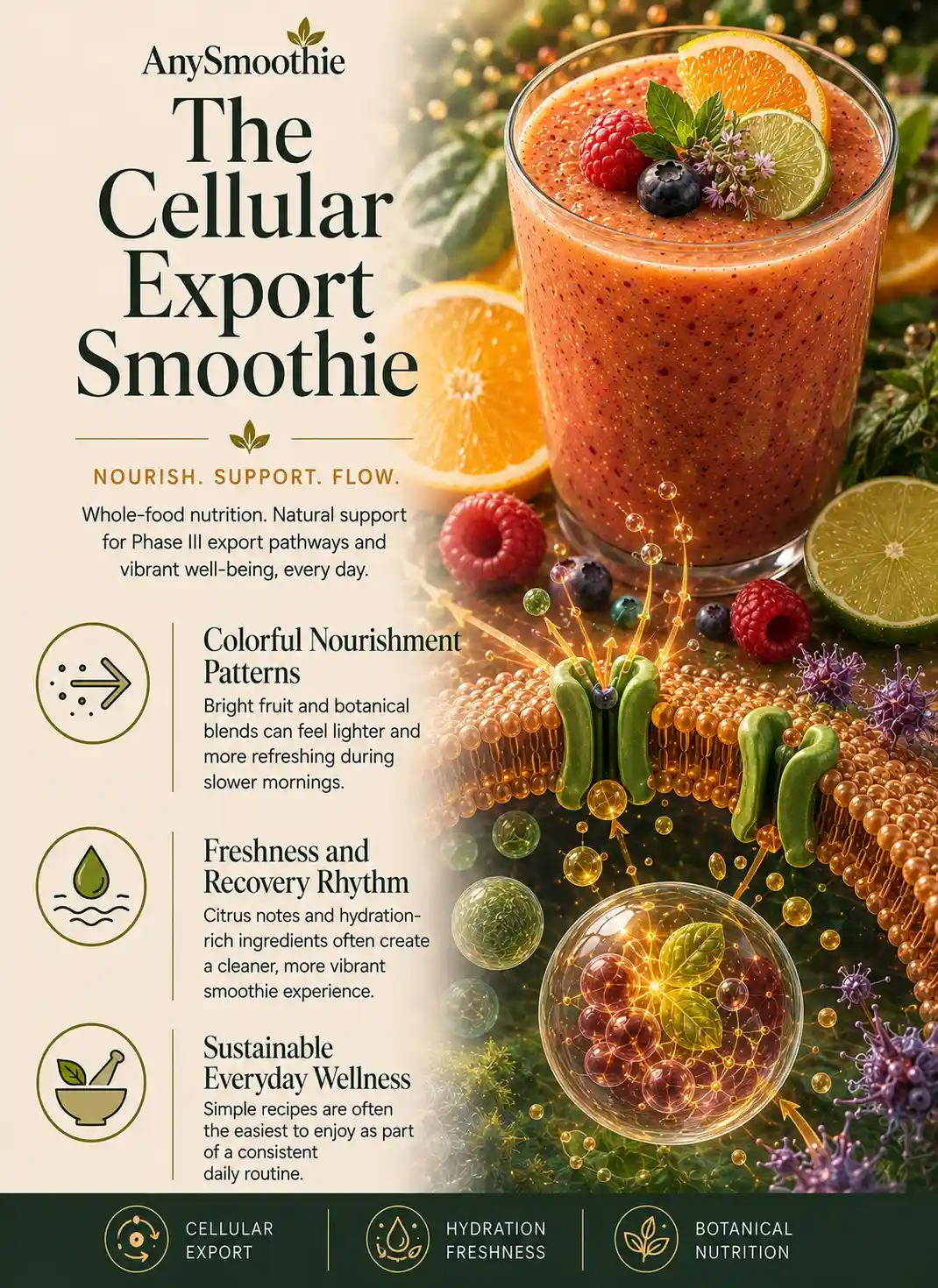
Phase III export is the step where cells move unwanted compounds across a membrane and out of the cell. That job depends on transport proteins, especially families of pumps that sit in cell walls like tiny gates. They do not make the body “clean” on their own, but they help move processed compounds toward bile, urine, or the gut for removal.
The phase concept is described in the scientific literature as part of xenobiotic transport and metabolism, including the combined phase model in xenobiotic transport. In plain language, phase I changes a compound, phase II makes it easier to carry, and phase III helps push it out.
How xenobiotics are processed before they leave the body
Xenobiotics are outside compounds. They can come from food, air, water, supplements, and the environment. After absorption, the body often modifies them with enzymes so they are easier to handle. Then transporters move them toward exit pathways.
That flow matters because export is not a single event. It is a chain of steps, and each step depends on the one before it. If the body has enough fluid, fiber, and plant nutrients, those normal routes are easier to keep moving.
Why transport support matters for everyday wellness
Liver, gut, kidney, and bile function all play a part in this process. The liver helps process compounds. The gut carries many of them out. The kidneys filter water-soluble material into urine. Bile also helps move certain compounds into the intestines for elimination.
Food choices matter because they shape the terrain. A smoothie with water, greens, fruit, and seeds can support hydration and regular digestion without feeling heavy. A Springer review on phase 0 and phase III transport also points to how transport happens across several organs, not just one.
The smoothie ingredients that best support export pathways
The best phase III export smoothies keep things light, fresh, and easy to digest. They use whole foods that bring fiber, fluid, and micronutrients without piling on sugar or fat.
Ingredients that add fiber, fluid, and micronutrients
Spinach and kale give you leafy greens with a mild taste. Cucumber adds water and a clean finish. Citrus brings brightness and vitamin C. Chia and flax add fiber, which helps a smoothie feel more filling and less spiky. Berries supply color, polyphenols, and natural sweetness. Ginger adds a sharp note that works well in morning blends.
| Functional Ingredient | Nutrition Context | Wellness Role | Ingredient Source | Everyday Use |
|---|---|---|---|---|
| Spinach | Leafy green with folate and magnesium | Supports a nutrient-dense base | Fresh or frozen spinach | Blend into green smoothies |
| Cucumber | High-water vegetable | Helps keep the smoothie light | Peeled or unpeeled cucumber | Use for a clean, mild base |
| Mixed berries | Fiber plus plant pigments | Adds antioxidants and flavor | Blueberries, raspberries, strawberries | Use fresh or frozen |
| Chia or flax | Seed fiber and healthy fats | Helps texture and digestion | Ground flax or soaked chia | Stir into green or berry blends |
| Citrus or coconut water | Acid plus hydration | Brightens taste and supports fluid intake | Lemon, lime, orange, coconut water | Use as liquid or flavor boost |
These ingredients work well because they keep the blend simple. They also make it easy to repeat the smoothie often, which matters more than chasing extremes.
What to avoid if you want a lighter, cleaner smoothie
Too much added sugar can make a smoothie feel more like dessert. Heavy dairy can make it richer than some people want in the morning. Highly processed powders, syrups, and flavored add-ins can crowd out the whole-food base.
The cleaner choice is usually the easier one. Use enough fruit for taste, then let the greens, seeds, and liquid do the rest. If a smoothie sits well and tastes good, you’re more likely to keep it in rotation.
3 phase III export smoothie recipes
These three blends keep the formula simple. Each one supports a routine built around hydration, fiber, and plant compounds.
Green citrus support smoothie
Ingredients
- 1 cup spinach
- 1/2 cucumber, chopped
- Juice of 1 lemon
- 1 small apple, cored
- 1 tablespoon chia seeds
- 1 to 1 1/2 cups water or coconut water
- Ice, optional
Steps
- Add the liquid, spinach, cucumber, and apple to a blender.
- Blend until smooth.
- Add chia seeds, blend briefly, then let it sit for 2 minutes.
This version is crisp and easy to drink. It fits a xenobiotic efflux support routine because it brings fluid, fiber, and a fresh citrus edge without a heavy texture.
Estimated Nutrition per Serving
Estimated with 1 cup plain water and without optional ice.
- Calories: ~180 kcal
- Protein: ~6 g
- Carbohydrates: ~36 g
- Fat: ~5 g
- Fiber: ~11 g
- Sugars: ~19 g
Berry seed antioxidant smoothie
Ingredients
- 1 cup mixed berries
- 1/2 banana
- 1 tablespoon ground flax or chia seeds
- 3/4 cup plain yogurt or unsweetened plant-based yogurt
- 1/2 to 1 cup water or unsweetened almond milk
- Ice, optional
Steps
- Add the yogurt and liquid first.
- Blend in the berries, banana, and seeds.
- Blend until creamy and pour into a glass.
This smoothie leans on berries for color and flavor, while the seeds add fiber and body. It supports a nutrient-rich routine without feeling too rich or too sweet.
Estimated Nutrition per Serving
Estimated with nonfat plain Greek yogurt, ground flaxseed, and 1/2 cup unsweetened almond milk.
- Calories: ~365 kcal
- Protein: ~24 g
- Carbohydrates: ~55 g
- Fat: ~8 g
- Fiber: ~14 g
- Sugars: ~29 g
If your berry mix contains plenty of raspberries or blackberries, the smoothie can be noticeably seedier. An extra 15–20 seconds of blending gives this version a much smoother finish.
Ginger pineapple recovery smoothie
Ingredients
- 1 cup pineapple chunks
- 1/2 banana
- 1 teaspoon grated fresh ginger or 1/4 teaspoon ground ginger
- 1 handful kale or spinach
- 1 cup coconut water
- Juice of 1/2 lime
Steps
- Blend the coconut water, greens, and ginger first.
- Add pineapple, banana, and lime.
- Blend until smooth and serve cold.
This blend works well in the morning or after a workout. The pineapple and ginger keep the flavor bright, while the greens and coconut water help the smoothie stay light and refreshing.
Estimated Nutrition per Serving
Estimated with fresh ginger and spinach.
- Calories: ~250 kcal
- Protein: ~5 g
- Carbohydrates: ~61 g
- Fat: ~1 g
- Fiber: ~7 g
- Sugars: ~42 g
Conclusion
Phase III export smoothies for xenobiotic efflux are really about one thing, giving your body clean, useful fuel for its normal transport and elimination systems. When you keep the ingredients simple, the smoothie is easier to digest and easier to repeat.
Rotate greens, berries, citrus, seeds, and hydration liquids so your routine stays varied. Small choices matter more than dramatic ones.
Food works best as part of an overall healthy lifestyle, not as a quick fix.
🛡️ Safety Notes & Dietary Interactions
- Hydration Flow and Xenobiotic Transport Support: Phase III export pathways rely on transport systems that move processed compounds toward normal elimination routes. Smoothies built around water-rich ingredients such as cucumber, citrus, coconut water, berries, and leafy greens may help support hydration balance, which is an important part of maintaining normal transport and clearance rhythms throughout the body.
- Fiber Matrix and Digestive Transit Dynamics: Chia, flax, berries, apples, and leafy greens contribute soluble and insoluble fibers that help create a steadier digestive environment. Fiber-rich smoothies may support regular gastrointestinal transit and help maintain the broader digestive pathways involved in everyday elimination and nutrient-handling processes.
- Polyphenol Diversity and Cellular Defense Balance: Mixed berries, citrus, ginger, spinach, and kale provide a wide range of plant compounds associated with oxidative balance and cellular defense discussions. Rotating these ingredients regularly may help support a broader spectrum of phytonutrients than relying on a single ingredient or highly concentrated supplement strategy.
- Nutrient Density and Metabolic Efficiency Support: The article emphasizes keeping smoothies simple and centered on whole foods rather than excessive sweeteners, syrups, or highly processed additives. Balanced combinations of greens, fruit, seeds, and hydration-focused ingredients may help support steadier energy patterns and smoother nutrient partitioning without creating a heavy or overly sugary meal.
FAQ
What does “Phase III export” actually mean in simple terms?
Phase III export refers to the stage where cells move processed compounds out through specialized transport systems. In broader discussions of xenobiotic metabolism, phase I modifies compounds, phase II helps prepare them for transport, and phase III helps move them toward elimination routes such as bile, urine, or the digestive tract. The article presents smoothies as supportive nutrition tools rather than direct controllers of these pathways.
Why are hydration-focused ingredients emphasized so heavily?
Transport and elimination systems function within fluid-rich biological environments, which is why ingredients like cucumber, citrus, coconut water, and leafy greens appear so frequently in these recipes. Hydration also improves texture and drinkability, making the smoothie easier to consume consistently as part of a daily wellness routine.
How do chia and flax seeds improve a Phase III export smoothie?
Chia and flax contribute fiber, healthy fats, and texture while helping the smoothie feel more satisfying. Their fiber content supports digestive regularity and creates a slower nutrient-delivery profile compared to fruit-only blends. This helps the smoothie function more like a balanced meal rather than a quick sugar source.
Why are berries, citrus, and greens commonly paired together?
These ingredients complement each other nutritionally and from a flavor perspective. Berries contribute polyphenols and natural sweetness, citrus brightens flavor while providing vitamin C, and greens increase micronutrient density without dramatically changing the overall taste. Together they create a fresher, more balanced smoothie structure that remains easy to repeat regularly.
Why does the article focus so much on consistency instead of “detox” claims?
The article repeatedly emphasizes that food supports normal physiological systems rather than acting as a quick fix. Small, repeatable habits built around hydration, fiber, nutrient density, and whole-food ingredients are presented as more sustainable and realistic than extreme detox protocols. The central theme is supporting everyday wellness patterns through practical nutrition choices.

Medical Disclaimer: AnySmoothie content is for educational purposes only and is not a substitute for professional medical advice. Consult a healthcare provider for personalized guidance. See our full Disclaimer & Terms of Use. AI Transparency: AnySmoothie may use AI to support content development. All content undergoes human editorial review for accuracy, clarity, and editorial quality. See our full AI Transparency.