
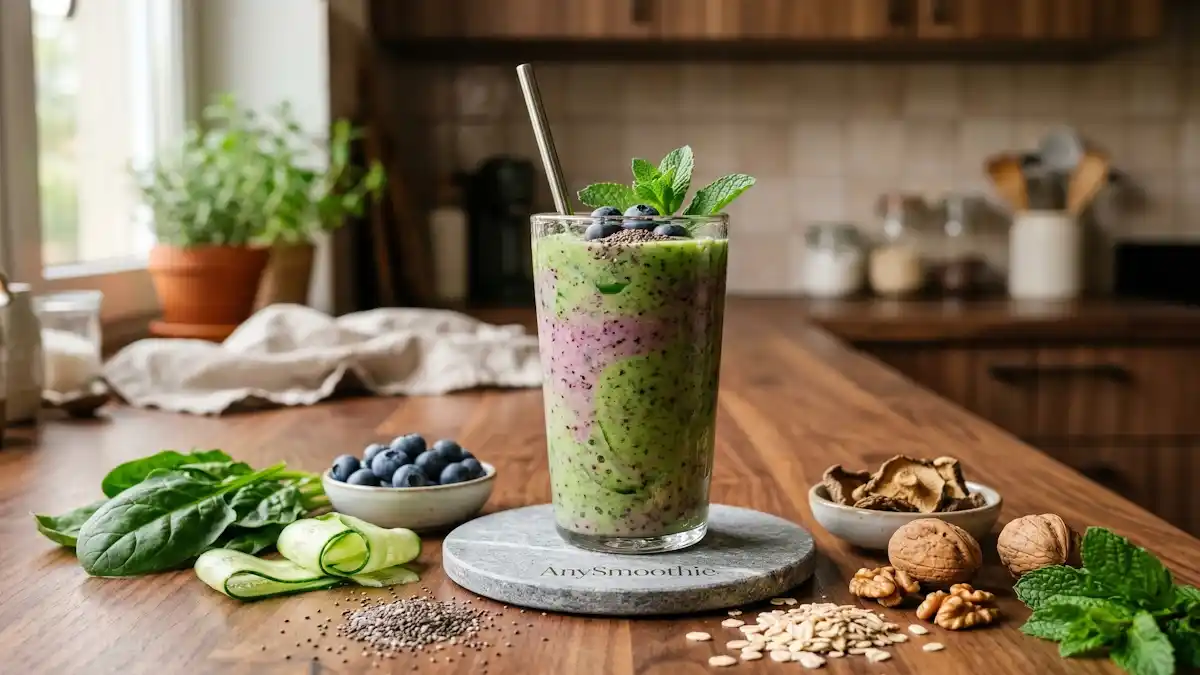
Polyamines are small compounds your cells use every day. They show up in many whole foods, and they matter because cells rely on them during normal growth, repair, and protein building.
If you want a food-first routine, polyamine smoothies for cellular translation support are an easy place to start. The right blend can combine those compounds with protein, fiber, fats, and color-rich plants in one glass. That gives you a simple way to support steady nutrient flow without turning breakfast into a project.
How Polyamine Rich Foods Support Cellular Wellness
Polyamines help cells keep their internal work organized. They interact with DNA, RNA, and the machinery that builds proteins. That is why they matter in normal cellular maintenance and turnover.
Food is the best place to get them in context. Whole ingredients bring polyamines with minerals, fiber, and plant compounds that work together. For a research-based overview of food sources, see Polyamines in Food.
Adaptive Recovery and Nutrient Flow Rhythms
Inside the cell, polyamines support the steps that keep growth and repair moving. They help stabilize charged molecules and support translation, the process cells use to make proteins from genetic instructions.
That sounds technical, but the practical takeaway is simple. Cells do better when meals provide useful building blocks, not empty calories. A smoothie can help with that when it contains a mix of plant nutrients and protein.
Why Whole Foods Beat Isolated Supplements
Whole foods package polyamines with fiber, polyphenols, minerals, and amino acids. That mix supports nutrient partitioning, because the body gets several inputs at once instead of one isolated piece.
It also makes the smoothie easier to use as a meal or snack. A review on dietary polyamines points to the same basic idea, food context matters.
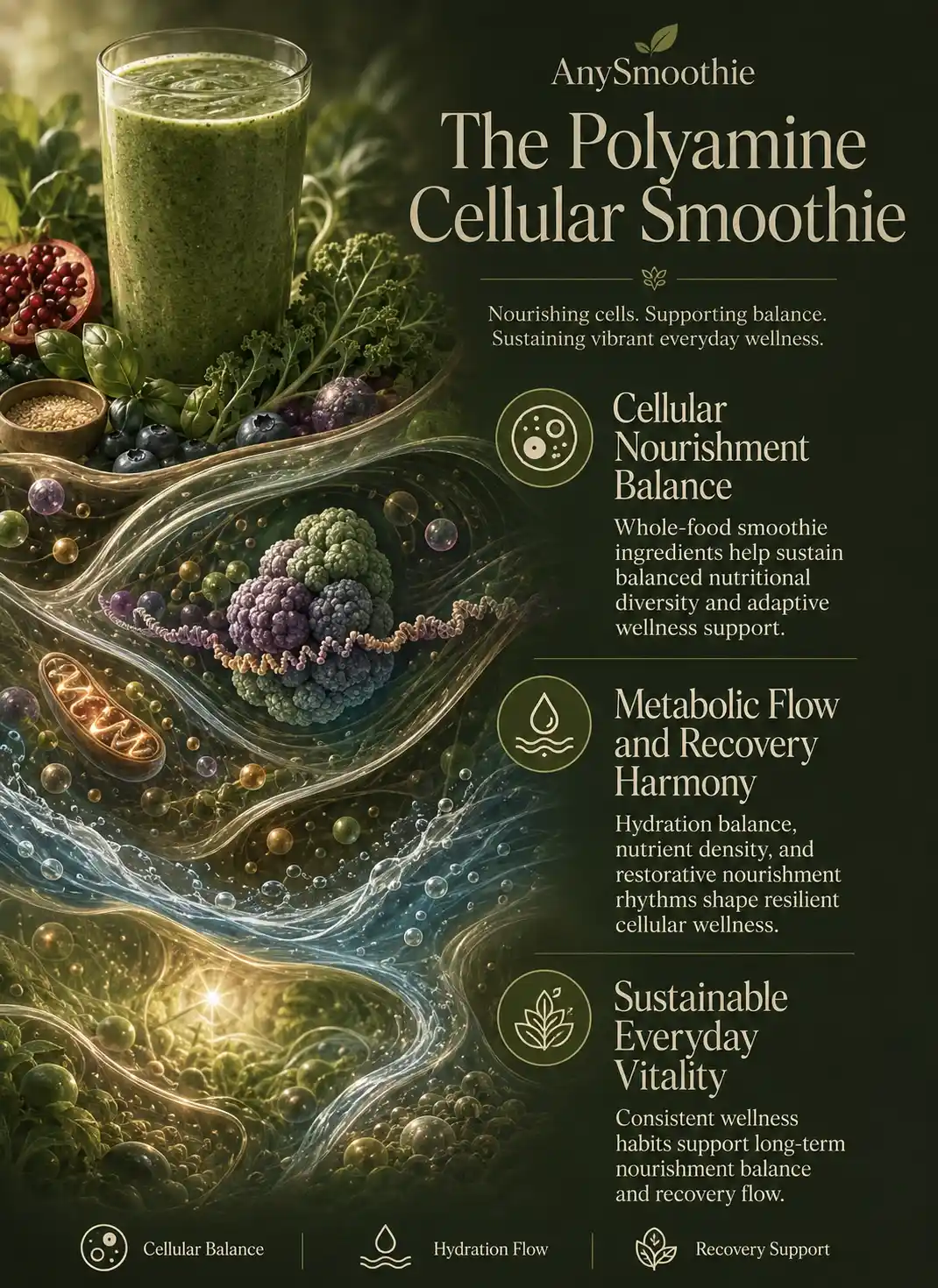
Whole Food Diversity and Metabolic Harmony
Smoothies work best when they do more than taste good. They should bring steady energy, useful texture, and a broad nutrient mix. That is where polyamine-rich ingredients fit well, because they pair easily with protein, fat, and fiber.
The best smoothie is the one you can repeat without thinking.
Cellular Nourishment and Energy Stability Balance
Protein keeps the smoothie grounded. Fat slows the rush from fruit. Fiber gives the blend more body and helps it feel like a real meal.
Antioxidant-rich plants, such as berries and greens, add color and more plant compounds. Together, those pieces support metabolic efficiency because your body gets a more balanced mix to work with.
Polyamine Nutrition and Cellular Wellness Dynamics
A quick reference can help when you build your own blends.
| Functional Ingredient | Wellness Flow Context | Nutritional Support Role | Smoothie Ingredient Source | Everyday Wellness Perspective |
|---|---|---|---|---|
| Mushroom Derived Compounds | Cellular housekeeping support | Adds bioactive compounds and savory depth | Culinary mushroom powder or blend | Good for grounded, less sweet smoothies |
| Spinach Phytonutrients | Fresh green nutrient flow | Brings folate, magnesium, and volume | Fresh spinach | Easy way to raise micronutrient density |
| Pea Protein Nutrients | Protein balance and meal structure | Helps round out amino acids and satiety | Pea protein powder | Useful when you want a fuller smoothie |
| Blueberry Polyphenols | Color-rich antioxidant support | Adds polyphenols and natural sweetness | Frozen blueberries | Helps balance flavor and texture |
| Walnut Micronutrients | Fat and mineral support | Adds texture, fats, and trace nutrients | Walnuts or walnut butter | Makes the blend more filling |
These ingredients work best as a team. Protein, minerals, and polyphenols do different jobs, and that variety supports steadier nourishment.
How to Read the Table and Mix Ingredients With Purpose
You do not need every item in one smoothie. Instead, think in roles. One ingredient can supply protein, another can bring color, and another can add fat or minerals.
That keeps the blend simple and useful. It also makes polyamine smoothies for cellular translation support easier to repeat during a busy week.
3 Polyamine Smoothies for Cellular Translation
These recipes are flexible templates, not strict rules. Use what you have, then adjust the flavor, sweetness, and thickness.
Mushroom Cacao Smoothie for a Deeper Nutrient Profile
Blend banana, cacao, mushroom powder, milk, protein powder, and a spoon of nut butter. Use a small amount of vanilla to soften the flavor.
The result is earthy, not sugary. For a broader view on how polyamines connect with cellular housekeeping, this polyamine research summary is a useful snapshot.
Lifestyle Habits Associated With Recovery Wellness Balance
A smoothie works better inside a steady routine. Sleep, hydration, movement, and meal timing all shape how your body handles nutrients.
Sleep Stability and Nourishment Flow Patterns
Regular sleep helps your day feel more predictable. A consistent eating rhythm does the same. When meals happen at similar times, it is easier to build a smooth pattern around energy and recovery.
Perfection is not the point. Consistency is.
Hydration, Light Activity, and Food Variety
Water helps every part of the routine work better, including digestion and blend texture. Light movement, such as a short walk, also fits well after a smoothie.
Rotate your ingredients over the week. Spinach one day, berries the next, mushrooms another time. Variety keeps the routine interesting and broadens nutrient intake.
Conclusion
Polyamine-rich smoothies work best as part of a whole-food pattern. When you pair greens, berries, mushrooms, protein, and nuts, the blend supports cellular wellness and steady nutrient flow.
The real win is a repeatable routine, not a perfect recipe. Start with one smoothie idea that tastes good, then adjust the texture, sweetness, or protein until it fits your day.
🛡️ Safety Notes & Dietary Interactions
- Polyamine Intake and Cellular Translation Dynamics: Polyamines are naturally occurring compounds involved in cellular growth, repair, and protein-building pathways. Whole-food smoothie ingredients like mushrooms, spinach, peas, yogurt, and nuts provide these compounds alongside fiber, minerals, and amino acids, creating a broader nutritional context that may support steadier cellular nourishment rhythms.
- Protein Balance and Nutrient Partitioning Support: Polyamine-focused smoothies generally work best when paired with meaningful protein intake rather than relying mainly on fruit sugars. Ingredients like pea protein, yogurt, nuts, and seeds help create a more complete amino acid structure that supports satiety, steadier energy pacing, and smoother nutrient partitioning across the day.
- Polyphenol Diversity and Oxidative Balance Coordination: Blueberries, cacao, greens, and walnuts contribute antioxidant-supportive plant compounds that interact with broader cellular maintenance and oxidative balance systems. Rotating colorful plant foods through the week may help support more balanced nutrient diversity than repeating one highly concentrated ingredient daily.
- Routine Consistency and Recovery Rhythm Stability: Smoothies tend to work best when they support an already stable pattern of sleep, hydration, movement, and meal timing. Light activity, regular eating windows, and ingredient variety often create a more sustainable wellness structure than trying to optimize every smoothie around isolated compounds or “perfect” formulas.
FAQ
What are polyamines and why are they discussed in cellular wellness nutrition?
Polyamines are naturally occurring compounds that cells use during normal growth, repair, and protein-building processes. Researchers often discuss them because they interact with DNA, RNA, and translation-related cellular pathways. In practical nutrition terms, they are most relevant as part of a broader whole-food dietary pattern rather than as isolated “longevity hacks.”
Why do whole foods work better than isolated polyamine supplements?
Whole foods provide polyamines alongside protein, minerals, fiber, healthy fats, and polyphenols that help create a more balanced nutritional environment. This broader structure supports smoother digestion, steadier satiety, and more complete nutrient delivery compared to relying entirely on isolated compounds without supportive meal context.
Why are mushrooms, spinach, and blueberries used so often in these smoothies?
These ingredients each contribute different nutritional roles. Mushrooms add bioactive compounds and earthy depth, spinach increases folate and mineral density, while blueberries provide polyphenols and natural sweetness. Together, they create a more balanced smoothie that feels nutrient-dense without depending on excessive sugar or artificial flavoring.
How does protein improve a polyamine-focused smoothie?
Protein helps turn the smoothie into a more complete meal by improving satiety and supporting amino acid balance. Pea protein, yogurt, milk, nuts, and seeds slow digestion and help stabilize energy release, which may support steadier nutrient flow and reduce the “quick crash” effect often associated with low-protein fruit-heavy smoothies.
Why does the article emphasize repeatable routines over “perfect” recipes?
Long-term nutrition patterns generally matter more than constantly chasing ideal ingredient stacks. A smoothie that tastes good, fits your schedule, and feels easy to repeat is more likely to become part of a sustainable routine. Variety across the week also broadens nutrient intake naturally without making daily nutrition feel rigid or exhausting.

Medical Disclaimer: AnySmoothie content is for educational purposes only and is not a substitute for professional medical advice. Consult a healthcare provider for personalized guidance. See our full Disclaimer & Terms of Use. AI Transparency: AnySmoothie may use AI to support content development. All content undergoes human editorial review for accuracy, clarity, and editorial quality. See our full AI Transparency.