
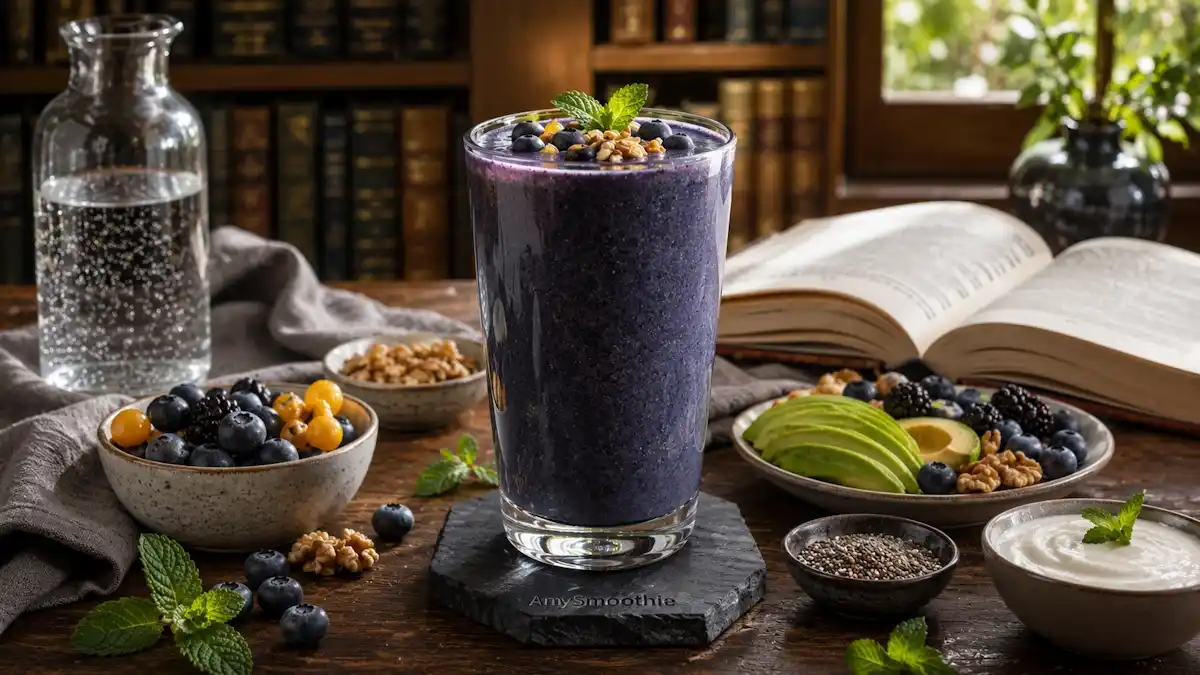
Your blood-brain barrier is a selective filter. It helps protect brain tissue while letting needed nutrients pass.
People care about supporting it because circulation, inflammation balance, and nutrient status all affect how the brain gets what it needs. Smoothies for blood-brain barrier support make that daily routine easier, since one glass can pack in fiber, protein, healthy fat, and plant compounds without much prep. In the sections below, you’ll see what to include, what to skip, and three practical blends you can make on a busy morning.
What the blood-brain barrier needs from your diet
The blood-brain barrier is part of the body’s vascular system, so food choices matter. The Cleveland Clinic’s BBB overview explains how the barrier works with circulation and brain protection. When your meals support steady energy and a normal inflammatory balance, that system tends to have an easier job.
A barrier works best when the rest of the diet supports blood flow, nutrient delivery, and stable energy.
A review on BBB nutrition in PubMed describes the barrier as both a protector and a nutrient route. That makes sense in daily life. Your body still has to move fuel, fluids, and building blocks where they belong.
Key nutrients that help support barrier function
Some smoothie ingredients fit this picture well. Omega-3 fats support cell membranes. Polyphenols from berries, cocoa, and colorful plants help your antioxidant defenses. Vitamin C supports normal collagen and immune function, while magnesium plays a role in many enzymes.
Fiber helps slow the rise in blood sugar, and protein adds steadier fuel. That matters because sharp energy swings can make a snack feel less useful an hour later. A smoothie with all of these pieces is more likely to feel balanced and satisfying.
Ingredients that may work against your goals
Added sugar is the easiest thing to overdo. Juice, sweetened yogurt, flavored protein drinks, and dessert-style add-ins can turn a smoothie into a fast sugar load.
Ultra-processed powders and syrups can do the same. Excess alcohol does not belong in the mix either. Very low-nutrient blends, like fruit plus juice only, miss the fat, fiber, and protein that help keep the drink more stable.
How to build smoothies for blood-brain barrier support
A good smoothie starts with structure, not a random pile of ingredients. If you want a broader framework, how to build nutrient-dense smoothies is a helpful reference.
| Building block | Examples | BBB support angle | Taste | Best use |
|---|---|---|---|---|
| Healthy fat | Avocado, chia, flax, hemp, walnuts | Supports cell membranes and slows digestion | Creamy, rich | Breakfast or a filling snack |
| Fiber source | Berries, spinach, oats, ground flax | Helps steady blood sugar and feed a better blend | Mild to bright | Everyday smoothies |
| Protein source | Greek yogurt, kefir, whey, pea protein, silken tofu | Adds satiety and steadier energy | Neutral to creamy | Meal replacement |
| Plant compounds | Cocoa, turmeric, ginger, leafy greens, citrus | Brings polyphenols and antioxidant support | Earthy, sharp, or bright | Add-on layer |
| Base liquid | Unsweetened kefir, plain yogurt, milk alternatives, water and ice | Keeps sugar lower while setting texture | Clean and simple | Any blend |
The pattern is simple. Pick one item from each row, then adjust fruit and flavor around it. That keeps the smoothie more useful and less like a sweet drink.
Use a smart balance of fats, fiber, and protein
Each smoothie should include all three. Healthy fat helps with texture and fullness. Fiber slows the drink down a bit. Protein keeps the smoothie from fading too fast.
That balance makes a smoothie work better as a snack or a light meal. A basic formula might look like this, one cup of liquid, one cup of produce, one protein source, and one fat source. If you want it thicker, add ice or frozen fruit instead of juice.
Choose colors that bring in protective plant compounds
Berries, leafy greens, cocoa, turmeric, ginger, and citrus all bring something useful. Their color often points to polyphenols and other plant compounds that support antioxidant pathways.
Purple and blue fruits are easy wins. Dark greens add minerals and volume. Cocoa and spice bring flavor without much sugar. When a blender turns out dull beige every day, the ingredient list often needs more color.
Keep the base simple and the sugar load lower
A simple base works best for most people. Unsweetened kefir, plain yogurt, unsweetened almond milk, oat milk, or just water and ice can all do the job.
Fruit still belongs in the mix. The trick is to keep portions thoughtful. A cup of berries is different from several bananas plus juice. One keeps the smoothie balanced, the other pushes it toward dessert.
3 Smoothies for blood-Brain barrier support
These three ideas use familiar ingredients and different flavor profiles. If you want a thicker berry option, this simple berries smoothie recipe is a useful starting point.
Berry antioxidant smoothie
Ingredients
- 1 cup blueberries, blackberries, or strawberries
- 3/4 cup plain Greek yogurt or kefir
- 1 tablespoon chia seeds or ground flax
- 1/2 cup unsweetened milk or water
- Ice, if needed
This one leans on color-rich fruit and polyphenols. It tastes familiar, which makes it easy to repeat during the week.
Estimated Nutrition per Serving
Estimated with blueberries, nonfat Greek yogurt, chia seeds, and unsweetened almond milk.
- Calories: ~310 kcal
- Protein: ~22 g
- Carbohydrates: ~39 g
- Fat: ~8 g
- Fiber: ~12 g
- Sugars: ~20 g
Blackberries make this noticeably seedier than blueberries or strawberries. If you choose them, an extra 15–20 seconds of blending can make the texture smoother without changing the basic recipe.
Green omega-3 smoothie
Ingredients
- 1 cup spinach or kale
- 1/2 avocado
- 1 tablespoon chia, flax, or hemp
- 1/2 green apple or a squeeze of lemon
- 1 cup unsweetened almond milk
- Cucumber for extra freshness
The greens add volume without much sugar. Avocado and seeds bring the fats that help the smoothie feel complete.
Estimated Nutrition per Serving
Estimated with spinach, chia seeds, 1/2 green apple, 1/2 cup cucumber, and unsweetened almond milk.
- Calories: ~300 kcal
- Protein: ~8 g
- Carbohydrates: ~28 g
- Fat: ~21 g
- Fiber: ~14 g
- Sugars: ~10 g
Cocoa spice recovery smoothie
Ingredients
- 1 scoop protein powder or 3/4 cup Greek yogurt
- 1 tablespoon unsweetened cocoa
- 1 teaspoon cinnamon
- Small piece of fresh ginger or a pinch of turmeric
- 1 tablespoon almond butter or tahini
- 1 cup unsweetened milk
This version feels rich, but it stays lower in sugar. Cocoa and spice give it a strong flavor, so you don’t need much sweetener, if any.
Estimated Nutrition per Serving
Estimated with a typical protein powder, almond butter, fresh ginger, and unsweetened soy milk.
- Calories: ~340 kcal
- Protein: ~36 g
- Carbohydrates: ~19 g
- Fat: ~16 g
- Fiber: ~6 g
- Sugars: ~4 g
Cocoa, cinnamon, and protein powder create several dry ingredients at once. Whisking or blending them briefly with the milk before adding the almond butter helps prevent powdery pockets.
Conclusion
Smoothies can fit into a brain-supportive eating pattern, but they work best as one part of the whole picture. Ingredient quality matters. So does balance, especially when you want steady energy instead of a sugar spike.
Keep the focus on real food, a simple base, and a smart mix of fat, fiber, protein, and plant compounds. The best smoothies for blood-brain barrier support are the ones that taste good, feel steady, and use ingredients you can make again tomorrow.

Medical Disclaimer: AnySmoothie content is for educational purposes only and is not a substitute for professional medical advice. Consult a healthcare provider for personalized guidance. See our full Disclaimer & Terms of Use. AI Transparency: AnySmoothie may use AI to support content development. All content undergoes human editorial review for accuracy, clarity, and editorial quality. See our full AI Transparency.