
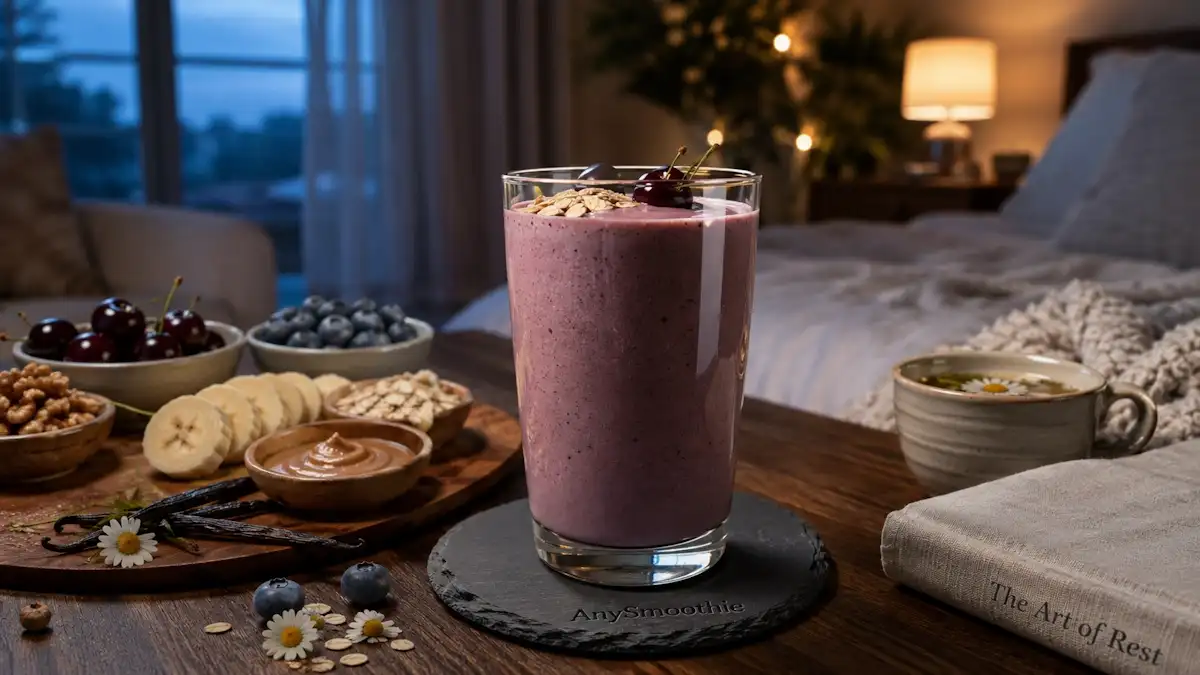
Late nights, shift work, travel, and irregular bedtimes can leave your body stuck between signals. Circadian recovery is the process of helping your internal clock get back in step with night and day. A night smoothie is not meant to knock you out. It’s a lighter choice than a heavy snack, and it can support normal nighttime biology when you want something small, calm, and easy to digest.
Food timing and composition matter more than most people think. Research on circadian nutrition has linked meal patterns, caffeine, fiber, and other compounds with body clock function, including the NIH review on nutrition and the circadian system. Below, you’ll see what belongs in a night smoothie, what to skip, and how to make three simple versions that fit a real evening routine.
What makes a smoothie helpful at night, not just healthy
A daytime smoothie can be bigger, sweeter, and more protein-heavy. At night, that same formula may feel like too much. Late in the day, the goal is to keep digestion easy, blood sugar steadier, and the drink light enough that it doesn’t sit like a brick.
That’s where night smoothies for circadian recovery get different. They work best when they use smaller fruit portions, enough fiber to slow the sugar hit, and a little fat or dairy to make the blend feel complete. A review on food and circadian rhythm points to the role of macronutrients and ingredients such as fiber and caffeine, which is a good reminder that timing matters as much as the ingredient list.
The best ingredients for nighttime support
Some ingredients fit evening use better than others. Tart cherry is a common choice because it brings a bright flavor without much effort. Kiwi adds freshness and a lot of water, so the smoothie feels lighter.
Banana works too, but a small amount is usually enough. Oats add gentle body and help the smoothie last a little longer. Chia and flax bring fiber and a thicker texture, while yogurt or kefir can add creaminess if you tolerate dairy well.
Magnesium-rich ingredients, like pumpkin seeds or a little cacao-free mineral blend, can fit too. Unsweetened milk alternatives, such as almond, oat, or soy milk, keep the drink simple and flexible.
Ingredients that can work against your evening rhythm
Some add-ins turn a calm smoothie into a late-night sugar rush. Large amounts of honey, juice, or dried fruit can push sweetness too far. Big scoops of stimulant-heavy powders can also work against a wind-down routine.
Caffeine belongs in this list too, even in hidden forms like matcha, guarana, or chocolate-based boosters. Very large protein doses can feel heavy at night, and huge fruit portions can make the drink more like dessert than support.
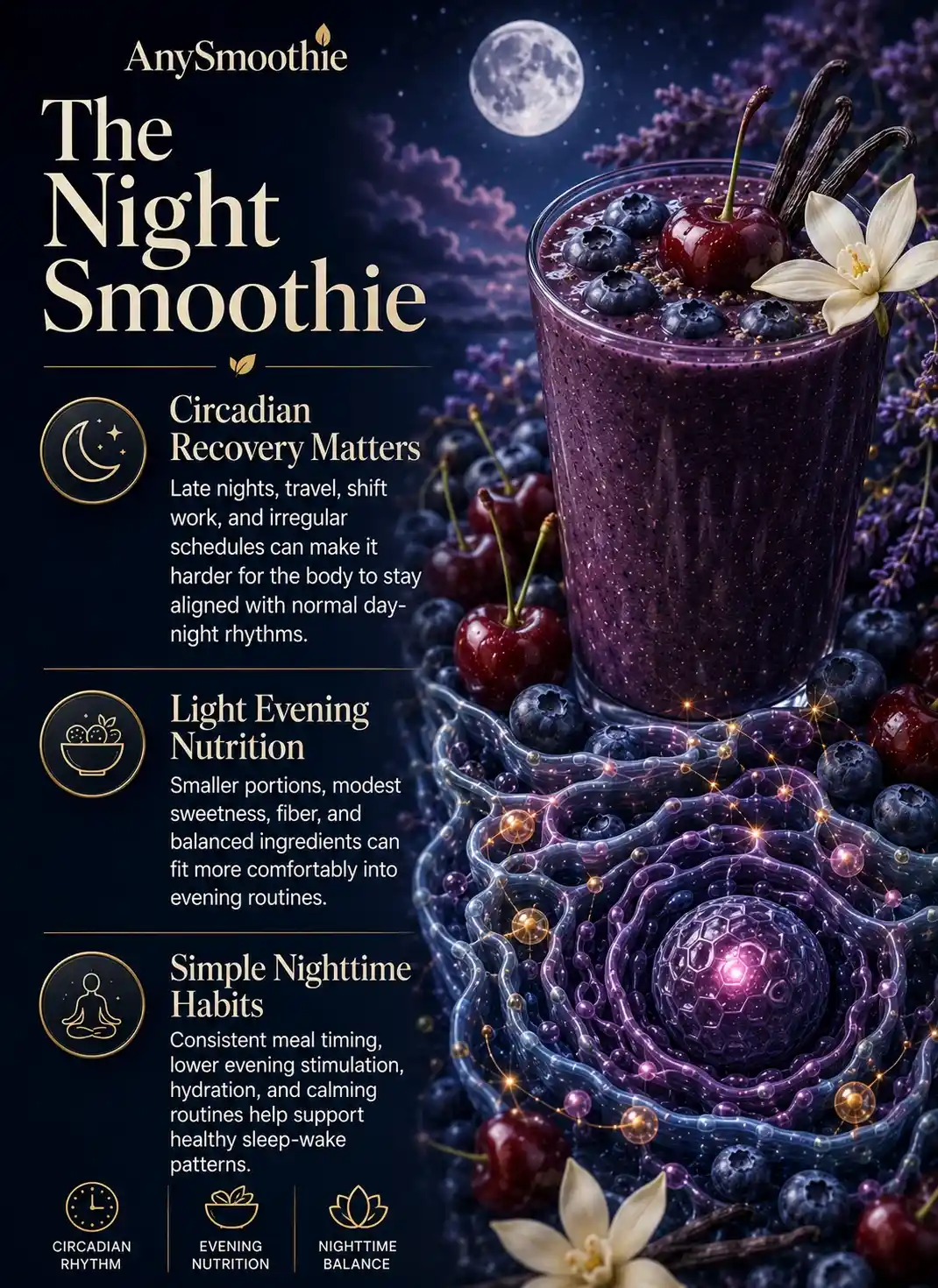
How to build a night smoothie that supports circadian recovery
A good evening smoothie doesn’t need exact measuring every time. It needs balance. Start with a liquid base, add a fruit or flavor note, then fold in fiber, a little fat, and one optional support ingredient. Keep the serving modest, especially if bedtime is close.
| Ingredient type | Role | Texture impact | Best time to use | Easy example |
|---|---|---|---|---|
| Liquid base | Sets the volume and keeps it light | Smooth and drinkable | 60 to 120 minutes before bed | Unsweetened oat milk |
| Fruit or flavor | Adds taste without making it too sweet | Fresh or creamy | Evening, in small amounts | Tart cherry or kiwi |
| Fiber source | Slows the sugar rise and adds body | Thicker | Night or late snack time | Chia or oats |
| Fat source | Helps the smoothie feel more complete | Creamier | When you need more staying power | Flax or nut butter |
| Support ingredient | Adds a calm, mineral-rich touch | Minimal change | Optional | Pumpkin seeds or yogurt |
The mix should feel light, but not watery. If it tastes like a dessert shake, cut the fruit and sweetener back. If it feels too thin, add chia, oats, or a spoon of yogurt.
A simple formula you can use every night
Use this pattern: liquid + fruit + fiber + healthy fat + optional support ingredient. That formula is easy to repeat, and it works with what you already have.
For example, almond milk, tart cherry, chia, and flax make a simple base. Add yogurt if you want more creaminess, or keep it dairy-free if that feels better. The point is consistency, not perfection.
How to adjust sweetness, texture, and portion size
Sweetness should stay low enough that the smoothie feels like evening food, not a treat. If it tastes too sweet, add ice, cucumber, or more liquid. If it feels too thin, add oats or chia instead of juice.
Portion size matters too. Some people do better with 8 to 10 ounces near bedtime. Others want a little more if they ate early or had a long shift. Keep the serving small if you’re close to sleep.
3 Night smoothie recipes for circadian recovery
These three recipes keep the ingredient lists short and the texture easy. Each one supports a different evening need, from tart and light to more filling and calm.
Small changes that make night smoothies work better for your sleep routine
A smoothie helps most when it sits inside a calm evening pattern. Dim the lights, slow the pace, and avoid pairing it with a bright screen and loud noise. That little routine gives your body a better cue that night is here.
The MDPI special issue on nutrition and sleep rhythms reflects the same idea, food timing and sleep timing are linked. A smoothie at the wrong moment can feel too close to bed, while one taken earlier can fit the night much better.
When to drink it for the best result
For many people, 60 to 120 minutes before bed works well. That window gives your stomach time to settle. Still, tolerance varies, so pay attention to how you feel the next morning.
If you’re prone to reflux or feel full easily, move the smoothie earlier or shrink the portion. If you’re a late worker or traveler, use it as a bridge between the last task and the start of sleep mode.
Easy upgrades for travelers, shift workers, and late-night eaters
Shelf-stable nut milk, single-serve chia packs, and instant oats make this easy on the road. Frozen fruit helps at home, while kiwi, bananas, and plain yogurt are easy to find almost anywhere. If your shift runs late, keep the recipe simple and repeatable.
Consistency matters more than variety. A steady pattern gives your body clearer signals than a random mix of late meals.
Conclusion
Night smoothies for circadian recovery work best when they stay light, balanced, and easy to repeat. That means small portions, low sugar, and ingredients that sit well in the evening.
Start with one recipe and notice how it feels the next morning. A calm smoothie, paired with a dim routine, can give your body a cleaner cue that the day is over. Small choices at night add up, and your internal clock notices them.

Medical Disclaimer: AnySmoothie content is for educational purposes only and is not a substitute for professional medical advice. Consult a healthcare provider for personalized guidance. See our full Disclaimer & Terms of Use. AI Transparency: AnySmoothie may use AI to support content development. All content undergoes human editorial review for accuracy, clarity, and editorial quality. See our full AI Transparency.