
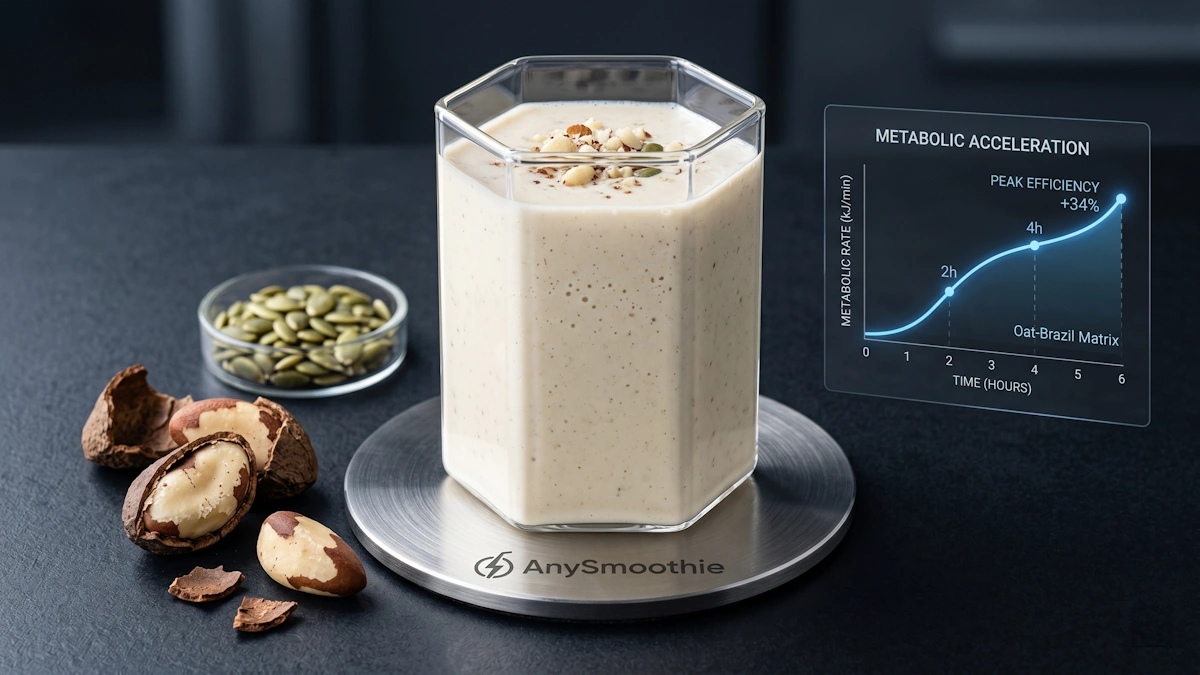
Selenium matters because the thyroid uses it in the enzyme systems that help turn T4 into T3. It also supports antioxidant defenses inside thyroid tissue, which faces a lot of oxidative load.
If you’re looking for a food-first way to support those pathways, selenium smoothies for T4 to T3 conversion are a practical place to start. They are not a fix, and they do not replace care. They can fit into a steady nutrition routine for anyone who wants simpler thyroid-friendly meals, plus a few buying and prep tips that make the habit easy to repeat.
Why selenium matters for healthy T4 to T3 conversion
The thyroid does not work alone. It depends on selenium-containing proteins to help manage hormone production and hormone conversion. A PMC review on selenium deficiency and thyroid hormones notes that low selenium can line up with lower T3 and slower conversion.
That does not mean more selenium is always better. It means the nutrient matters when your intake is low, your diet is uneven, or stress is high.
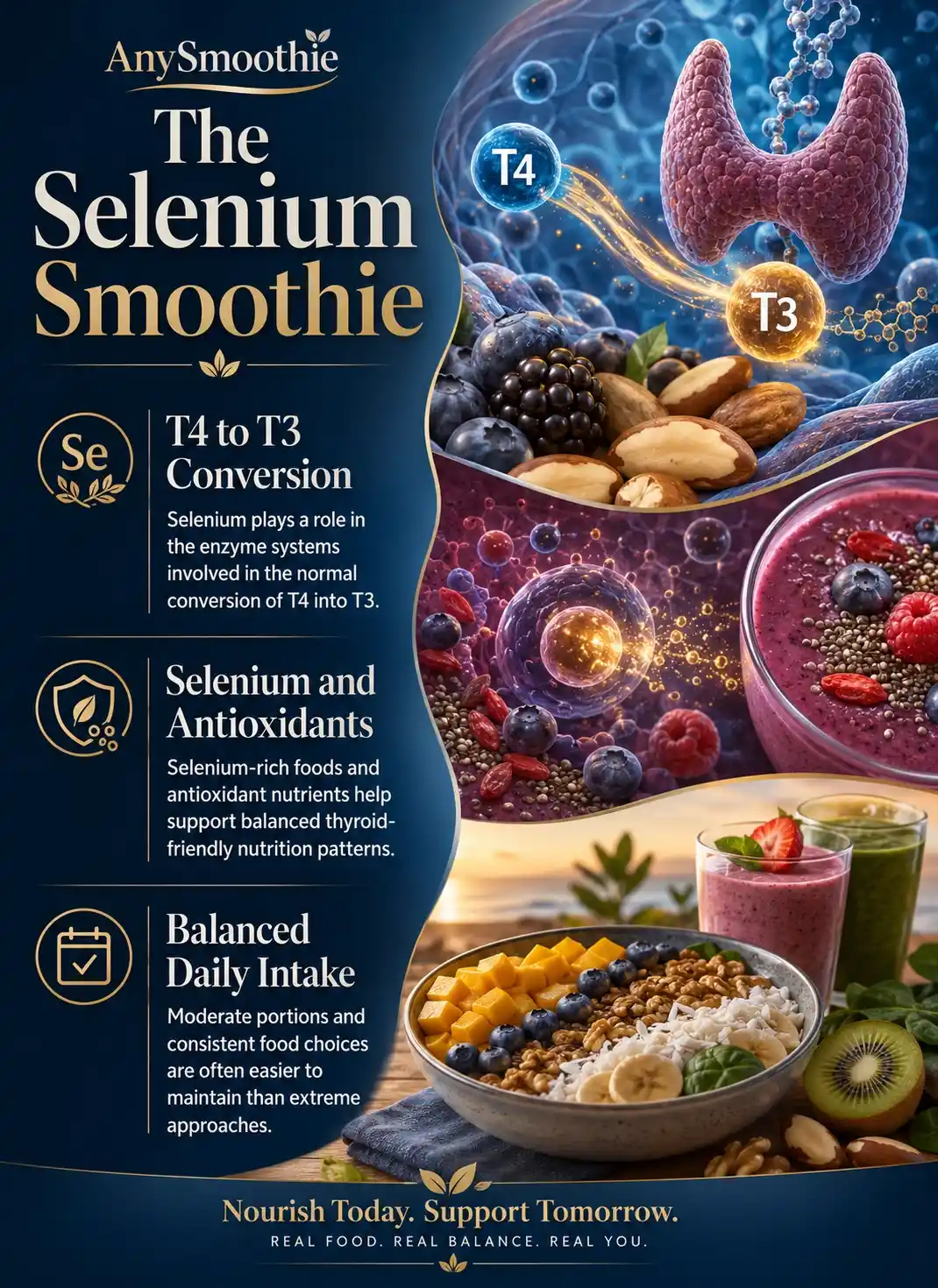
How deiodinase enzymes use selenium
Deiodinase enzymes do the main conversion work. They remove one iodine atom from T4 and help form T3, the more active thyroid hormone. Selenium sits at the center of that process.
If selenium intake is too low, these enzymes may not work as smoothly. Food still matters, because it gives the body the raw materials it needs to keep normal pathways moving.
Why oxidative stress can matter for thyroid function
Selenium also supports antioxidant systems, including glutathione-related defenses. That matters because thyroid tissue uses oxygen and can generate reactive molecules as part of normal function.
A 2025 review on selenium and thyroid function points to selenium’s role in thyroid hormone metabolism and tissue support. Stress, poor diet, and low intake can make that support more relevant.
What to put in selenium smoothies for T4 to T3 support
A good smoothie starts with a clear selenium source, then adds protein, fiber, and fat for balance. Food values vary by soil, brand, and serving size, so keep the focus on patterns, not perfection.
Best selenium-rich ingredients to blend
This table shows the foods that matter most.
| Ingredient | Selenium content | Taste | Smoothie use | Best use case |
|---|---|---|---|---|
| Brazil nuts | Very high, even one nut can be a lot | Rich, earthy | Blend 1 nut, or 2 at most | Strong selenium boost |
| Greek yogurt or kefir | Moderate | Tangy, creamy | Smooth base | Breakfast blends |
| Pasteurized egg whites | Moderate | Mild | Adds protein without much flavor | High-protein smoothies |
| Oats | Small | Neutral, thick | Makes smoothies more filling | Steadier energy |
| Spinach | Small | Mild, green | Adds volume and minerals | Green blends |
| Cacao | Small | Bitter, chocolatey | Covers earthy notes | Dessert-style smoothies |
Brazil nuts do most of the selenium work. Yogurt, kefir, and pasteurized egg whites help round out the protein.
More selenium is not better, especially when Brazil nuts are in the mix.
Chia and sunflower seeds are useful add-ins, too. They bring fiber and healthy fats, but they are not the main selenium source.
Ingredients that help the smoothie work better
A few extras make the blend easier to use in real life:
- Vitamin C foods like berries, pineapple, or citrus help add brightness.
- Protein from yogurt, kefir, or pasteurized egg whites helps with satiety.
- Healthy fats from avocado, nut butter, or chia slow down digestion.
- Minerals from spinach, oats, and cacao help the smoothie feel complete.
That mix matters because a balanced smoothie keeps blood sugar steadier and supports better staying power.
How much selenium is too much
Food-first habits are the easiest way to avoid overdoing selenium. One Brazil nut can already carry a lot, depending on where it came from. Stack that with a supplement, and the total can climb fast.
If you already use a selenium supplement, keep your smoothie ingredients simple. When in doubt, use yogurt, kefir, oats, and berries as your base, then add only one selenium-rich ingredient.
3 Selenium Smoothies for T4 to T3 Conversion
These three blends support the same goal in different ways.
| Recipe | Key ingredients | Flavor profile | Selenium focus | Timing |
|---|---|---|---|---|
| Creamy Brazil nut berry | Berries, Greek yogurt, 1 Brazil nut, chia | Sweet-tart, creamy | Highest of the three | 5 min, breakfast |
| Green cacao protein | Spinach, cacao, protein powder, kefir, 1 Brazil nut | Earthy, chocolate | Moderate with more protein | 5 min, post-workout |
| Tropical coconut blend | Coconut milk, pineapple, mango, yogurt, 1 Brazil nut | Bright, light | Easy daily support | 5 min, morning snack |
How to use these smoothies in a thyroid-friendly routine
Smoothies work best when they fit your day, not when they take over your routine. Rotation helps. One day can be berry-based, another can be green, and another can go tropical.
A review on selenium and thyroid disease also highlights selenium’s role in hormone metabolism and antioxidant defense. That makes consistency more useful than intensity.
Best time of day to drink them
Breakfast is the easiest slot for most people. A protein-rich smoothie can help you avoid the mid-morning crash.
They also work well after a workout or as an afternoon snack. Pair them with a little protein or fat if you need more staying power.
Simple shopping and prep tips
Keep the process easy:
- Freeze berries, mango, and spinach in small bags.
- Store Brazil nuts in a small jar so portions stay modest.
- Buy plain kefir or Greek yogurt for a fast base.
- Pre-portion chia, oats, and cacao into small containers.
If you have thyroid concerns or take medication, ask a qualified clinician about timing and supplement use. A small food habit can still fit into a larger plan.
Conclusion
Selenium smoothies can be a simple way to support the body’s natural T4 to T3 conversion pathways. The best versions keep selenium in check, then add protein, fiber, and healthy fats for balance.
That balance matters more than chasing the highest amount. One small smoothie habit, repeated often, can become a steady part of a thyroid-friendly routine.
🛡️ Safety Notes & Dietary Interactions
- Brazil Nut Portion Control: Brazil nuts can contain substantial amounts of selenium. Using one nut per smoothie is often sufficient for food-based routines and helps avoid unnecessary intake fluctuations.
- Food-First Selenium Strategy: Selenium works alongside protein, minerals, and overall nutritional status. Whole-food sources generally provide a steadier approach than stacking multiple selenium-rich products together.
- Antioxidant Network Support: Selenium participates in antioxidant enzyme systems that help manage normal oxidative processes. Pairing selenium-rich foods with colorful fruits and vegetables creates a broader nutritional foundation.
- Supplement Overlap Awareness: If you already use a selenium supplement, check total intake before adding multiple selenium-rich foods. Consistency and moderation are often more practical than maximizing intake.
FAQ
Why is selenium important for T4 to T3 conversion?
Selenium is required for deiodinase enzymes, which help convert T4 into T3, the more biologically active thyroid hormone. The article explains that selenium sits directly within these enzyme systems, making it an important nutrient for normal thyroid hormone metabolism and the physiological pathways involved in thyroid function.
Why are Brazil nuts used so often in selenium smoothie recipes?
Brazil nuts are among the richest natural food sources of selenium available. Because of their high selenium content, even a single nut can contribute a meaningful amount. The article repeatedly emphasizes moderation, using Brazil nuts as a concentrated ingredient rather than treating larger quantities as automatically better.
Why is protein included alongside selenium-rich ingredients?
Protein provides amino acids that support numerous physiological functions throughout the body. Ingredients such as Greek yogurt, kefir, protein powders, and pasteurized egg whites help transform a selenium smoothie into a more complete meal. This combination improves satiety while supporting a balanced nutritional profile rather than focusing on one nutrient alone.
How does selenium relate to antioxidant support in the thyroid?
The thyroid is metabolically active tissue that naturally generates reactive molecules during normal hormone production. Selenium participates in antioxidant enzyme systems, including glutathione-related pathways, that help manage these processes. The article highlights this role as one reason selenium is frequently discussed in thyroid-supportive nutrition strategies.
What is the biggest takeaway from the article?
The article consistently emphasizes balance rather than excess. Selenium is important for thyroid-related pathways, but more is not always better. A practical smoothie combines modest amounts of selenium-rich foods with protein, fiber, healthy fats, and nutrient-dense ingredients. Building a repeatable daily habit is presented as more valuable than chasing the highest possible selenium intake.

Medical Disclaimer: AnySmoothie content is for educational purposes only and is not a substitute for professional medical advice. Consult a healthcare provider for personalized guidance. See our full Disclaimer & Terms of Use. AI Transparency: AnySmoothie may use AI to support content development. All content undergoes human editorial review for accuracy, clarity, and editorial quality. See our full AI Transparency.