
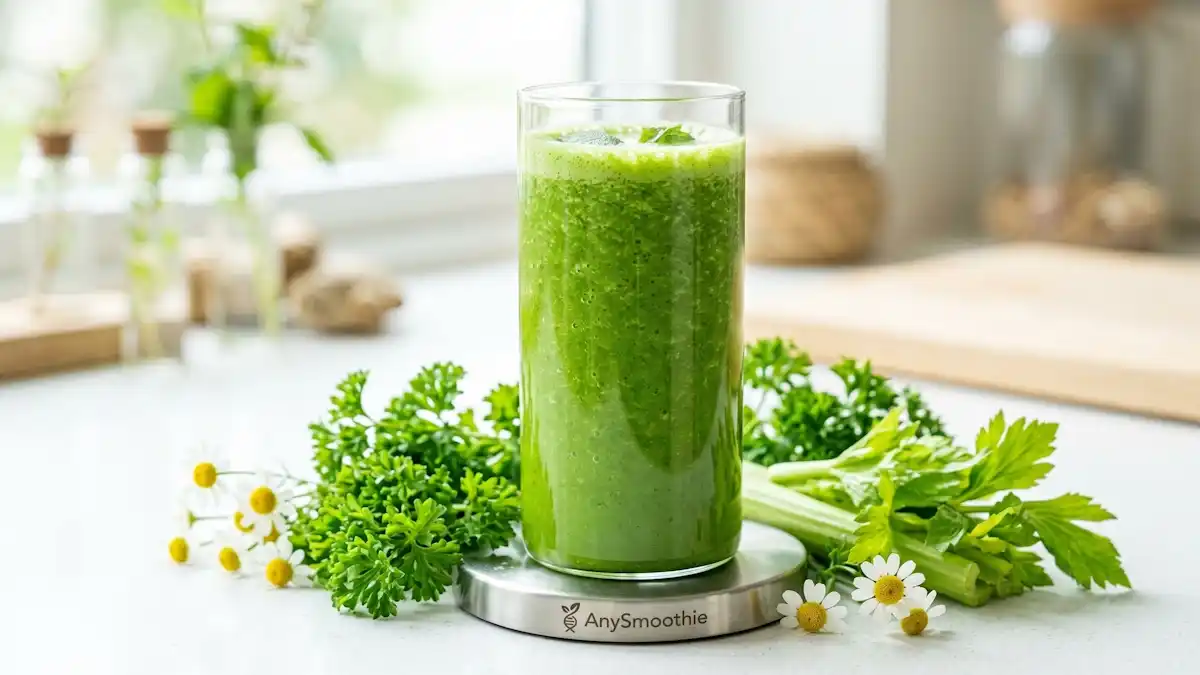
CD38 uses NAD+, and that matters when you care about cellular energy. When the enzyme is too active, it can pull on the NAD+ pool that cells use for repair, signaling, and mitochondrial work. That is why apigenin smoothies for CD38 enzyme regulation have become a food-first idea for people who want practical support.
This post keeps things grounded. You’ll see the science, the best food sources, and smoothie builds that fit real life. You’ll also see how ingredient pairings can support nutrient partitioning, flavonoid uptake, and metabolic efficiency without turning breakfast into a chemistry project.
The NAD+ drain: understanding the CD38 enzyme pathway
CD38 is an enzyme that helps break down NAD+, a molecule tied to energy transfer and cellular repair. You don’t need a lab coat to understand the concern. If more NAD+ gets spent here, less may be available for the pathways that keep cells running well.
That’s why CD38 gets attention in healthy aging circles. It sits near the center of the NAD+ story, and that makes it interesting for people who track mitochondria, recovery, and resilience.
Why CD38 matters when NAD+ is part of the picture
Think of CD38 as part of the cell’s fuel budget. It does not create energy, but it can consume NAD+, and that affects what’s left for downstream work.
When NAD+ balance stays steadier, mitochondrial function and repair pathways have a better shot at staying efficient. That is one reason this enzyme shows up in longevity and biohacking conversations.
Enzyme competition, and why regulation can be useful
Enzymes compete for the same resources. If CD38 activity is high, the cell may have less NAD+ for other pathways, including sirtuin-linked processes tied to healthy aging and stress response.
The goal is balance, not a hard shutdown. A steadier NAD+ economy is the real target.
That framing matters, because the best food strategy supports physiology instead of chasing extremes.
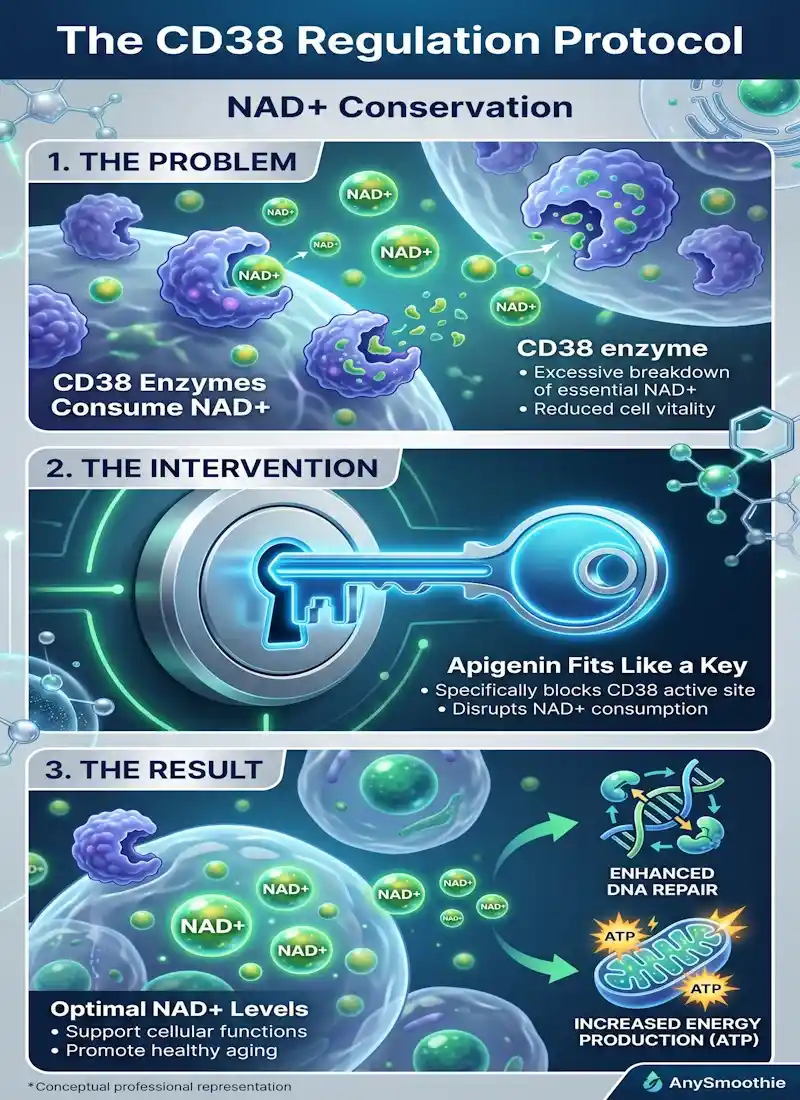
The apigenin shield: supporting a healthier CD38 balance
Apigenin is a flavonoid found in parsley, chamomile, celery, and several herbs. A recent apigenin food-source review lists parsley as a standout source, with celery and chamomile close behind. Whole foods make sense here, because they bring apigenin with water, fiber, and other plant compounds.
Direct lab work also matters. In the original CD38 inhibition paper, apigenin reduced CD38 activity in vitro and helped preserve NAD+ related pathways. That is the main reason it gets so much attention in food-first NAD+ discussions.
What apigenin is, and where it shows up in food
Parsley is the easiest apigenin anchor for smoothies. Celery adds a milder, greener base. Chamomile tea gives you a simple infusion that blends well and softens the flavor.
You can also find apigenin in thyme, oregano, basil, and some citrus. Still, parsley and chamomile are the most practical daily options.
How flavonoid mechanics may support intracellular NAD+
At a high level, apigenin may help reduce excess CD38 activity, which can support intracellular NAD+ availability. That matters for redox balance, because cells use NAD+ and NADH like a charged battery.
In plain terms, better balance can support mitochondrial priming and cleaner fuel handling. In food-based longevity circles, that is where apigenin stands out.
Apigenin compared with quercetin and luteolin
Here’s a quick side-by-side view of the three flavones most often discussed for CD38 support.
| Compound | CD38 inhibitory potency | Primary biological source | Half-life in systemic circulation | Best smoothie pairing |
|---|---|---|---|---|
| Apigenin | Low micromolar, and the strongest direct food-based option here | Parsley, chamomile, celery | Short, with rapid first-pass metabolism in preclinical work | Parsley, cucumber, lemon, chamomile |
| Quercetin | Low micromolar, slightly weaker in the cited assay | Capers | Short, with rapid oral metabolism | Berries, citrus, greens |
| Luteolin | Low micromolar, strong but less smoothie-focused | Celery | Short, with rapid oral metabolism | Celery, mint, green apple |
Among smoothie-friendly plant compounds, apigenin is the most potent natural inhibitor in the direct CD38 data cited here, so it gets top billing for NAD+ support.
3 ‘NAD-Prime’ apigenin smoothie recipes
These blends keep the ingredient list simple. Each one supports a different use case, but all three stay apigenin-forward.
How to make apigenin smoothies work better in daily life
A good smoothie is not about exotic ingredients. It’s about pairing them well and repeating the habit often.
Healthy fats help flavonoid uptake, citrus improves flavor, and fiber slows the hit from fruit. That mix supports metabolic efficiency and keeps the drink easier to use day after day.
A few easy timing options work well:
- Morning, when you want a clean start.
- After training, when you want a light recovery support drink.
- Mid-day, when you want a green reset instead of another snack.
Preclinical work also suggests apigenin can help restore the NAD+/NADH ratio under stress, which fits the mitochondrial angle study. That does not make the smoothie a treatment, but it does make the food strategy more interesting.
Conclusion
Apigenin-rich smoothies are a smart food-first way to support CD38 balance and keep NAD+ availability in view. The best results come from simple ingredients, steady use, and blends that you can repeat without effort.
Parsley, celery, chamomile, citrus, berries, and a little fat give you a clean place to start. A small daily smoothie can do more for consistency than a complicated stack ever will.
🛡️ Safety Notes & Dietary Interactions
🛡️ GABA Pathway Dynamics: Apigenin interacts naturally with central GABA receptors, which optimizes the body’s natural pathways for systemic rest and relaxation. Because high-density apigenin sources like concentrated parsley can influence these relaxation channels, it is best to utilize these formulations during evening hours, before bed, or during quiet periods when lower cognitive and physical demand is required.
🛡️ Hepatic Enzyme Cleaving (CYP450): Like many active dietary flavonoids, apigenin is processed in the liver via the cytochrome P450 enzyme pathways. Because it utilizes these specific metabolic channels, individuals managing standard daily medication schedules should keep their nutrient intake timed appropriately throughout the day to ensure steady, predictable breakdown.
🛡️ Metabolic Coordination: The natural plant compounds and trace minerals within these green formulations naturally support glucose management and clean metabolic efficiency. If you currently utilize targeted metabolic or blood-sugar support tools, keeping a standard, consistent eye on your regular data parameters ensures your energy delivery stays perfectly aligned.
🛡️ Fluid Exchange Dynamics: Highly concentrated green herbs possess natural properties that assist the body with normal fluid exchange and flushing. To maintain baseline hydration and support clean renal flow, always ensure you consume adequate plain water alongside your daily green formulations throughout the rest of the day.
FAQ: Apigenin Smoothies & Cellular Nutrition
What exactly is apigenin, and which smoothie ingredients are packed with it?
Apigenin is a naturally occurring plant flavone—a powerful antioxidant compound that belongs to the flavonoid family. In a standard diet, it shows up in exceptionally high concentrations within fresh herbs like parsley, crisp celery, and brewed chamomile tea, as well as culinary herbs like thyme and oregano. Because it is an oil-soluble compound integrated into the plant’s cellular walls, using whole foods like parsley or celery in a high-powered blender is the easiest way to release this flavone into a highly absorbable, drinkable form without relying on synthetic pills.
Can a daily apigenin smoothie directly control my body’s CD38 enzyme levels?
It is important to keep expectations grounded: a smoothie is a functional food tool, not a medical therapy or a drug. While exciting laboratory and preclinical models explore how isolated apigenin interacts with the CD38 enzyme matrix to preserve NAD+, whole-food smoothies work on a foundational level. They don’t instantly switch enzymes on or off, but they supply your cells with a steady, concentrated stream of dietary flavonoids and micronutrients that naturally support your baseline metabolic efficiency and cellular resilience over time.
What are the best ingredients to make a powerful green apigenin smoothie taste amazing?
High-apigenin greens like parsley can have a very intense, earthy, and slightly bitter bite. To balance the flavor profile naturally, pair them with ingredients that cut through the bitterness without turning the drink into a sugar bomb. Freshly squeezed lemon or lime juice works beautifully because the natural citrus acids brighten the flavor. A half-inch of fresh ginger or a handful of mint leaves adds a refreshing, crisp finish, while low-glycemic fruits like green apples or a quarter of an avocado soften the texture and completely mask the grassy taste.
Are high-apigenin green smoothies completely safe for daily consumption?
When you consume apigenin in standard food amounts—like a handful of parsley or a cup of celery in a daily blend—it is incredibly safe and highly nutritious for the vast majority of people. However, because concentrated green herbs have natural flushing and metabolic properties, moderation is key. If you are managing a specific health layout, taking prescription medications, or have known allergies to plants in the daisy family (like chamomile), it is always a smart, professional habit to consult with your healthcare clinician before heavily increasing your intake of herb-dense formulations.
How do the apigenin levels in real food compare to the doses used in longevity research?
There is a significant structural difference between a kitchen blender and a laboratory setting. Preclinical research often utilizes highly purified, isolated apigenin extracts at specific concentrations to map out metabolic cellular pathways. A whole-food smoothie delivers lower, gentler concentrations of apigenin, but it offers a massive advantage: it provides the flavonoid within a living matrix of companion nutrients, dietary fibers, and natural enzymes that work together. Instead of chasing massive, unnatural doses, using apigenin-rich foods is about building a consistent, compounding daily habit that supports long-term cellular health.

Medical Disclaimer: AnySmoothie content is for educational purposes only and is not a substitute for professional medical advice. Consult a healthcare provider for personalized guidance. See our full Disclaimer & Terms of Use. AI Transparency: AnySmoothie may use AI to support content development. All content undergoes human editorial review for accuracy, clarity, and editorial quality. See our full AI Transparency.