
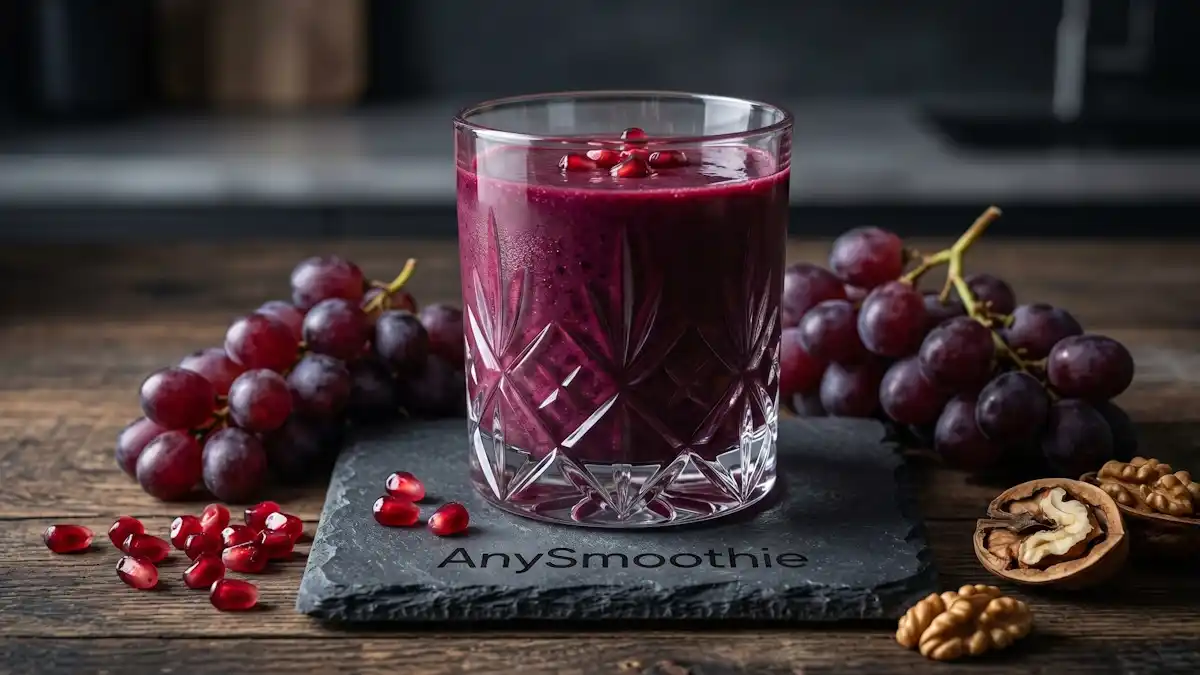
Cells talk to each other through chemical shifts all day long. One of the main languages is redox signaling, and it helps cells manage energy, stress, and repair.
A smoothie is a practical way to bring together polyphenols, fiber, and healthy fats in one glass. That matters because the mix can support normal biological pathways without turning the drink into a sugar-heavy snack. This is about supporting physiology, not treating disease.
Below, you’ll see the science in plain English, a simple ingredient strategy, bioavailability tips, and three smoothie recipes that fit a biohacker-style routine.
Redox Signaling, Explained in Plain English
Redox signaling is how cells use tiny shifts in oxidation and reduction to send messages. In simple terms, cells use small chemical changes as cues. Those cues help them adjust to exercise, food, stress, and recovery.
The key point is balance. A small burst of reactive oxygen species can act like a signal. Too much of it turns into oxidative stress, which can strain normal cell function.
Small amounts of reactive oxygen species are not always a problem. Cells also use them as part of normal signaling.
How cells use oxidation and reduction to stay balanced
Your body does not aim for zero oxidation. It aims for control. When signals stay in range, cells can adapt and keep metabolic work moving.
That balance matters for mitochondrial efficiency, immune response, and recovery after stress. It is one reason people look at a resveratrol smoothie for redox signaling support. The goal is to feed pathways that help cells respond well, not flood them with one isolated compound.
The SIRT1 link and how resveratrol fits in
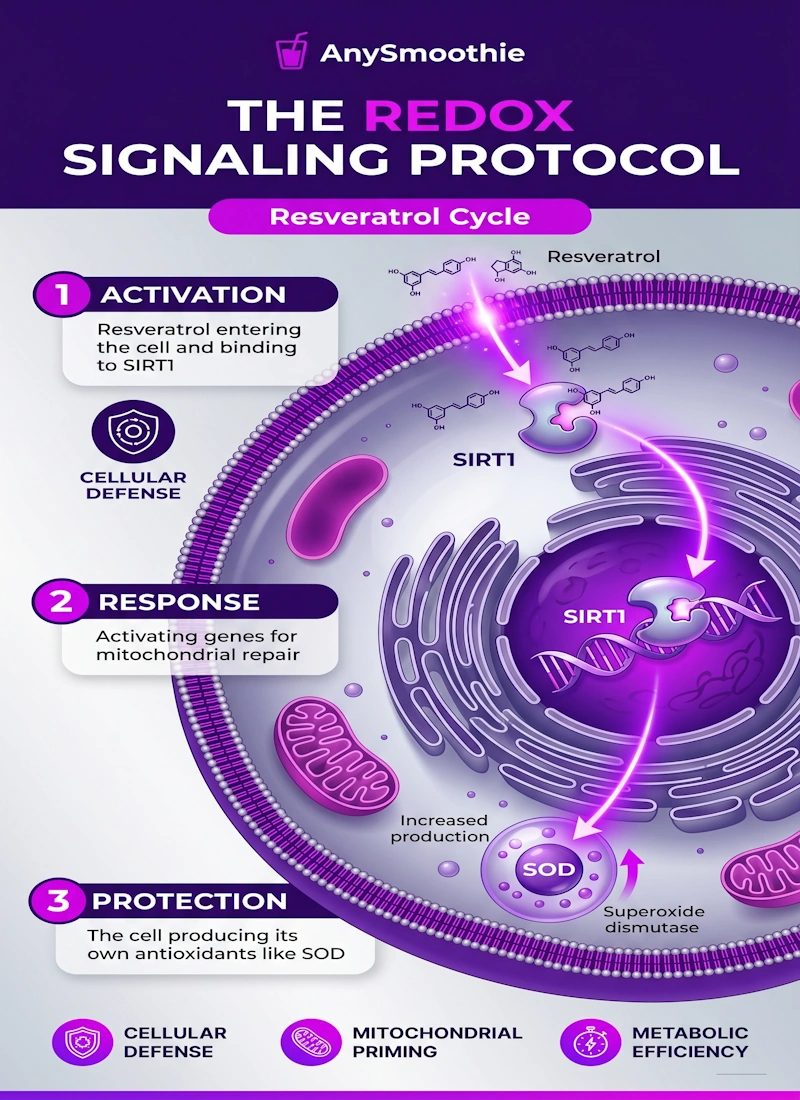
Resveratrol is studied for its links to SIRT1 and related stress-sensing pathways. A recent review on sirtuins and resveratrol summarizes how these pathways connect to cell survival, inflammation control, and metabolic adaptation.
That is the useful frame here. Resveratrol may help nudge the body toward a mild stress-response pattern, which can encourage protective responses already built into cells. It does not work like a magic switch. It works more like a signal the body can read.
What Makes a Smoothie a Smart Delivery System for Polyphenols
Smoothies are useful because they blend compounds that often work better together. Polyphenols bring signaling support. Fiber slows the pace of absorption. Fats help with texture and nutrient partitioning.
A human study on trans-resveratrol found that food timing matters, and a standard breakfast may support exposure better than a heavy high-fat meal in that setting. You can see that detail in this pharmacokinetic study from Springer. The practical takeaway is simple, keep the smoothie balanced, not greasy.
Why fat and fiber matter for absorption
A little fat can help carry fat-soluble compounds through digestion. Walnuts, chia, flax, avocado, almond butter, or yogurt all work well. Fiber helps slow gastric emptying, which can make the metabolic response steadier.
That matters because a smoothie that spikes blood sugar can work against the calm, efficient feel people want from this kind of drink. The best versions are thick, balanced, and not too sweet.
Liposomal transport and the bioavailability problem
Resveratrol has a bioavailability issue. It is absorbed, but it is also broken down quickly. That means the body sees less of the original compound than many people expect.
Food pairing can help support transport and uptake in a practical way. Whole-food fats and a blended texture may improve the delivery environment, even if they do not solve every absorption limit. In other words, the smoothie should help the compound move, not fight digestion.
The Best Ingredients for a Resveratrol Smoothie
The strongest smoothies use deep red and purple produce, a modest fat source, and one or two flavor boosters. That keeps the drink useful and repeatable.
Grapes, blueberries, blackberries, pomegranate, and tart cherries are strong choices. They bring a mix of polyphenols that fit well with redox support. For a quick chemistry primer on related compounds, the pterostilbene data below gives a useful comparison.
| Criterion | Resveratrol (Trans-isomer) | Pterostilbene (Methylated Resveratrol) | Astaxanthin |
|---|---|---|---|
| Physiological Mechanism | SIRT1 and AMPK signaling support, redox modulation | Similar signaling support, with stronger membrane affinity | Strong ROS scavenging and membrane protection |
| Bioavailability Score | Lower, because it clears fast | Higher, it is more lipophilic and stays in the blood longer | Higher for a carotenoid, with good stability |
| Best Smoothie Pairing | Grapes, berries, walnuts | Avocado, nut butter, cacao | Coconut, yogurt, berry blends |
| Primary Cellular Target | Nucleus and signaling proteins | Nucleus and membranes | Mitochondria and membranes |
The broad pattern is clear. Resveratrol is a solid signaling compound, while pterostilbene tends to last longer in circulation because it is more lipophilic. Astaxanthin fits more as a membrane and mitochondrial support compound.
3 Redox-Prime Smoothie Recipes You Can Make at Home
These are fast, repeatable, and built for practical use.
The Purple Shield, red grape, pomegranate, and walnut blend
Ingredients
- 1 cup red grapes
- 1/2 cup pomegranate seeds or unsweetened juice
- 1 small banana
- 1 tablespoon walnuts
- 1 cup unsweetened kefir or almond milk
- Ice
If you use a resveratrol supplement, this is the place to pair it with the drink.
The flavor is bright and clean, with a light nut finish. It fits a busy morning when you want something simple and easy to digest.
Estimated Nutrition per Serving
- Calories: ~360 kcal
- Protein: ~14 g
- Carbohydrates: ~59 g
- Fat: ~10 g
- Fiber: ~6 g
- Sugars: ~40 g
The Mito Boost, blueberry, cacao, and chia smoothie
Ingredients
- 1 cup blueberries
- 1 tablespoon cacao powder
- 1 tablespoon chia seeds
- 1 tablespoon almond butter
- 1 cup unsweetened milk
- A pinch of cinnamon
The cacao adds depth, while chia thickens the drink and helps slow the pace of digestion.
This one feels richer and more grounded. It works well after a workout or on a morning that needs steady energy.
Estimated Nutrition per Serving
- Calories: ~300 kcal
- Protein: ~13 g
- Carbohydrates: ~32 g
- Fat: ~16 g
- Fiber: ~11 g
- Sugars: ~17 g
I’d let this one sit for three or four minutes after blending. The chia has time to absorb some liquid, giving the smoothie a noticeably thicker, more substantial texture.
The Clean Slate, tart cherry, avocado, and flax smoothie
Ingredients
- 1 cup tart cherries
- 1/2 avocado
- 1 tablespoon ground flax
- 1 cup plain yogurt or kefir
- 1/4–1/2 cup cold water or unsweetened milk, as needed to thin
The texture is creamy, and the fat-fiber mix keeps it satisfying.
Tart cherry fits the redox-support theme well, and avocado gives the smoothie a smoother, more filling profile. It is a good choice when you want less sweetness and more balance.
Estimated Nutrition per Serving
- Calories: ~350 kcal
- Protein: ~14 g
- Carbohydrates: ~42 g
- Fat: ~17 g
- Fiber: ~10 g
- Sugars: ~25 g
If the cherries are especially tart, I’d blend everything first before adjusting the flavor. The avocado and yogurt soften the sharpness more than you might expect, so extra sweetness may not be necessary.
Mitochondrial Flux: Supporting Energy Production via Redox Balance
Mitochondria respond to redox signals all day. When that balance stays in range, energy production tends to run more efficiently. That is why a smoothie built around polyphenols and healthy fats can feel more useful than a random fruit blend.
For a closer look at the stress-response side, this Nrf2 review shows how resveratrol connects with endogenous protection pathways. Nrf2 helps turn on genes that support antioxidant defense and cellular resilience.
When to drink it for the best metabolic fit
Breakfast is the easiest fit for many people. Post-workout is another strong option, since cells are already primed for nutrient uptake. A mid-morning smoothie also works if you want a lighter meal that still feels structured.
The best timing is the one that matches your routine. Consistency matters more than chasing a perfect window.
Simple mistakes that weaken the effect
Too much juice can turn the smoothie into a sugar load. Too many sweeteners do the same. A giant portion can also dilute the point of the drink.
Keep an eye on these basics:
- Use whole fruit instead of fruit juice when you can.
- Add a fat source, even a small one.
- Keep sweeteners light.
- Stay close to one serving.
Conclusion
A resveratrol smoothie for redox signaling works best when it stays simple. Use polyphenol-rich fruit, add a little fat for transport, and keep the texture steady enough to fit real life.
That approach supports mitochondrial function, healthy cell communication, and a more balanced metabolic response. Try one recipe this week, then repeat the one that fits your routine best.
🛡️ Safety Notes & Contraindications: Redox Support
Lipid-Mediated Transport: Resveratrol and related stilbenes are fat-soluble compounds with naturally low bioavailability. To optimize their transport and systemic exposure, ensure your smoothie contains a lipid source like walnuts, avocado, or chia seeds to facilitate micellar solubilization during digestion.
Hormetic Signal Balance: Redox signaling relies on a delicate balance of oxidative stimuli. Avoid over-consumption of isolated high-dose antioxidants immediately around intense training sessions, as a certain level of natural oxidation is required to trigger the body’s adaptive repair and growth signals.
Metabolic Flux Stability: High-sugar fruit bases or added sweeteners can trigger insulin spikes that counteract the metabolic efficiency supported by SIRT1 pathways. Use whole fruits and fiber-rich seeds to maintain steady glucose levels and support a cleaner metabolic response.
Interactions with Endogenous Systems: Bioactive polyphenols interact with endogenous enzymes like Nrf2 to boost the body’s own defense systems. For the best results, maintain consistency in your smoothie routine rather than seeking acute results from a single serving.
FAQ
How does Resveratrol act as a “Signal Modulator” rather than a simple antioxidant?
Resveratrol functions as a signaling molecule by activating the SIRT1 enzyme and the Nrf2 pathway. Biochemically, it doesn’t just scavenge free radicals directly; it nudges the cell’s internal stress-response systems into action. Supporting this physiological system optimizes the natural pathways of endogenous antioxidant production. This “signaling” approach ensures that the biochemical mechanics of cellular resilience are primed, allowing the cell to adapt more efficiently to metabolic and oxidative demands.
Why is the SIRT1-AMPK axis critical for mitochondrial flux?
The SIRT1 and AMPK pathways act as metabolic sensors that coordinate energy production. Biochemically, sirtuins require NAD+ to function, and their activity leads to the deacetylation of proteins involved in mitochondrial biogenesis. Supporting these physiological systems through targeted polyphenol intake facilitates the natural pathways of energy efficiency. This optimization ensures that the biochemical mechanics of “mitochondrial flux” are supported, maintaining a steady energy output even under varying stress levels.
How does “Methylation” in Pterostilbene influence its systemic retention?
Pterostilbene is a methylated analog of resveratrol. Biochemically, the presence of two methoxy groups increases its lipophilicity and reduces the rate at which the liver metabolizes and excretes it. Supporting the physiological systems of absorption through methylated forms optimizes the natural pathways of systemic exposure. This ensures that the compound stays in the circulation longer, providing a more sustained influence on the biochemical mechanics of redox signaling compared to standard resveratrol.
Why is a “Balanced Fat Matrix” essential for polyphenol bioavailability?
Many polyphenols, including resveratrol, are lipophilic and have poor water solubility. Biochemically, pairing them with a fat source—like walnuts or avocado—supports the physiological systems of micellar solubilization in the small intestine. This optimization facilitates the natural pathways of transport across the intestinal barrier. Ensuring a balanced fat matrix in your smoothie prevents the “rapid clearance” of these compounds, supporting the biochemical mechanics of systemic bioavailability.
In what way does Nrf2 induction support “Endogenous Protection” pathways?
Nrf2 is a transcription factor that controls the expression of over 200 protective genes. Biochemically, resveratrol facilitates the release of Nrf2, allowing it to enter the nucleus and initiate the production of enzymes like glutathione peroxidase. Supporting this physiological system optimizes the natural pathways of cellular defense. By triggering this “endogenous” response, the body builds a more resilient biochemical shield, facilitating long-term mitochondrial priming and protecting the structural integrity of cellular membranes.

Medical Disclaimer: AnySmoothie content is for educational purposes only and is not a substitute for professional medical advice. Consult a healthcare provider for personalized guidance. See our full Disclaimer & Terms of Use. AI Transparency: AnySmoothie may use AI to support content development. All content undergoes human editorial review for accuracy, clarity, and editorial quality. See our full AI Transparency.