
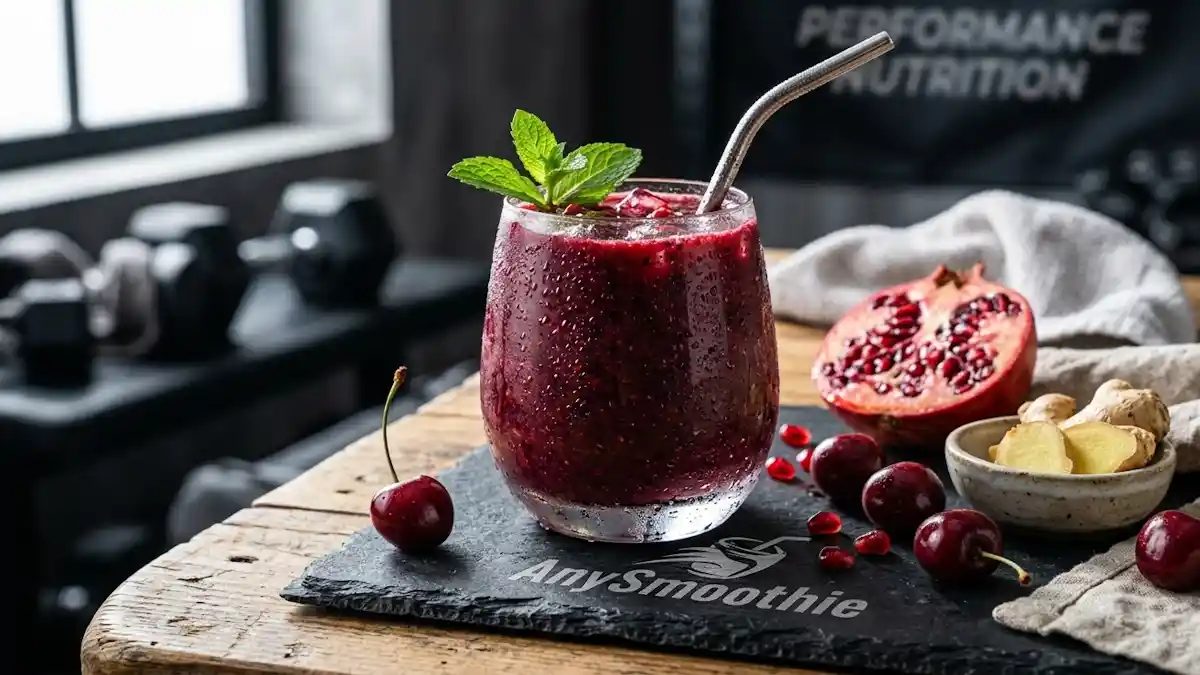
DOMS, the ache that shows up a day or two after hard training, can make stairs feel rude. It usually follows a new workout, heavier load, or more volume than your body is used to. A smart smoothie for post-workout DOMS gives you fluid, carbs, protein, and anthocyanin-rich fruit in one easy meal.
That mix matters because the recovery window is busy. Muscles need fuel, amino acids, and hydration at the same time. The goal is simple, support normal repair and help the body bounce back with less drag, not chase extreme claims.
What DOMS really is, and why anthocyanins matter after training
DOMS is delayed soreness that comes after micro-stress in muscle tissue. It often feels like stiffness, tenderness, and a drop in power. Hard eccentric work, such as lowering a weight or downhill running, tends to trigger it.
The body responds by repairing small tissue damage and clearing the stress signals left behind. That process needs energy and raw materials. Nutrition helps because it supports fluid balance, glycogen refill, and the normal repair cycle.
The goal is recovery support, not blocking the adaptation that training is trying to create.
Anthocyanins fit here because they are the red, blue, and purple pigments in certain fruits. They support antioxidant balance and may help circulation, which matters when tired fibers need nutrients. For a helpful review of tart cherry recovery data, see research on cherry juice and exercise recovery.
The DOMS mechanism: micro-trauma, oxidative stress, and recovery demand
Training creates tiny stress signals in muscle cells. Those signals can raise soreness and lower output for a short time. Oxidative stress also rises, so the body has to manage repair without getting stuck in a longer-than-needed stressed state.
That is why recovery food works best when it is simple and efficient. Carbs refill fuel, protein supports rebuilding, and fluids help the system move. Good post-workout nutrition improves metabolic efficiency because it gives the body what it needs before the next session.
Why anthocyanins stand out in a recovery smoothie
Anthocyanins are useful because they come packed inside fruit you can actually eat. Tart cherries, wild blueberries, and blackcurrants bring color and a strong polyphenol profile. They also pair well with protein foods, so the smoothie does more than taste good.
These pigments may support oxidative balance and microvascular flow. That can help nutrient delivery after training, when muscles are primed for repair. In practice, that means less friction between your workout and your next meal.
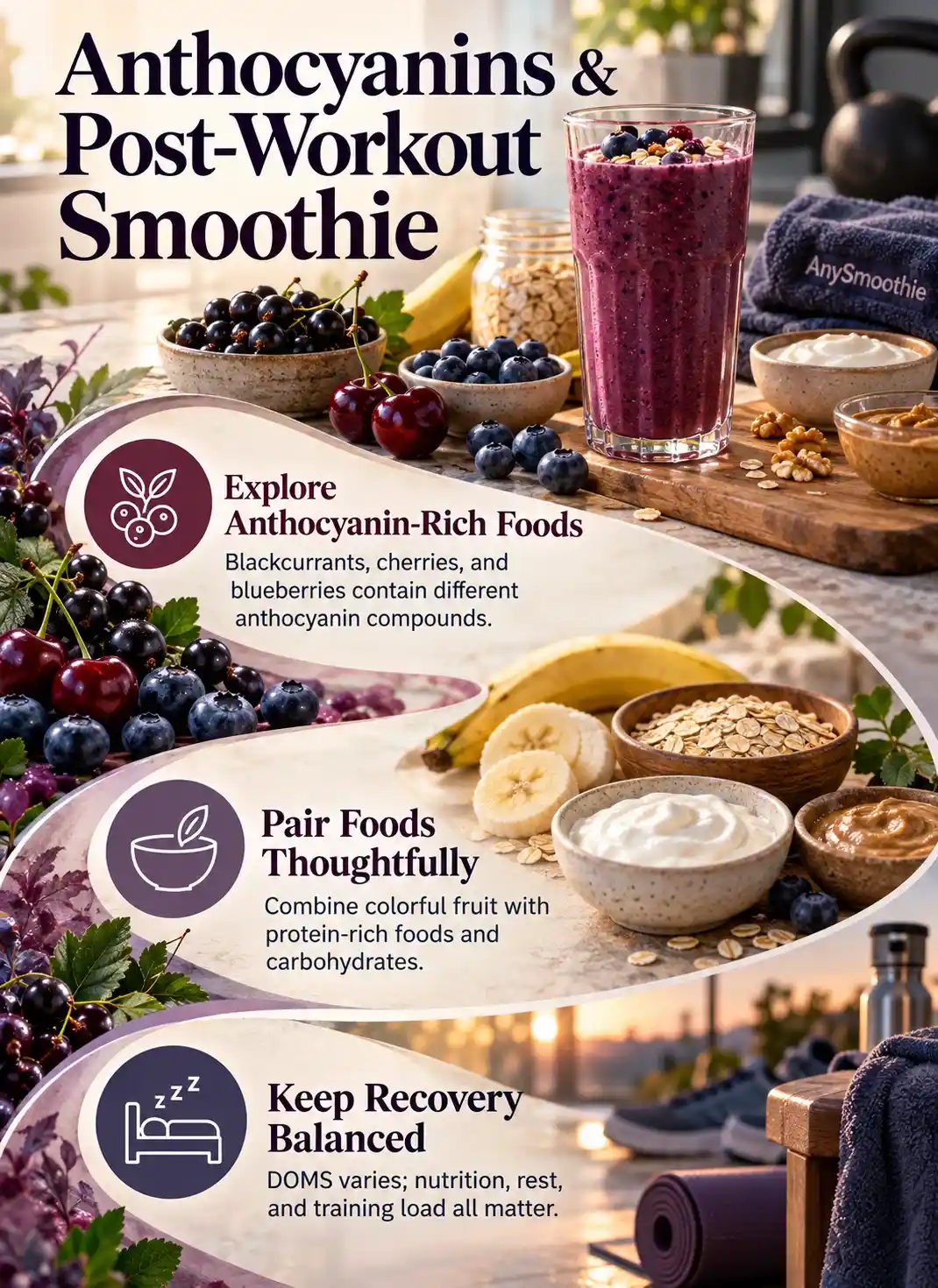
Anthocyanin power: the biochemical engine of muscle repair
The best anthocyanin sources for recovery smoothies are easy to find and easy to use. Tart cherry leads the pack, while wild blueberries and blackcurrants add variety and a different flavor profile. A good recovery smoothie does not need all three, but each one has a place.
| Source | Primary Anthocyanin Type | Physiological Focus | Best Smoothie Pairing | Synergistic Recovery Nutrient |
|---|---|---|---|---|
| Tart cherry (Montmorency) | Cyanidin-based anthocyanins | Gold Standard for reducing post-exercise power loss, plus soreness support | Banana and Greek yogurt | Ginger |
| Wild blueberries | Delphinidin and malvidin compounds | Oxidative buffering and endurance-friendly antioxidant support | Kefir and oats | Protein |
| Blackcurrants | Delphinidin-rich profile | Microvascular flow and recovery support | Yogurt and banana | Turmeric |
Tart cherry gets the most attention for good reason. It is the best studied option for post-exercise recovery, and it fits well in a smoothie with fruit and protein.
Nitric oxide modulation: enhancing nutrient delivery to damaged fibers
Anthocyanin-rich fruit may support nitric oxide signaling, which helps blood flow. Better flow can support delivery of glucose, amino acids, and water to working tissue. That matters after hard training, when you want fast nutrient partitioning and less wasted effort from digestion.
Wild blueberries are a strong second pick. Research on exercise stress has found signs that they may help antioxidant capacity, as shown in this wild blueberry exercise study. They also bring a clean, bright flavor that blends well with kefir, yogurt, or milk.
Blackcurrants are more assertive in taste and color. They work well when you want a sharper berry profile and a more intense looking smoothie.
How to build a smoothie that supports recovery without slowing digestion
The best recovery smoothie is balanced, not overloaded. Start with a fruit base for anthocyanins and carbs. Add a protein source for repair. Then use enough liquid to keep it easy to drink and easy to digest.
A small amount of fat is fine, but keep it modest after training. Too much fat can slow gastric emptying and make the smoothie sit heavy. For most people, the sweet spot is a drink that feels light but still covers the basics.
Timing matters less than consistency, but the post-workout window is still useful. Aim to drink it within an hour or two after training. Fit the portion to your total day, so the smoothie supports the plan instead of replacing it.
The recovery formula: fruit, protein, fluids, and a small amount of fat
Use frozen berries or tart cherry juice for the fruit base. Add Greek yogurt, kefir, whey, or a protein milk for repair. Blend with water, milk, or coconut water until the texture is smooth.
If you want more satiety, add a small spoon of nut butter or oats. If you want faster digestion, keep the recipe lean. The best version is the one you can repeat after every hard session.
3 “Anti-DOMS” anthocyanin focus smoothie recipes
The first recipe leans on tart cherry for the strongest recovery angle. The second keeps things simple and tasty. The third uses blackcurrant for a brighter finish.
The “Purple-Recover” Tart Cherry, Wild Blueberry, and Pomegranate Blend
Ingredients
- 1/2 cup unsweetened tart cherry juice
- 1/2 cup wild blueberries
- 1/4 cup pomegranate arils
- 3/4 cup plain Greek yogurt
- 1/4 cup unsweetened milk or kefir
- Optional: 1/2 medium banana
This mix is useful after intense training because it combines anthocyanins, protein, and fluid in one fast drink.
Estimated Nutrition per Serving
- Calories: ~240 kcal
- Protein: ~19 g
- Carbohydrates: ~38 g
- Fat: ~3 g
- Fiber: ~5 g
- Sugars: ~27 g
If I were making this immediately after training, I’d blend it without the optional banana first. Add the banana when you want a thicker texture and additional carbohydrates rather than automatically making the drink heavier.
A blueberry-cocoa smoothie for soreness support and better taste
Ingredients
- 1 cup wild blueberries
- 1/2 medium banana
- 1 tablespoon unsweetened cacao powder
- 1 scoop (about 25 g) unsweetened protein powder
- 1 cup unsweetened milk
Cacao gives the smoothie a deeper flavor and makes it feel more filling. Blueberries bring the anthocyanins, while protein helps muscle repair.
Estimated Nutrition per Serving
- Calories: ~330 kcal
- Protein: ~31 g
- Carbohydrates: ~48 g
- Fat: ~7 g
- Fiber: ~10 g
- Sugars: ~25 g
A blackcurrant-ginger recovery smoothie for a sharper finish
Ingredients
- 3/4 cup blackcurrants
- 1/2 medium banana
- 3/4 cup plain Greek yogurt
- 1/2 cup unsweetened milk
- 1 teaspoon freshly grated ginger
Ginger adds a bright edge that fits the tart berry flavor. This version stays smooth, easy to digest, and quick to prep.
Estimated Nutrition per Serving
- Calories: ~260 kcal
- Protein: ~21 g
- Carbohydrates: ~39 g
- Fat: ~4 g
- Fiber: ~7 g
- Sugars: ~22 g
I’d start with about a teaspoon of fresh ginger rather than a larger piece. Blackcurrants are already assertive, and too much ginger can quickly overpower the berry flavor.
Small add-ins that can improve the recovery effect
A few add-ins can make the smoothie more complete. Bromelain from pineapple may support the recovery mix, while electrolytes help replace what you lose in sweat. A pinch of salt works well after hot or long sessions.
Ginger and turmeric also fit here. They add flavor and may support normal recovery pathways without turning the smoothie into a huge recipe. If your stomach feels off after training, keep the add-ins simple.
Bromelain and electrolytes for smoother recovery support
Pineapple gives you bromelain, which fits well in fruit-based smoothies. Electrolytes, especially sodium and potassium, matter when you sweat a lot. They help the drink do more than just taste good.
When to keep the recipe simple instead of stacking ingredients
More ingredients do not always mean better recovery. A short recipe is often easier to digest and easier to repeat. If you cover carbs, protein, fluids, and anthocyanins, you already have the core of a solid post-workout smoothie.
Conclusion
Smoothies for post workout DOMS work best when they do four jobs at once, deliver anthocyanin-rich fruit, protein, fluids, and enough carbs to refill fuel. Tart cherry is the strongest single choice, especially for post-exercise power loss, but wild blueberries and blackcurrants bring useful variety. Keep the recipe simple, keep it repeatable, and focus on how you feel the next day.
Try one blend after your next hard workout, then see how your body responds the morning after.
⚠️ SAFETY NOTES: Post-Workout DOMS
NSAID INTERACTION: Anthocyanin-rich fruits (especially tart cherry) have natural properties that support comfort. If you are already taking NSAIDs (Aspirin, Ibuprofen), be aware that high amounts of these extracts can have additive effects. Consult your doctor to avoid excessive stress on the stomach lining.
SUGAR OVERLOAD & INFLAMMATION: While carbs are needed for recovery, a smoothie with too much fruit juice or honey can cause an excessive insulin spike, which in some individuals may paradoxically increase systemic inflammation. Always balance fruit with protein and fiber.
BROMELAIN SENSITIVITY: If your recovery smoothie includes fresh pineapple for bromelain, be cautious of oral or digestive irritation. High doses of bromelain can also interfere with blood-thinning medications.
KIDNEY HEALTH & OXALATES: Many berries used for anthocyanins (like blackberries) are moderate in oxalates. If you have a history of calcium-oxalate kidney stones, ensure you are drinking plenty of water alongside your recovery routine.
TRUE INJURY VS. DOMS: Smoothies support recovery from normal exercise soreness. If you experience sharp pain, swelling, or localized heat, this may be an acute injury (muscle tear or ligament damage) rather than DOMS, and requires medical evaluation, not just nutritional support.
FAQ
How do anthocyanins support the physiological response to DOMS
Anthocyanins are potent plant pigments that support the body’s natural pathways for managing oxidative stress induced by eccentric exercise. Biochemically, they help modulate the inflammatory response without completely suppressing the signals needed for muscle hypertrophy. This supports the physiological systems involved in maintaining structural integrity and reducing the intensity of soreness, allowing for a faster return to peak training volume
Why is Tart Cherry the “gold standard” for post-workout recovery
Tart cherries (specifically Montmorency) contain high concentrations of anthocyanins 1 and 2. These compounds support the natural pathways of nitric oxide production, which enhances blood flow to damaged muscle tissues. By facilitating the delivery of nutrients and the removal of metabolic byproducts, tart cherry supports the physiological systems involved in strength recovery and the mitigation of muscle damage markers.
Will these antioxidants blunt the “training effect”
Standard pharmaceutical anti-inflammatories can blunt the adaptive response to exercise. However, the anthocyanins found in whole foods like berries support the natural pathways of recovery by acting as signaling molecules rather than just “blockers.” This supports mitochondrial priming and systemic balance, ensuring that the body can adapt to the training stimulus while recovering from the associated soreness more efficiently.
What is the synergy between anthocyanins and Bromelain
Bromelain, an enzyme found in pineapple, supports the physiological systems involved in the digestion of damaged protein fragments in muscle tissue. When paired with anthocyanins, it creates a biochemical synergy that supports the natural pathways of “cleanup” after intense exercise. This combination optimizes the removal of inflammatory markers, supporting faster tissue repair and improved metabolic efficiency during the recovery phase.
When is the most effective time to consume an Anthocyanin Focus smoothie
For maximum efficacy in supporting the physiological systems of recovery, consume the smoothie within 30 to 60 minutes post-exercise. This timing optimizes nutrient partitioning during the peak “blood flow window,” ensuring that the bioactive anthocyanins reach the damaged muscle fibers when they are most receptive. For high-volume training, consuming a second dose 24 hours later further supports the natural pathways of systemic recovery.

Medical Disclaimer: AnySmoothie content is for educational purposes only and is not a substitute for professional medical advice. Consult a healthcare provider for personalized guidance. See our full Disclaimer & Terms of Use. AI Transparency: AnySmoothie may use AI to support content development. All content undergoes human editorial review for accuracy, clarity, and editorial quality. See our full AI Transparency.