
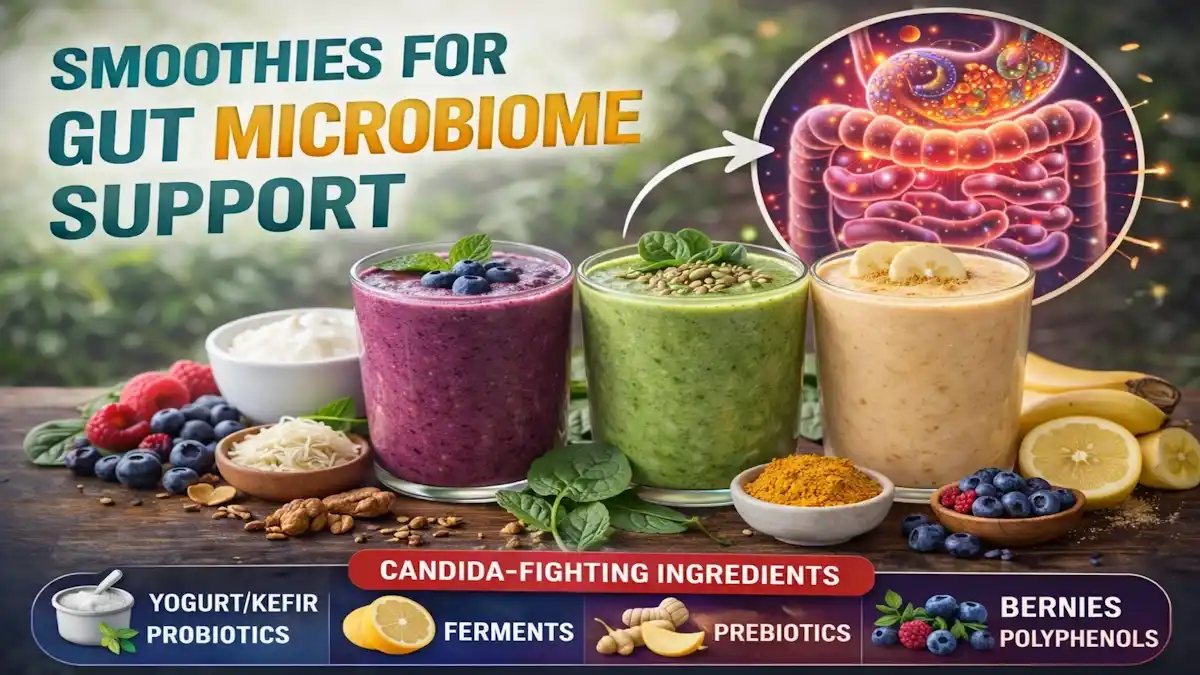
A smoothie can do more than taste good. A well-built one can support gut microbiome modulation by feeding helpful microbes with the right substrates.
That means fiber, resistant starch, and polyphenol-rich fruit. The goal is to support microbial balance, not to turn a sweet drink into a health claim.
With the right blend, a smoothie becomes a simple daily tool. Think green bananas, oats, chia, flax, berries, pomegranate, and a little cacao.
Why smoothies can help shape the gut microbiome
Smoothies can pack plant matter, fluids, and texture into one easy meal. For some people, that makes high-fiber ingredients easier to use every day.
A smoothie supports the gut best when fiber leads and sweetness stays in the background.
How liquid meals change digestion and nutrient delivery
Blending breaks plant cell walls, so the gut gets faster access to the contents. That can help you fit in more fiber, but it also means the formula matters.
A thick smoothie tends to slow intake and improve satiety. A thin, sugary one can move fast and leave little behind for microbes.
Why ingredient quality matters more than just adding fruit
A fruit-heavy smoothie is not the same as a microbiome-focused one. Fruit brings water and flavor, but fiber, resistant starch, and polyphenols do the real work.
Added juice, syrups, and sweetened yogurt can push the formula in the wrong direction. A good gut microbiome modulation smoothie keeps sugar modest and fermentable material high.
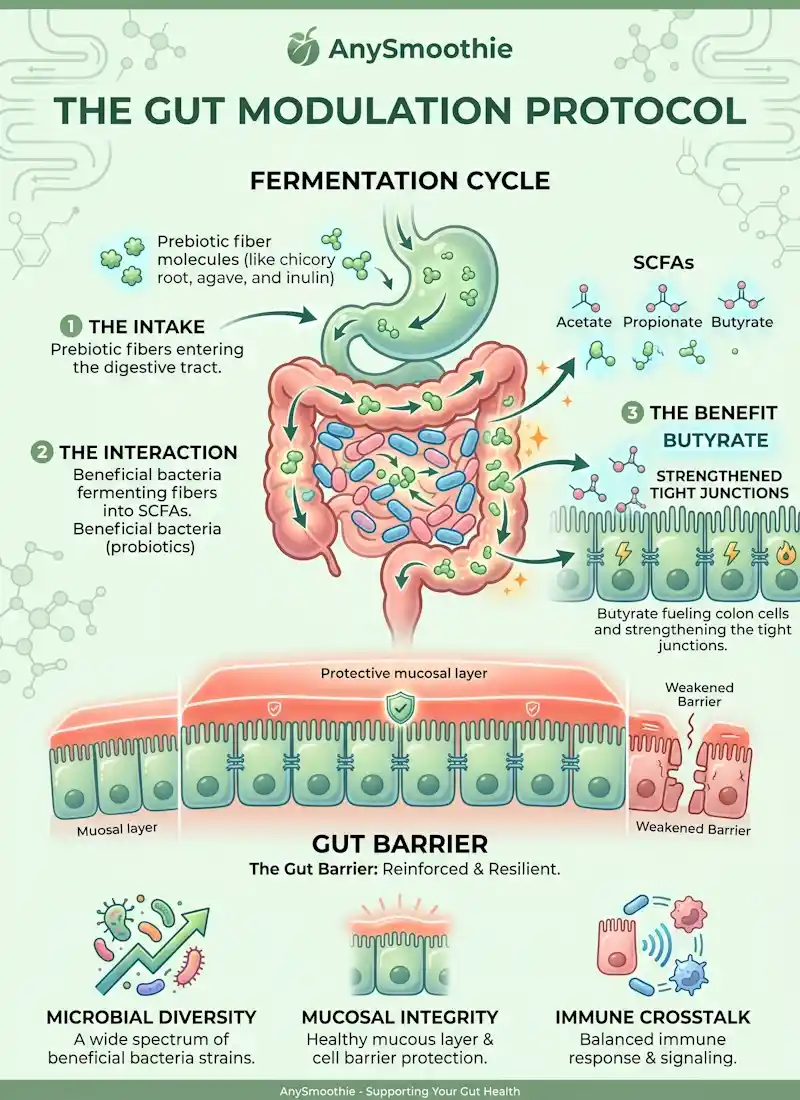
The Microbial Landscape: Cultivating Diversity via Substrate Selection
Different compounds feed different bacterial groups, and they do not all act the same way in the colon. That matters because microbial diversity is shaped by what reaches the lower gut intact.
Postbiotic Synthesis: The Role of Butyrate in Colonocyte Energy
When bacteria ferment the right fibers, they make short-chain fatty acids, especially butyrate. Colon cells use butyrate for energy, so resistant starch has a direct role in the back end of the colon.
These three ingredients work through different routes, so the mix matters. A human study on resistant starch and butyrate production is here. These three ingredients work through different routes, so the mix matters, and balance matters more than pushing one source alone.
| Modulator | Physiological Mechanism | Target Bacterial Group | Best Smoothie Pairing | Impact on Gut Transit |
|---|---|---|---|---|
| Inulin from chicory | Selective bifidogenic stimulation, fast-fermenting prebiotic | Bifidobacteria, some Lactobacilli | Green banana, raspberries, plain kefir | May soften stool and support steadier transit |
| Resistant starch from green bananas | Short-chain fatty acid production, primary driver for butyrate production in the distal colon | Butyrate producers such as Roseburia and Faecalibacterium | Oats, flax, cacao, unsweetened milk | Supports stool bulk and steadier transit |
| Ellagitannins from pomegranates or raspberries | Polyphenol metabolism, support for Akkermansia and related converters | Akkermansia and other beneficial microbes | Pomegranate, berries, chia | Mild effect, best with fiber |
Resistant starch is the main driver of butyrate production in the distal colon. Inulin and ellagitannins add breadth.
Prebiotic Architecture: Soluble Fibers and Resistant Starches
Soluble fiber helps slow digestion and gives microbes steady fuel. Resistant starch does something different, it slips into the colon and becomes fermentation fuel.
Green bananas, oats, chia, flax, and cooled cooked starches all fit here. If you want a formula you can repeat, this is the core.
Polyphenol Synergy: Selective Inhibition of Pathobionts
Polyphenols from berries, pomegranate, and cacao add another layer. They may favor helpful species while making life harder for less useful ones.
That is why berries work better than fruit juice, and cacao does more than add taste. They pair well with fiber because they give the microbes another set of compounds to process.
How to Build a Gut Microbiome Modulation Smoothie That Actually Works
Build each smoothie with four parts, a fiber base, one resistant starch source, one polyphenol-rich fruit, and one fat source. Protein can go in if you want more satiety, but fiber and starch should lead.
A spoon of chia, flax, nut butter, or avocado helps nutrient partitioning and smooths the sugar curve. Keep juice out unless you want a lighter drink with less microbial payoff.
What to limit if you want better microbial support? Large amounts of juice, syrup, sweetened yogurt, and too much tropical fruit. Those choices crowd out the substrates that help shape the microbiome.
For more butyrate-focused builds, butyrate-boosting smoothie ideas give a few more whole-food variations.
3 ‘Microbiome-Prime’ Gut Modulation Smoothie Recipes
Biohacking the Mucosal Barrier: Supporting Goblet Cell Function
The mucus layer is part of the gut’s protective surface, and goblet cells help build it. A diet with varied plant compounds gives that system a steadier supply of raw material.
If your smoothies rotate fruits, fibers, and seeds, you support that layer without making it complicated. Repetition matters more than novelty here.
Mitochondrial Priming: Supporting the Energetic Demand of the Gut Wall
Colon cells need energy, and butyrate is one of their preferred fuels. Resistant starch helps produce that fuel through fermentation, which ties your smoothie choices to the gut wall’s energy needs.
If you want to support metabolic efficiency, consistency matters more than flashy ingredients. A repeatable smoothie with enough fiber beats a random sweet blend.
Conclusion
The best smoothie for gut microbiome modulation is built on fiber, resistant starch, and polyphenols, not on fruit sweetness alone. That mix gives helpful microbes better fuel and gives you a drink that fits real life.
Start with one recipe, notice how it feels, and keep the formula steady long enough to matter. Small choices repeated often do more than a flashy one-off blend.
🛡️ Safety Notes & Contraindications: Gut microbiome smoothies
FODMAP sensitivity: high-prebiotic smoothies containing inulin (chicory), green bananas, or large amounts of berries can trigger symptoms in individuals with SIBO (Small Intestinal Bacterial Overgrowth) or IBS; symptoms include intense bloating, flatulence, and abdominal pain. Start with very small servings.
Osmotic diarrhea: a sudden, massive increase in soluble fiber (like chia and flax combined) can draw excess water into the colon, leading to osmotic diarrhea; ensure you increase your water intake significantly when consuming these blends.
Antinutrient interference: raw oats and seeds contain phytic acid, which can bind to minerals (calcium, magnesium, zinc) and reduce their absorption; consider using sprouted oats or soaked seeds to improve the nutrient partitioning of minerals.
Microbial “Die-off” (Herxheimer-like) reactions: shifting the microbiome rapidly can sometimes cause temporary headaches, fatigue, or skin breakouts as pathogenic bacteria are displaced; reduce the frequency of the smoothie if symptoms persist.
Choking hazard & Hydration: insoluble fibers like chia and flax expand rapidly in liquid; always blend them thoroughly and drink the smoothie immediately or with extra water to prevent any esophageal discomfort or constipation.
FAQ
How does “Resistant Starch” from green bananas support colonocyte energy?
Resistant starch escapes digestion in the small intestine and reaches the distal colon, where it acts as a primary fuel for fermentation. Biochemically, bacteria ferment this starch to produce short-chain fatty acids (SCFAs), particularly butyrate. Supporting this physiological system optimizes the natural pathways of energy production for colon cells (colonocytes), ensuring the biochemical mechanics of the gut wall remain healthy and efficient.
Why is “Microbial Diversity” shaped by the selection of prebiotic substrates?
Different bacterial groups thrive on specific types of fiber; for instance, inulin from chicory selectively stimulates Bifidobacteria, while resistant starch supports butyrate producers like Faecalibacterium. Biochemically, providing a variety of substrates ensures that no single group dominates the landscape. Supporting this physiological system through diverse plant-based smoothies facilitates the biochemical mechanics of “substrate selection,” fostering a more resilient and diverse microbial ecosystem.
How do “Ellagitannins” in pomegranates and berries promote mucosal health?
Ellagitannins are polyphenols that are metabolized by specific gut microbes into urolithins, which support the growth of beneficial bacteria like Akkermansia. Biochemically, these microbes play a role in maintaining the mucosal barrier by supporting goblet cell function. Supporting this physiological system through polyphenol-rich smoothies optimizes the natural pathways of “mucosal priming,” ensuring the biochemical mechanics of the gut’s protective surface are well-maintained.
Why does “Blending” change the nutrient delivery to the gut microbiome?
Blending breaks down plant cell walls, providing the gut with faster access to nutrients while keeping fiber intact. Biochemically, the formula matters because a thick, high-fiber smoothie slows transit and ensures that fermentable material reaches the lower gut. Supporting this physiological system through high-fiber, low-sugar blends optimizes the natural pathways of “prebiotic architecture,” ensuring the biochemical mechanics of fermentation are sustained in the colon.
What is the synergy between “Soluble Fibers” and Short-Chain Fatty Acid (SCFA) production?
Soluble fibers from ingredients like oats, chia, and flax slow digestion and provide a steady supply of fuel for microbial fermentation. Biochemically, this leads to the continuous synthesis of postbiotics like acetate, propionate, and butyrate. Supporting these physiological systems simultaneously through balanced smoothies optimizes the natural pathways of “metabolic efficiency,” facilitating the biochemical mechanics of a healthy gut-brain and gut-immune axis.

Medical Disclaimer: AnySmoothie content is for educational purposes only and is not a substitute for professional medical advice. Consult a healthcare provider for personalized guidance. See our full Disclaimer & Terms of Use. AI Transparency: AnySmoothie may use AI to support content development. All content undergoes human editorial review for accuracy, clarity, and editorial quality. See our full AI Transparency.