
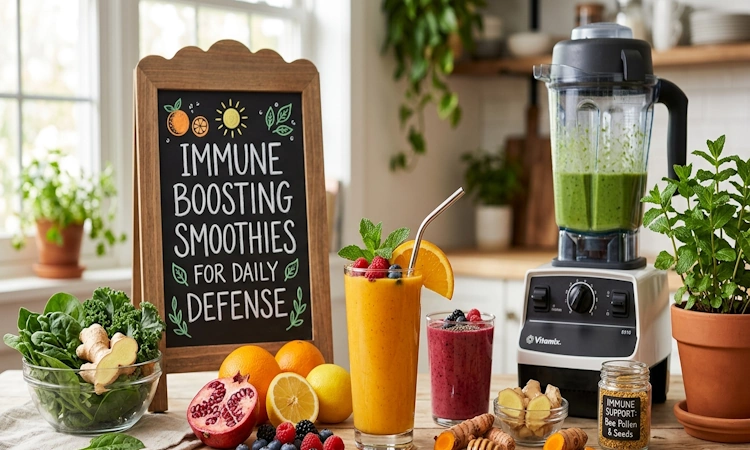
Busy mornings don’t leave much room for complicated health routines. When seasonal sniffles start going around, it’s natural to want one easy habit that feels doable every day. That’s where immune boosting smoothies can fit in.
In plain terms, these are nutrient-rich blends made with fruits, vegetables, and other wholesome add-ins that can help support your immune system as part of a balanced diet and healthy lifestyle. They aren’t a way to prevent or cure illness, but they can make it easier to get more vitamin C, antioxidants, fiber, protein, and fluids in one quick meal or snack.
That matters when you’re short on time and still want something better than skipping breakfast or grabbing a pastry. A well-built smoothie can be simple, filling, and packed with ingredients often used in wellness smoothie ideas, from berries and citrus to yogurt, ginger, and even elderberry drinks.
In this guide, you’ll find the best ingredients to use, how to build a balanced smoothie that actually satisfies you, a few easy recipes to try, and common mistakes that can make a healthy drink less helpful. So if you want simple vitamin C smoothie recipes, citrus smoothies, and other cold fighting drinks you can make on repeat, you’re in the right place.
What makes an immune boosting smoothie actually helpful
Not all immune boosting smoothies do the same job. A helpful one is more than a sweet fruit blend with a healthy-sounding name. It should give you a mix of nutrients your immune system uses every day, while also keeping you full and steady instead of hungry an hour later.
That means looking past hype and focusing on what your ingredients are actually bringing to the glass. When you build your smoothie with a few key nutrients in mind, it starts to work more like a real meal or smart snack, not just a cold drink.
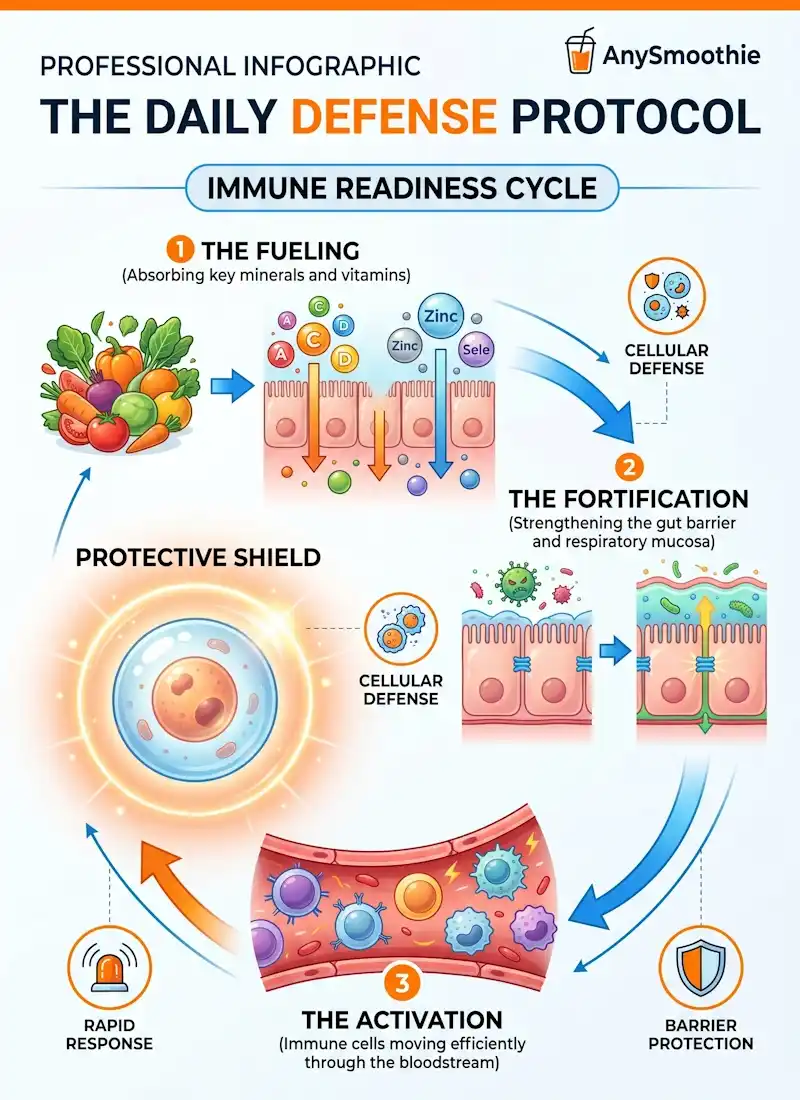
The nutrients that matter most for immune support
A strong smoothie usually starts with vitamin C, because it helps support immune cell function and also acts as an antioxidant. In simple terms, antioxidants help protect your cells from stress. That’s one reason citrus, strawberries, kiwi, and other berries show up so often in vitamin c smoothie recipes and citrus smoothies.
Next comes vitamin A, which helps support the tissues that act like your body’s front line, such as the skin and the lining of the nose and mouth. Think of it as part of your body’s barrier system. Smoothie-friendly sources include mango, spinach, and even carrots if you like a thicker blend.
Zinc matters too, because your immune system uses it to help with normal cell growth and repair. You do not need a huge amount in one drink, but adding foods like pumpkin seeds can help round things out. A small spoonful blends in easily, especially with berries, banana, or cocoa.
Then there are probiotics, the helpful bacteria found in foods like yogurt and kefir. They support gut health, and a lot of immune activity is tied to the gut. So if you tolerate dairy well, plain yogurt or kefir can make immune boosting smoothies creamier and more useful at the same time. For a simple example, these immune boosting smoothie ideas show how easy it is to pair fruit with cultured dairy.
Protein may not sound like an immunity ingredient at first, but it matters because your body needs protein to build and repair tissues, including parts of the immune system. It also helps your smoothie keep you satisfied. Greek yogurt, kefir, milk, soy milk, and protein powder can all do the job, depending on how filling you want the smoothie to be.
Finally, antioxidants show up in deeply colored foods like blueberries, blackberries, cherries, spinach, and even ginger. They do not act like magic shields, but they do help support overall cell health. If you want your smoothie to pull its weight, color is often a good clue. Bright berries, dark greens, and orange fruits usually bring more to the table than pale, sugary fillers.
Here’s a simple way to think about it:
- Citrus and berries add vitamin C and antioxidants.
- Mango and spinach bring vitamin A and more plant compounds.
- Yogurt and kefir add probiotics and protein.
- Pumpkin seeds contribute zinc and healthy fats.
- Ginger adds bold flavor and fits naturally into wellness smoothie ideas.
Food-first ingredients can be useful because they package nutrients with fiber, fluid, and other plant compounds, not just isolated vitamins.
That does not mean every smoothie has to include every single item. Still, the more variety you use across the week, the better your odds of covering your bases. A mango-spinach-kefir blend one day and a berry-citrus-yogurt smoothie the next can do more than repeating the same sugary mix every morning.
If you want a quick reality check, reputable health systems often point to the same core foods: produce, protein, and probiotic-rich options. This short guide on immune-boosting foods from CoxHealth lines up with that common-sense approach.
Why balance matters more than one superfood
It’s easy to get pulled in by one trendy ingredient. Maybe it’s ginger, elderberry, turmeric, or a pricey powder with a long label. Those foods can fit into healthy cold fighting drinks, but none of them does all the work alone.
A better smoothie acts like a team, not a solo act. Fruit brings flavor and helpful nutrients. Vegetables add more fiber and color. Protein makes it satisfying. Healthy fats help slow digestion and improve staying power. When those parts work together, the smoothie feels balanced instead of spiking your blood sugar and fading fast.
Here’s why that matters in real life. If your smoothie is mostly juice, frozen fruit, and honey, it may taste great but leave you hungry soon after. On the other hand, if you blend berries, spinach, Greek yogurt, and a spoonful of pumpkin seeds or nut butter, you get something with more structure. Your energy tends to feel steadier, and you’re less likely to go hunting for a snack right away.
That balance also makes immune boosting smoothies easier to use daily. You are not relying on one so-called superfood to carry the whole drink. You are building a solid base that supports your overall diet.
A practical formula looks like this:
- Fruit for flavor and nutrients, such as berries, orange, pineapple, or mango
- Vegetables for extra fiber and plant compounds, such as spinach or cauliflower
- Protein from Greek yogurt, kefir, cottage cheese, milk, soy milk, or protein powder
- Healthy fat from chia seeds, flax, pumpkin seeds, nut butter, or avocado
- Optional extras like ginger, cinnamon, or even elderberry, if you enjoy them
In other words, the best superfood immunity smoothies are usually not the flashiest ones. They are the ones that help you feel good after drinking them. They taste good, keep you full, and fit into your routine without much effort.
One ingredient can add value, but balance is what makes a smoothie worth repeating.
So if you’re comparing wellness smoothie ideas, look for the full picture. A smoothie with berries, greens, yogurt, and seeds will usually do more for your day than one built around a single trendy add-in. That’s the difference between a drink that sounds healthy and one that actually helps.
The best smoothie ingredients to keep on hand
If you want immune boosting smoothies to feel easy, stock your kitchen like a smoothie shortcut. A few reliable fruits, greens, and add-ins can turn a random blender mix into something you’ll actually want again tomorrow.
The goal isn’t to buy everything at once. It’s to keep a small group of flexible ingredients that blend well, taste good, and work in different wellness smoothie ideas all week.
Fruits that add vitamin C and natural sweetness
Fruit does a lot of the heavy lifting in vitamin c smoothie recipes. It brings bright flavor, natural sweetness, and the kind of texture that makes a smoothie feel fresh instead of flat.
Oranges are an easy base for citrus smoothies because they add juice, sweetness, and a clean, familiar taste. Grapefruit works too, though it has a sharper bite, so it pairs best with sweeter fruit like mango or pineapple. If you like tart drinks, half a grapefruit can wake up the whole blender.
For tropical flavor, pineapple and mango are hard to beat. Pineapple adds sweet-tart punch, while mango makes smoothies thicker and creamier. Kiwi is another strong pick because it brings a bright, slightly tangy flavor that works well with orange, strawberry, and spinach.
Then there are the everyday favorites, strawberries, blueberries, raspberries, and blackberries. Strawberries blend smoothly and soften stronger flavors. Mixed berries add depth and color, which is why they show up in so many cold fighting drinks and superfood immunity smoothies.
Frozen fruit deserves a spot in your freezer, too. It’s often picked and frozen at peak ripeness, and it saves you from washing, peeling, or racing the clock before produce goes bad. For example, frozen strawberries, mango chunks, and pineapple can help you make a thicker smoothie without watering it down with extra ice. If you want a few flavor pairings to try, these vitamin C-packed smoothie ideas show how well citrus and berries work together.
A simple rule helps here: mix one sweet fruit with one tart fruit. That keeps the flavor lively without making it too sour or too sugary.
Add-ins that bring extra support without much effort
Add-ins can give immune boosting smoothies more character and staying power, but you don’t need much. Think of them like seasoning for soup, a little changes the whole bowl.
Ginger adds warmth and a peppery kick. Start with about 1/2 inch fresh ginger or 1/4 teaspoon ground ginger. Turmeric has an earthy taste, so keep it modest, about 1/4 to 1/2 teaspoon ground or a small slice fresh, especially when you’re pairing it with orange, pineapple, or mango.
Lemon brightens a smoothie fast. Usually 1 to 2 teaspoons juice is enough to sharpen the flavor without making it harsh. If you enjoy elderberry drinks, elderberry syrup can be an easy add-in, but a small amount goes a long way because it’s often sweet and bold. Try 1 to 2 teaspoons first, then adjust. This elderberry smoothie recipe gives a helpful idea of how it fits into a fruit blend.
Seeds and oats make a smoothie feel more like a real snack. Chia seeds thicken the drink if they sit for a minute or two, so 1 tablespoon is plenty. Ground flax adds a mild nutty taste and blends in best at 1 tablespoon. Pumpkin seeds are slightly earthy, so use 1 to 2 tablespoons, especially with banana, berries, or cocoa to soften the flavor. Oats make the texture creamier and more filling, and 1/4 cup usually does the trick without turning the smoothie gluey.
For protein and a creamy finish, plain Greek yogurt and kefir are two of the easiest choices. Greek yogurt makes smoothies thick and spoonable, while kefir keeps them lighter and easier to sip. A good starting point is 1/4 to 1/2 cup. If you want inspiration for pairing ginger and turmeric with fruit, this tropical immune smoothie shows why those flavors work so well together.
Start small with strong add-ins. You can always add more, but you can’t un-blend a heavy hand with ginger or turmeric.
Leafy greens and veggies that blend well
Greens and vegetables are where many people get nervous, mostly because they don’t want a smoothie that tastes like salad. The good news is that some blend in so quietly you’ll barely notice them.
Spinach is the mildest place to start. It disappears easily behind berries, mango, pineapple, or orange, and it usually won’t make the smoothie taste earthy. Baby kale has a stronger flavor, so use less at first, about a small handful, and pair it with sweet fruit or citrus to keep it balanced. If you want a quick guide to softer-tasting options, this roundup of greens for smoothies is useful.
For vegetables, cucumber is one of the easiest wins. It tastes light and fresh, and it adds fluid without much flavor. Carrots work best in small amounts, especially with orange, mango, or pineapple, because they bring sweetness along with a thicker texture. Cooked sweet potato is another smart choice. It makes a smoothie rich and creamy, almost like pie filling, and it pairs especially well with banana, cinnamon, mango, or orange.
A few simple tricks keep veggies from taking over:
- Use sweet fruit first: Pineapple, mango, berries, and orange cover green notes well.
- Start small: Add a handful of spinach, a few cucumber slices, or a couple tablespoons of cooked sweet potato.
- Choose texture on purpose: Cucumber thins, sweet potato thickens, and carrots land in the middle.
If you’re new to green smoothies, start with spinach and cucumber before moving to kale. That way, your smoothie still tastes like fruit, just with more going for it.
How to build a daily smoothie that tastes good and keeps you full
A good smoothie should feel like a real meal, not a cold glass of fruit puree. For immune boosting smoothies that you can drink often, keep the build simple and balanced. When flavor, texture, and staying power work together, the habit gets much easier to keep.
A simple base formula for better texture and nutrition
Think of your smoothie like a basic formula you can repeat with small swaps. That way, you don’t need a recipe every time. A practical guide from this smoothie formula overview follows the same idea: build in layers, then adjust to taste.
Start here:
- Fruit: about 1 cup, such as berries, mango, pineapple, or half a banana
- Greens or veggies: 1 handful spinach, or a few cucumber slices, or a small chunk of cooked carrot
- Protein: 1 serving, like 1/2 cup Greek yogurt, 3/4 cup kefir, or a scoop of protein powder
- Healthy fat or fiber: 1 tablespoon chia, flax, nut butter, or 1/4 avocado
- Liquid: about 1 cup, such as milk, soy milk, or unsweetened almond milk
- Optional booster: a pinch of cinnamon, fresh ginger, or a spoonful of oats
If it tastes thin, add frozen fruit. If it’s too thick, add a splash of liquid. That small tweak is often the difference between chalky and creamy.
How to keep sugar in check without losing flavor
The easiest way to keep a smoothie from turning into dessert is to cap the fruit and build around it. One cup of fruit is usually plenty, especially when you add yogurt, seeds, oats, or avocado for body and richness.
Also, use unsweetened liquids when you can. Juice-heavy blends can stack sugar fast, while milk, kefir, or unsweetened plant milk keep things steadier. If you want sweetness, let ripe fruit do most of the work. Berries with banana, or mango with plain yogurt, usually taste full without much extra help.
Sweetness tastes better when it has support from protein, fat, and fiber.
For ideas that keep flavor front and center, these immune smoothie recipes show how balanced blends can still taste fresh and satisfying.
When to drink your smoothie for the most benefit
Timing matters less than consistency. If a smoothie helps you eat better on busy days, that’s the best time to have it.
For most people, smoothies fit well in a few spots:
- Breakfast: great when you want something fast but filling
- Post-workout: helpful with fruit plus protein for recovery
- Afternoon snack: useful when energy drops and vending machine cravings hit
- Light meal: works best when it includes protein, fat, and fiber
Still, no smoothie does all the heavy lifting. It works best alongside sleep, regular movement, stress care, and enough fluids throughout the day. In other words, think of it as one steady habit in a bigger routine, not a magic fix.
4 immune boosting smoothies to try this week
If you want immune boosting smoothies that feel easy to repeat, start with a short rotation. A few dependable blends can cover bright citrus, tropical fruit, dark berries, and greens without making breakfast feel boring.
These four picks keep the flavor familiar and the prep simple. Each one also fits a different mood, from crisp and sunny to creamy and more filling, so you can match the smoothie to your day.
Common smoothie mistakes that can cancel out the benefits
Even the best immune boosting smoothies can miss the mark if the build is off. A smoothie should support your day, not leave you hungry, wired, or tired of the whole routine by Friday.
Most problems come down to three things: too much sugar, too many add-ins, and too much effort. The good news is that each one is easy to fix once you know what to look for.
Using too much fruit and not enough protein or fiber
Fruit is great, but more isn’t always better. If your blender is packed with banana, mango, pineapple, dates, and juice, your smoothie can act more like a sweet drink than a balanced meal.
That matters because a fruit-heavy blend may digest fast, raise blood sugar quickly, and fade just as fast. As Health’s smoothie blood sugar tips explain, protein, fiber, and healthy fats help slow things down and make a smoothie more satisfying.
A better approach is simple. Keep fruit to a reasonable portion, then add ingredients that give the drink some staying power. For example:
- Greek yogurt or kefir adds protein and a creamy texture
- Protein powder can help on busy mornings
- Chia, flax, or pumpkin seeds add fiber and healthy fats
- Nut butter makes the smoothie richer and more filling
- Oats help thicken the drink and stretch your energy
Think of fruit as the spark, not the whole fire. Berries plus yogurt and chia will usually carry you longer than a blender full of tropical fruit alone.
If your smoothie leaves you hungry in an hour, it probably needs more protein, fat, or fiber, not more fruit.
Relying on supplements instead of whole foods
It’s easy to turn a smoothie into a chemistry set. A scoop of greens powder, a spoon of collagen, a shot of elderberry syrup, mushroom powder, sweetened protein, and a vitamin mix can sound impressive, but that doesn’t always make the drink better.
In fact, piling on powders, extracts, and sweet boosters can make flavor worse, drive up cost, and add sugar or ingredients you don’t really need. As Health’s guide to smoothie ingredients points out, whole fruits, unsweetened bases, and simple proteins are often the smarter choice.
A food-first smoothie is easier to trust and easier to repeat. Start with real basics:
- Fruit, such as berries, orange, or kiwi
- A protein source, like plain yogurt or kefir
- A fiber or fat source, such as seeds or oats
- One optional extra, like ginger or cinnamon
That’s enough for most wellness smoothie ideas. If you enjoy add-ins, use them like seasoning. A little can help, but too much can crowd out the foods doing the real work.
Simple blends also tend to taste better. And when a smoothie tastes good without five specialty products, you’re more likely to keep making it.
Making it hard to stick with the habit
A smoothie habit falls apart fast when every recipe needs ten ingredients, a big grocery bill, and 15 minutes of prep. That’s true even if the recipe looks perfect on paper.
Prep fatigue is real. So is ingredient waste. If you’re always buying fresh mint, fresh turmeric, two kinds of berries, and one expensive powder for a single drink, the routine starts to feel like a chore.
Instead, make it boring in the best way. Pick a few combos you already like and repeat them. Keep a short list of staples on hand, such as frozen berries, spinach, bananas, Greek yogurt, oats, and one seed or nut butter. With those alone, you can make plenty of solid cold fighting drinks and breakfast smoothies.
A few habits make this much easier:
- Build freezer packs with fruit and greens for grab-and-blend mornings
- Repeat favorite combos instead of chasing new recipes every week
- Buy a short staple list so shopping stays simple
- Use frozen produce to cut waste and save prep time
You don’t need endless variety. You need a smoothie you can make half awake, with ingredients you actually keep around. That’s what turns good intentions into a real routine.
Conclusion
The biggest takeaway is simple: immune boosting smoothies work best when they’re balanced, easy to make, and part of a healthy routine. Fruit alone isn’t the goal. What helps most is pairing produce with protein, fiber, and healthy fats, so your smoothie supports your day instead of fading fast.
So keep it practical. Start with one recipe you already know you’ll enjoy, then build one short shopping list around it. That approach works better than trying to stock your kitchen for every vitamin C smoothie recipe, citrus smoothie, or elderberry drink at once.
Over time, small habits add up. A simple smoothie with berries, yogurt, spinach, or seeds can do more for your routine than a long list of superfood immunity smoothies you never make twice. Pick one blend, make it often, and let consistency do the heavy lifting. Daily defense usually looks a lot like that, simple choices repeated enough to matter.
🛡️ Safety Notes & Contraindications: Immune boosting smoothies
Drug-Nutrient Interactions: if you use grapefruit in your citrus smoothies, be aware that it can interfere with the metabolism of numerous medications (e.g., statins, calcium channel blockers, and certain anti-anxiety drugs); check with your pharmacist before including it.
Excessive Zinc: while pumpkin seeds are a safe dietary source, do not over-supplement with isolated zinc powders in your smoothies, as chronic excess can deplete copper levels and ironically weaken immune function.
Sugar-Induced Immunosuppression: high-sugar smoothies (heavy in juice and honey) can cause rapid glucose spikes; research suggests that acute hyperglycemia can temporarily impair the ability of white blood cells (neutrophils) to fight off bacteria.
Oxalate Sensitivity: raw greens like spinach are high in oxalates; if you have a history of kidney stones, rotate your greens or lightly steam them before blending to lower the oxalate load.
Elderberry Safety: never use raw elderberries; they contain cyanogenic glycosides which can cause severe nausea. Only use heat-processed elderberry syrups or extracts from reputable sources.
FAQ
How do Vitamin C and Polyphenols work in synergy within a smoothie?
Vitamin C (ascorbic acid) is a potent antioxidant that supports leukocyte (white blood cell) function. Biochemically, polyphenols found in berries and citrus fruits help “recycle” oxidized vitamin C, keeping it active in the body for longer periods. Supporting this physiological system through colorful smoothies optimizes the natural pathways of cellular protection, ensuring the biochemical mechanics of defense against oxidative stress are consistent and long-lasting.
Why is protein foundational in a smoothie built for immune defense?
Immune cells and antibodies are constructed from proteins. During an immune response, the body requires rapid protein synthesis to produce new cells and signaling molecules. Biochemically, the intake of amino acids (from Greek yogurt, kefir, or plant proteins) provides the “bricks” necessary for this expansion. Supporting this physiological system optimizes the natural pathways of cellular repair and replication, ensuring the biochemical mechanics of immune surveillance are not slowed by a lack of substrates.
What is the role of the “Gut-Immune Axis” in probiotic smoothies?
Approximately 70-80% of the immune system resides in the gut-associated lymphoid tissue (GALT). Biochemically, the probiotics found in kefir and yogurt interact with intestinal immune cell receptors, “training” them to distinguish between threats and harmless substances. Supporting this physiological system through the integration of fermented foods optimizes the natural pathways of communication between the gut and the immune system, facilitating faster and more precise biochemical mechanics of response.
How do healthy fats improve the efficacy of fat-soluble immune nutrients?
Several critical components for immune support, such as Vitamin A (found in spinach and mango) and certain compounds in turmeric, are fat-soluble. Biochemically, without a source of fats (like chia seeds, pumpkin seeds, or avocado), these nutrients cannot be effectively absorbed through the intestinal mucosa. Supporting this physiological system by adding a lipid component optimizes the natural pathways of absorption, ensuring the biochemical mechanics of nutrient transport reach the target cells.
Why are zinc and selenium vital for cellular signaling and redox balance?
Zinc and selenium act as cofactors for hundreds of enzymatic reactions involved in the growth and protection of immune cells. Biochemically, zinc is necessary for signaling between cells, while selenium is an integral part of the glutathione peroxidase enzyme, which protects immune cells from “friendly fire” during their own attack on pathogens. Supporting this physiological system with pumpkin seeds or whole grains optimizes the natural pathways of redox balance, keeping the biochemical mechanics of cellular defense efficient and controlled.

Medical Disclaimer: AnySmoothie content is for educational purposes only and is not a substitute for professional medical advice. Consult a healthcare provider for personalized guidance. See our full Disclaimer & Terms of Use. AI Transparency: AnySmoothie may use AI to support content development. All content undergoes human editorial review for accuracy, clarity, and editorial quality. See our full AI Transparency.