

One smoothie can push energy in very different directions. The fat source you choose can favor quick use, slower release, or a heavy lag between meals. Smoothie protocols for lipid-based energy flux are about matching the fat to the fuel job, then keeping digestion smooth enough for your cells to use it well.
That means looking at how fats are digested, where they travel, and how mitochondria turn them into ATP. It also means paying attention to nutrient partitioning, because the same ingredients can support very different energy patterns. The goal here is practical, not fancy.
How lipid-based energy flux works in the body
Fats in a smoothie do not move as one uniform fuel stream. They are broken down, absorbed, and routed based on chain length and structure. For a clear look at the bigger lipid path, see a clear lipid metabolism overview.
After digestion, long-chain fats usually travel through the lymphatic system before they reach circulation. That delay changes how fast they can be used. Inside cells, fatty acids enter beta-oxidation, where they are broken into acetyl-CoA and sent into ATP production. In plain terms, that is how a smoothie can shift from calories on paper to usable energy.
Why some fats move faster than others
Shorter fats move faster because they need less processing. Medium-chain fats, especially C8 MCTs, have the fastest lipid flux because they bypass the lymphatic system and head to the liver quickly. Longer fats, like those in avocado and walnut oil, move more slowly and give a steadier release.
What mitochondria do with incoming fats
Mitochondria are the cell’s energy engines. When they get fatty acids, they burn them in a controlled way to make ATP. That supports a more stable energy pattern, especially when you want to keep glucose swings small.
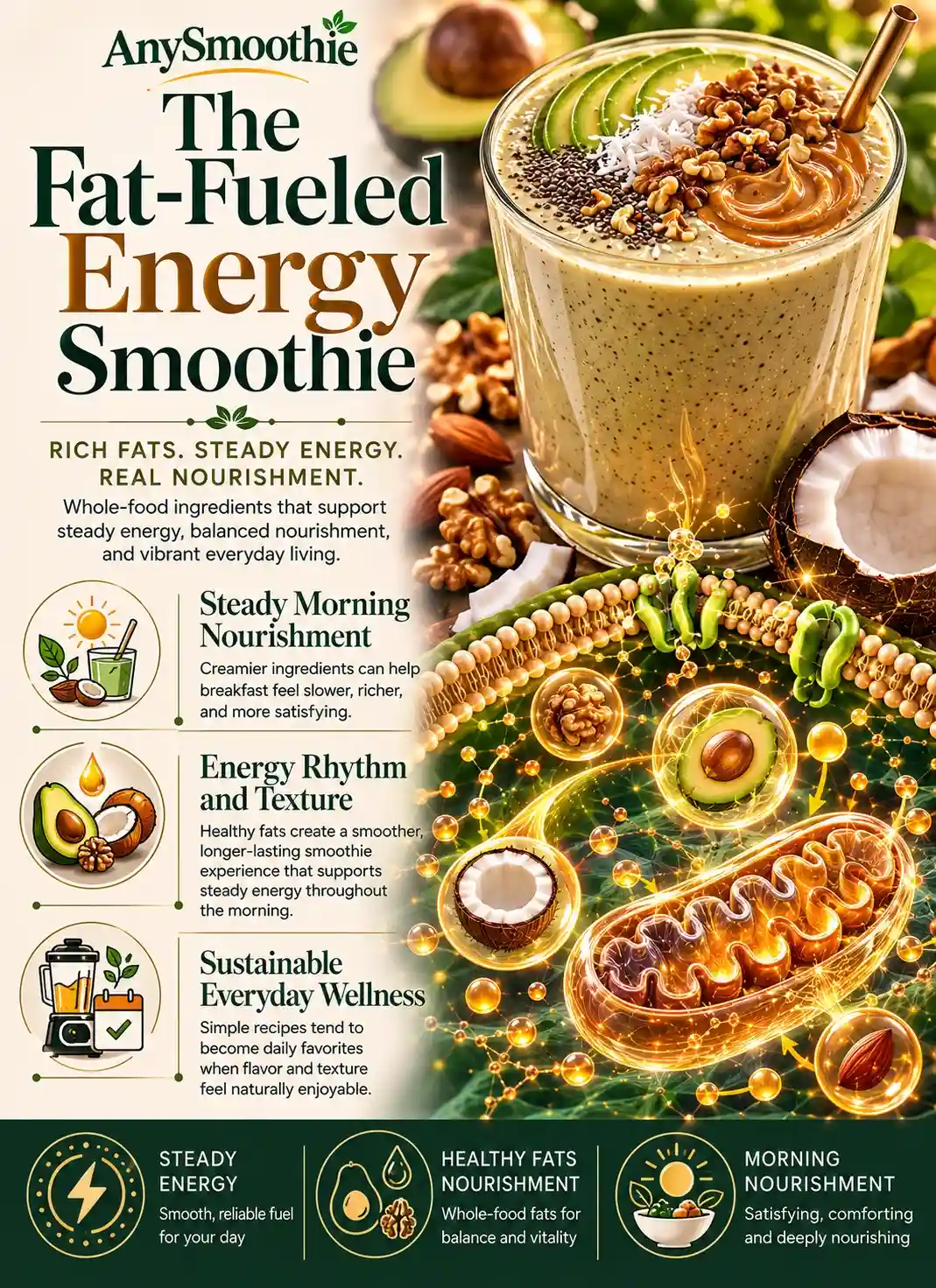
Mitochondrial Entry: The Carnitine Shuttle Mechanism
Long-chain fats need a gatekeeper before they can enter the mitochondrial matrix. That gate is the carnitine shuttle. First, the fat is activated in the cell. Then it is moved across the mitochondrial membrane so beta-oxidation can begin.
For background on how fats are mobilized and used for energy, how fatty acids move in the body gives a useful transport-level view.
CPT1 and CPT2: The Gatekeepers of Fatty Acid Oxidation
CPT1 controls the first step of entry. CPT2 helps finish the transfer inside the mitochondria. If you want smoother fat use, this shuttle matters because it decides how quickly long-chain fats can become fuel. Medium-chain fats need less of this machinery, which is one reason they feel faster.
Medium-Chain Triglycerides (MCTs): Bypassing Peripheral Digestion
MCTs are popular in smoothie protocols because they skip some of the slow parts of fat transport. C8 and C10 move quickly through the portal vein and reach the liver with less delay. That is why they create the quickest shift toward ketone production.
Hepatic Conversion: Rapid Ketone Production for Neural Flux
Once MCTs reach the liver, they are converted fast and can support ketone output. That gives a quick fuel feel without a heavy digestive load. In practice, this makes MCTs useful when you want mental work, light training, or a fast morning blend.
The best lipid sources for smoothie fuel
Here is a simple comparison of three common fat sources and how they behave in a smoothie.
| Lipid source | Physiological mechanism | Oxidation speed | Best smoothie pairing | Target energy system |
|---|---|---|---|---|
| MCT oil (C8/C10) | Direct portal transport, with C8 bypassing the lymphatic route | Fastest | Coffee, cacao, or vanilla blends | Acute mental clarity |
| Avocado | Slow-release monounsaturated fat with creamy texture | Moderate | Greens, berries, or protein shakes | Sustained physical endurance |
| Walnut oil | Omega-3/6-rich fat with a delicate flavor | Slower | Berry or yogurt blends, used in small amounts | Cellular repair |
C8 MCTs give the fastest lipid flux, but the best choice still depends on the energy output you want.
MCT oil, especially C8, for fast energy support
Use MCT oil when you want a clean, quick fuel shift. C8 and C10 are useful for fast mornings, pre-work focus, or short sessions that call for a light stomach. Keep the dose modest at first, because more is not always better.
Avocado and walnut oil for slower, steadier fat delivery
Avocado works well when you want creaminess and slower digestion. Walnut oil is better in small amounts, since its flavor is delicate and its fatty acid profile is best used with care. Both fit slower, steadier blends.
How to match the fat source to your goal
Pick the fat based on the energy system you want to support. Fast mental work calls for MCTs. Long work blocks or endurance sessions fit better with avocado. Recovery blends can use walnut oil or other omega-rich fats for broader fatty acid support.
A simple protocol for building a lipid-optimized smoothie
- Start with a light base and enough protein. Water, unsweetened milk, or kefir keeps the blend easy to digest. Protein helps the smoothie feel balanced without turning it into a heavy meal.
- Add carbs only when they fit the goal. A small amount of fruit helps if you want training fuel or better taste. A lower-carb version makes more sense when you want a stronger fat-driven energy pattern.
- Match the dose to your tolerance. Begin with 1 teaspoon to 1 tablespoon of added fat, especially with MCTs. More fat can slow digestion if your system is not ready for it.
The best protocol is the one your body handles well and can use without a crash.
3 ‘Lipid-Prime’ High-Efficiency Energy Smoothie Recipes
Supporting Lipid Transporters
Metabolic flexibility gets better when your body sees fats in a predictable way. Regular use of the right smoothie can train tolerance, especially with MCTs and moderate protein. Over time, your cells get better at handling fat through beta-oxidation and the electron transport chain.
Mitochondrial Priming: Optimizing the Electron Transport Chain for Fats
Mitochondrial priming is simple in practice. Pair smart fat choices with movement, good sleep, and enough minerals. That gives the electron transport chain a better setup for fat use, which supports steadier output during the day.
Conclusion
The best smoothie protocol depends on the kind of energy flux you want. Fast MCTs give quick access, while avocado and walnut oil support slower, steadier release. Timing, portion size, and tolerance matter as much as the ingredient list.
Start with one blend, track your energy, and adjust based on how you feel. The right smoothie should work with your metabolism, not against it.
🛡️ Safety Notes & Contraindications
MCT Digestive Sensitivity: Medium-chain triglycerides (MCT oil) can cause rapid osmotic shifts in the gut, leading to “disaster pants” (urgency, cramping, or diarrhea) if the dose is too high. Always start with 5ml (1 tsp) and increase gradually to personal tolerance.
Biliary Insufficiency: Individuals with gallbladder issues, gallstones, or those who have had a cholecystectomy should exercise caution with high-fat smoothies. Large lipid loads require significant bile flow for emulsification; without it, steatorrhea (fatty stools) and malabsorption may occur.
Apolipoprotein E (APOE4) Carriers: Those with the APOE4 genetic variant may exhibit a hyper-response to saturated fats (including MCTs), potentially leading to unfavorable shifts in LDL-cholesterol profiles. Monitor lipid panels if using high-dose fat protocols daily.
Lipid Oxidation Risk: Polyunsaturated fats (like those in walnut oil or flax) are highly unstable. To prevent the ingestion of rancid fats, never heat these oils and consume the smoothie immediately after blending to minimize exposure to light and oxygen.
Caloric Density Awareness: Fats contain 9 kcal/g. A “Lipid-Prime” smoothie can easily exceed 600-800 calories. Ensure the portion size aligns with your total daily energy expenditure (TDEE) to avoid unintended weight gain.
FAQ
How does “Carbon Chain Length” determine the speed of lipid-based energy flux?
The metabolic route of a fat is determined by its molecular structure. Biochemically, long-chain fatty acids (found in avocado or walnut oil) must be packaged into chylomicrons and transported via the lymphatic system before entering circulation. Supporting this physiological system through long-chain fats optimizes the natural pathways of “sustained energy release,” providing a steady fuel source for endurance or long work blocks.
Why are “C8 and C10 MCTs” able to bypass peripheral digestion for faster energy?
Medium-chain triglycerides (MCTs) have a unique biochemical advantage: they are water-soluble enough to enter the portal vein directly from the intestinal lumen. Biochemically, this allows them to bypass the lymphatic system and head straight to the liver for rapid conversion into ketones. Supporting this physiological system through MCT-rich smoothies facilitates the biochemical mechanics of “acute neural flux,” providing quick fuel for mental clarity or light training.
What is the role of the “Carnitine Shuttle” in mitochondrial priming?
Long-chain fatty acids cannot cross the inner mitochondrial membrane on their own; they require the carnitine shuttle (specifically CPT1 and CPT2) for transport. Biochemically, this shuttle is the gatekeeper of fat oxidation. Supporting this physiological system through steady lipid intake and mitochondrial cofactors facilitates the biochemical mechanics of “beta-oxidation,” ensuring that the electron transport chain has a reliable supply of acetyl-CoA for ATP production.
How does “Hepatic Conversion” turn MCTs into neural fuel?
Once MCTs reach the liver, they are rapidly oxidized into ketone bodies (such as acetoacetate and beta-hydroxybutyrate). Biochemically, these ketones can cross the blood-brain barrier to provide an alternative energy source to glucose. Supporting this physiological system through C8 MCT protocols facilitates the biochemical mechanics of “hepatic flux,” providing a fast-acting energy substrate that does not rely on a heavy digestive load.
Why is “Nutrient Partitioning” critical for metabolic flexibility?
Metabolic flexibility is the body’s ability to switch efficiently between burning carbohydrates and fats. Biochemically, this depends on the availability of transport proteins and the efficiency of the mitochondrial matrix. Supporting this physiological system through balanced smoothies—matching fat sources to specific energy demands—optimizes the natural pathways of “substrate partitioning,” helping the body manage energy flux without the “lag” or “crash” associated with poorly timed inputs.

Medical Disclaimer: AnySmoothie content is for educational purposes only and is not a substitute for professional medical advice. Consult a healthcare provider for personalized guidance. See our full Disclaimer & Terms of Use. AI Transparency: AnySmoothie may use AI to support content development. All content undergoes human editorial review for accuracy, clarity, and editorial quality. See our full AI Transparency.