
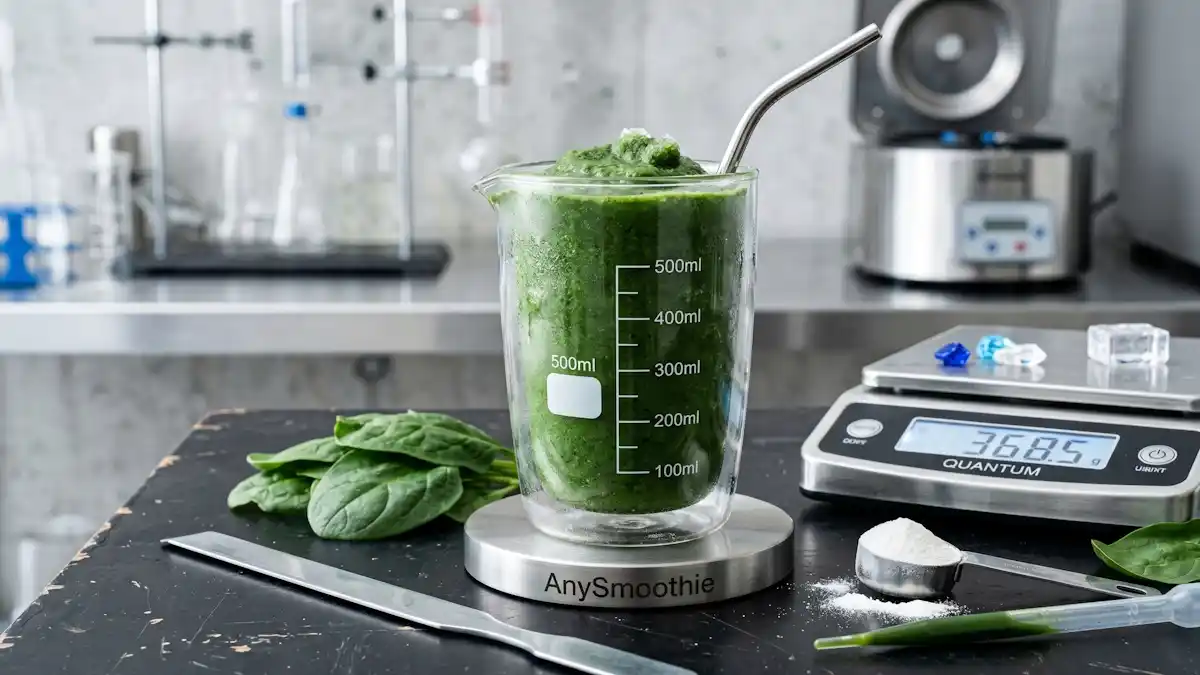
When training runs long, a heavy meal can feel like a bad fit. A smoothie for nitrogen saturation gives you a faster way to push amino acids into circulation, support nitrogen pooling, and keep protein intake simple after lifting or on a packed day.
The real advantage is speed. When amino acid kinetics are faster, the body has a better chance to use them for repair before they get oxidized for fuel. The blends below compare whey peptides, EAAs, and glutamine, so you can match the tool to the job. For a plain-language primer, see the Journal of Nutrition’s nitrogen balance overview. Then the rest comes down to substrate choice, digestibility, and timing.
What nitrogen balance means in a smoothie context
Nitrogen balance is the difference between nitrogen in and nitrogen out. In plain terms, it shows whether protein intake is keeping up with repair and turnover. A smoothie can help because it brings amino acids in fast, with less digestive drag than a big plate, and that can create a better nutrient window than waiting on a full meal.
The goal is a fuller amino acid pool, not a bigger meal.
Intracellular Pool Loading: Overcoming Amino Acid Oxidation
Inside the body, amino acids sit in a temporary pool. From there, they can be used for rebuilding or burned for energy. If that pool is thin, oxidation rises. A fast smoothie helps refill it during training stress, fasting, or long meal gaps, which is where protein retention matters most. It gives the body a usable buffer when demand climbs.
Why amino acid timing matters after hard training
After resistance work or hard endurance work, tissues are ready for repair. A quick shake is often easier than waiting for a full meal. Research on post-exercise protein intake shows efficient digestion and dose-dependent recovery support, including whole-body net protein balance, in a randomized endurance recovery trial. The aim is steady recovery, not a dramatic effect.
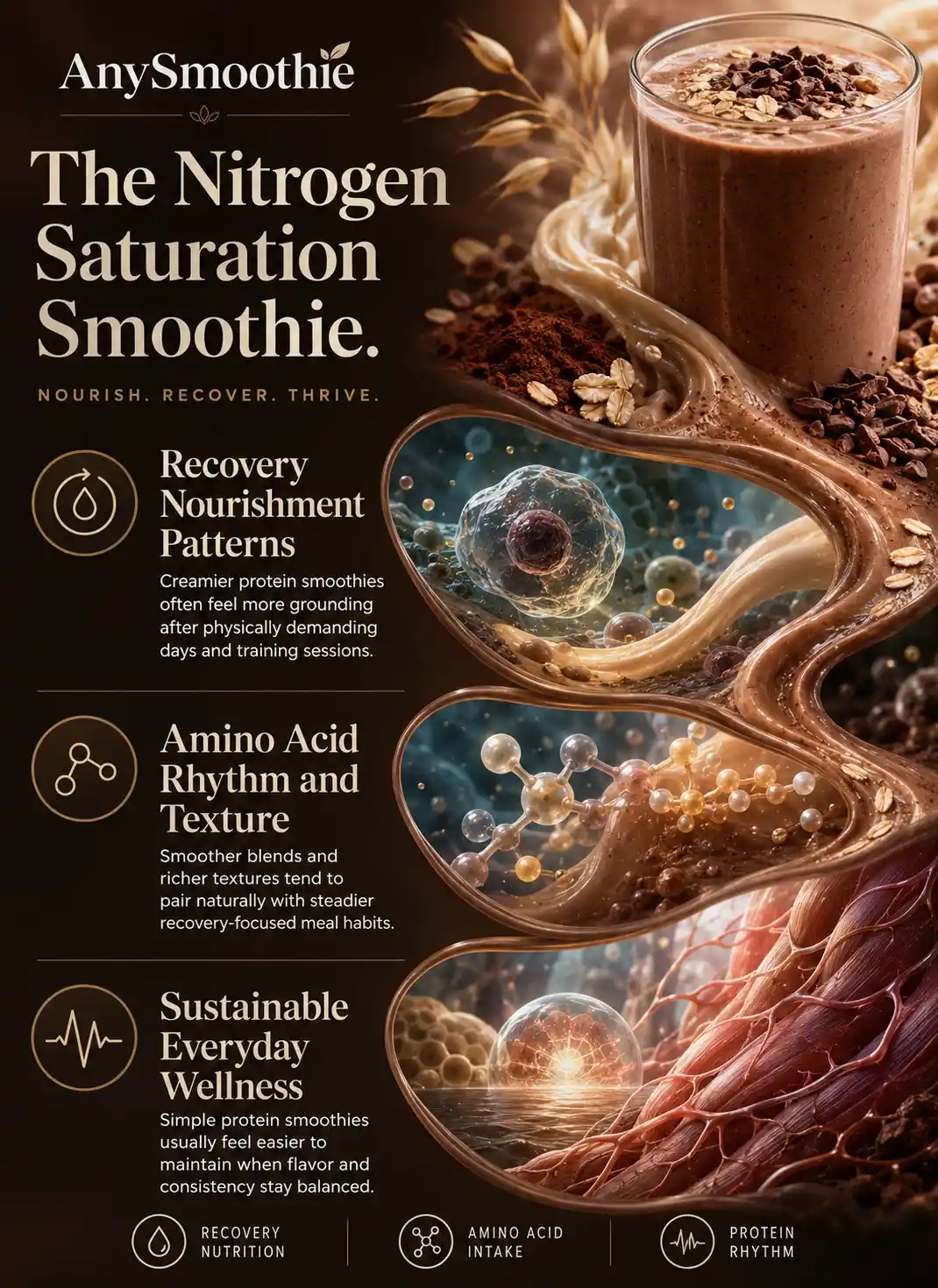
Best ingredients for a nitrogen-rich smoothie
The best blend depends on how fast you want the amino acids to show up. The table below keeps the main nitrogen donors in view.
| Nitrogen donor | Physiological mechanism | Absorption speed | Best smoothie pairing | Target tissue focus |
|---|---|---|---|---|
| Hydrolyzed collagen/whey peptides | Rapid di- and tri-peptide uptake, with whey driving fast amino acid delivery | Fast | Banana, berries, kefir, spinach | Muscle recovery, connective tissue |
| Essential amino acids, free-form | Direct systemic entry with minimal gastric delay | Very fast | Water, coconut water, citrus, light fruit | Muscle protein synthesis, acute recovery |
| L-Glutamine | Primary nitrogen shuttle and gut-barrier substrate, a key intercellular “nitrogen carrier” across blood and visceral organs | Fast to moderate | Any post-workout or low-calorie blend | Gut-facing tissues, visceral support |
L-glutamine matters because it helps move nitrogen between tissues, so it fits blends that need transport as much as muscle loading.
Peptides versus free-form EAAs versus glutamine
Peptides digest fast and feel easy on the stomach. Free-form EAAs skip much of the breakdown step, so they give direct amino acid availability. Glutamine is different. It is less about a strong muscle signal and more about nitrogen transport and gut-facing tissue support. In practice, peptides work when you want a meal-like shake, EAAs work when you want speed, and glutamine fills the gap when recovery and transport both matter.
How to pair each substrate with fruit, greens, and fats
Banana and berries pair well with peptides because they improve taste and add quick carbs. EAAs work best in a lighter mix with water or coconut water, plus citrus or berry flavor. Glutamine fits both post-workout and lower-calorie blends. Keep greens mild, like spinach. A little fat from kefir or nut butter slows digestion, so save it for the times you want more staying power.
When a urea cycle friendly approach matters
When protein intake rises, ammonia clearance matters too. A urea-cycle-friendly smoothie avoids dumping more protein than the body can use at once. It spreads nitrogen load across ingredients the body can process cleanly, which supports retention during heavy training blocks and long gaps between meals. The point is efficient handling, not maxing out the scoop count.
3 smoothie formulas built for nitrogen saturation
Each version has a different job. One is fast. One is light. One is more filling. Texture, sweetness, and digestibility are the knobs worth turning.
How to make the smoothie work better for your body
Hydration, sleep, and enough calories shape how well your body uses amino acids. If energy is low, the body is more likely to burn substrate instead of holding it in reserve. Carbs help some people, especially after hard sessions. That is where mitochondrial priming matters, because cells handle nutrients better when energy flux is steady. That pattern also matches basic protein balance during recovery.
Mitochondrial priming through energy and electrolytes
In plain terms, mitochondrial priming means giving cells enough water, sodium, potassium, and, for many people, some carbohydrate around training. Those pieces help the smoothie land well and support normal metabolic efficiency. Better sleep helps too, because tired tissue handles stress poorly. The whole system works better when the day is not running on empty.
Simple mistakes that lower nitrogen retention
Too little protein is the biggest miss. So is making the shake mostly fruit without enough amino acids. Heavy fat slows digestion when you want speed. Adding five powders and two boosters often makes the drink harder to use, not better. Keep the formula simple, repeat it often, and adjust one variable at a time.
Conclusion
A smart smoothie for nitrogen saturation is about fast amino acid delivery, clean substrate choices, and matching the formula to the job. Peptides work well when you want quick absorption. EAAs fit light, fast recovery. Glutamine adds a useful nitrogen transport layer when appetite is low or stress is high.
Pick the version that matches your training, your meals, and your energy, then use it consistently. That is where the real benefit shows up.
🛡️ Safety Notes & Contraindications
Hyperammonemia and Hepatic Clearance Deficits: CRITICAL: Individuals with subclinical hepatic insufficiency, non-alcoholic fatty liver disease (NAFLD), or genetic polimorfismi affecting the urea cycle must avoid sudden, massive protein/peptide pulses. Failure to clear ammonia efficiently can lead to transient hyperammonemia, presenting as lethargy, headaches, or cognitive fatigue.
Renal Hyperfiltration Strain: Delivering a rapid, high-density nitrogen flux (combining whey peptides and free-form EAAs) increases the intraglomerular pressure and the renal ultrafiltration workload. This protocol is safe for healthy athletes but strictly contraindicated or subject to strict dosing boundaries in individuals with Stage 2-5 Chronic Kidney Disease (CKD).
Uric Acid and Gout Vulnerability: Rapid amino acid turnover, especially if paired with underlying dehydration or high fructose bases, can elevate serum uric acid levels. If you have a clinical history of gout or uric acid nephrolithiasis, monitor your systemic markers and ensure a high water-to-nitrogen ratio.
GI Osmotic Influx from Free-Form EAAs: Free-form essential amminoacids possess high osmolarity. Consuming concentrated EAA solutions on an empty stomach can trigger an acute osmotic fluid draw into the intestinal lumen, causing transient abdominal gurgling, cramping, or sudden watery transit. Always dilute EAAs with at least 350ml of fluid.
Collagen Amino Acid Imbalance: Utilizing collagen peptides as the sole nitrogen source post-workout provides a rich pool of glycine and proline, but lacks tryptophan and is low in BCAA. To activate muscle protein synthesis via mTORC1, collagen must always be coupled with a high-leucine substrate like whey isolate.
FAQ
How do “Hydrolyzed Peptides” bypass traditional digestive bottlenecks to accelerate nitrogen flux?
Intact proteins must be broken down by gastric and pancreatic proteases before absorption. Biochemically, hydrolyzed whey or collagen contains high concentrations of di- and tri-peptides that utilize the PepT1 transporter in the intestinal brush border. Supporting this physiological system through peptide-dense smoothies optimizes the natural pathways of “facilitated transport,” delivering nitrogenous substrates into systemic circulation with significantly less kinetic delay than standard whole foods.
Why do “Free-Form EAAs” provide an advantage against amino acid oxidation?
When amino acids are absorbed slowly, the liver may divert a higher percentage toward deamination and urea synthesis to be used as plain fuel. Biochemically, free-form Essential Amino Acids (EAAs) require zero breakdown and enter the portal vein almost immediately. Supporting this physiological system during periods of high training demand maximizes the “velocity of delivery,” overloading cellular sensors to drive protein synthesis before the substrates can be oxidized for energy.
What is the specific role of “L-Glutamine” as an intercellular nitrogen shuttle?
L-Glutamine is the most abundant free amino acid in the human body and functions as a principal intercellular currency for nitrogen transport. Biochemically, it acts as a non-toxic vector that carries nitrogen between peripheral muscles, the visceral organs, and the immune system. Supporting this physiological system by integrating glutamine into post-workout blends facilitates the biochemical mechanics of “metabolic allocation,” ensuring that other essential amino acids are spared for structural recovery rather than being consumed by gut-facing tissues.
How does a “Urea-Cycle-Friendly” approach prevent metabolic inefficiency?
Dumping massive, unabsorbable quantities of protein into a single serving overloads the hepatic clearance capacity, converting excess amino acids into ammonia and subsequently urea. Biochemically, a urea-cycle-friendly protocol matches the nitrogen dose to the body’s acute processing threshold (typically 25 to 40 grams of bioavailable protein). Supporting this physiological system optimizes the natural pathways of “ammonia clearance,” minimizing metabolic waste and maximizing tissue retention.
Why does “Mitochondrial Priming” decide whether amino acids are held in reserve or burned?
Peptide bond polymerization and muscle remodeling are energy-intensive processes that require a continuous flux of ATP. Biochemically, if a cell detects an energetic deficit, it activates AMPK, which can switch off anabolic pathways and signal the body to burn incoming amino acids for fuel. Supporting this physiological system with a baseline of fluids, electrolytes, and targeted carbohydrates facilitates the biochemical mechanics of “energetic stabilization,” giving cells the financial energy budget required to treat the smoothie as a building block source.

Medical Disclaimer: AnySmoothie content is for educational purposes only and is not a substitute for professional medical advice. Consult a healthcare provider for personalized guidance. See our full Disclaimer & Terms of Use. AI Transparency: AnySmoothie may use AI to support content development. All content undergoes human editorial review for accuracy, clarity, and editorial quality. See our full AI Transparency.