
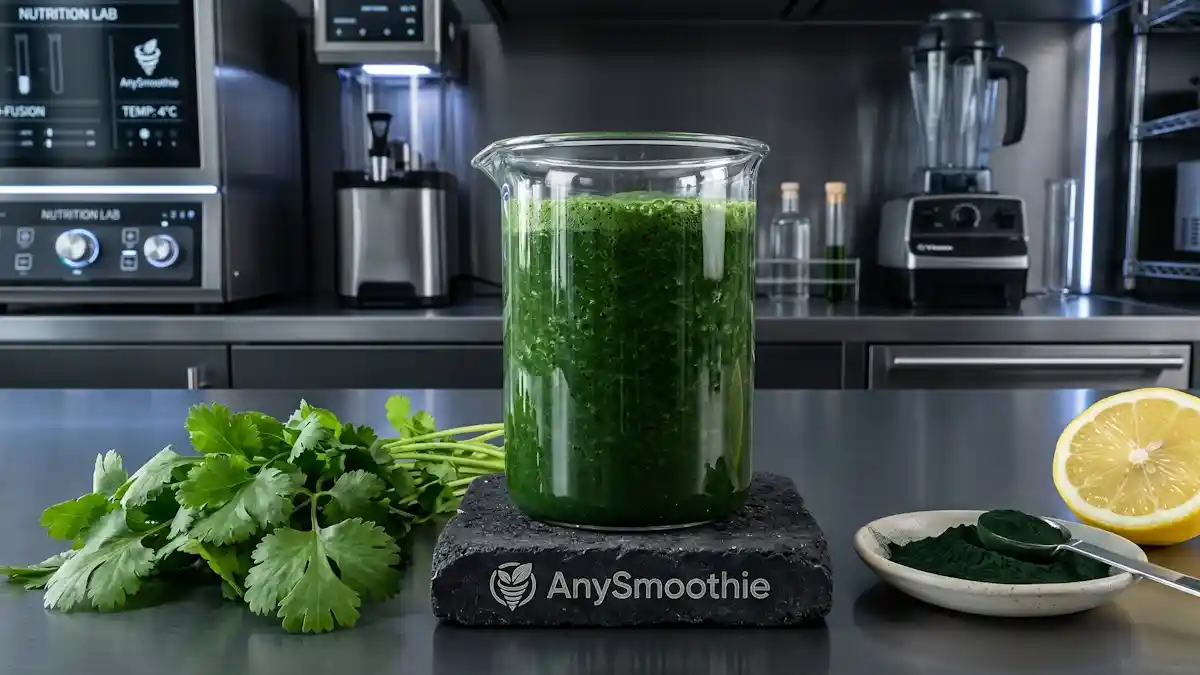
A good smoothie can do more than taste clean and fresh. With the right ingredients, it can support the body’s own cleanup pathways without turning breakfast into a science project.
That is the core idea behind smoothie logic for natural chelation. You pair foods that help bind unwanted compounds, keep digestion moving, and support daily consistency. Smoothies work well here because they are easy to blend, simple to repeat, and easy to pack with nutrients in one serving.
Molecular Binding: The Science of Natural Chelation
Natural chelation support is about helping the body move unwanted compounds through normal routes, especially digestion and elimination. The goal is not to force anything. It is to support the systems that already handle clearance.
A basic chelation review from PMC explains the core science well, even if the smoothie version is far gentler than a lab setting. In plain terms, some plant compounds can bind to certain molecules in the gut, which may help keep them moving toward exit pathways.
Adsorption vs. Absorption, and Why the Difference Matters
Adsorption means a substance sticks to the surface of another substance. Absorption means something moves into tissue or gets taken up by the body.
That difference matters because many smoothie ingredients are chosen for what they bind in the gut, not for what they push into the bloodstream. Fiber, algae, and certain fruit compounds can help hold onto waste products long enough for normal elimination to do its job.
Why Bioavailable Ingredients Matter More Than Trendy Ingredients
A smart smoothie is not a random pile of superfoods. It uses ingredients the body can digest, mix, and move.
Bioavailable ingredients matter because they support metabolic efficiency. Fiber helps bulk and bind. Polyphenols add antioxidant support. Liquid helps transport everything through the digestive tract. If the smoothie is hard to digest, the plan falls apart.
| Natural chelator | Primary target | Binding strength | Impact on essential minerals | Best smoothie pairing |
|---|---|---|---|---|
| Cilantro (Coriandrum sativum) | More tissue-focused support | Moderate | Can affect balance if overused | Citrus, greens, and chlorella |
| Chlorella (Pyrenoidosa) | Gut and digestive tract | Stronger binder | May compete if the formula is too aggressive | Cilantro, pineapple, or lime |
| Modified citrus pectin | Digestive tract and gut clearance | Gentle to moderate | Usually lower mineral stress | Berries, citrus, and water-rich fruit |
Cilantro and chlorella work best in tandem. One helps move, the other helps trap. That move-then-trap pattern is the simplest way to think about the pairing.
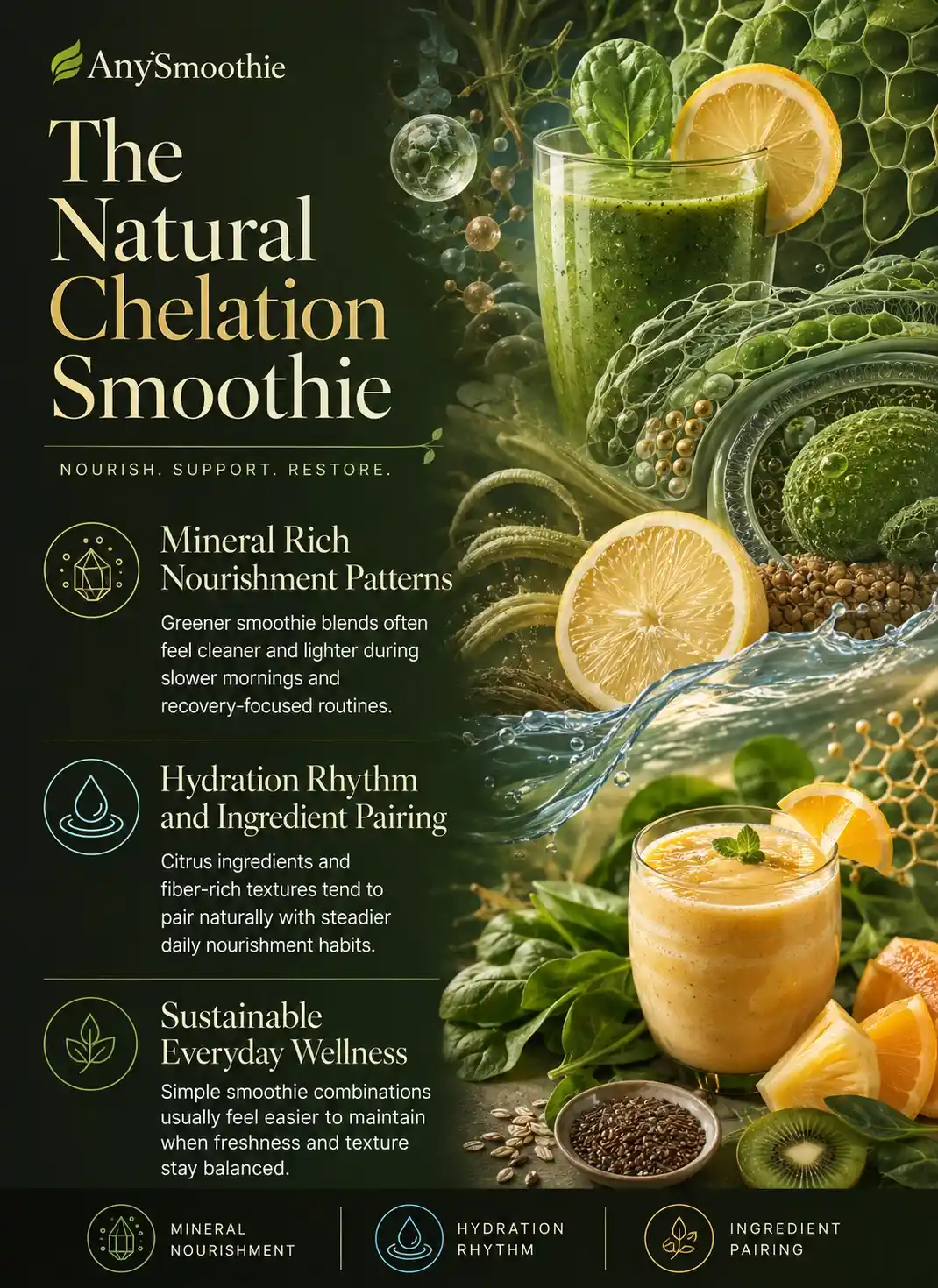
The Chelation Stack: Cilantro, Chlorella, and Pectin Synergy
A useful smoothie stack has three jobs. It mobilizes, binds, and supports exit. That keeps the formula balanced instead of chaotic.
A good blend moves gently, binds well, and leaves your mineral status intact.
Phase III Detoxification: Supporting the Final Exit Pathway
Phase III is the final handoff step. Once compounds are mobilized and bound, the body still needs to route them out through bile, stool, and urine.
That is where citrus, fiber, water, and regular meals matter. They keep the traffic moving. Without that support, a strong binder can feel like a roadblock instead of a helper.
Modified citrus pectin fits well here. A review on modified citrus pectin and detox support discusses its use in human studies and its gentle gut-level role. For smoothie use, that makes it a practical binder when you want less intensity.
Protect Minerals While You Support Clearance
A solid plan also protects what you need. Magnesium, zinc, selenium, and trace minerals help the body stay steady while you support clearance.
That is why food quality matters. Use mineral-rich greens, seeds, and clean bases. Do not build every smoothie around binding alone. Repletion should happen at the same time as support.
Keep Digestion, Hydration, and Bile Flow in the Mix
Water is not filler here. It is transport.
Citrus helps keep flavors sharp and adds acid support. Greens add minerals and fiber. Healthy fats, like avocado or chia, can support bile flow and make the texture smoother. If digestion is sluggish, the whole plan slows down with it.
A review of chelating foods in chronic detox support gives a useful snapshot of how cilantro and chlorella are often paired in food-based support.
3 Chelation-Active Bioactive Smoothie Recipes
These formulas keep the logic simple. Each one has a different job, so you can match it to the day.
The Cilantro, Chlorella, and Citrus Blend for Daily Support
Ingredients
- 1 cup coconut water
- ½ cup fresh cilantro
- 1 small lime, peeled
- ½ cup pineapple
- ½ teaspoon chlorella powder
- ½ cup ice, optional
Pour the coconut water into the blender first. Add the cilantro, peeled lime, pineapple, chlorella, and ice if using. Blend until completely smooth.
Cilantro and chlorella contribute plant compounds and micronutrients, while pineapple and lime provide vitamin C and balance the stronger green flavors. Chlorella should be used according to product directions. Although cilantro and chlorella are sometimes promoted for heavy-metal “detox” or binding, a smoothie should not be expected to mobilize, bind, or remove heavy metals from the body.
Estimated Nutrition per Serving
- Calories: ~120 kcal
- Protein: ~3 g
- Carbohydrates: ~29 g
- Fat: ~1 g
- Fiber: ~4 g
- Sugars: ~19 g
The Modified Citrus Pectin Blend for a Gentler Binder Focus
Ingredients
- 1 cup cold water
- 1 small apple, cored and chopped
- 1 tablespoon modified citrus pectin
- ½ cup frozen mixed berries
- 1 tablespoon chia seeds
- 1 tablespoon fresh lemon juice
Pour the water into the blender first. Add the apple, modified citrus pectin, frozen berries, chia seeds, and lemon juice. Blend until completely smooth. Let the smoothie stand for 2–3 minutes if you prefer a thicker consistency.
Apple, berries, chia, and pectin contribute dietary fiber, while berries provide polyphenols. Modified citrus pectin is a processed form of pectin sold as a dietary supplement, but this smoothie should not be described as providing predictable gut-level binding or removing unwanted substances from the body. Follow the product’s labeled serving if using it as a supplement.
Estimated Nutrition per Serving
- Calories: ~210 kcal
- Protein: ~4 g
- Carbohydrates: ~47 g
- Fat: ~5 g
- Fiber: ~16 g
- Sugars: ~24 g
The Green Mineral-Rebuild Blend for Balance Days
Ingredients
- 1 cup mineral water
- 1 packed cup baby spinach
- ¼ avocado
- 1 tablespoon pumpkin seeds
- ½ small lemon, peeled
- 1 small cucumber, chopped
- ½ cup ice, optional
Pour the mineral water into the blender first. Add the spinach, avocado, pumpkin seeds, peeled lemon, cucumber, and ice if using. Blend until completely smooth.
Spinach, avocado, pumpkin seeds, and cucumber provide a mixture of potassium, magnesium, fiber, unsaturated fats, and other micronutrients. Mineral content varies with the water and ingredients used, so this is better viewed as a nutrient-rich, hydrating smoothie than as a way to “rebuild” minerals after a binding or detox routine.
Estimated Nutrition per Serving
- Calories: ~210 kcal
- Protein: ~7 g
- Carbohydrates: ~22 g
- Fat: ~13 g
- Fiber: ~10 g
- Sugars: ~6 g
If I were making this for a lighter, fresher texture, I’d blend the cucumber, spinach, lemon, and water first, then add the avocado and pumpkin seeds. That keeps the greens smooth while the final ingredients add body without making the drink overly dense.
How to Avoid Common Mistakes with Smoothie Logic
The biggest mistake is chasing intensity. A heavy, bitter mix can be harder to digest and harder to repeat.
Smaller blends used often usually work better than large, overloaded recipes used at random. That is where consistency beats drama.
Taste and texture matter too. If a smoothie is too thick, too sharp, or rough on your stomach, adjust it. Add more liquid, reduce chlorella, or switch to pectin for a while. The best formula is the one you can use without dreading it.
Conclusion
The best smoothie logic for natural chelation is simple. Use a mover, a binder, and mineral support, then keep digestion and hydration in the picture.
That approach respects the body’s normal cleanup routes without overcomplicating the process. If you want a clean starting point, the cilantro and chlorella pairing is the clearest move-then-trap option. Start simple, repeat it well, and let consistency do the work.
⚠️ SAFETY NOTES: Natural Chelation Support
MINERAL BINDING & DEPLETION: Natural binders like chlorella and modified citrus pectin can be non-selective. They may bind to essential minerals like zinc, magnesium, and calcium. To prevent depletion, do not use these smoothies as meal replacements every day; ensure you are replenishing minerals through a nutrient-dense diet.
MEDICATION ADSORPTION: Strong binders can interfere with the absorption of oral medications, including birth control, thyroid hormones, and blood pressure meds. Always consume these chelation-support smoothies at least 2–3 hours away from any medication.
RE-TOXIFICATION RISK: If you are constipated, do not use strong binders. If mobilized toxins are not excreted quickly, they can be re-absorbed into the bloodstream, potentially causing headaches, fatigue, or “brain fog.” Ensure daily bowel regularity before starting this protocol.
HEAVY METAL SOURCE: Algae like chlorella can absorb heavy metals from their growth environment. Only use third-party tested, organic chlorella to ensure you are not adding more contaminants to your system.
PREGNANCY & BREASTFEEDING: Natural chelation protocols are strictly discouraged during pregnancy or breastfeeding, as mobilizing stored compounds could potentially transfer them to the fetus or infant through the placenta or breast milk.
FAQ
How does “natural chelation” work in a smoothie context
Natural chelation involves using specific food-based compounds, known as ligands, that have a high affinity for divalent metal ions and other environmental toxins. In a smoothie, ingredients like cilantro and chlorella provide these ligands. This supports the body’s natural pathways for capturing and neutralizing these substances, facilitating their transport to the organs of elimination and supporting the physiological systems involved in systemic purification.
Why is the combination of Cilantro and Chlorella considered a bio-synergy
Biochemically, cilantro is thought to act as a “mobilizer,” supporting the physiological systems that release certain ions from deep tissue storage. However, once mobilized, these ions can be reabsorbed. Chlorella acts as a “binder” or “adsorbent” in the gut, trapping the released molecules so they can be safely excreted. This dual-action protocol optimizes the natural pathways of clearance while preventing the recirculation of unwanted metabolites.
Can natural binders interfere with essential minerals like zinc or iron
A key aspect of chelation logic is “selective affinity.” High-quality natural binders like chlorella and pectin generally have a higher affinity for heavier, toxic elements than for essential minerals. However, to maintain metabolic efficiency, it is ideal to consume your chelation-support smoothie separately from your primary mineral supplements, ensuring that your physiological systems can effectively partition essential ions without competition.
What is the role of Pectin in a chelation-support blend
Modified Citrus Pectin (MCP) is a complex polysaccharide that can enter the bloodstream due to its low molecular weight. Once there, it supports the natural pathways of extracellular chelation. It is particularly effective at supporting the physiological systems involved in the filtration of lipophilic toxins, acting as a secondary layer of protection that complements the gut-based binding action of chlorella.
How often should I use the Chelation Support Smoothie
For environmental maintenance, integrating this protocol 2-3 times a week supports the body’s natural “cleaning” cycles. During periods of higher environmental exposure, it can be used daily to support mitochondrial priming and genomic stability. Always pair these smoothies with high hydration to support the physiological pathways of renal filtration and ensure a smooth exit for the neutralized metabolites.

Medical Disclaimer: AnySmoothie content is for educational purposes only and is not a substitute for professional medical advice. Consult a healthcare provider for personalized guidance. See our full Disclaimer & Terms of Use. AI Transparency: AnySmoothie may use AI to support content development. All content undergoes human editorial review for accuracy, clarity, and editorial quality. See our full AI Transparency.