
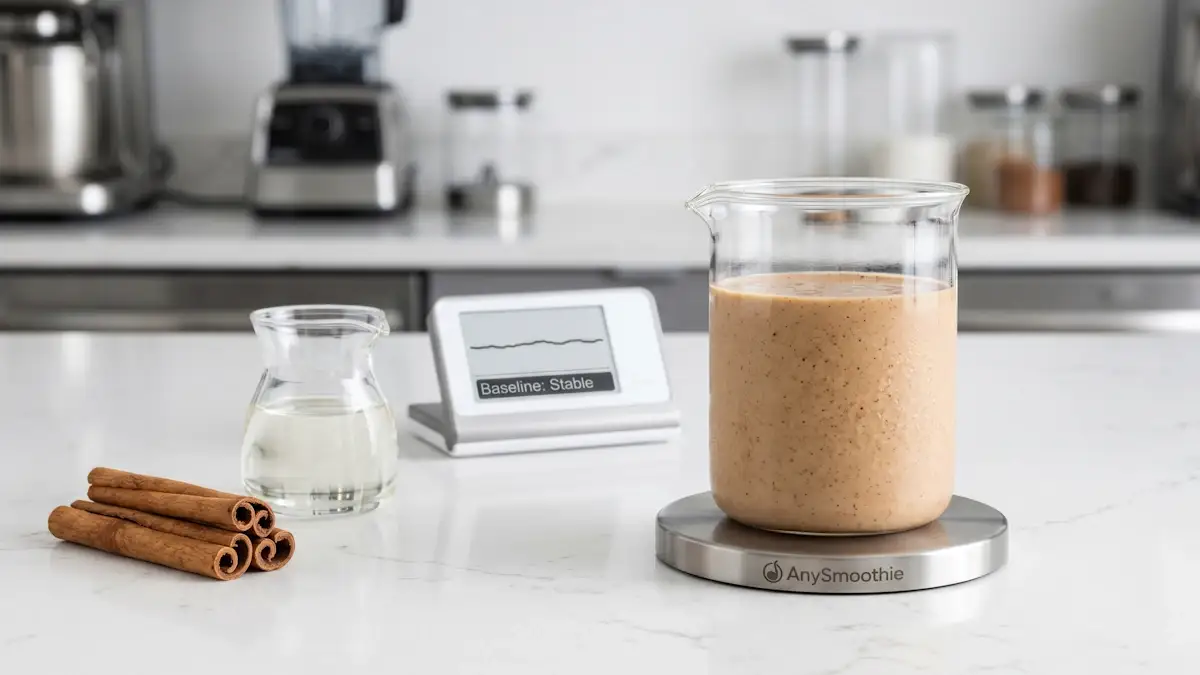
Gluconeogenesis is the liver’s way of making new glucose when food is scarce. That matters most overnight and between meals, when blood sugar still needs to stay steady. A smoothie for gluconeogenesis regulation is a practical food strategy, not a cure, and the goal is simple: support AMPK activity, reduce excess hepatic glucose output, and improve metabolic efficiency.
That sounds technical, but the idea is straightforward. If your smoothie pushes the wrong fuel mix, the liver can keep making more glucose than you need. If it uses the right balance, it can support a calmer energy curve and fit into a biohacking routine without feeling restrictive.
The Hepatic Glucose Factory: Mechanics of Gluconeogenesis
The liver acts like a glucose factory. It can use lactate from hard effort, glycerol from fat breakdown, and amino acids from protein to make glucose when the body needs it.
That process is useful during sleep, long gaps between meals, and training recovery. Trouble starts when stress, poor sleep, or unstable eating patterns keep the liver in overdrive. Then glucose output can stay higher than the moment calls for.
Energy balance matters here. When intake, stress signals, and recovery all line up poorly, the liver gets mixed messages. It keeps producing glucose even when the rest of the body would do better with less.
PEPCK and FBPase, the control points that shape glucose output
PEPCK and FBPase are two key gates in the gluconeogenesis pathway. When their activity rises, the liver can make more glucose. When they are down-regulated, glucose output eases.
For a smoothie strategy, that matters because ingredients can influence those gates through substrate load and signaling. A good formula supports lower pressure on those control points instead of pushing them harder.
AMPK as the main switch for calming excess gluconeogenesis
AMPK is the cell’s fuel sensor. When energy status shifts, it helps the body conserve fuel and reduce unnecessary glucose production.
That makes AMPK activation the primary mechanical pathway for down-regulating excessive nocturnal gluconeogenesis. In practice, it means ingredients that support energy sensing may help the liver back off. A well-built smoothie can support that shift, especially when paired with stable sleep and consistent meal timing.
For a useful background on diet patterns that reduce glucose output, see this PubMed study on low-carb, high-protein, and gluconeogenesis.
Ingredients That Matter in a Smoothie for Gluconeogenesis Regulation
The best smoothie is not just low in sugar. It is built around protein, fat, and bioactive compounds that shape hepatic signaling. That means the mix matters as much as the ingredients themselves.
A smoothie can support better metabolic efficiency when it gives the body enough amino acids and fat for satiety, while keeping glucose swings smaller. It can also support mitochondrial priming, which helps cells handle fuel more cleanly.
A useful reminder comes from smoothie research on glycemic response. Blended fruit can behave differently depending on the fruit mix and what else is in the cup. A recent Nature review on smoothie glycaemic response shows why composition matters more than simple rules about blending.
L-glutamine, C8 MCT oil, and polyphenols do different jobs
These three regulators support the same goal from different angles.
| Regulator | Physiological mechanism | Primary site of action | Best smoothie pairing | Impact on glycemic flux |
|---|---|---|---|---|
| L-glutamine | Controlled substrate donor for baseline gluconeogenesis | Liver and gut | Protein-based smoothie with cinnamon | Steadier support, less abrupt swing |
| C8 MCT oil | Provides acetyl-CoA, supports fuel signaling, may help spare lean mass | Liver and mitochondria | Low-sugar, high-protein blend | Can smooth energy use without a big glucose rise |
| Polyphenols, such as resveratrol or cinnamon | Supports AMPK signaling and can down-regulate PEPCK gene expression | Liver cells | Berry or cacao smoothie with unsweetened base | Helps moderate post-meal glycemic flux |
L-glutamine is useful when you want a controlled substrate donor. C8 MCT oil gives fast-available fat for energy handling. Polyphenols help on the signaling side, which is why they pair well with an AMPK-focused formula.
How to manage lactate, glycerol, and amino acids without spiking the mix
Substrate partitioning is simple once you strip away the jargon. The liver can use several fuels, but too much of any one input can shift output upward.
That means fruit, protein powder, and add-ins need balance. A little lactate support after training can help. Too much sweet fruit with fast-digesting protein can push glucose production higher than planned. The target is steady fuel handling, not a flood of ingredients.
3 Glyco-Reg Smoothie Recipes for Metabolic Balance
Biohacking Glycemic Stability: Supporting Hepatic Insulin Sensitivity
Timing matters as much as ingredients. A smoothie for gluconeogenesis regulation works best when your sleep is steady, your meals are consistent, and your daily protein is enough to cover demand.
Portion size matters too. More ingredients are not better if the shake becomes a sugar bomb. Watch how you feel two hours later, then check morning energy, hunger, and focus. Those signals tell you more than hype ever will.
Mitochondrial Priming: Fueling the Oxaloacetate Shuttle for Energy Flux
Mitochondrial priming is about making fuel use smoother. When mitochondria handle fat and amino acid inputs well, the liver does not need to compensate as aggressively.
That helps the oxaloacetate shuttle work with less friction. In plain terms, the cell can move fuel through its system with less waste. The smoothie supports that when it stays balanced, lower in sugar, and rich in the fuels the body can use cleanly.
Conclusion
The best smoothie for gluconeogenesis regulation works with normal physiology. It does not fight the liver, it helps it settle into a more efficient pattern.
Keep the substrate mix under control, support AMPK, and choose ingredients that help the body use fuel with less strain. If you stay consistent, the results are usually cleaner than any complicated recipe ever could be.
🛡️ Safety Notes & Contraindications
Hypoglycemia Risk with Medication Synergy: CRITICAL: Because this formulation matrix intensely up-regulates AMPK and enhances hepatic insulin sensitivity, it naturally limits glucose output. If you are taking prescription anti-diabetic medications (e.g., Insulin, Metformin, Sulfonylureas), consuming this low-glycemic, GNG-regulating protocol can induce rapid, unmanaged hypoglycemia. Rigorous blood glucose monitoring is mandatory.
MCT-Induced Gastrointestinal Distress: C8 MCT oil bypasses standard lymphatic digestion, reaching the liver rapidly. However, initiating intake with high doses can cause immediate osmotic irritation in the intestinal mucosa, presenting as gastric cramping, nausea, or explosive diarrhea. Titrate C8 MCT upward cautiously, starting with a absolute floor of 2.5ml (half a teaspoon).
Glucagon-Insulin Dynamics in Type 1 Diabetes: In individuals with Type 1 Diabetes, the metabolic response to pure amino acid loading (L-glutamine/protein isolated bases) can trigger variable glucagon secretion without compensatory insulin counter-regulation, resulting in paradoxical glycemic rises rather than stabilization.
Hepatic Mitochondrial Overload (Enzymatic Congestion): Stacking mega-doses of isolated polyphenols (like high-potency resveratrol extracts) inside a dense fat matrix can transiently tax the liver’s Phase I cytochromes or create competition at the mitochondrial transport level. Rely strictly on whole dietary spices (cinnamon) or standardized food-source compounds.
Nighttime Cortisol Influx (The Dawn Phenomenon): Individuals managing a dysregulated HPA-axis often experience high nocturnal gluconeogenesis driven by a premature cortisol spike (Dawn Phenomenon). Consuming this protocol too close to bedtime can occasionally trigger high autonomic vigilance if the MCT energy flux induces a state of physical alertness; isolate the night-blend to 90 minutes before sleep.
FAQ
How does “AMPK Activation” function as the primary molecular brake on excess gluconeogenesis?
AMP-activated protein kinase (AMPK) acts as the master energy sensor within hepatic cells. Biochemically, when AMPK is activated, it phosphorylates transcription cofactors, which down-regulates the expression of genes encoding PEPCK (Phosphoenolpyruvate carboxykinase) and FBPase (Fructose-1,6-bisphosphatase). Supporting this physiological system through polyphenol-rich inputs (like cinnamon or resveratrol) optimizes the natural pathways of “transcriptional silencing,” instructing the liver factory to ease off unnecessary glucose production.
Why is “L-Glutamine” utilized as a controlled substrate donor rather than a rapid glucose spike?
L-Glutamine is a glucogenic amino acid, meaning it can be converted into glucose by the liver when needed. Biochemically, however, its conversion is a slow, rate-controlled process that requires multi-step enzymatic deamination in the liver and gut. Supporting this physiological system with a precise 3 to 5-gram dose provides the liver with a steady, predictable substrate baseline, avoiding the aggressive counter-regulatory insulin-glucagon surges caused by simple sugars.
What is the role of “C8 MCT Oil” in modulating hepatic fuel selection?
Medium-chain triglycerides, specifically Caprylic Acid (C8), bypass peripheral digestion via direct portal vein transport to enter hepatocytes rapidly. Biochemically, C8 MCTs undergo beta-oxidation to generate a rapid pool of acetyl-CoA and ketone bodies. Supporting this physiological system through lipid-emulsified smoothies optimizes the natural pathways of “fuel signaling,” providing an efficient alternative lipid fuel source that spares muscle tissue and signals the liver that peripheral energy demands are satisfied.
How do “PEPCK and FBPase” serve as the ultimate checkpoints for nocturnal glucose output?
PEPCK and FBPase catalyze the irreversible, rate-limiting steps that force metabolic substrates up the chemical ladder toward glucose creation. Biochemically, during extended overnight fasting or high-stress states, high levels of cortisol and glucagon accelerate these enzymes. Supporting this physiological system with a low-glycemic, protein-and-lipid-anchored evening smoothie facilitates the biochemical mechanics of “enzymatic dampening,” preserving stable overnight baseline glucose flux without waking up with erratic energy swings.
Why does “Mitochondrial Priming” of the oxaloacetate shuttle stabilize glycemic flux?
Before a cell can process amino acids or lipids cleanly into energy, substrates must pass through the mitochondrial membrane via the oxaloacetate shuttle. Biochemically, if the mitochondria lack essential mineral cofactors or face an overwhelming substrate overload, this shuttle bottlenecks, causing the liver to dump excess glucose into the blood as a default stress response. Supporting this physiological system with balanced micronutrients and healthy fats optimizes the natural pathways of “substrate allocation,” allowing the hepatic machinery to run with less energetic friction.

Medical Disclaimer: AnySmoothie content is for educational purposes only and is not a substitute for professional medical advice. Consult a healthcare provider for personalized guidance. See our full Disclaimer & Terms of Use. AI Transparency: AnySmoothie may use AI to support content development. All content undergoes human editorial review for accuracy, clarity, and editorial quality. See our full AI Transparency.