
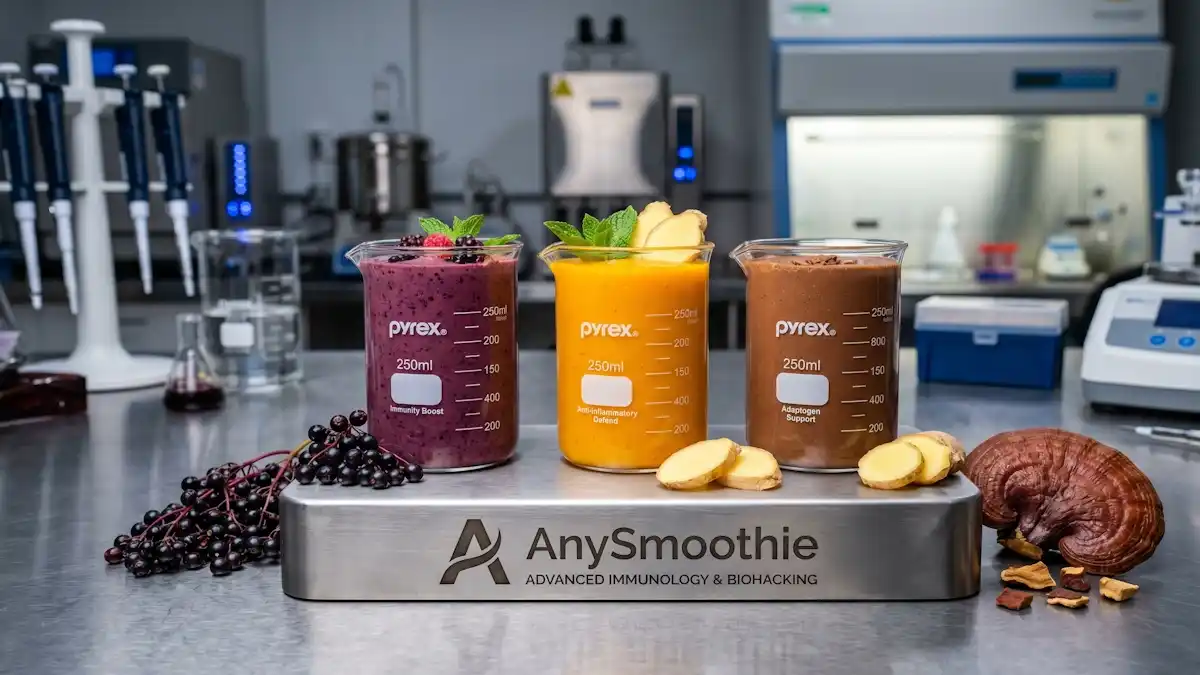
A basic fruit blend gives you flavor and quick carbs. A bioactive smoothie does more. It can support immune balance, gut barrier function, and healthy stress responses with a better mix of fiber, fats, and plant compounds.
These three smoothies for immune resilience are built with targeted ingredients for nutrient partitioning, antioxidant support, and metabolic efficiency. Each one uses a different angle, from beta-glucans and mushrooms to quercetin-rich fruit and mineral-dense greens.
What Makes a Smoothie Truly Bioactive?
A bioactive smoothie is more than a cold snack. It combines ingredients that influence how nutrients are used, absorbed, and delivered.
Fiber slows the sugar load and feeds gut microbes. Healthy fats help carry fat-soluble compounds. Polyphenols support antioxidant pathways. Minerals like zinc help immune enzymes do their work. Mushrooms add beta-glucans, which are one reason medicinal blends get attention in research, including this overview of beta-glucans and immune cells.
The main compounds that matter most
Beta-glucans are mushroom fibers that interact with immune receptors. They help immune cells stay alert without forcing an overreaction.
Quercetin is a plant flavonoid found in berries and onions. It supports antioxidant defenses and can help calm excess immune signaling.
Vitamin C supports tissue repair and helps with nutrient use. Zinc is needed for many immune enzymes and barrier functions. Polyphenols round out the mix by supporting redox balance.
Why smoothie format helps delivery
Blending makes these ingredients easy to eat consistently. It also improves mixing, so seeds, greens, and berries share the same cup.
A little fat from chia, flax, avocado, or nut butter helps compound delivery. Fiber from fruit and vegetables supports nutrient timing and steadier energy. When you pair vitamin C with zinc and quercetin, you build a more practical absorption setup.
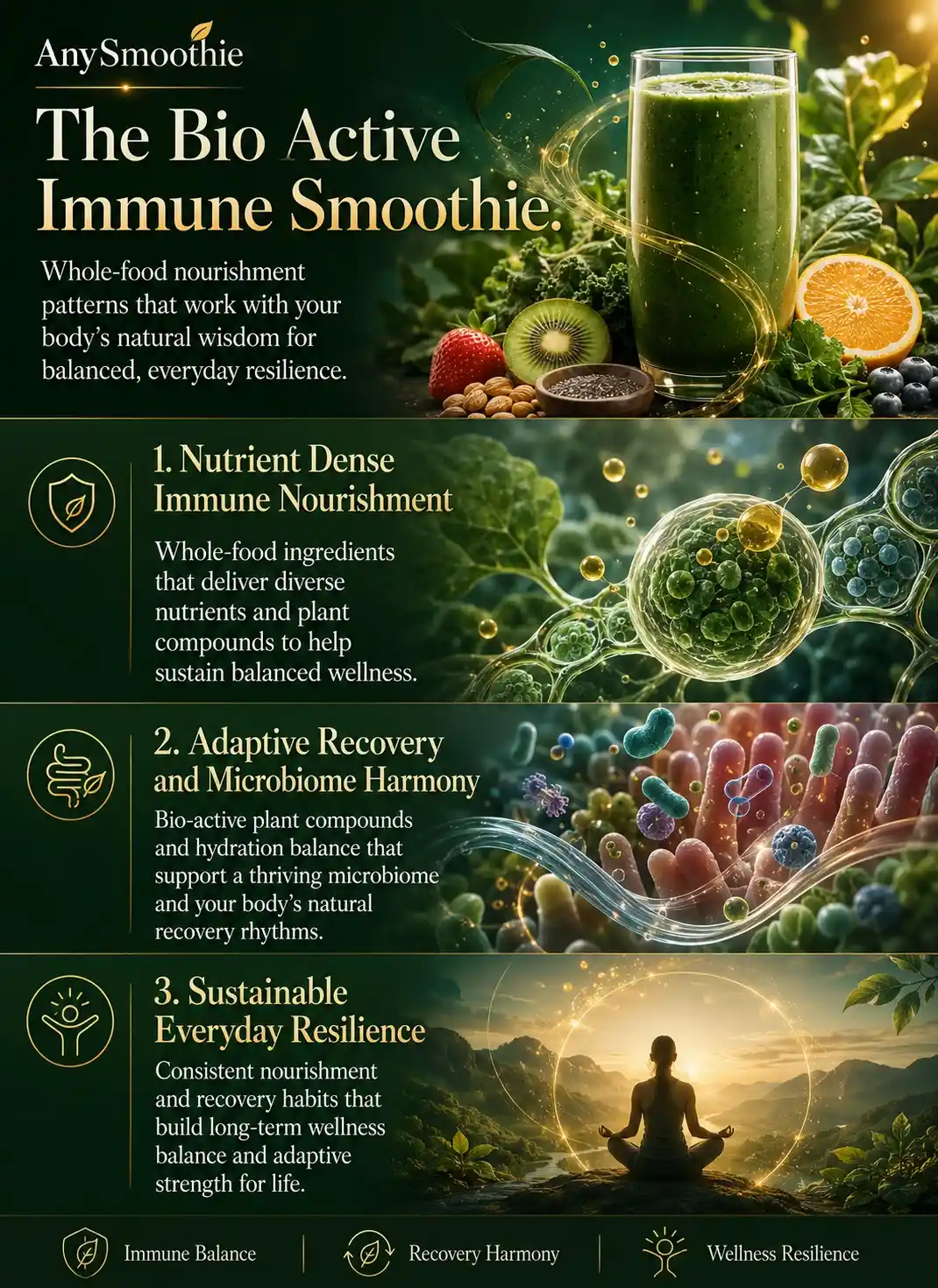
Immune Modulation: The Science of Biological Vigilance
Your immune system is not a simple on-or-off switch. It senses, responds, and resets. The goal is steady communication, not constant alarm.
The best support keeps the system alert without pushing it too hard.
Innate and adaptive immunity work best as a team
The innate immune system is the fast first responder. It reacts quickly and broadly.
The adaptive immune system is slower, but more precise. It remembers patterns and helps the body respond more efficiently later.
Beta-glucans, zinc, quercetin, and vitamin C can support both layers through different routes. They do not do the same job, and that is the point.
A quick comparison of three core immune bioactives
| Bioactive | Physiological Action | Primary Immune Target | Best Smoothie Pairing | Synergistic Nutrient |
|---|---|---|---|---|
| Beta-glucans | Supports macrophage signaling and immune recognition | Innate | Reishi, elderberry, cacao | Vitamin C |
| Quercetin | Supports redox balance and mast cell stability | Innate and adaptive | Berries, citrus, greens | Vitamin C |
| Zinc | Supports enzyme activity and immune signaling | Innate and adaptive | Pumpkin seeds, hemp seeds, yogurt | Vitamin C |
Vitamin C helps support the uptake of zinc and quercetin, so it earns a place in all three.
The Bioactive Stack Behind Better Immune Support
The best blends stack ingredients by function. Beta-glucans support immune sensing. Zinc supports enzymes and signaling. Vitamin C supports antioxidant status and nutrient use. Polyphenol-rich plants add another layer through redox support.
That mix also fits with Nrf2 research on immune cell defense pathways. Nrf2 is a cellular switch that helps the body make protective enzymes when stress rises. You do not need a lab to use that idea. Just feed the system with berries, greens, citrus, and mushrooms.
How beta-glucans, zinc, and vitamin C complement each other
Beta-glucans help train immune recognition. Zinc supports the enzymes that keep those signals moving. Vitamin C helps round out the blend by supporting uptake and antioxidant status.
Together, they create a cleaner input for the body. That matters when you want a smoothie that does more than fill you up.
Why antioxidant-rich plants matter for cellular defense
Berries, citrus, leafy greens, and mushrooms supply compounds that support cellular defense pathways. Their value is not one magic nutrient. It is the pattern of inputs.
Quercetin-rich fruit and leafy greens pair well with vitamin C. Mushrooms add beta-glucans. The result is a smoother path for the body’s own protective systems.
3 Immune-Resilience Smoothies You Can Actually Use
How to Make These Smoothies Work in Real Life
Simple execution beats perfect recipes. Frozen fruit is fine. Powdered mushrooms are fine. Plain plant milk or yogurt works too.
Keep the flavor balanced. If a blend tastes sharp, add banana, avocado, or a little honey. If it tastes flat, use more citrus or ginger. Avoid loading every smoothie with too many sweet fruits, because that can crowd out the bioactive profile.
Simple swaps for different diets and budgets
Use frozen berries instead of fresh fruit. Swap pumpkin seeds for hemp seeds. Choose kefir, yogurt, or a plant-based version based on your diet. If reishi powder is hard to find, use another mushroom powder with beta-glucans.
The best time to drink them for steady support
Breakfast works well because it sets the tone for the day. Between meals can work too, especially if you want light but steady fuel. After exercise is another smart window, since fluids and nutrients are easier to use then.
Supporting the Gut-Immune Axis Beyond the Glass
Immune resilience starts in the gut as much as in the bloodstream. Fiber and polyphenols help shape the microbial environment that feeds that system.
Why fiber and polyphenols help feed a healthier gut environment
Prebiotic fiber helps beneficial microbes make short-chain fatty acids. Polyphenols add another layer by supporting a balanced gut ecosystem. Together, they help keep the gut-immune conversation steady.
How butyrate and postbiotic signaling support barrier integrity
Butyrate is a short-chain fatty acid made when gut microbes ferment fiber. It supports the gut lining and helps maintain barrier integrity. That matters because a strong barrier helps the immune system stay organized. This PubMed review on dietary fiber and acid metabolites explains the link well.
Conclusion
These smoothies are not magic, but they are practical. They combine beta-glucans, quercetin, zinc, vitamin C, and gut-supportive fibers in one habit you can repeat.
That is the real edge here, not complexity. A good smoothie helps your body handle load, recover, and stay balanced. Keep the recipe simple, keep the ingredients steady, and let consistency do the work.
⚠️ Safety Notes for Immune-Resilience Smoothies
Autoimmune Conditions: If you have a diagnosed autoimmune disease (e.g., Lupus, Rheumatoid Arthritis), consult your rheumatologist before using immune-modulating ingredients like Reishi or Elderberry, as they may theoretically overstimulate an already hyperactive system.
Mushroom Sourcing: Ensure your Reishi or mushroom powders are third-party tested for heavy metals. Mushrooms are bio-accumulators and can concentrate lead or cadmium from the soil if not grown in controlled environments.
Zinc Overload: While zinc is vital, excessive intake (above 40mg/day long-term) can interfere with copper absorption and cause anemia or neurological issues. Stick to food sources like seeds or moderate supplementation within the smoothie.
Drug Interactions (Immunosuppressants): Ingredients that support immune vigilance may interfere with immunosuppressant medications or corticosteroids. If you are on these treatments, professional medical guidance is mandatory.
Oxalates in Greens: Using high amounts of raw spinach for minerals can increase oxalate load. If you have a history of kidney stones, rotate with low-oxalate greens like steamed kale or romaine lettuce.
FAQ
How do bioactive smoothies support “Immune Resilience” instead of just “Boosting”
Immune resilience refers to the body’s ability to mount an appropriate response and then return to homeostasis. “Boosting” implies a constant state of high activation, which can be taxing. Bioactive smoothies provide compounds like beta-glucans and polyphenols that support the natural pathways of immune modulation, ensuring your physiological systems are “primed” and ready without being overstimulated.
What is the role of Beta-Glucans in immune vigilance
Beta-glucans are complex polysaccharides found in medicinal mushrooms like Reishi and Shiitake. Biochemically, they act as “biological response modifiers.” They bind to specific receptors on macrophages and natural killer cells, supporting their natural ability to detect and respond to challenges. This process optimizes the innate immune system’s vigilance without triggering a systemic inflammatory cascade.
Why is Zinc bioavailability critical in an immune smoothie
Zinc is an essential co-factor for over 300 enzymes, many of which are involved in DNA synthesis and immune cell proliferation. However, zinc requires “ionophores” to effectively cross the cell membrane. Pairing zinc-rich ingredients (like pumpkin seeds) with quercetin-rich berries in your smoothie optimizes the natural pathways of zinc transport, ensuring the mineral reaches the intracellular compartments where it can support immune resilience.
How does the Gut-Immune axis impact overall resilience
Approximately 70-80% of the immune system resides in the gut-associated lymphoid tissue (GALT). Bioactive smoothies rich in soluble fiber and fermented ingredients support the production of postbiotics like butyrate. These molecules communicate with immune cells, supporting the body’s natural pathways of tolerance and defense, ensuring a robust yet balanced immune landscape.
Can Vitamin C and Elderberry work synergistically in a smoothie
Yes, they create a potent biochemical synergy. Elderberries contain anthocyanins that support the integrity of cell membranes, while Vitamin C supports the physiological systems involved in the production of interferons—proteins that signal the presence of challenges to neighboring cells. Together, they provide a comprehensive suite of substrates that support both the structural and signaling aspects of immune resilience.

Medical Disclaimer: AnySmoothie content is for educational purposes only and is not a substitute for professional medical advice. Consult a healthcare provider for personalized guidance. See our full Disclaimer & Terms of Use. AI Transparency: AnySmoothie may use AI to support content development. All content undergoes human editorial review for accuracy, clarity, and editorial quality. See our full AI Transparency.