
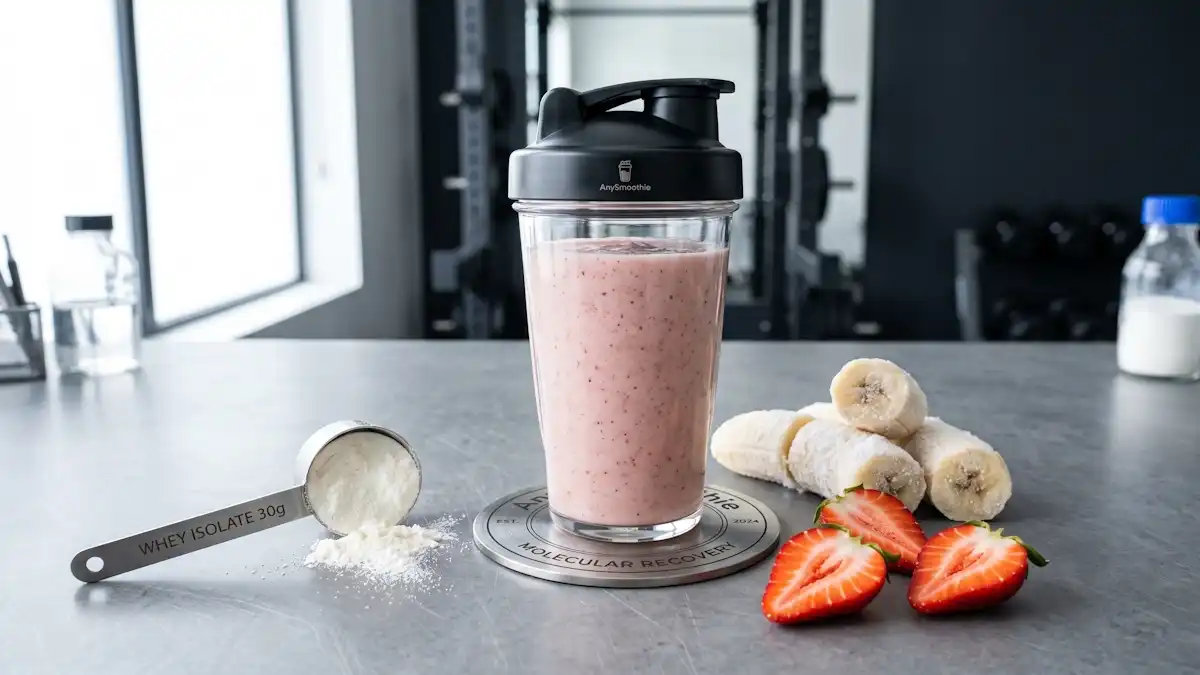
Mornings can feel like a sprint. You want something that tastes like a treat but still keeps you full, and you don’t want a sink full of dishes. That’s where a strawberry and banana protein smoothie earns its spot in the rotation.
It’s sweet without needing much (or any) added sugar, it’s creamy when you build it right, and it works just as well for breakfast as it does after a workout or during that mid-afternoon slump.
In this post you’ll get a reliable base recipe, simple ways to hit your protein goal, easy swaps for dairy-free or plant-based needs, and quick fixes for the most common texture problems. Best part, it can be done in about 5 minutes.
What Makes a Strawberry and Banana Protein Smoothie So Filling and Popular
This smoothie works because it balances comfort and function. Strawberries bring bright flavor and vitamin C, while bananas add natural sweetness and a thick, milkshake-like texture. Add protein, and the drink feels more like a meal, since it slows digestion and helps keep hunger down. Leucine from whey is the main absolute rate-limiting nutrient signal for muscle protein synthesis.
| Signaling Vector | Physiological Mechanism | Activation Velocity | Best Smoothie Pairing | Target Downstream Consequence |
|---|---|---|---|---|
| Whey Protein Isolate, High Leucine Yield | Leucine binds to Sestrin2, which helps activate Rag GTPases and mTORC1 signaling | Fast, about 30 to 60 minutes | Strawberry banana smoothie after training | Ribosomal p70S6K phosphorylation, initiation complex assembly |
| Fast-Acting Carbohydrates, Banana Starch and Insulin Flux | Carbs raise insulin, which phosphorylates Akt and helps inactivate TSC2 | Fast, about 15 to 45 minutes | Banana-heavy smoothie for quick energy | Better amino acid uptake, support for anabolic signaling |
| Free-Form Essential Amino Acids, EAAs | Direct systemic transporter saturation without gastric delay | Very fast, about 15 to 30 minutes | Light smoothie when you want low bulk | Rapid amino acid availability, initiation complex assembly |
The filling part comes down to two things:
First, protein helps you stay full longer than carbs alone. It slows digestion and gives your body building blocks for muscle repair. Second, fruit adds water and fiber, which makes the smoothie more satisfying than a plain protein shake.
Most homemade versions land in a practical range: about 300 to 400 calories and roughly 25 to 30 grams of protein, depending on your milk choice, yogurt, and the scoop you use. If you keep the ingredients simple (frozen fruit, milk, protein powder), you can get a thick, sweet smoothie without pouring in sweeteners.
In early 2026, it’s also popular for a simple reason: people want fast food that still feels like self-care. Online chatter around strawberry banana smoothies has climbed year over year, and you’re seeing more plant-based options too, with pea protein and seed add-ins showing up in ready-to-blend cups and café menus. If you’re curious about how “healthy” strawberry banana smoothies can be (and what makes them less healthy), this breakdown from Lose It! is a helpful reality check.
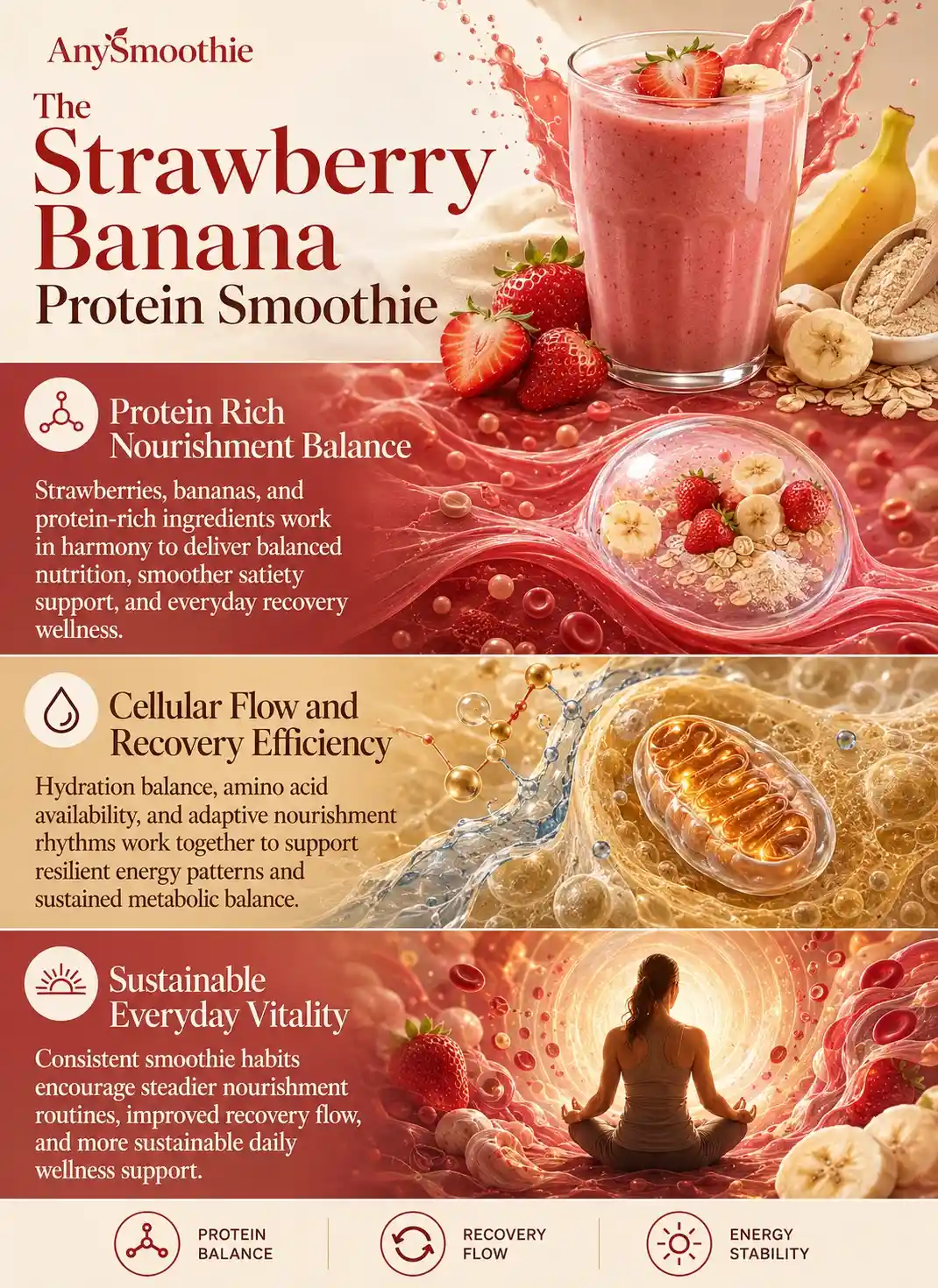
Nutrition basics: protein, fiber, carbs, and why they matter
- Protein: Helps with fullness and muscle repair. You’ll boost it fast by using Greek yogurt, high-protein milk, or a full scoop of whey or pea protein.
- Fiber: Slows digestion and supports gut health. Add-ins like oats or ground flax raise fiber and make the smoothie more “stick-to-your-ribs.”
- Carbs: Your body’s quickest fuel. Fruit carbs are great around workouts, and they make the smoothie taste good without much extra work.
- A simple example: Use high-protein milk or Greek yogurt to raise protein, add oats or flax to raise fiber, and use frozen fruit to get sweetness and thickness without added sugar.
Best times to drink it: breakfast, post workout, or snack
Breakfast: Make it more filling with yogurt or oats, and you’ll stay satisfied longer than you would with toast alone.
Pre-workout: Keep it lighter so it doesn’t sit heavy. Use milk plus fruit plus half a scoop of protein, or skip the oats.
Post-workout: This is the easiest time to go higher protein. Use a full scoop and consider Greek yogurt for extra thickness.
Two easy serving ideas:
- Drink it right away in a cold glass, it tastes best while it’s frosty and thick.
- Pour it into a lidded cup and sip it during your commute, it’s a clean, one-hand breakfast.
The Best Strawberry and Banana Protein Smoothie Recipe (Creamy, Not Icy)
The biggest difference between “creamy” and “icy” is simple: frozen fruit does the thickening, not ice. Ice waters down flavor and can leave crunchy bits unless your blender is strong.
This base recipe is built for a smooth texture and a balanced taste. You can keep it classic, or adjust it depending on your protein needs and calorie target.
A quick note on protein powder: vanilla usually tastes best here. Unflavored also works if you want more fruit flavor.
Strawberry Banana Protein Smoothie
Ingredients
- 1 medium frozen banana, sliced
- ¾ cup frozen strawberries
- 1 cup low-fat milk
- 1 scoop protein powder
- ½ cup plain Greek yogurt
Pour the milk and Greek yogurt into the blender first. Add the protein powder, frozen banana, and strawberries. Blend until completely smooth and creamy. Add a small splash of milk if you prefer a thinner consistency.
The combination of Greek yogurt, milk, and protein powder provides substantial high-quality protein, while banana and strawberries contribute carbohydrates, fiber, potassium, vitamin C, and natural sweetness.
Estimated Nutrition per Serving
- Calories: ~430 kcal
- Protein: ~45 g
- Carbohydrates: ~56 g
- Fat: ~7 g
- Fiber: ~6 g
- Sugars: ~38 g
If I were making this extra thick, I’d start with slightly less than the full cup of milk and add the remainder gradually. Frozen banana and strawberries can create an almost soft-serve texture without needing extra ice.
Easy substitutions that actually matter:
- Soy milk or pea milk: Higher protein, closer to dairy in texture.
- Almond milk: Lighter calories, a bit less creamy unless you add yogurt.
- Unflavored protein: Lets strawberry and banana taste more “real,” less like a shake.
- Fresh strawberries: Fine in a pinch, but you’ll want to freeze the banana or add a few frozen berries to keep it thick.
Step by step blending order for the smoothest texture
- Add milk first to the blender. This protects the blades and helps everything move.
- Add protein powder next, so it hydrates in liquid instead of clumping.
- Add the frozen banana and frozen strawberries.
- Blend 30 to 60 seconds, starting low and finishing high, until the sound changes and it looks glossy.
How to adjust it without ruining the flavor:
- If it’s too thick, add a splash of milk and blend 10 seconds.
- If it’s too thin, add a few more frozen strawberries or half a frozen banana.
- If it’s gritty, blend longer, or let it sit 1 minute so the powder hydrates, then blend again.
- If it tastes flat, add a tiny pinch of salt or a drop of vanilla extract. It shouldn’t taste salty, it should taste brighter.
How to sweeten it without turning it into dessert:
- Use a riper banana (more natural sweetness).
- Add more strawberries for a sweeter berry flavor without the same “banana sugar” feel.
- If you truly need a boost, use 1 teaspoon of honey or maple syrup, not a big squeeze.
Easy Variations for Your Goals (Higher Protein, Dairy Free, or More Fiber)
Once you have the base, the “best” smoothie becomes the one that fits your day. Think of the recipe like a favorite hoodie. You can wear it different ways, but it still feels familiar.
Below are a few high-impact changes that people actually stick with, because they don’t make the smoothie weird.
Higher protein version (25g to 39g) without making it chalky
If you’ve ever added extra powder and ended up with a thick, dusty shake, you already know the rule: don’t just pile on more powder and hope for the best.
Try these options instead:
- Use high-protein milk: This raises protein without changing flavor much. It also keeps the smoothie drinkable.
- Add Greek yogurt: It boosts protein and makes the texture more like a milkshake. Start with 1/4 cup, then adjust.
- Choose a powder that mixes well: Whey tends to blend smooth and creamy. Many pea proteins work great too, but some need a longer blend to lose that “grainy” edge.
If you want to push protein higher, it’s usually better to combine two moderate upgrades (protein milk plus yogurt) than to double your powder. Depending on the products you choose, these combos can land in the 30-gram range or more while still tasting like strawberries and banana.
More fiber and steady energy: oats, ground flax, and “hidden greens”
If your smoothie leaves you hungry an hour later, you probably need more fiber and a bit more “slow fuel.”
A few add-ins that work without overpowering the taste:
- Rolled oats (2 to 4 tablespoons): Makes the smoothie thicker and more filling. It also softens the banana sweetness.
- Ground flax (1 to 2 teaspoons): Adds fiber and a mild, nutty note. It also helps the smoothie feel more substantial.
- Spinach (a small handful): This is the classic hidden greens move. With strawberries and banana, you’ll barely taste it, but you’ll notice the color shift.
These add-ins thicken the smoothie, so plan on an extra splash of milk. If you’re using oats and flax together, blending a little longer helps everything turn silky instead of speckled.
Dairy-free and plant-based swaps that still taste creamy
Dairy-free smoothies can be fantastic, but they can also turn thin if you swap milk and remove yogurt without replacing the thickness.
To keep it creamy:
- Pick a higher-protein plant milk (soy is the common go-to).
- Use a pea protein that’s labeled as smooth or “shake-friendly.”
- Add half an avocado slice (yes, really) if you need extra body, the fruit flavor still leads.
If you want a fully dairy-free version built around that idea, Eight Forest Lane’s strawberry banana protein smoothie (dairy free) is a solid reference for ingredient choices and texture.
Common Mistakes and How to Fix Them
Most smoothie problems aren’t “bad recipes,” they’re just small balance issues. Frozen fruit size varies, protein powders absorb liquid differently, and bananas can swing from barely sweet to candy-sweet depending on ripeness.
The goal is simple: use frozen fruit for body, use enough liquid to blend, and adjust in tiny steps. Big changes usually backfire.
Quick troubleshooting cheat sheet
- Too thick: Add 1 to 2 tablespoons milk, blend again.
- Too thin: Add more frozen strawberries, or half a frozen banana.
- Too sweet: Use half a banana next time, or increase strawberries for a brighter taste.
- Not sweet enough: Use a riper banana, or add 1 teaspoon honey.
- Protein taste too strong: Use unflavored protein, or do a half scoop plus 1/4 cup Greek yogurt.
Make ahead and storage tips (without losing texture)
Smoothies taste best right after blending, when the cold and thickness feel fresh. If you need to prep, focus on prepping ingredients, not the finished drink.
Best options:
- Make smoothie packs: portion frozen banana and strawberries into bags, then dump and blend in the morning.
- Store a blended smoothie in a sealed jar up to 24 hours in the fridge. Shake hard before drinking, separation is normal.
- If it thickens too much overnight, add a small splash of milk and stir, or re-blend for 10 seconds.
Conclusion
A strawberry and banana protein smoothie is one of the easiest ways to get a fast, filling meal that still tastes like comfort food. Start with the base recipe, use frozen fruit for that creamy texture, and pick one upgrade based on your goal, either higher protein or more fiber.
Once you’ve made it a few times, you won’t need a recipe. You’ll just know what your blender should sound like when it’s perfect. Try it tomorrow morning, tweak the thickness to your liking, and keep the best version in your back pocket for busy days.
🛡️ Safety Notes & Contraindications
Reactive Hypoglycemia and Post-Prandial Lethargy: CRITICAL: Stacking whole ripe bananas alongside simple fruit sugars triggers a rapid, sharp exocytosis of pancreatic insulin. If this high-flux carbohydrate matrix is consumed on an empty stomach during a sedentary mid-afternoon slump rather than immediately post-workout, the sudden insulin spike can cause rapid cellular glucose clearance. This results in transient reactive hypoglycemia, manifested as post-prandial lethargy, brain fog, or an acute rebound of edonic hunger.
Oxalate Nephropathy and Renal Transport Overload: Strawberries concentrate a noticeable baseline structural density of soluble oxalic acid. When greens (like hidden spinach) are added to the dairy-free or plant-based versions without a concurrent calcium factor, free oxalates pass directly into systemic circulation. In phenotypes with a clinical history of calcium-oxalate nephrolithiasis (kidney stones), this flux can saturate glomerular filtration. Always ensure a true Calcium co-factor ($Ca^{2+}$, like Greek yogurt) is present to complex oxalates directly in the bowel lumen.
Latex-Fruit Syndrome Cross-Reactivity: Due to evolutionary structural homology between plant defense proteins (specifically class I chitinases), individuals with a diagnosed Type 1 IgE-mediated hypersensitivity to natural rubber latex can display significant cross-reactivity to banana proteins. Monitor for localized oral pruritus, lip tingling, or micro-swelling of the throat.
Phytic Acid Mineral Chelation from Raw Oat Stacking: Adding raw, un-soaked rolled oats to expand the fiber matrix introduces a high structural concentration of acido fitico. Phytates act as aggressive anti-nutrients, chelating divalent cations like Iron ($Fe^{2+}$), Zinc ($Zn^{2+}$), and Magnesium ($Mg^{2+}$) within the chimo grid. Phenotypes managing iron-deficiency anemia should utilize flash-blanched or pre-soaked oats to activate native phytases before blending.
Urea Cycle Overload in Renal Insufficiency: Stacking a full scoop of whey or pea protein with high-protein soy milk and Greek yogurt can elevate the protein floor per serving beyond 35 grams. This creates a high ultrafiltration workload on the kidneys and forces the liver to process large amounts of waste nitrogen through the urea cycle. Individuals presenting with advanced Chronic Kidney Disease (CKD, Stages 3-5) must calibrate their daily protein flooring.
FAQ
How does pairing whey or pea protein with a fruit matrix optimize the sarcoplasmic leucine threshold?
Muscle protein synthesis (MPS) is fundamentally an all-or-nothing molecular switch governed by the intracellular concentration of the essential amino acid leucine. Biochemically, achieving the “leucine threshold”—typically requiring a minimum of 2.5 to 3 grams of highly bioavailable leucine per feeding—is mandatory to displace Sestrin2 from GATOR2 and fully activate the mTORC1 complex. Supporting this physiological system with a dedicated scoop of isolated whey or pea protein within an emulsified fluid vehicle ensures rapid amino acid kinetics, triggering structural myofibrillar repair far more efficiently than an un-fortified fruit drink.
Why do the complex starches in rolled oats and flaxseed attenuate postprandial glycemic turbulence?
Mechanical blending shears fruit cell walls, transforming whole-food carbohydrates into a highly accessible, low-viscosity fluid that can cause a rapid glucose influx across the enterocyte lining. Biochemically, integrating structural add-ins like the beta-glucans in rolled oats or the hydrophilic mucilage in ground flaxseed establishes a cross-linked viscoelastic hydrogel within the gastric lumen. Supporting this physiological system slows gastric emptying rates and physically delays carbohydrate cleavage by brush border disaccharidases, optimizing the natural pathways of “glycemic pacing” to yield a calm, sustained postprandial energy curve.
What is the mechanical advantage of a liquid-first layering sequence on protein hydration kinetics?
When dry macro-nutrient powders encounter moisture, they spontaneously form a sticky, hydrophobic outer shell that traps un-hydrated cores, resulting in highly aversive, gritty particulate clumps. Biochemically, introducing the liquid vehicle into the blender reservoir prior to the protein isolate ensures immediate particle dispersion and complete hydration of the peptide chains. Supporting this physiological system through a precise layering sequence facilitates uniform homogenization, maximizing the accessible surface area for gastrointestinal proteases to dismantle the protein matrix later.
How does a cryopreserved banana matrix function as a superior structural texturizer compared to crystalline ice?
Crystalline water ice reduces fluid temperatures but aggressively dilutes the mixture as it phase-shifts into liquid water, breaking down the emulsion and causing early syneresis (separation). Biochemically, a flash-frozen banana matrix delivers solid-phase water structurally locked inside an intricate network of uncoiled plant pectin and soluble dietary fibers. Supporting this physiological system during high-velocity shear builds a stable colloidal suspension that coats taste receptors, naturally masking the subtle organoleptic bitterness or chalkiness of plant-based protein isolates.
Why does “Mitochondrial Priming” depend on a controlled carbohydrate-to-protein ratio during post-exertion recovery?
Flooding the portal vein with an unbuffered, high-fructose fruit load forces hepatocytes into a high-friction, ATP-depleting pathway to process the sugar surge, which can trigger cellular oxidative stress. Biochemically, balancing fruit carbohydrates with complete amino acids and slow-releasing lipids provides recovering tissues with a synchronized fuel mix. Supporting this physiological system facilitates the biochemical mechanics of “mitochondrial priming,” delivering pyruvate and amino acid substrates at a pace that matches routine cellular respiration, keeping the cellular energy budget optimized for tissue repair.

Medical Disclaimer: AnySmoothie content is for educational purposes only and is not a substitute for professional medical advice. Consult a healthcare provider for personalized guidance. See our full Disclaimer & Terms of Use. AI Transparency: AnySmoothie may use AI to support content development. All content undergoes human editorial review for accuracy, clarity, and editorial quality. See our full AI Transparency.