
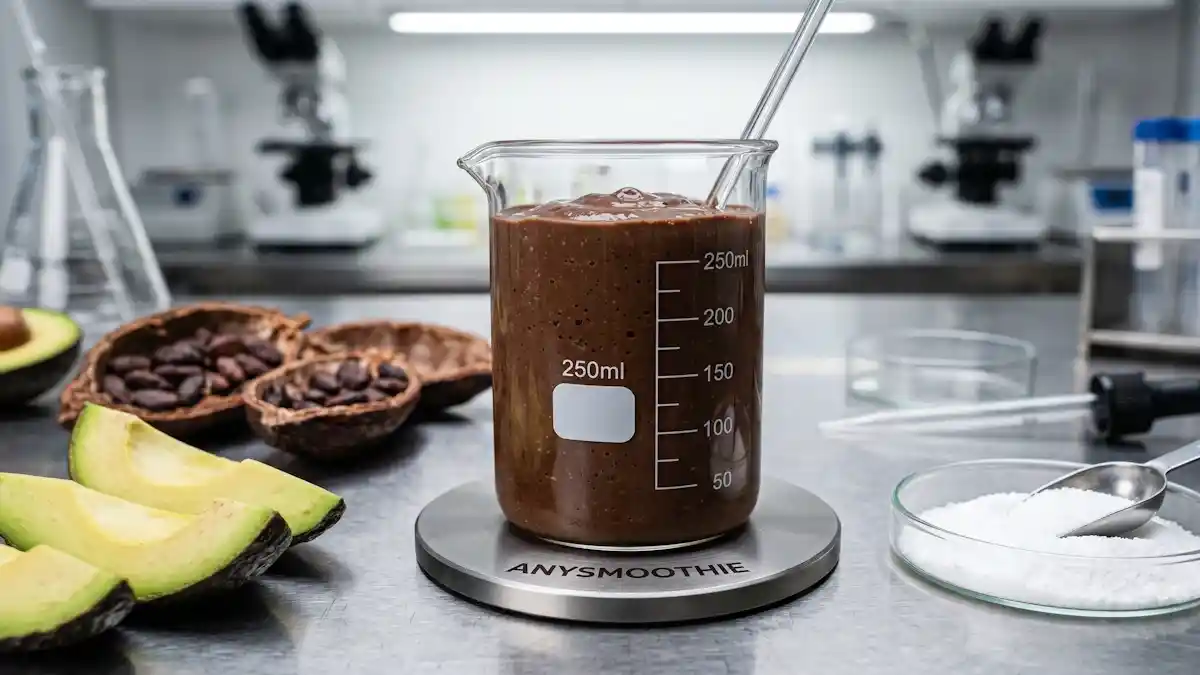
This protocol outlines precise smoothie formulations engineered specifically to suppress the volatile, bitter organoleptic profiles of dark greens and cruciferous vegetables without compromising overall nutrient density. By manipulating the physical parameters of the liquid matrix, these tailored blends interface directly with gustatory receptors, utilizing dense lipid bases, organic acids, and cryogenic carbohydrate structures to mute the signaling of bitter glucosinolates and support dietary compliance.
This technical manual establishes a step-by-step tolerance progression designed to optimize nutrient delivery through fluid dynamics and viscosity control. You will discover the exact mechanics of layer optimization—homogenizing fibrous plant cells with hydrostatic fluids first—to alter the rheological consistency of the blend, ensuring a uniform, particulate-free texture that bypasses texturizing defense mechanisms.
Why veggie smoothies taste bad, and how to fix it fast
Most veggie smoothies taste “off” for a few predictable reasons. Bitter greens, like raw kale or dandelion, can read as sharp and grassy. Earthy vegetables can taste like soil even when they’re fresh, and beets and celery are common culprits. Then there’s the thin, sad texture problem, too much liquid makes the whole drink watery, which lets the veggie flavor come through harder. Finally, small chunks from under-blended greens or fibrous veg can make every sip feel like you’re chewing a salad.
| Substrate Masking Agent | Physiological Mechanism | Target Substrate | Best Smoothie Pairing | Masking Efficiency |
|---|---|---|---|---|
| Phospholipids (from avocado, lecithin) | Coats T2R tongue receptors and can physically block bitter ligands. It also helps lipid-encapsulate unpalatable compounds. | Free-form bitter compounds, some metallic notes, and rough-tasting plant compounds | Spinach, kale, celery, beet blends | High |
| Polymeric Polyphenols (from dark cacao) | Binds proteins and peptides through hydrophobic interactions, which can soften bitter notes and astringency. | Highly bitter botanicals, berberine-rich ingredients, harsh greens | Kale, cucumber, mint, cocoa blends | Medium to high |
| Viscous Soluble Fibers (from berries, pectin) | Thickens the mixture and alters chyme rheology, which slows the diffusion of taste molecules to the buds. | Sharp acids, light bitter notes, thin watery blends | Berry, blueberry, strawberry, chia-free fruit veg smoothies | Medium |
Phospholipids work best when a smoothie has a strong bitter edge, because they help trap unappealing compounds in fat. Polyphenols help more with harsh, dry notes, while soluble fiber smooths out a thin blend by giving it body. So if your veggie smoothie tastes grassy, dusty, or just too loud, the fix is usually a mix of less water, better blending, and one masking agent that fits the ingredients.
The fixes are simple, and you’ll use them in every dessert-style smoothie in this post:
- Balance bitter with sweet and acid (fruit plus a squeeze of lemon or lime).
- Fix texture first (frozen fruit plus a creamy add-in).
- Control smell and aftertaste (start with mild veggies that disappear).
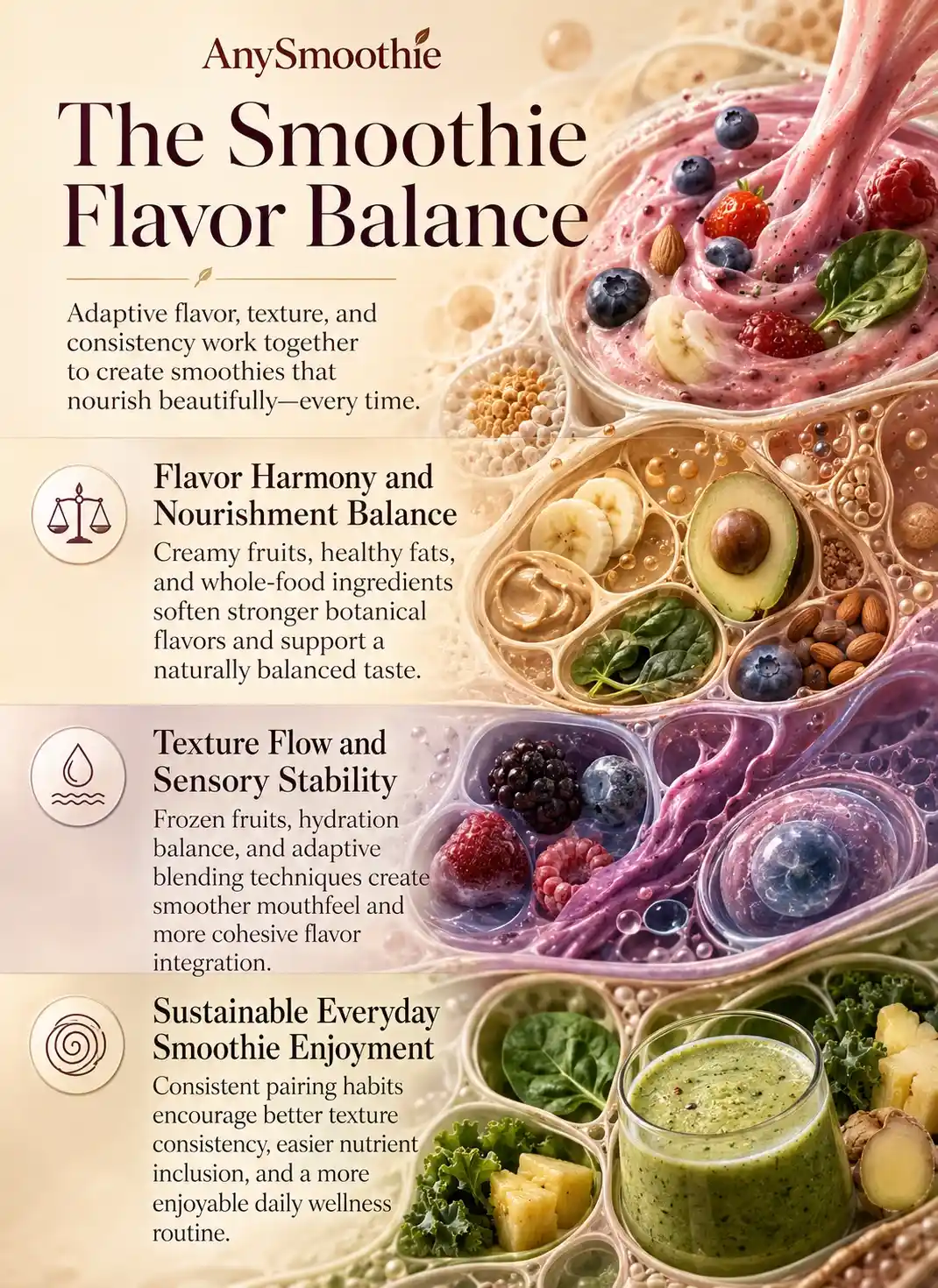
Flavor math that works: sweet, creamy, and a little tang
Here’s the rule of thumb that keeps veggie flavor on mute while your smoothie still tastes like dessert:
2 cups fruit + 1 cup liquid + 1 creamy add-in, then finish with a pinch of salt or cinnamon (optional) and a squeeze of citrus (optional).
A few notes that make this “math” work:
- Bananas, mango, and pineapple are the best cover-up fruits. They’re strong, sweet, and they drown out green notes fast.
- Acid is the secret weapon. A small squeeze of lemon or lime brightens the fruit and cuts that earthy aftertaste.
- A tiny pinch of salt doesn’t make it salty. It makes it taste more like a real milkshake.
Quick example combo (easy, forgiving, and veggie-proof):
Frozen mango + frozen banana + milk (or oat milk) + Greek yogurt + squeeze of lime + baby spinach. It lands like a tropical creamsicle, not a vegetable drink.
Texture matters more than you think: make it thick like a milkshake
A thin smoothie makes veggie flavors harder to ignore. Thickness is your disguise. The fastest path to milkshake texture is frozen fruit, because it chills and thickens without watering things down.
Use these habits and the texture problem usually disappears:
- Start with less liquid than you think (you can always add more). Aim for about 1 cup to begin.
- Use frozen fruit as the base, not ice. Ice can make it slushy and dull the flavor.
- Blend longer than you think, especially if you’re adding greens. Most “chunks” are just under-blending.
- High-power blender helps, but you can still win with a basic blender if you go slower, add liquid gradually, and blend an extra 30 to 60 seconds.
- Add ice only if needed after it’s already smooth and thick.
For creaminess that reads like dessert, rotate in:
- Greek yogurt (thick, tangy, and masks bitterness)
- Oats (makes it shake-like and smooth)
- Nut butter (adds richness and covers green flavors)
Pick mild veggies first so you do not taste them
For a smoothie for people who hate vegetables, your first goal is “invisible,” not “super green.” Start with veggies that don’t announce themselves.
Beginner-friendly options that hide well:
- Frozen cauliflower: surprisingly creamy and neutral, it disappears behind fruit.
- Zucchini: mild and watery in a good way, it blends smooth when paired with frozen fruit.
- Baby spinach: much milder than kale, especially when you keep the amount small at first.
- Cooked and chilled carrot: naturally sweet, it fits right into dessert flavors like vanilla, cinnamon, and orange.
Save these stronger flavors for later, once you’ve nailed your base:
- Raw kale (bitter)
- Beets (earthy, and they can take over fast)
- Celery (sharp, “fresh” smell that lingers)
A simple starting move: add a small handful of a mild veggie to a fruit-forward smoothie, then increase only when you stop noticing it. That’s how you build a veggie habit without ruining breakfast.
If you want a smoothie for people who hate vegetables, you need two things: strong dessert flavors (fruit, vanilla, cocoa, cinnamon) and a texture that feels like a treat (thick, cold, creamy). These six recipes taste like milkshakes, soft-serve, or pie filling, but they can still sneak in mild veggies that blend in quietly.
Each one includes a hidden veggie option you can skip or add, plus an easy swap so you can make it work with what you have.
Strawberry Banana Cream Smoothie
Ingredients
- 1 cup frozen strawberries
- 1 medium ripe banana
- ¾ cup low-fat milk
- ½ cup plain Greek yogurt
- ½ teaspoon vanilla extract, optional
- 1 small handful baby spinach, optional
Add the milk and Greek yogurt first, followed by the strawberries, banana, and spinach if using. Blend for 45–90 seconds until completely smooth and creamy.
The strawberry-banana combination keeps the flavor fruity and naturally sweet, while Greek yogurt adds protein and creaminess. A small amount of baby spinach adds folate and carotenoids without dramatically changing the flavor. For a thicker smoothie, start with ¾ cup milk and use a frozen banana.
Estimated Nutrition per Serving
- Calories: ~330 kcal
- Protein: ~19 g
- Carbohydrates: ~53 g
- Fat: ~6 g
- Fiber: ~7 g
- Sugars: ~36 g
Peanut Butter Banana Oat Smoothie
Ingredients
- 1 medium banana
- 2 tablespoons peanut butter
- ¼ cup rolled oats
- ¾ cup low-fat milk
- ½ cup plain Greek yogurt
- Pinch of cinnamon
- ½ cup frozen cauliflower, optional
Add the milk and Greek yogurt to the blender first. Add the banana, peanut butter, oats, cinnamon, and frozen cauliflower if using. Blend until thick and completely smooth.
Peanut butter contributes protein and unsaturated fat, while oats provide carbohydrates and fiber, including beta-glucan. Greek yogurt and milk add high-quality protein. Frozen cauliflower has a relatively mild flavor and can add extra body without dominating the banana and peanut butter.
Estimated Nutrition per Serving
- Calories: ~530 kcal
- Protein: ~29 g
- Carbohydrates: ~64 g
- Fat: ~21 g
- Fiber: ~10 g
- Sugars: ~31 g
Tropical Vacation Smoothie
Ingredients
- 1 cup frozen mango
- 1 cup frozen pineapple
- ½ medium banana
- ¾ cup unsweetened coconut milk beverage
- 1 tablespoon fresh lime juice
- ½ cup peeled chopped zucchini
Pour the coconut milk into the blender first. Add the zucchini, frozen mango, pineapple, banana, and lime juice. Blend until thick and creamy.
Mango and pineapple provide vitamin C, carotenoids, and natural sweetness, while banana creates a smoother, sorbet-like consistency. Peeled zucchini has a mild flavor and blends easily into the tropical fruit without adding much sweetness.
Estimated Nutrition per Serving
- Calories: ~285 kcal
- Protein: ~4 g
- Carbohydrates: ~62 g
- Fat: ~4 g
- Fiber: ~8 g
- Sugars: ~47 g
Blueberry Vanilla Smoothie With Frozen Cauliflower
Ingredients
- 1½ cups frozen blueberries
- 1 medium frozen banana
- ¾ cup low-fat milk
- ½ cup vanilla Greek yogurt
- ½ cup frozen cauliflower florets
Pour the milk and Greek yogurt into the blender first. Add the frozen cauliflower, banana, and blueberries. Blend for 60–90 seconds until completely smooth and creamy.
Frozen cauliflower has a mild flavor and contributes body, while blueberries and vanilla remain the dominant flavors. Blueberries also provide fiber and anthocyanins, and Greek yogurt and milk contribute protein.
Estimated Nutrition per Serving
- Calories: ~410 kcal
- Protein: ~20 g
- Carbohydrates: ~72 g
- Fat: ~7 g
- Fiber: ~11 g
- Sugars: ~48 g
Chocolate Cherry Smoothie That Hides Greens
Ingredients
- 1½ cups frozen cherries
- 1 tablespoon unsweetened cocoa powder
- 1 medium banana
- ¾ cup low-fat milk
- ½ cup plain Greek yogurt
- ½ cup baby spinach
Pour the milk and Greek yogurt into the blender first. Add the spinach and cocoa, followed by the banana and frozen cherries. Blend until completely smooth.
Cocoa and cherries create a strong chocolate-fruit flavor that can make a modest amount of spinach less noticeable. Cherries provide carbohydrates and anthocyanins, cocoa contributes flavanols, and Greek yogurt adds protein.
Estimated Nutrition per Serving
- Calories: ~430 kcal
- Protein: ~21 g
- Carbohydrates: ~76 g
- Fat: ~7 g
- Fiber: ~10 g
- Sugars: ~51 g
Apple Pie Smoothie
Ingredients
- 1 medium frozen banana
- ½ cup unsweetened applesauce
- ¼ cup rolled oats
- ¾ cup low-fat milk
- ½ cup plain Greek yogurt
- ½ teaspoon cinnamon
- Pinch of salt
- ⅓ cup cooked and chilled carrot
- ½ teaspoon vanilla extract, optional
Pour the milk and Greek yogurt into the blender first. Add the oats, applesauce, carrot, frozen banana, cinnamon, salt, and vanilla if using. Blend until completely smooth and creamy.
Cooked carrot has a naturally mild sweetness that fits well with apple and cinnamon, while oats add body and fiber. Banana, vanilla, and warm spice create the dessert-like profile without requiring added sugar.
Estimated Nutrition per Serving
- Calories: ~425 kcal
- Protein: ~21 g
- Carbohydrates: ~75 g
- Fat: ~7 g
- Fiber: ~9 g
- Sugars: ~43 g
If I were making this especially thick, I’d blend the oats with the milk for 10–15 seconds first, then add everything else. It gives the smoothie a smoother, almost pie-filling texture without needing extra banana.
How to sneak in vegetables without noticing: a step-by-step tolerance plan
If the idea of “veggie smoothies” makes you think of lawn clippings in a cup, this plan is for you. Think of it like turning down the volume on vegetable flavor while you turn up the dessert vibes. You’ll start with almost invisible amounts, then slowly increase only when your taste buds stop flagging it.
Before you begin, here are the safe picks and the ones to save for later:
- Stealth veggies (start here): frozen cauliflower, zucchini (peeled if you want), baby spinach, cooked and chilled carrot
- Strong veggies (avoid early): raw kale, beets, celery, raw broccoli, green pepper
One more rule that makes this work: keep it cold and thick. A thick smoothie hides veggie flavor way better than a thin one.
Stage 1: Add 1 to 2 tablespoons of a neutral veggie
Start with frozen cauliflower or frozen zucchini. At this stage, you’re not trying to “eat vegetables,” you’re just teaching your smoothie that veggies can exist without taking over.
How to measure it (keep it simple):
- Use a regular tablespoon and add 1 tablespoon first.
- Next time, try 2 tablespoons.
- If you’re using frozen riced cauliflower, it’s even easier to measure.
When to add it (so it blends smooth):
- Add your liquid and yogurt first (or any creamy base).
- Add the fruit.
- Add your 1 to 2 tablespoons of frozen cauliflower or zucchini last.
How to keep it cold so it stays thick:
- Use frozen fruit as your base (not ice).
- Keep liquid on the low side at first, then add a splash only if needed.
- If you pre-portion smoothie packs, store the veggie in the bag already frozen so it never softens.
If you stop at Stage 1, you still win. You’re getting a little extra fiber and nutrients with no “vegetable smoothie” experience.
Stage 2: Move up to 1/4 cup, then 1/2 cup
Once 2 tablespoons feels normal, move to 1/4 cup for a few smoothies. Then, if you want, bump it to 1/2 cup.
A few pairings make this jump feel easy:
- Blueberry + cauliflower: blueberries and vanilla cover everything and cauliflower adds creaminess.
- Tropical fruit + zucchini: mango, pineapple, and coconut make zucchini disappear.
- Chocolate + spinach: cocoa is a strong mask, especially with banana or dates.
If the smoothie starts tasting “healthy,” don’t force it. Fix it fast:
- Add more banana (fresh or frozen) for sweetness and body.
- Add 1 pitted date for a caramel-like sweetness.
- Add 1/4 to 1/2 tsp vanilla to push it back into dessert territory.
Tip for families and picky eaters: try the “two-sip rule.” Offer a small glass first, ask for two sips, and keep it low-pressure. You’ll get more buy-in over time. For more picky-eater-friendly smoothie ideas, Autism Dietitian’s smoothie tips are practical and realistic.
Stage 3: Try mild greens, then stronger veggies only if you want
When you’re ready to add a green, start with baby spinach. It’s much milder than kale and it blends into fruit smoothies without that sharp bite.
Your green progression:
- Baby spinach: start with 1/4 cup, then go to 1/2 cup
- Optional later: kale, start with 1 to 2 tablespoons, then increase only if you truly like it
If you taste bitterness, use this quick fix checklist (pick 1 or 2, not all):
- Add citrus: lemon or lime wakes up fruit flavor and distracts from greens.
- Add banana: sweetness plus creaminess calms bitter notes.
- Add a pinch of salt: it makes chocolate and fruit taste richer.
- Add cocoa or cinnamon: both cover green flavors well.
- Chill more: more frozen fruit, or pop the smoothie in the freezer for 10 minutes.
Tip for picky kids: blend greens with the liquid first until fully smooth, then add fruit. It removes the “tiny green bits” problem that turns some kids off.
This is the simplest path to a smoothie for people who hate vegetables: start tiny, keep it thick, and only increase when you stop noticing.
Smoothie add-ins that boost nutrition without a veggie flavor
When you’re making a smoothie for people who hate vegetables, the easiest win is to upgrade what’s already delicious. Think of add-ins like “quiet helpers”, they change how filling and balanced the smoothie feels, without turning it into a green drink. Start with one add-in at a time, keep the flavors familiar (vanilla, chocolate, berry), and you’ll notice the difference by lunchtime.
Protein choices that stay mild: Greek yogurt, milk, and powders
Protein is what turns a sweet smoothie into something that actually keeps you full. If your smoothie tastes great but you’re hungry again in an hour, it usually needs more protein (and sometimes more fat or fiber too).
Here are mild options that blend in easily:
- Greek yogurt: Thick, creamy, and slightly tangy in a good way. It makes fruit taste more like frozen yogurt. Plain works, but vanilla is the “dessert” shortcut.
- Cottage cheese: Sounds weird, tastes normal once blended. It turns into a cheesecake-like base when you pair it with berries, vanilla, or cocoa.
- Milk options: Dairy milk is neutral and creamy. Soy milk is a good plant option when you want more protein without a strong flavor.
- Protein powder (whey or plant-based): If you use powder, pick vanilla or unflavored first. Skip anything marketed as “greens,” “superfood,” or “matcha” if you hate grassy notes.
Simple tip: if you can taste the protein powder, you used the wrong flavor or too much. Start with half a scoop, then adjust.
Fiber and healthy fats for a creamy, filling smoothie
Fiber and healthy fats help your smoothie stick with you. They also make the texture feel more like a milkshake instead of fruit juice.
The best “no veggie flavor” picks:
- Rolled oats: The easiest way to get a thicker, creamier smoothie that feels like breakfast. Start with 2 to 3 tablespoons, blend well.
- Chia seeds: Great thickener, but they can feel gritty if you go heavy. Start with 1 teaspoon, then let the smoothie sit 3 to 5 minutes.
- Ground flaxseed: Adds fiber and a subtle nutty taste. Use 1 teaspoon to 1 tablespoon, and make sure it’s ground (whole flax can pass right through you).
- Nut butter: Peanut butter, almond butter, or cashew butter adds richness and covers “healthy” flavors fast. 1 tablespoon is usually enough.
- Avocado (small amount): Avocado is more about texture than taste. Use 1 to 2 tablespoons for extra creaminess, especially in chocolate or tropical blends.
Flavor boosters that make it taste like a treat
This is where you turn “healthy smoothie” into “dessert smoothie,” without needing ice cream.
A few tiny additions make a big difference:
- Vanilla extract: The fastest way to make a smoothie taste like cake batter or a milkshake (start with 1/4 teaspoon).
- Cinnamon: Adds bakery flavor, especially with banana, oats, apples, or nut butter.
- Cocoa powder: Covers almost anything and instantly reads as dessert.
- Espresso powder: Just a pinch makes chocolate taste deeper (like mocha).
- Citrus zest (lemon or orange): Brightens fruit and masks earthy aftertaste.
- Frozen fruit blends: Mixed berries, cherry blends, or tropical mixes create a stronger “fruit-forward” flavor that keeps veggies in the background.
- A pinch of salt: It won’t taste salty, it makes sweet flavors pop.
For sweetness, use the smallest amount needed so it still tastes like a treat, not candy:
- 1 to 2 dates for caramel vibes
- 1 teaspoon honey for gentle sweetness
- 1 teaspoon maple syrup for a warm, dessert flavor (great with cinnamon)
Conclusion
A smoothie for people who hate vegetables doesn’t have to taste like a salad. When you keep it thick and cold, stick with mild add-ins (spinach, zucchini, cauliflower, or cooked carrot), and build around dessert flavors like banana, berries, cocoa, vanilla, and cinnamon, the “veggie” part stays quiet. The biggest wins come from texture, frozen fruit for body, less liquid up front, and blending long enough to remove every last bit.
Your simple next step is this, pick one dessert-style recipe from above, use frozen fruit, then try the Stage 1 stealth veggie (just 1 to 2 tablespoons). That small amount is how you build consistency without triggering the taste buds that usually say “nope.” Consistency beats perfection, a “pretty good” smoothie you’ll drink all week is better than a “perfect” one you quit after two days.
Try one recipe tomorrow morning, then tweak it to taste (sweeter, thicker, more vanilla, or a pinch of salt) until it feels like your new normal.
🛡️ Safety Notes & Contraindications
Asymptomatic Oxalate Accumulation in Calcium-Free Matrixes: CRITICAL: Utilizing baby spinach or cocoa powders daily to camouflage vegetable tastes introduces a steady, concentrated structural load of soluble oxalates. If you shift towards a completely dairy-free layout (omitting Greek yogurt/milk) without adding a calcium-fortified plant alternative, free oxalates will be fully absorbed, increasing the risk of calcium-oxalate nephrolithiasis (kidney stones). Always ensure a calcium source is present to complex oxalates directly in the gut lumen.
Insulin Volatility from High-Density Fruit Stacking (The Sugar Bomb): Stacking bananas, mangoes, and dates simultaneously to suppress bitter notes creates a high-flux delivery of simple sugars (fructose/glucose). In individuals managing Type 2 Diabetes, metabolic syndrome, or severe insulin resistance, this targeted “dessert disguise” can trigger severe hyperinsulinemic spikes and subsequent reactive hypoglycemia.
Goitrogenic Myrosinase in Raw Cruciferous Loading: Raw cauliflower contains active mirosinasi enzymes that hydrolyze glucosinolates into thiocyanates, compounds that compete with iodine uptake at the thyroid gland. Individuals presenting with hypothyroidism or Hashimoto’s autoimmune thyroiditis must utilize strictly frozen-steamed or blanched cauliflower inputs, as thermal processing deactivates the myrosinase while keeping the texturizing matrix intact.
Gastric Stasis from Excessive Fiber Stacking (Stage 2/3 Overload): Rapidly accelerating your veggie tolerance from Stage 1 to Stage 3 by mixing oats, chia seeds, cauliflower, and spinach concurrently can overload upper GI transit mechanics. This dense hydrostatic gel grid can draw excessive fluid into the intestinal lumen, presenting as painful temporary bloating, severe distension, or altered transit kinetics.
Caffeine and Theobromine Influx in Autonomic Dysregulation: The Chocolate Cherry profile relies heavily on raw cocoa powder to mute green profiles. Cacao concentrates natural methylxanthines, primarily teobromina, which can stimulate the central nervous system. In individuals presenting with severe autonomic anxiety, panic metrics, or a hyper-reactive HPA-axis, using this chocolate-dense disguise as a late-night dessert can disrupt sleep architecture.
FAQ
How do lipid bases and cryo-carbohydrate structures mute bitter glucosinolate signaling?
Bitter taste transduction occurs when hydrophobic compounds, such as the glucosinolates found in brassica and cruciferous leaves, bind to specialized T2R receptors on the tongue’s gustatory cells. Biochemically, dense lipid matrices (found in Greek yogurt, nut butters, or avocado) and cryo-carbohydrate structures (frozen banana or mango) coat these oral receptors. Supporting this physiological system forms a physical and chemical barrier that interrupts enzyme-substrate interaction, minimizing the kinetic velocity of bitter signaling before it can reach central processing pathways.
Why do organic acids and trace sodium act as molecular modulators of taste?
The human tongue utilizes specific ion channels to interpret sweet, salty, bitter, and sour inputs. Biochemically, the hydrogen ions ($H^+$) in organic acids (such as citric or malic acid from lemons, limes, or berries) and sodium ions ($Na^+$) from a trace pinch of mineral salt alter the electrical potential of taste cell membranes. Supporting this physiological system through target-rich acid and sodium additions cross-modulates receptor thresholds, effectively dampening bitter perception while emphasizing sweet and savory aromatic volatiles.
What is the mechanical advantage of a “Two-Stage Particulate Homogenization” sequence?
Fibrous plant cells possess resilient, cellulose-walled compartments that hold green chlorophyll and sharp tasting elements. Biochemically, if tough greens are sheared simultaneously with large frozen masses, the blade velocity undergoes uneven friction, leaving small visible fragments that trigger tactile aversive responses in the mouth. Supporting this physiological system with a precise two-stage blending sequence—liquefying greens with the fluid medium first—breaks down cell walls completely, dispersing green particles evenly into a uniform, sub-micron colloidal suspension.
How does a “High-Viscosity Emulsion” alter postprandial flavor persistence?
A fluid’s thickness (rheological density) dictates its transit timeline over the tongue and through the upper gastrointestinal tract. Biochemically, a thin, watery smoothie flows rapidly, allowing volatile molecules to release quickly and leave a lingering, grassy aftertaste in the oral cavity. Supporting this physiological system by creating a high-viscosity emulsion (using oats, chia, or frozen fruit) slows down the release of volatile compounds, shifting the flavor balance toward long-chain starches and healthy lipids.
Why does cellular “Mitochondrial Priming” require a controlled carbohydrate-to-protein ratio?
Flooding the system with an unbuffered, simple fruit-sugar load can trigger a rapid postprandial glucose spike, stressing hepatic and cellular respiration. Biochemically, hiding hidden vegetables within a balanced framework of complete amino acids (from Greek yogurt or soy protein) and low-glycemic fats cushions the metabolic impact. Supporting this physiological system facilitates the biochemical mechanics of “metabolic priming,” delivering glucose and micronutrient cofactors to the mitochondria in a steady, metered stream that maintains stable cellular energy production.

Medical Disclaimer: AnySmoothie content is for educational purposes only and is not a substitute for professional medical advice. Consult a healthcare provider for personalized guidance. See our full Disclaimer & Terms of Use. AI Transparency: AnySmoothie may use AI to support content development. All content undergoes human editorial review for accuracy, clarity, and editorial quality. See our full AI Transparency.