
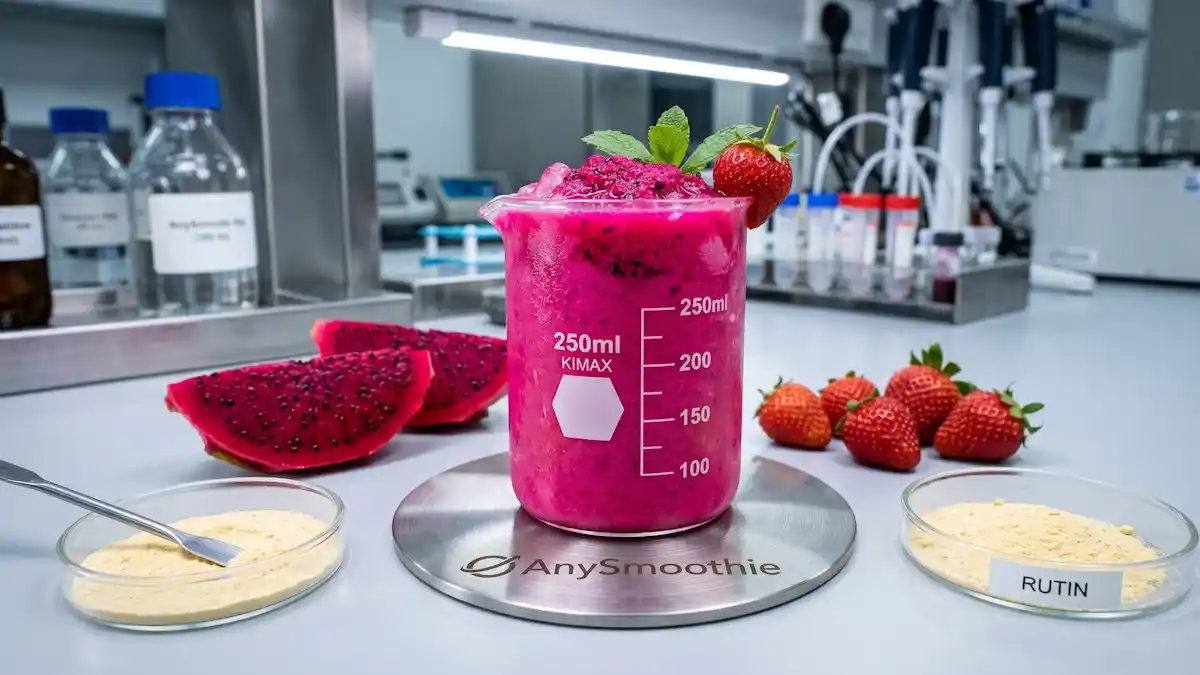
That hot-pink smoothie you see all over social media tastes just as good as it looks. Dragon fruit, also called pitaya, blends into a silky drink with a mild sweetness and a color that almost looks unreal.
Dragon fruit comes from a cactus and has speckled flesh, a bit like kiwi. The flavor is gentle and lightly sweet, so it mixes well with banana, yogurt, and other fruit. People love it in smoothies because it is full of vitamins, fiber, and water, so you get a drink that feels hydrating instead of heavy.
In this guide, you’ll learn a simple dragon fruit smoothie recipe, plus easy swaps to fit your diet and taste. By the end, you’ll know how to blend a thick, creamy smoothie that looks like dessert but works for breakfast, snack time, or even a light dessert.
Why Make a Dragon Fruit Smoothie at Home?
Buying a bright pink smoothie at a café is fun, but it adds up fast. At home, you get the same treat with simple ingredients, less sugar, and more control over what goes in.
| Micronutrient synergy | Physiological mechanism | Absorption transporter/pathway | Best smoothie pairing | Target physiological outcome |
|---|---|---|---|---|
| Vitamin C + non-heme iron (spinach/acerola) | Vitamin C acts as a strict mechanical requirement to reduce Fe3+ to soluble Fe2+, which maximizes non-heme iron flux | DMT-1 transport after reduction in the gut | Spinach with acerola or other vitamin C-rich fruit | Better iron uptake and support for healthy blood iron levels |
| Vitamin E + Vitamin C (avocado/berries) | Vitamin C helps regenerate tocopheryl radicals back to active tocopherol | Antioxidant recycling across cell membranes and watery tissues | Avocado with berries | Better antioxidant protection |
| Dietary lipids + carotenoids (avocado/carrots) | Dietary fats enhance hydrophobic micelle formation, which supports passive diffusion of carotenoids | Micelle formation and passive intestinal absorption | Avocado with carrots | Better carotenoid absorption and support for eye and skin health |
You can control what goes into the blender, from the type of milk to how sweet it is. You also get to use ripe produce, which can taste fresher than some store-bought blends. Frozen dragon fruit is now easy to find in grocery stores or online. For example, you can order frozen dragon fruit products through services like Instacart and have them delivered.
Once you learn the base method, you can tweak the flavor, boost the protein, or turn it into a thick smoothie bowl.
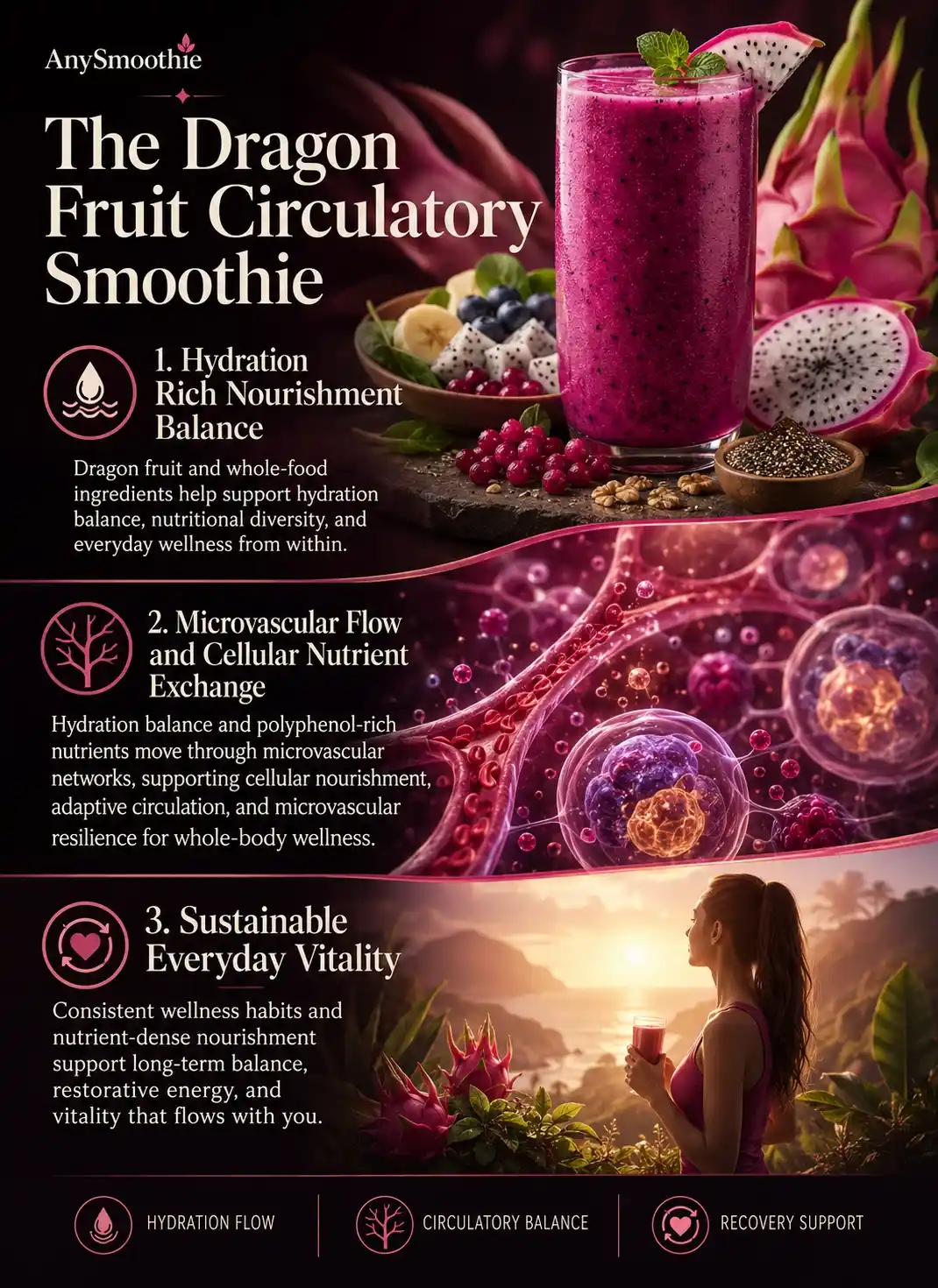
Health perks: vitamins, fiber, and hydration in one glass
Dragon fruit is known for its vitamin C, antioxidants, and fiber. That mix helps support steady energy, good digestion, and a general “light and fresh” feeling after you drink it.
Since dragon fruit is mostly water, it can help you stay hydrated, especially on hot days or after a workout. If you want to read more about dragon fruit health benefits, you can check the overview on WebMD.
Blending it into a smoothie also lets you combine it with yogurt, milk, or plant milk, so you get protein and some healthy fats along with your fruit.
Taste and texture: mild, creamy, and kid friendly
Dragon fruit has a gentle, slightly sweet taste, almost like a cross between pear and kiwi. It is not sour, and it is not very strong, which makes it great for picky eaters.
When you blend dragon fruit with a ripe banana and a scoop of yogurt, the texture turns creamy and milkshake-like without a lot of added sugar. Kids tend to love the bright pink color, especially the hot-pink varieties. If you are curious about the differences between white, pink, and red types, this guide to types of dragon fruit is helpful.
That bold color also makes this smoothie fun to serve at brunch, kids’ parties, or as a quick after-school snack.
3 Easy Dragon Fruit Smoothie Recipe (Step-by-Step)
Classic Creamy Dragon Fruit Smoothie
Ingredients
- 1 cup frozen dragon fruit pieces
- 1 small ripe banana
- ½ cup Greek yogurt
- ½ cup unsweetened almond milk
- 1 teaspoon honey, optional
- A few ice cubes
Pour the almond milk into the blender first, followed by the Greek yogurt. Add the banana, frozen dragon fruit, honey if using, and ice. Blend on high until thick and creamy. Add a small splash of almond milk if you prefer a thinner consistency.
Frozen dragon fruit creates a thick, cold base, while banana adds natural sweetness and body. Greek yogurt contributes protein and makes the texture noticeably creamier without requiring a large amount of liquid.
Estimated Nutrition per Serving
- Calories: ~275 kcal
- Protein: ~16 g
- Carbohydrates: ~48 g
- Fat: ~5 g
- Fiber: ~7 g
- Sugars: ~30 g
If I wanted this thick enough to eat with a spoon, I’d use a frozen banana as well as frozen dragon fruit and skip the ice initially. It gives you a much creamier texture without watering down the fruit flavor.
High-Protein Dragon Fruit Smoothie
Ingredients
- 1 cup frozen dragon fruit pieces
- ½ small ripe banana
- ¾ cup Greek yogurt
- 1 scoop vanilla protein powder
- ½ cup unsweetened almond milk
- A few ice cubes
Pour the almond milk into the blender first, then add the Greek yogurt and protein powder. Add the banana, frozen dragon fruit, and ice. Blend until completely smooth, adding a little more almond milk only if needed.
Increasing the Greek yogurt and adding protein powder makes this version considerably higher in protein while retaining the creamy dragon fruit base. Using only half a banana keeps the fruit sweetness present without making the smoothie excessively sweet.
Estimated Nutrition per Serving
- Calories: ~390 kcal
- Protein: ~45 g
- Carbohydrates: ~42 g
- Fat: ~6 g
- Fiber: ~6 g
- Sugars: ~24 g
Lower-Sugar Dragon Fruit Smoothie
Ingredients
- 1 cup frozen dragon fruit pieces
- ½ small banana
- ½ cup plain Greek yogurt
- ½ cup frozen zucchini
- ½ cup unsweetened almond milk
- ¼ teaspoon vanilla extract
- A few ice cubes, optional
Pour the almond milk into the blender first, followed by the Greek yogurt. Add the frozen dragon fruit, banana, zucchini, vanilla, and ice if using. Blend until thick and completely smooth.
Using half a banana and skipping honey or maple syrup reduces the sugar compared with the classic version. Frozen zucchini adds volume and body with relatively little sugar, while Greek yogurt provides protein and helps maintain a creamy texture.
Estimated Nutrition per Serving
- Calories: ~225 kcal
- Protein: ~16 g
- Carbohydrates: ~38 g
- Fat: ~5 g
- Fiber: ~7 g
- Sugars: ~22 g
Helpful Tips, Toppings, and FAQ for Dragon Fruit Smoothies
Once you know the basics, small touches can turn a simple smoothie into something special.
Fun toppings and mix-ins to level up your smoothie
Toppings add texture and help your drink keep you full longer.
- Chia seeds add a slight crunch and extra fiber.
- Shredded coconut gives a tropical flavor and some chew.
- Fresh berries add a pop of tartness and more color.
- Granola makes it feel more like a meal and adds crunch.
- A spoonful of peanut butter or almond butter adds richness and healthy fats.
- A squeeze of lime juice brightens the flavor and cuts sweetness.
If you want a smoothie bowl, use less liquid at the start so the blend is thicker. Pour it into a bowl, pile on toppings, and eat it with a spoon.
Quick answers: common questions about dragon fruit smoothies
Can I use white dragon fruit instead of pink?
Yes. The flavor is similar, just a bit milder, but the color will be pale instead of hot pink.
Can I make this smoothie ahead of time?
You can blend it, store it in the fridge for up to 24 hours, and shake or stir before drinking, but it tastes best fresh.
How long does it last in the fridge?
For the best taste and texture, drink your smoothie within a day. After that, it can separate and lose its bright color.
Can I use fresh dragon fruit instead of frozen?
Yes. Use fresh dragon fruit and add extra ice to chill and thicken the drink, or freeze the dragon fruit in chunks first for a thicker result. Either way, this dragon fruit smoothie recipe still works.
Conclusion
A homemade dragon fruit smoothie recipe is an easy way to bring a bit of tropical color into your day. You get a thick, creamy drink that feels like a treat, but it is built from simple, nourishing ingredients.
With frozen dragon fruit, banana, and yogurt, you can blend breakfast, a post-workout snack, or a light dessert in just a few minutes. From dairy-free and high-protein versions to low-sugar tweaks, you can adjust the base recipe to match your routine and tastes.
Save this recipe, share it with a friend who loves smoothies, and try making a bright pink glass this week. Once you taste how refreshing it is, that bag of frozen dragon fruit will become a regular in your freezer.
🛡️ Safety Notes & Contraindications
Pseudohematuria and Pseudohemochezia (The Betalain Trap): CRITICAL: High-flux ingestion of concentrated red/pink dragon fruit betaciandine can saturate the peripheral metabolic pathways in certain genotypes with reduced gastric acidity or specific genetic profiles. This leads to incomplete pigment breakdown, resulting in a distinct pink or reddish discoloration of urine (pseudoematuria) and stool (pseudoemochezia) 12-24 hours post-consumption. This is a completely benign physiological event but must be recognized to avoid clinical misinterpretation.
Fructose Saturation and Osmotic Transit Shifts (FODMAP): Dragon fruit contains structural pools of free fructose and oligosaccharides. In phenotypes diagnosed with Fructose Malabsorption, severe IBS, or active Small Intestinal Bacterial Overgrowth (SIBO), the enterocitary GLUT5 transport capacity can be rapidly overwhelmed. The unabsorbed fructose acts as an osmotic pump, drawing extracellular fluid into the intestinal lumen, presenting as sudden meteorism, abdominal distension, or loose transit.
Renal Potassium Filtering Saturation: Pitaya and banana substrates deliver a substantial, rapid internal surge of dietary Potassium ($K^+$). For individuals presenting with advanced Chronic Kidney Disease (CKD, Stages 3-5) or under medical prescription of potassium-sparing diuretics (e.g., Spironolactone), this potassium density requires strict portion boundaries to prevent cardiotoxic hyperkalemia metrics.
Latex-Fruit Syndrome Cross-Reactivity: Due to strict evolutionary structural homology between specific plant defense proteins (chitinases), individuals presenting with a diagnosed Type 1 IgE-mediated hypersensitivity to natural rubber latex can display significant cross-reactivity to dragon fruit and kiwi proteins. Monitor for localized oral pruritus, urticaria, or upper airway tightness.
Oxalate Accrual in Calcium-Depleted Layouts: If you shift towards a completely dairy-free layout (replacing Greek yogurt with unfortified water or almond bases) while adding cocoa or spinach boosts to the dragon fruit matrix, free oxalates will be absorbed without intestinal complexation. This increases the structural workload of glomerular filtration, exacerbating calcium-oxalate nephrolithiasis risks.
FAQ
How do the “Betalain” pigments in hot-pink dragon fruit protect muscle membranes from training strain?
Eccentric physical exercise creates temporary localized mechanical stress, generating reactive oxygen species (ROS) that can cause lipid peroxidation of the sarcolemma. Biochemically, the rich nitrogenous betalain pigments in pink dragon fruit function as highly stable electron donors. Supporting this physiological system through raw or flash-frozen pitaya infusions optimizes the natural pathways of “cellular scavenging,” intercepting free radicals and reinforcing cell membrane integrity before oxidative stress can alter baseline recovery timelines.
Why does the high water-and-potassium matrix of dragon fruit drive deep cellular hydration?
Dragon fruit exhibits a high fluid density consisting of bound structured water paired with organic potassium fractions ($K^+$), the primary intracellular cation. Biochemically, as these electrolytes interface with intestinal brush border transporters, they create a steep osmotic gradient that co-transports water across cell membranes via aquaporin channels. Supporting this physiological system with pitaya-based liquid matrices drives rapid “cytosolic volumization,” replenishing intracellular fluid stores to support normal metabolic clearance.
What is the mechanical advantage of utilizing a “Cryopreserved Fruit Matrix” against thermal blending kinetics?
High-velocity blender blades deliver significant kinetic friction into a liquid emulsion, generating heat that can accelerate the oxidative breakdown of fragile vitamins. Biochemically, using flash-frozen dragon fruit segments acts as a native thermodynamic buffer or heat sink during homogenization. Supporting this physiological system neutralizes the frictional thermal flux, maintaining subterranean temperatures inside the blender jar to shield heat-sensitive ascorbic acid and delicate pigments from structural degradation.
How do the structural mucilage fibers in dragon fruit attenuate postprandial glucose flux?
Dragon fruit contains specialized soluble fibers and mucilage gums that expand rapidly upon contact with fluids. Biochemically, when homogenized, this matrix uncoils to establish a dense, viscous hydrogel within the gastric cavity. Supporting this physiological system through precise fruit pairing slows gastric emptying rates and increases the physical diffusion distance required for simple sugars to reach intestinal transport pathways, optimizing the natural pathways of “glycemic pacing” to prevent sharp insulin spikes.
Why does pairing potassium-dense pitaya with a proteinaceous anchor like Greek yogurt enhance mitochondrial efficiency?
Active cellular transport mechanisms and peptide bond polymerization during muscle tissue repair are energy-intensive processes that require substantial ATP. Biochemically, if a cell is flooded with rapid fruit fructose without an accompanying amino acid and trace mineral anchor, the intracellular environment faces an energetic bottleneck. Supporting this physiological system with the complete amino acid pool and calcium ions found in Greek yogurt or kefir facilitates the biochemical mechanics of “bioenergetic priming,” providing mitochondria with the necessary raw materials to maintain steady cellular respiration.

Medical Disclaimer: AnySmoothie content is for educational purposes only and is not a substitute for professional medical advice. Consult a healthcare provider for personalized guidance. See our full Disclaimer & Terms of Use. AI Transparency: AnySmoothie may use AI to support content development. All content undergoes human editorial review for accuracy, clarity, and editorial quality. See our full AI Transparency.