
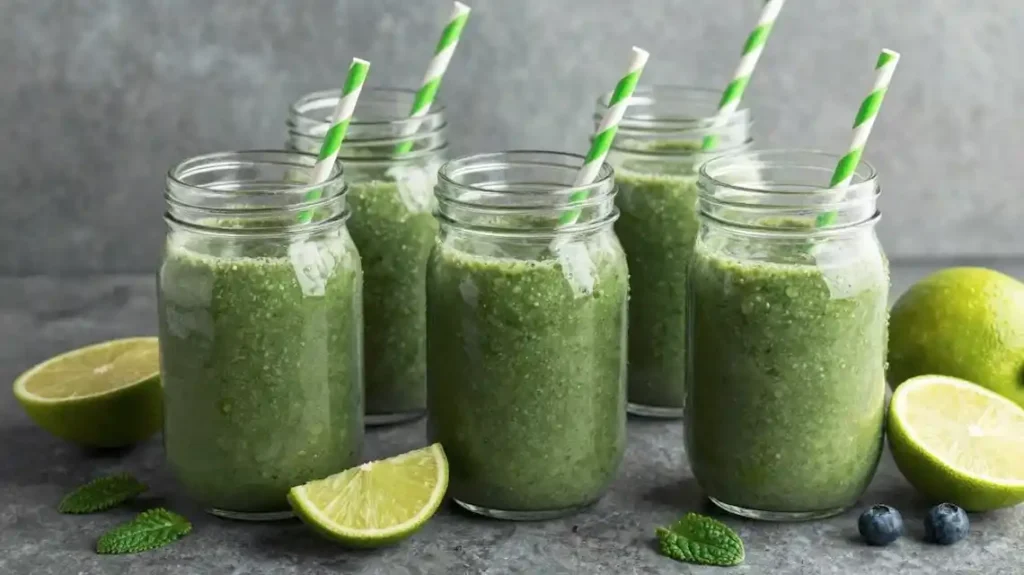
Waking up with stiff fingers, a puffy face, or tight knees can make even simple things feel hard. On some days, it almost feels like your body is wearing a heavy coat you never asked for.
A big part of that heaviness often comes from inflammation. In simple terms, inflammation is your body “turning on the fire alarm” to protect you. Some foods pour more fuel on that fire, while others help cool it down.
The good news is that simple, tasty smoothies can load your day with calming foods like leafy greens, berries, turmeric, ginger, and healthy fats. In this guide, you will get easy anti inflammation smoothie recipes that fit busy schedules, taste good, and use ingredients you can find at almost any store.
What Makes a Smoothie Anti Inflammatory?
The idea is simple. Certain foods help your body relax instead of react. When you blend those foods into a smoothie, you get a fast, easy meal that supports your joints, gut, skin, and energy.
You do not need to understand every chemical name for this to work. Just think of anti inflammatory foods as “body helpers” and highly processed, sugary foods as “body stressors.” Smoothies let you load up on the helpers in one glass.
If you want to see another example, check out this anti-inflammatory smoothie with beets, berries, and ginger that shows how simple ingredients can still be powerful.
Inflammation Explained in Plain Language
Imagine you sprain your ankle. It gets red, warm, and puffy. That is inflammation. Your body sends extra blood and helpers to fix the problem.
Short-term inflammation is normal and useful. The trouble starts when that “puffy ankle feeling” moves inside your body and never fully turns off. This is often called chronic inflammation.
You might not see it, but you can feel it as constant joint pain, brain fog, or feeling tired all the time. Over years, that can lead to more serious health issues. Food will not replace medical care, but it can either push that flame higher or help calm it down.
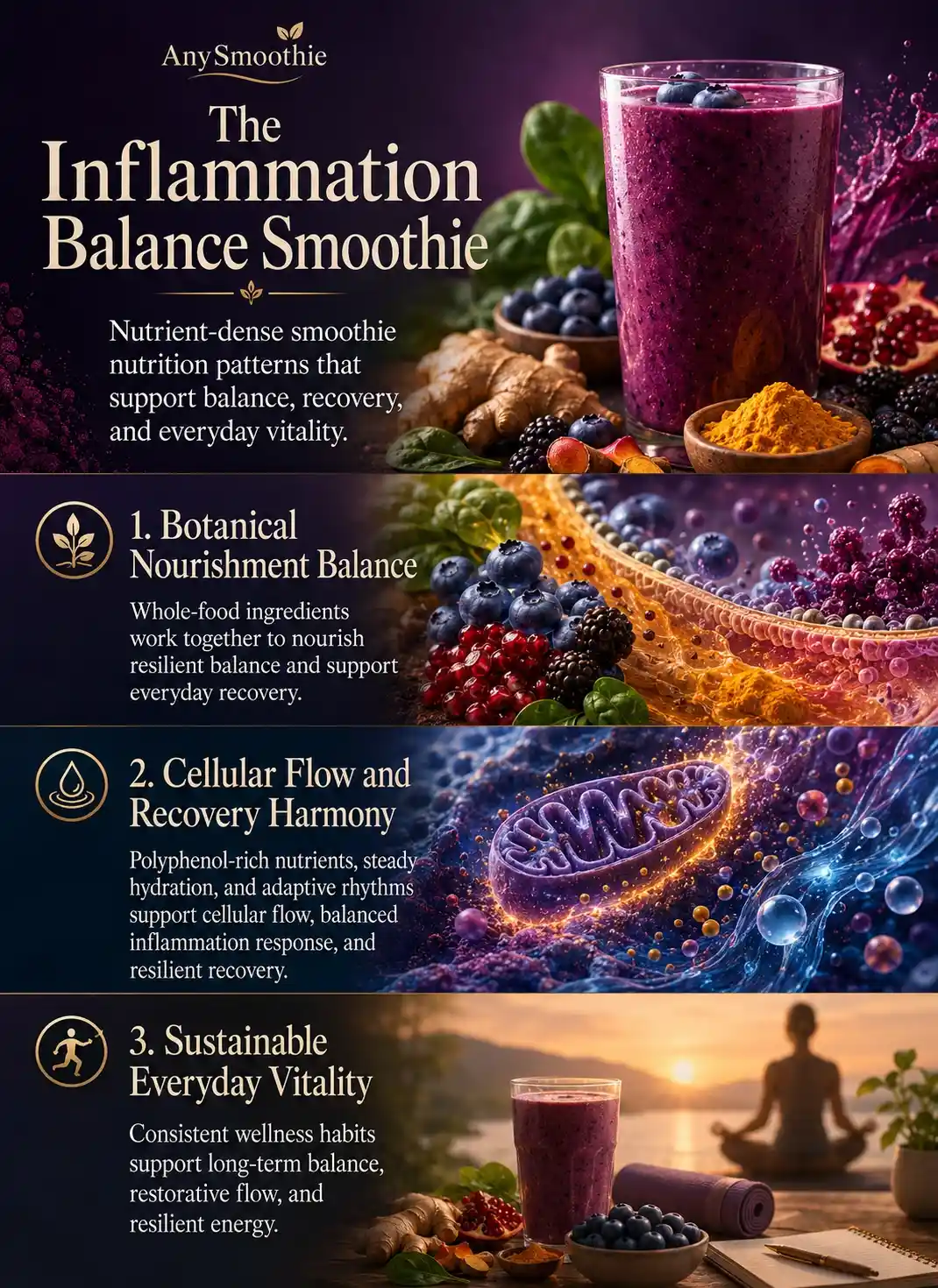
Key Anti Inflammatory Ingredients to Blend
Here are the main food groups that make a smoothie more calming than stressing:
- Leafy greens (spinach, kale): Packed with vitamins and minerals that support your immune system and help reduce inflammation.
- Colorful fruits (berries, cherries, pineapple): Rich in antioxidants that help fight cell damage from daily stress.
- Healthy fats (avocado, nuts, seeds): Provide omega-3 and other fats that help cushion joints and support brain health.
- Spices and roots (turmeric, ginger, cinnamon): Natural plant compounds in these spices help your body cool down inflammation signals.
- Liquids (water, green tea, unsweetened plant milk): Help with hydration, and some, like green tea, bring extra antioxidants.
You do not need every group in each smoothie. Pick a leafy green, a fruit, some healthy fat, and a spice or two. That is often enough.
Easy Anti Inflammation Smoothie Recipes for Busy Days
These anti inflammation smoothie recipes are built for real life. They use frozen fruit, simple greens, and pantry spices. You can swap what you have and still get a drink that helps support calmer joints and better digestion.
Tips to Get the Most From Your Anti Inflammatory Smoothies
Small daily habits matter more than one “perfect” smoothie. These tips help you fit them into your normal week.
If you like planning ahead, you can also get ideas from these best anti-inflammatory smoothies and blending tips.
How Often Should You Drink Anti Inflammatory Smoothies?
You do not need to live on smoothies. For most people, one smoothie a day or a few times a week is a great start.
Use them in place of a sugary breakfast, a heavy dessert, or a processed snack. Many people like them in the morning, after a workout, or as an afternoon pick-me-up instead of chips or candy.
Remember, smoothies are one tool, not a magic cure. The rest of your plate still matters. Try to pair them with other whole foods like veggies, whole grains, and lean protein during the day.
Prep, Storage, and Simple Swaps for Any Diet
To save time, make freezer packs. Fill small bags with fruit and greens, press out the air, and freeze. When you are ready, pour one bag into the blender, add liquid, add spices, and blend.
Most recipes here can be dairy-free or nut-free. Use water or unsweetened plant milk instead of juice to keep sugar lower. Swap nut butter for seeds like sunflower, hemp, or chia if you avoid nuts. If you want less sugar, try half a banana instead of a full one and add extra cinnamon for flavor.
The key is to keep it easy. If your smoothie fits your taste and needs, you are more likely to keep drinking it.
Conclusion
Smooth, simple drinks can fit into almost any routine and still support lower inflammation, steadier energy, and less stiffness. A blender, a few basic ingredients, and a little curiosity are usually all you need for helpful daily habits.
Pick one recipe from this post and try it this week. Then play with the build-your-own formula and create a blend that feels like “you in a glass.” Pay attention to how your body feels after a few days, and let that guide your next round of anti inflammatory smoothie recipes.
🛡️ Safety Notes & Dietary Interactions
- Polyphenol Diversity and Inflammatory Balance Support: Berries, leafy greens, ginger, turmeric, and colorful fruits contain polyphenols and antioxidant compounds commonly discussed in relation to oxidative balance and inflammatory signaling pathways. Rotating these ingredients through the week may help support steadier recovery rhythms and broader nutrient diversity without relying on highly restrictive eating patterns.
- Healthy Fat Pairing and Fat-Soluble Nutrient Absorption: Ingredients like avocado, chia, flax, coconut milk, and nut butters help create a smoother transport environment for fat-soluble compounds found in turmeric and leafy greens. Pairing spices and polyphenol-rich foods with healthy fats may improve satiety and support more balanced nutrient absorption dynamics during digestion.
- Blood Sugar Stability and Energy Curve Management: Anti inflammation smoothie recipes generally work best when they balance fruit with fiber, fats, and protein rather than relying on sweetness alone. Chia, flax, avocado, greens, and unsweetened liquids help soften rapid glucose spikes and may support steadier energy pacing throughout the day.
- Digestive Comfort and Gradual Fiber Adaptation: Greens, seeds, berries, and higher-fiber ingredients can increase digestive workload when added too aggressively all at once. Gradually increasing fiber intake while maintaining hydration may help support smoother digestion and improve consistency, especially for people transitioning away from highly processed meals or low-fiber eating patterns.
FAQ
What makes a smoothie “anti inflammatory” in practical terms?
An anti inflammatory smoothie usually combines foods associated with calmer oxidative and inflammatory signaling patterns, including leafy greens, berries, healthy fats, ginger, turmeric, and fiber-rich seeds. The goal is not creating a “miracle cure,” but building a steadier nutritional environment that supports energy, digestion, joints, and recovery through whole-food consistency.
Why are turmeric and black pepper used together so often?
Turmeric contains curcumin, a compound frequently discussed in inflammation-support nutrition. Black pepper contains piperine, which may help improve curcumin availability during digestion. Pairing turmeric with fats like coconut milk, avocado, or nut butter can also help support smoother absorption of fat-soluble plant compounds.
How do berries help support joints, skin, and recovery?
Berries provide anthocyanins and other antioxidant compounds associated with oxidative balance and cellular protection pathways. Their relatively lower sugar content combined with fiber also helps create steadier digestion compared to highly processed sweets. Many anti inflammation smoothie routines use berries because they improve both flavor and nutrient density at the same time.
Why are healthy fats important in anti inflammation smoothie recipes?
Healthy fats help slow digestion, improve fullness, and support absorption of fat-soluble nutrients and phytonutrients. Ingredients like avocado, chia, flax, hemp, coconut milk, and nut butters also contribute omega-3s and minerals tied to broader recovery and nervous-system support. This creates a more stable and satisfying smoothie structure overall.
How often should someone drink anti inflammatory smoothies?
The article emphasizes that smoothies work best as part of a broader whole-food pattern rather than as a complete replacement for meals. For many people, one smoothie daily or a few times per week fits well into a sustainable routine. Consistency, hydration, sleep, and balanced meals across the day usually matter more than chasing a “perfect” smoothie formula.

Medical Disclaimer: AnySmoothie content is for educational purposes only and is not a substitute for professional medical advice. Consult a healthcare provider for personalized guidance. See our full Disclaimer & Terms of Use. AI Transparency: AnySmoothie may use AI to support content development. All content undergoes human editorial review for accuracy, clarity, and editorial quality. See our full AI Transparency.