
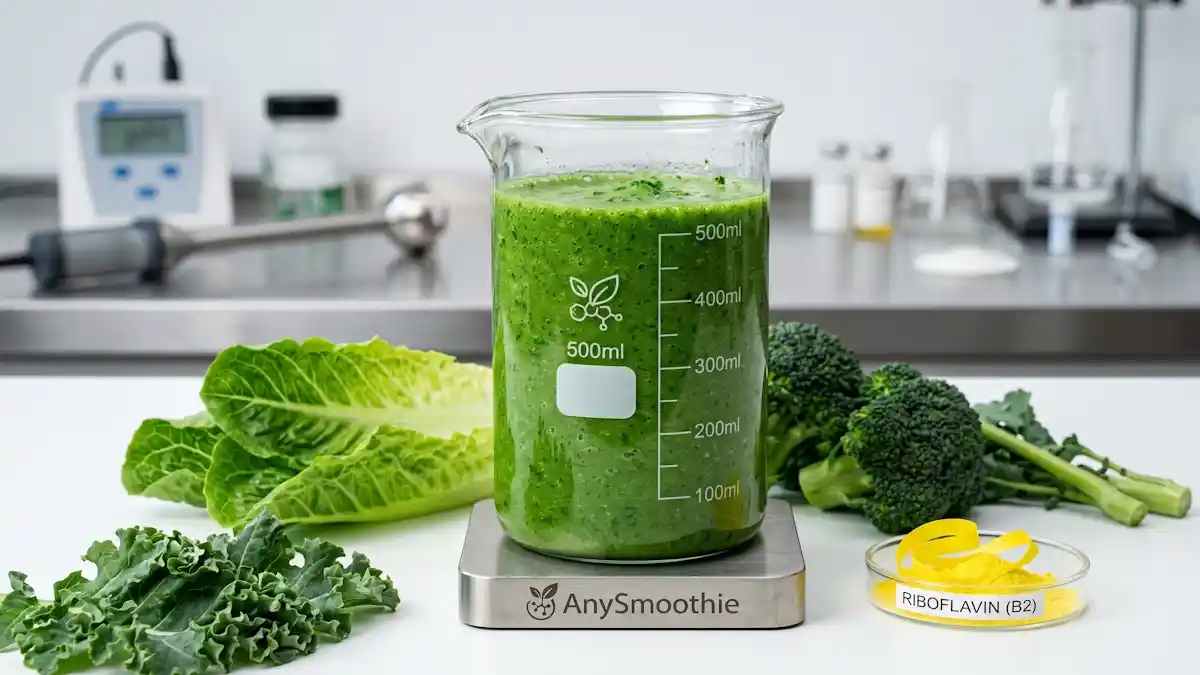
Your liver starts with a sorting step before it does any cleanup. That first step, hepatic Phase I, uses oxidation to change compounds into forms the body can handle next. People often look to a green smoothie for hepatic Phase I support because it can bring together cruciferous greens, chlorophyll-rich plants, and riboflavin in one simple drink.
That matters because Phase I can create reactive intermediates that need follow-through. This is about supporting normal liver pathways, not making medical claims. The trick is to choose ingredients that fit the chemistry instead of just packing in more greens.
How hepatic Phase I works, and why your smoothie ingredients matter
Phase I is the liver’s first pass at many compounds. It uses CYP450 enzymes to change their structure through oxidation, reduction, or hydrolysis. A clear overview of liver detoxification pathways shows why this stage matters so much, because Phase I often sets up the next step rather than finishing the job.
What CYP450 enzymes do in the first stage of liver processing
CYP450 enzymes are a family of proteins that help convert compounds into a form the body can move along. They do not remove everything on their own. Instead, they add or expose chemical groups so the next phase can finish processing.
That is where ingredient choice starts to matter. A smoothie with random fruit and a handful of spinach may taste fine, but a smarter mix can support the chemistry. The goal is to give the system useful plant compounds without creating a heavy sugar load or a bland fiber bomb.
Why Phase I and Phase II need to stay in balance
Phase I can move fast. Phase II still has to catch up. If the first stage runs ahead without enough support, the body has more reactive byproducts to manage.
That is why a good smoothie should support both activation and follow-through. It should help the liver process compounds without pushing the system harder than it can handle. Balance is the real target here, not force.
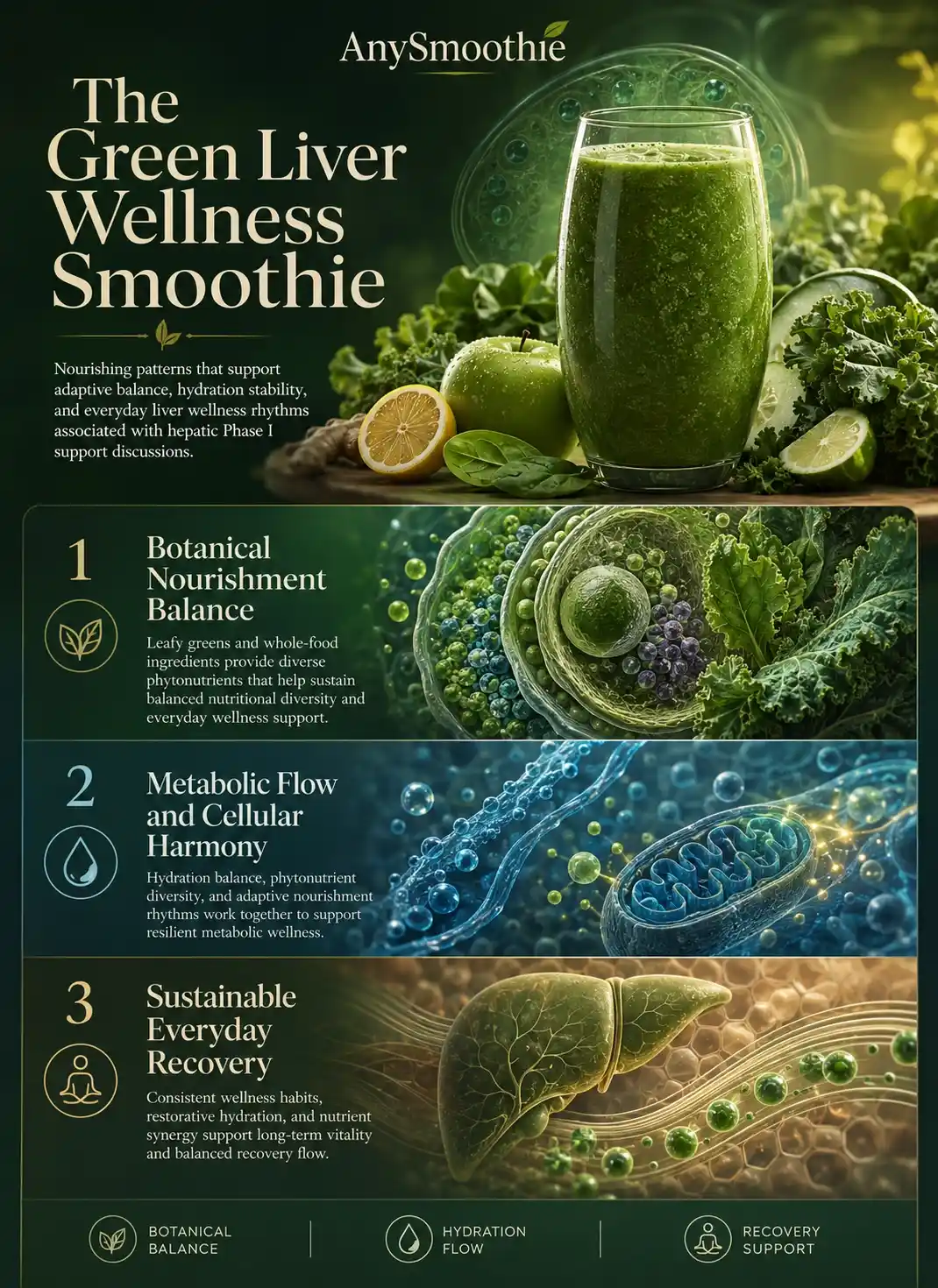
The best green smoothie ingredients for hepatic Phase I support
This is where the biochemistry gets useful. The best ingredients do three things: they modulate CYP activity, they help intercept reactive species, and they supply cofactors that keep electron flow moving. The P450 electron transfer system depends on that flow, which is why riboflavin matters so much.
| Green Phase I Modulator | Physiological Mechanism | Phase I Specific Role | Best Smoothie Pairing | Synergistic Nutrient |
|---|---|---|---|---|
| Indole-3-carbinol from broccoli, kale | Modulates CYP1A expression and activity | Helps balance bioactivation in early oxidation steps | Lemon, cucumber, green apple | Vitamin C |
| Chlorophyll from spinach, romaine, chlorella | Binds or intercepts reactive species | Helps buffer the redox load created during Phase I | Avocado, mint, kiwi | Magnesium |
| Riboflavin, vitamin B2 from green leaves | FAD/FMN electron-transfer co-factor, an absolute mechanical requirement for CYP450 reductase | Supplies electrons that keep CYP450 cycling | Banana, oat milk, almond butter | Niacin |
The table shows the pattern clearly. Cruciferous compounds nudge enzyme activity, chlorophyll-rich greens help with molecular interception, and riboflavin keeps the electron chain moving. That is the core structure of a green smoothie for hepatic Phase I support.
Cruciferous greens and indole-3-carbinol for CYP1A support
Broccoli, kale, and similar greens bring indole-3-carbinol and related compounds. These support CYP1A-related pathways, which matters because Phase I chemistry is about modulation, not brute force.
Used well, cruciferous greens help balance bioactivation. They give the liver a cleaner signal without loading the smoothie with strange add-ons. A small handful is enough to shift the profile in a useful direction.
Chlorophyll-rich greens and molecular interception
Spinach, romaine, and chlorella bring chlorophyll, which fits this formula in a different way. Chlorophyll-rich foods can help with biochemical interception, meaning they may bind or buffer reactive species created during oxidation.
That matters because Phase I activity creates a redox load. The smoother the transition, the less strain on the rest of the system. In practical terms, these greens give you depth without making the drink taste harsh.
Riboflavin as the electron donor that keeps the system moving
This is the point people miss most often. Riboflavin is not optional for the CYP450 system. Through FAD and FMN, it helps transfer electrons in the microsomal chain.
Without that support, Phase I chemistry stalls. With it, the system has the mechanical piece it needs to keep moving. Riboflavin-rich greens, plus a few B2-supporting foods, make the smoothie more than a pile of plants.
Riboflavin matters because CYP450 chemistry depends on electron flow, not just plant compounds.
How to build a smoothie that supports the redox transition
A good formula keeps the drink balanced. It should taste good enough to repeat, and it should support metabolic efficiency without overwhelming the palate. This is also where mitochondrial priming matters, because a stable redox load is easier for the cell to handle.
A simple formula for greens, fruit, fat, and liquid
Start with one cruciferous green, like kale or a few broccoli florets. Add one chlorophyll-rich green, such as spinach or romaine. Then use a modest amount of fruit for taste, a small fat source for absorption, and a clean liquid base.
That mix does three jobs. Greens bring the signal, fruit keeps the flavor workable, and fat helps with uptake of fat-soluble compounds. Keep the fruit modest, because too much sweetness can push the drink away from its purpose.
3 quick smoothie variations for different taste preferences
The best version is the one you can drink often without forcing it. Consistency matters more than chasing a perfect formula every time.
Conclusion
A strong green smoothie for hepatic Phase I support works best when it respects the chemistry. Cruciferous compounds help modulate early enzyme activity, chlorophyll-rich greens help buffer reactive species, and riboflavin keeps electron transfer moving.
That mix gives you a practical way to support normal liver pathways without hype. Keep the formula balanced, use quality ingredients, and repeat it often enough to matter.
🛡️ Safety Notes & Contraindications
CYP450 Induction and Medication Clearance: CRITICAL: Because indole-3-carbinolo and cruciferous enzymes actively up-regulate and accelerate the clearance rate of the CYP1A subclass, this protocol can drastically alter the pharmacokinetics of prescription medications metabolized by the same enzymatic gates (e.g., certain antipsychotics, respiratory therapeutics, and anti-estrogens). Consult your physician to prevent premature drug clearance and loss of clinical efficacy.
The Phase I/Phase II Decoupling Hazard: Accelerating Phase I oxidation without a matching, dense logistical pool of Phase II conjugation substrates (such as amino acids, glutathione precursors, or sulfur donors) can lead to the dangerous accumulation of highly reactive electrophilic intermediates. Always ensure the green matrix is coupled with high-quality amino acid anchors (whey, kefir, or collagen) to lock the clearance loop.
Goitrogenic Myrosinase Retention in Raw Crucifers: Raw kale and raw broccoli contain active myrosinase enzymes that release goitrogenic compounds, competing with iodine uptake at the thyroid level. Individuals managing hypothyroidism or Hashimoto’s autoimmune thyroiditis must utilize blanched or frozen-steamed cruciferous inputs, as thermal processing denatures myrosinase while preserving the structural indole footprint.
Oxalate Influx and Renal Transport Saturation: Heavy daily loading of raw spinach and chlorella delivers an intense internal concentration of soluble oxalates. If your renal clearance metrics are compromised or you possess a clinical history of calcium-oxalate kidney stones, replace spinach with low-oxalate greens like romaine or cucumber, or space this protocol carefully from calcium-dense components.
Chlorella Cell-Wall Fermentation Distress: Utilizing non-broken cell wall chlorella powders can cause severe localized gastrointestinal distension, bloating, and osmotic cramping due to the inability of human upper GI enzymes to digest the tough cellulose matrix. Verify and select exclusively “broken cell-wall” microalgae certifications.
FAQ
How do “Indole-3-Carbinol (I3C)” substrates modulate CYP450 enzyme expression?
Cruciferous vegetables like kale and broccoli contain glucobrassicin, which is enzymatically converted into indole-3-carbinol during mechanical shear. Biochemically, I3C acts as a natural ligand that binds to the Aryl Hydrocarbon Receptor (AhR) in hepatocytes, up-regulating the transcription and balanced expression of specific Phase I enzymes like CYP1A1 and CYP1A2. Supporting this physiological system through cruciferous-rich smoothies optimizes the natural pathways of “enzymatic modulation,” ensuring the liver’s early oxidation machinery is responsive rather than sluggish.
Why is “Riboflavin (Vitamin B2)” a strict biochemical requirement for Phase I cycling?
The Cytochrome P450 enzyme complex cannot oxidize a single compound without a continuous influx of electrons. Biochemically, these electrons are delivered by an obligate partner enzyme called NADPH-Cytochrome P450 Reductase, which relies entirely on two riboflavin-derived cofactors: Flavin Adenine Dinucleotide (FAD) and Flavin Mononucleotide (FMN). Supporting this physiological system with riboflavin-dense leafy greens and seeds satisfies this mechanical requirement, preventing the electron transfer chain from stalling mid-cycle.
What is the role of “Chlorophyll” in molecular interception during liver biotransformation?
During Phase I oxidation, steady-state substrates are often converted into highly reactive, electrophilic intermediates before they reach Phase II clearance. Biochemically, chlorophyll molecules possess a planar porphyrin ring structure that allows them to physically bind, intercept, and form stable complexes with these transient reactive species within the intestinal and portal environments. Supporting this physiological system through chlorophyll-dense green smoothies facilitates the biochemical mechanics of “substrate interception,” buffering the overall redox load before it strains downstream tissue matrixes.
Why is the balance between Phase I and Phase II kinetics critical for avoiding cellular strain?
Phase I oxidation modifies compounds by creating highly volatile free radicals and reactive intermediates. If Phase I enzyme activity runs too quickly or if Phase II conjugation pathways lack the necessary sulfur and amino acid substrates to clear these altered molecules, the reactive compounds can accumulate and cause lipid peroxidation within hepatic membranes. Supporting this physiological system with a balanced, whole-food smoothie ensures that early activation inputs are matched by supportive cofactors, keeping the overall biotransformation timeline smooth and synchronized.
How does “Mitochondrial Priming” protect hepatocytes during Phase I bioactivation?
The metabolic workload of hepatic biotransformation and the constant regeneration of reduced NADPH consume significant amounts of cellular ATP. Biochemically, if a hepatocyte experiences a severe energy deficit or an uncontrolled glucose spike, its internal defense mechanisms weaken, making it vulnerable to the very reactive oxygen species (ROS) generated during normal Phase I oxidation. Supporting this physiological system with low-glycemic carbs and trace minerals facilitates the biochemical mechanics of “bioenergetic priming,” ensuring the liver has the mitochondrial energy required to maintain steady cellular repair and normal metabolic flux.

Medical Disclaimer: AnySmoothie content is for educational purposes only and is not a substitute for professional medical advice. Consult a healthcare provider for personalized guidance. See our full Disclaimer & Terms of Use. AI Transparency: AnySmoothie may use AI to support content development. All content undergoes human editorial review for accuracy, clarity, and editorial quality. See our full AI Transparency.