
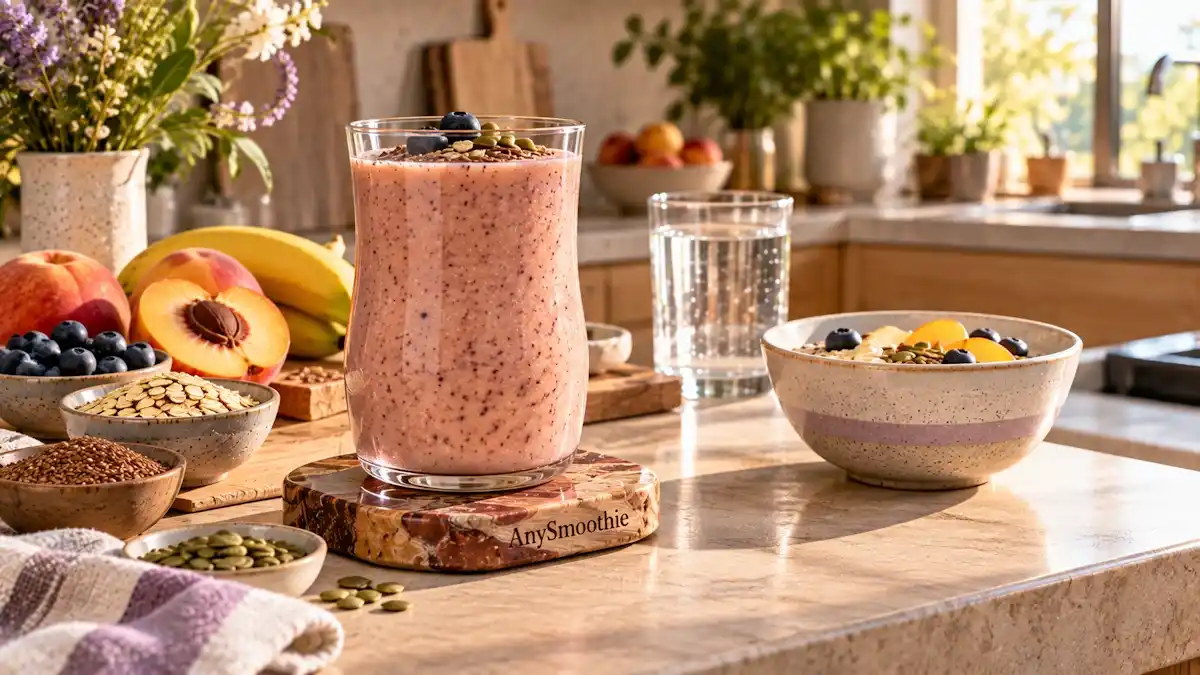
When your appetite, energy, or food preferences shift during perimenopause, putting together a satisfying meal can feel harder than usual. Smoothies for perimenopause can make nourishing foods easier to combine, but they belong within a varied eating routine, rather than a plan to treat symptoms.
A useful smoothie brings together protein, fiber, and some fat in a portion you enjoy. Start with a flexible formula, then adjust the ingredients and texture to suit your hunger and preferences.
How Smoothies Fit Into a Balanced Perimenopause Nutrition Routine
Perimenopause is a life stage, not a condition a smoothie can fix. Your body still needs nutrients for normal digestion, energy metabolism, tissue maintenance, and bone maintenance.
Smoothies can help you include those nutrients when cooking feels unappealing. However, their nutritional value depends on the ingredients and what else you eat throughout the day.
Build a smoothie with protein, fiber, and healthy fats
Begin with plain Greek yogurt, milk, or fortified soy milk. Add fruit or vegetables, then a fiber-rich ingredient such as oats, chia seeds, or ground flaxseed. Finish with a small portion of nuts, seeds, or nut butter.
Protein supplies amino acids that your body uses to maintain tissues and make enzymes. Meanwhile, fiber holds water and adds bulk during digestion, supporting normal bowel function. Fats supply energy and help your body absorb fat-soluble vitamins.
Together, protein and fiber can make a drink more substantial. Start with modest portions, then adjust according to how satisfied you feel.
Choose ingredients for nutrients, not hormone claims
Milk, yogurt, and fortified soy milk can supply calcium. The NIH’s calcium fact sheet explains its role in bone structure and maintenance. Check labels for vitamin D, because fortification varies, especially among yogurts.
Soy contributes plant protein, while berries, oats, and seeds provide fiber. Leafy greens add variety, although a handful won’t replace vegetables elsewhere in your meals.
No single smoothie ingredient is proven to balance hormones or treat perimenopause symptoms. A clinician or registered dietitian can help you identify personal nutrition needs.
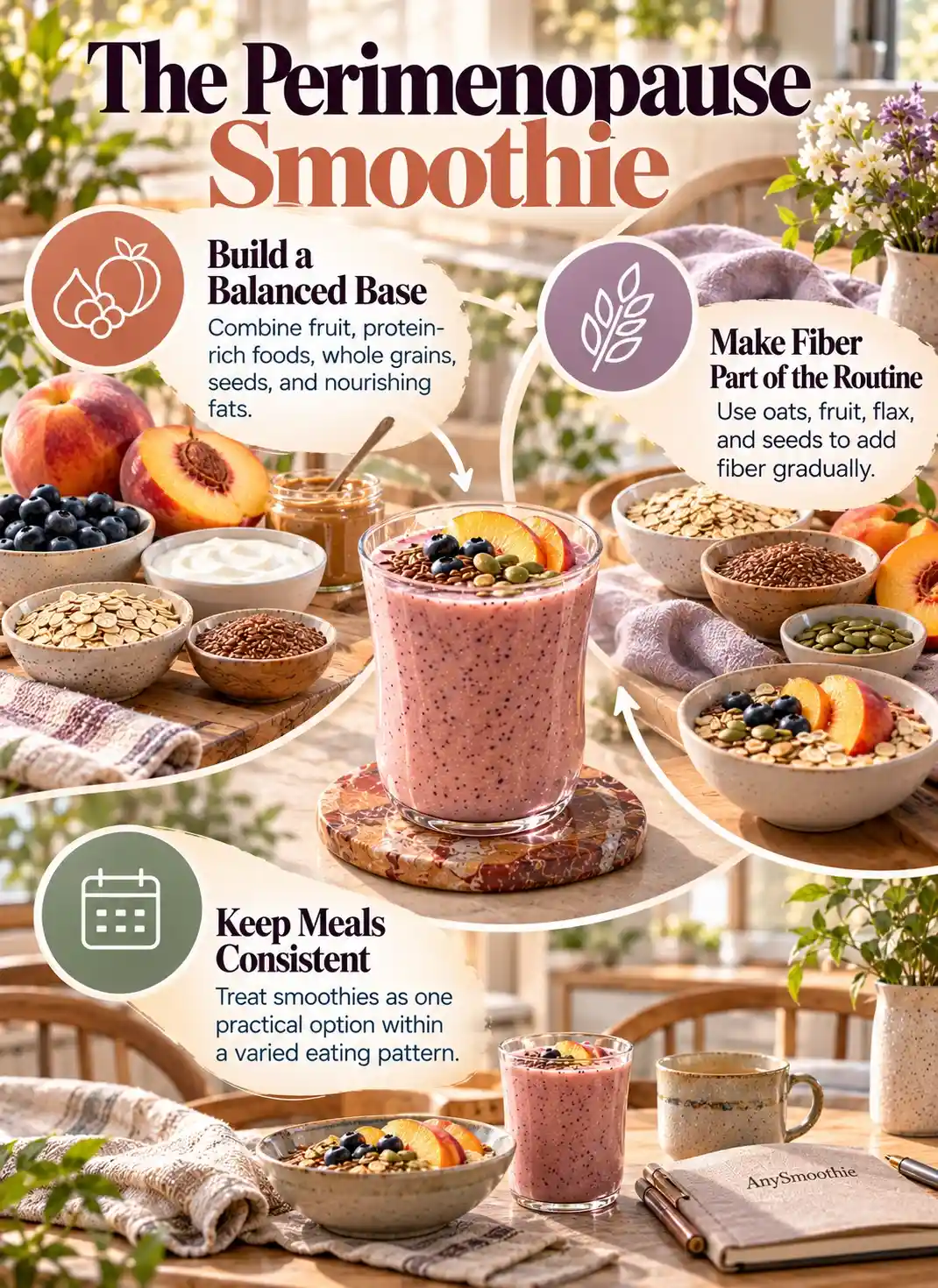
3 Smoothies for Perimenopause Nutrition Routines
Each recipe makes one modest serving. Use a blender and blend until smooth, adding liquid as needed.
Berry, yogurt, and oat smoothie
Ingredients
- 1/2 cup frozen berries
- 1/2 cup plain Greek yogurt
- 2 tablespoons rolled oats
- 1/2 cup milk or an unsweetened alternative
Steps
Combine the berries, Greek yogurt, rolled oats, and milk or unsweetened alternative. Blend until the oats break down. Add another tablespoon or two of liquid for a thinner texture.
This combination includes protein, fiber, and fruit; however, the protein content changes with your chosen yogurt and milk alternative.
Estimated Nutrition per Serving
- Calories: ~210
- Protein: ~20 g
- Carbohydrates: ~34 g
- Fat: ~5 g
- Fiber: ~4 g
- Sugars: ~17 g
Green soy and flax smoothie
Ingredients
- 3/4 cup unsweetened fortified soy milk
- 1/2 cup washed spinach
- 1/2 small banana
- 1 tablespoon ground flaxseed
Steps
Blend the spinach and soy milk first. Then add the banana and ground flaxseed and blend until smooth. Use frozen banana if you prefer a colder, thicker drink.
Soy supplies plant protein, while flax contributes fiber and unsaturated fats. Use frozen banana if you prefer a colder, thicker drink.
Estimated Nutrition per Serving
- Calories: ~145
- Protein: ~8 g
- Carbohydrates: ~19 g
- Fat: ~6 g
- Fiber: ~5 g
- Sugars: ~8 g
Cherry, cocoa, and nut butter smoothie
Ingredients
- 1/2 cup pitted frozen cherries
- 3/4 cup milk or fortified soy milk
- 1 teaspoon unsweetened cocoa
- 1 tablespoon peanut or almond butter
Steps
Combine the cherries, milk or fortified soy milk, unsweetened cocoa, and peanut or almond butter. Blend thoroughly so the cocoa disperses. Choose a nut butter you enjoy without adding extra sweetener first.
Milk or soy milk contributes protein, while the nut butter adds fats and a richer texture.
Estimated Nutrition per Serving
- Calories: ~190
- Protein: ~8 g
- Carbohydrates: ~20 g
- Fat: ~11 g
- Fiber: ~3 g
- Sugars: ~15 g
If bone-focused nutrition is also part of your planning, you can explore protein and calcium smoothies for bone health for recipes built around those nutrients.
Compare the recipes by ingredient mix and serving style.
| Smoothie | Key ingredients | Nutrient focus | How the ingredients support normal body processes | Practical serving tip |
|---|---|---|---|---|
| Berry and oat | Berries, yogurt, oats | Protein, fiber | Amino acids support tissue maintenance; fiber supports bowel function. | Adjust liquid for thickness. |
| Green soy | Soy milk, spinach, flax | Plant protein, unsaturated fats | Protein supplies amino acids; fats provide energy. | Blend greens first. |
| Cherry cocoa | Cherries, milk, nut butter | Protein, calcium | Calcium contributes to bone structure. | Pair with toast if hungry. |
Vitamin D supports calcium absorption, as the NIH’s vitamin D fact sheet explains. Check the milk carton rather than assuming every base supplies it.
Make smoothie habits easy, filling, and flexible
Use smoothies for perimenopause as an option that fits your day, rather than a default replacement for meals. A lighter smoothie may work as a snack. If you’re hungry for breakfast, pair it with whole-grain toast, an egg, or another solid food you enjoy.
Because drinking and chewing feel different, pay attention to satisfaction after you finish. You can increase the yogurt or oats, reduce the liquid, or keep the smoothie small alongside a meal. Portions can also change with your appetite and activity.
To reduce preparation time, freeze measured fruit and vegetables in individual containers. Add milk, yogurt, and dry ingredients when you’re ready to blend. Ground flax or oats can thicken a drink as it stands, so blend close to serving.
Choose unsweetened bases when you want more control over sweetness. Ripe banana or cherries may provide enough flavor without honey or syrup. Also, compare labels: almond and oat drinks often contain less protein than dairy or soy milk.
A fortified milk alternative can supply calcium without supplying much protein. Check both nutrients when choosing your base.
Across the day, keep eating a range of whole foods. The Menopause Charity’s healthy eating guidance emphasizes varied produce and whole grains.
Smoothies won’t suit every preference or digestive need. If a recipe leaves you uncomfortable or unsatisfied, change the ingredients or choose another meal.
Conclusion: Keep Your Smoothie Routine Flexible
A satisfying smoothie starts with a simple formula: protein, produce, fiber, and a little fat. Ingredient variety helps you include different nutrients without depending on one drink.
Choose recipes you enjoy, adjust portions to your hunger, and keep other foods in your routine. Smoothies for perimenopause are one convenient food option, not a cure or substitute for individualized care. On days when meals feel harder, they can make putting nourishing ingredients together a little easier.
🛡️ Safety Notes & Dietary Interactions
- Supplemental Expectations: These smoothies provide nutrients relevant to everyday nutrition, but no ingredient is established as a way to balance hormones or treat perimenopause symptoms. Avoid treating a recipe as a therapeutic intervention.
- Calcium and Vitamin D: Milk, yogurt, and fortified soy milk can contribute calcium, while vitamin D fortification varies. Check product labels rather than assuming a smoothie automatically supplies enough of either nutrient.
- Fiber Tolerance: Oats, flaxseed, berries, spinach, and other plant foods can increase fiber intake. If your usual diet is lower in fiber, increase amounts gradually and reduce portions if bloating or digestive discomfort occurs.
- Allergen Awareness: Dairy, soy, peanuts, and almonds are potential allergens. Check labels carefully when using milk alternatives or nut butters, especially when replacing ingredients or preparing smoothies for someone else.
FAQs
Which smoothie is most substantial as a breakfast option?
The Berry, Yogurt, and Oat Smoothie provides the highest estimated protein and combines yogurt with oats and berries. If you’re still hungry afterward, the article suggests pairing a smoothie with solid food such as whole-grain toast or an egg rather than automatically making the drink much larger.
Why does the article emphasize fortified soy milk?
Fortified soy milk can provide both plant protein and calcium, making it nutritionally different from some other milk alternatives. The article notes that almond and oat drinks may contain less protein. Check the label for both calcium and protein instead of assuming all fortified alternatives are nutritionally equivalent.
Can these smoothies balance hormones during perimenopause?
The article specifically avoids that claim. These recipes provide nutrients such as protein, fiber, fats, and calcium that can fit into a varied eating pattern, but no single smoothie ingredient is presented as proven to balance hormones or treat perimenopause symptoms.
How can I adjust a smoothie if it doesn’t keep me satisfied?
You can increase the yogurt or oats, reduce the liquid, or keep the smoothie smaller and pair it with solid food. The article emphasizes that drinking and chewing can feel different, so satisfaction matters more than following a fixed portion or recipe formula.
Should I increase flaxseed or oats for more fiber?
Not automatically. The Green Soy and Flax Smoothie already contains a tablespoon of ground flaxseed, while the berry recipe includes oats. Increasing fiber rapidly can affect digestive comfort, so adjust gradually according to your overall diet and tolerance rather than trying to maximize fiber in one smoothie.

Medical Disclaimer: AnySmoothie content is for educational purposes only and is not a substitute for professional medical advice. Consult a healthcare provider for personalized guidance. See our full Disclaimer & Terms of Use. AI Transparency: AnySmoothie may use AI to support content development. All content undergoes human editorial review for accuracy, clarity, and editorial quality. See our full AI Transparency.