
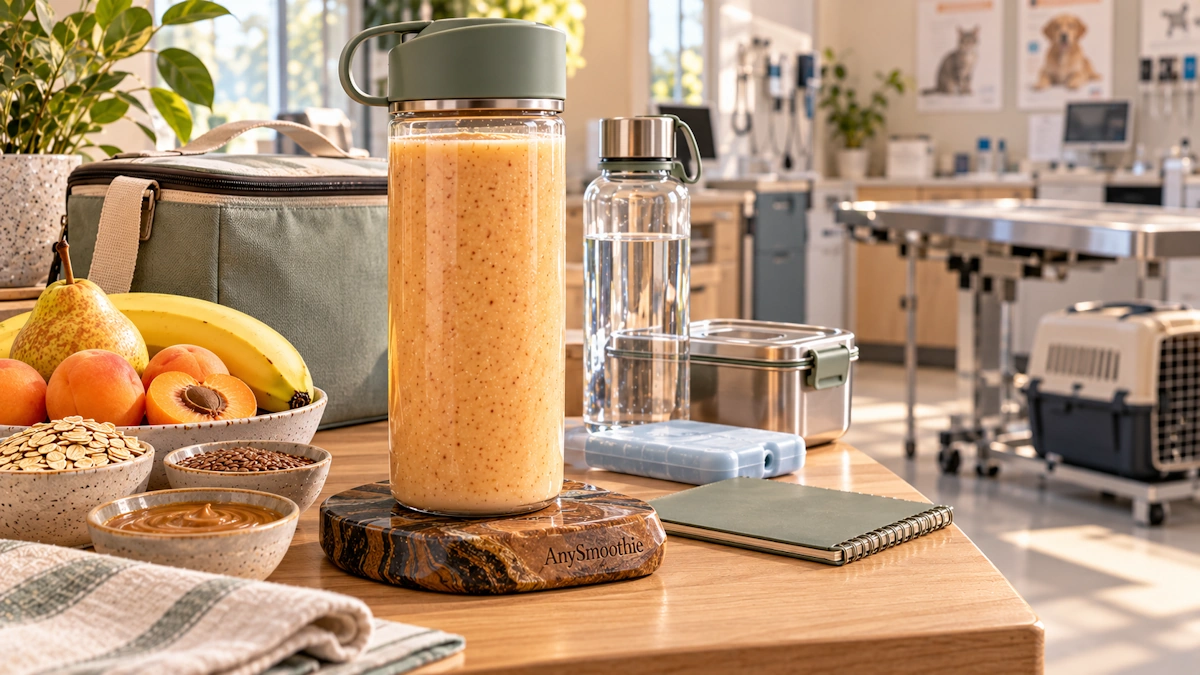
When appointments run late and a patient needs unexpected care, your lunch break can shrink without warning. Smoothies for veterinarians offer a portable food option that you can prepare before a shift and drink during an appropriate break.
For another healthcare setting with unpredictable breaks, see smoothies for nurses working night shifts.
They aren’t a treatment or a replacement for balanced meals. But with a few ingredients chosen to suit your needs, they can be a practical part of your clinic-day food plan. These three recipes keep prep simple, with tips for getting your smoothie to work safely.
How a smoothie can fit a long clinic day
A smoothie lets you put several foods in one container. Fruit and oats provide carbohydrates, which your body breaks down and uses for energy. Yogurt, milk, tofu, or soy milk can add protein. Protein supplies amino acids that your body uses to build and maintain tissues.
Nut or seed butter adds fat, while fruit and oats contribute fiber. Together, these ingredients make a more substantial drink than fruit juice alone. Still, the right mix depends on what you like, what you can eat, and whether the smoothie is a small snack or part of a larger meal.
For a short break, you might prefer a thinner smoothie that’s easy to drink. If it’s standing in for breakfast, oats and a protein source may make the portion more satisfying. You can also pack something to eat alongside it. Let your appetite and dietary needs guide the portion, rather than treating any recipe as a fixed formula. If you need individualized nutrition advice, a registered dietitian can help you plan around your schedule.
If an unexpected case means you miss a meal altogether, our smoothies after missing a meal guide offers another approach to planning for that situation.
3 Smoothies for Veterinarians on Long Clinic Days
Each recipe makes one serving and takes about five minutes to blend. Start with the liquid listed, then add a splash more if you prefer a thinner drink.
| Smoothie | Main ingredients | Protein source | Prep time | A useful clinic-day fit |
|---|---|---|---|---|
| Berry-oat | 1 cup berries, 1/4 cup oats, 3/4 cup milk, 1/2 cup Greek yogurt | Greek yogurt | 5 minutes | Make-ahead breakfast |
| Banana-peanut butter | 1 banana, 1 tablespoon peanut butter, 3/4 cup milk, optional 2 tablespoons oats | Milk and peanut butter | 5 minutes | More substantial break |
| Green mango | 3/4 cup mango, 1 cup spinach, 1/2 cup yogurt, 1/2 cup water | Yogurt or silken tofu | 5 minutes | Fruit-forward afternoon option |
Berry-oat smoothie for a quick breakfast
Ingredients
- 1 cup berries
- 1/4 cup oats
- 3/4 cup milk
- 1/2 cup Greek yogurt
Steps
Blend the milk and yogurt first, then add the berries and oats. Give the oats enough time in the blender to smooth out, especially if you’re using old-fashioned rolled oats. Frozen berries work well, and they save you from washing and sorting fresh fruit on a work morning.
For a dairy-free version, use soy milk and replace the Greek yogurt with 1/2 cup silken tofu. Protein content varies between products, so check the label if you’re choosing one to meet a particular dietary goal. Pour the finished smoothie into a clean, leakproof bottle if you’re taking it to the clinic.
Estimated Nutrition per Serving
- Calories: ~390
- Protein: ~27 g
- Carbohydrates: ~48 g
- Fat: ~11 g
- Fiber: ~8 g
- Sugars: ~25 g
Estimated using 1 cup mixed berries, 1/4 cup rolled oats, 3/4 cup 2% milk, and 1/2 cup plain Greek yogurt.
Banana-peanut butter smoothie for a more filling break
Ingredients
- 1 banana
- 1 tablespoon peanut butter
- 3/4 cup milk
- 2 tablespoons oats
Steps
Blend the banana, milk, and peanut butter until smooth. Add the optional oats when you want a thicker drink, or use a little more milk if you need it to flow easily through a bottle opening. A ripe banana gives this version plenty of sweetness without another ingredient.
Check allergies and clinic policies before packing peanut butter. Where nuts aren’t suitable, sunflower seed butter may be an option, but read its label for allergens and cross-contact information. If seed butter isn’t appropriate either, leave it out and choose a milk or other protein source that meets your needs.
Estimated Nutrition per Serving
- Calories: ~365
- Protein: ~15 g
- Carbohydrates: ~49 g
- Fat: ~14 g
- Fiber: ~5 g
- Sugars: ~25 g
Estimated using 1 medium banana, 1 tablespoon peanut butter, 3/4 cup 2% milk, and 2 tablespoons rolled oats.
Green mango smoothie with yogurt or tofu
Ingredients
- 3/4 cup mango
- 1 cup spinach
- 1/2 cup yogurt
- 1/2 cup water
Steps
Blend the mango, spinach, yogurt, and water until the spinach is finely mixed in. Mango gives this smoothie a familiar fruit flavor, while the spinach adds greens without much extra prep. Add more water, a tablespoon at a time, until the texture suits your bottle.
Swap the yogurt for 1/2 cup silken tofu if you prefer a plant-based option. Milk can replace the water for a creamier drink. Frozen mango is especially handy here: measure it into a freezer bag ahead of time, then add the spinach and other ingredients when you’re ready to blend.
Estimated Nutrition per Serving
- Calories: ~175
- Protein: ~7 g
- Carbohydrates: ~32 g
- Fat: ~3 g
- Fiber: ~5 g
- Sugars: ~25 g
Estimated using 3/4 cup mango, 1 cup raw spinach, 1/2 cup plain whole-milk yogurt, and 1/2 cup water.
If I were preparing one before a busy clinic day, I’d choose the version that fits the break I realistically expect rather than making the largest smoothie possible.
Prep smoothies safely for busy veterinary shifts
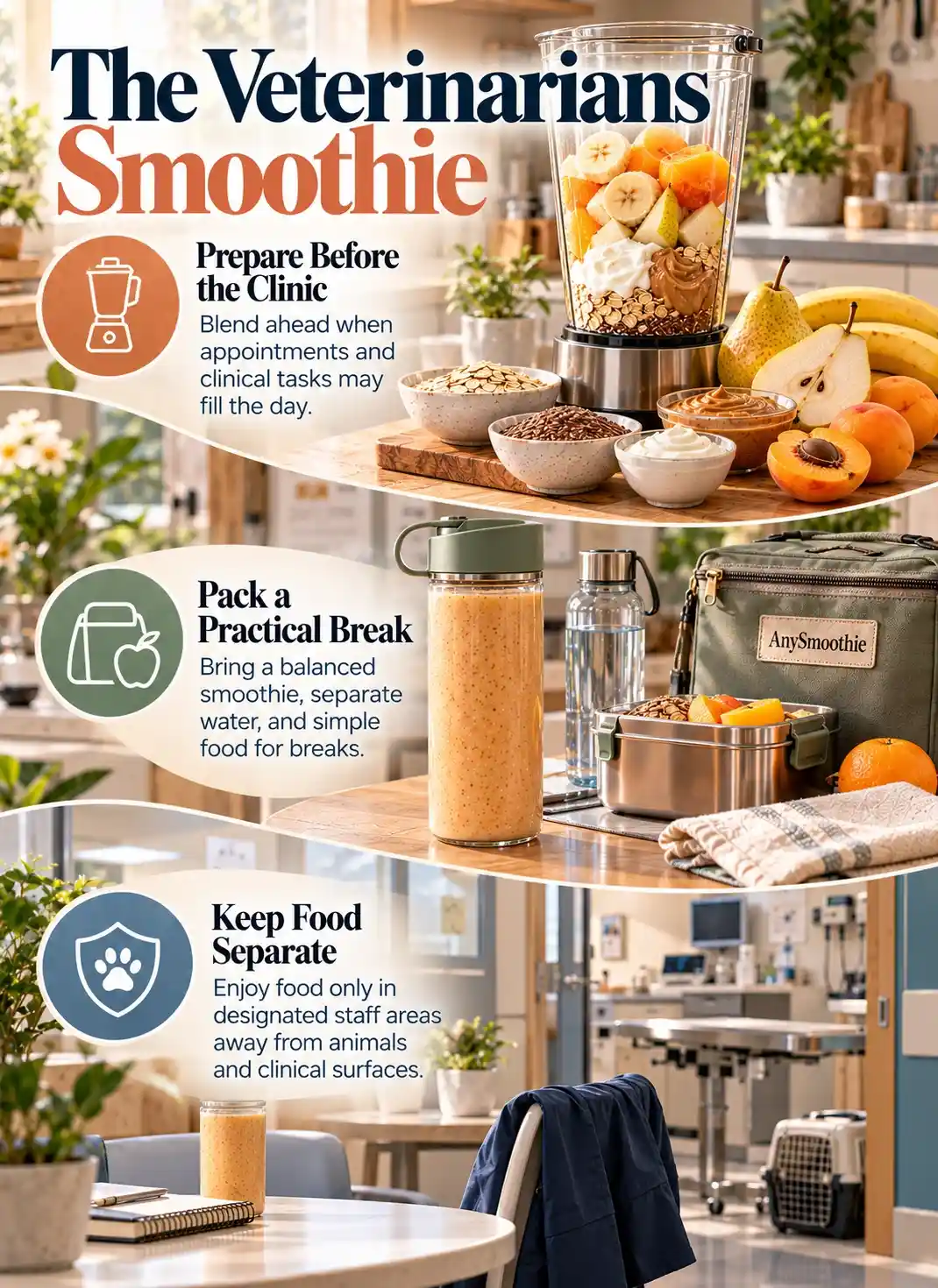
If mornings are crowded, blend your smoothie the night before and refrigerate it promptly in a covered container. Some ingredients may separate while it sits, so shake the bottle before drinking. You can also prepare freezer packs with measured fruit and spinach, then add the liquid and protein source when you blend.
Use a leakproof container that fits your bag and your clinic’s food-storage rules. Keep smoothies made with yogurt, milk, soy milk, or tofu cold until your break. The USDA’s guidance for keeping packed lunches safe recommends an insulated bag with at least two cold sources for perishable foods. A clinic refrigerator is another option if staff may use it. Keep food in a designated area, away from patient-care supplies.
Before blending, wash fresh produce, check ingredient labels, and clean the blender and bottle thoroughly. Allergies matter for coworkers as well as for you, particularly when shared spaces or equipment are involved. Finally, stash a suitable shelf-stable snack, such as crackers, for days when a break runs later than planned. A smoothie in the fridge won’t help much if you can’t get to it.
Conclusion: A practical place for smoothies in your shift
Start with the recipe that sounds good to you, then adjust the ingredients and portion to suit your appetite. Plan how you’ll keep it cold before you leave home.
A smoothie can make an unpredictable break easier to manage. It’s one convenient food choice alongside balanced meals, not a substitute for nutrition advice tailored to you.

Medical Disclaimer: AnySmoothie content is for educational purposes only and is not a substitute for professional medical advice. Consult a healthcare provider for personalized guidance. See our full Disclaimer & Terms of Use. AI Transparency: AnySmoothie may use AI to support content development. All content undergoes human editorial review for accuracy, clarity, and editorial quality. See our full AI Transparency.