
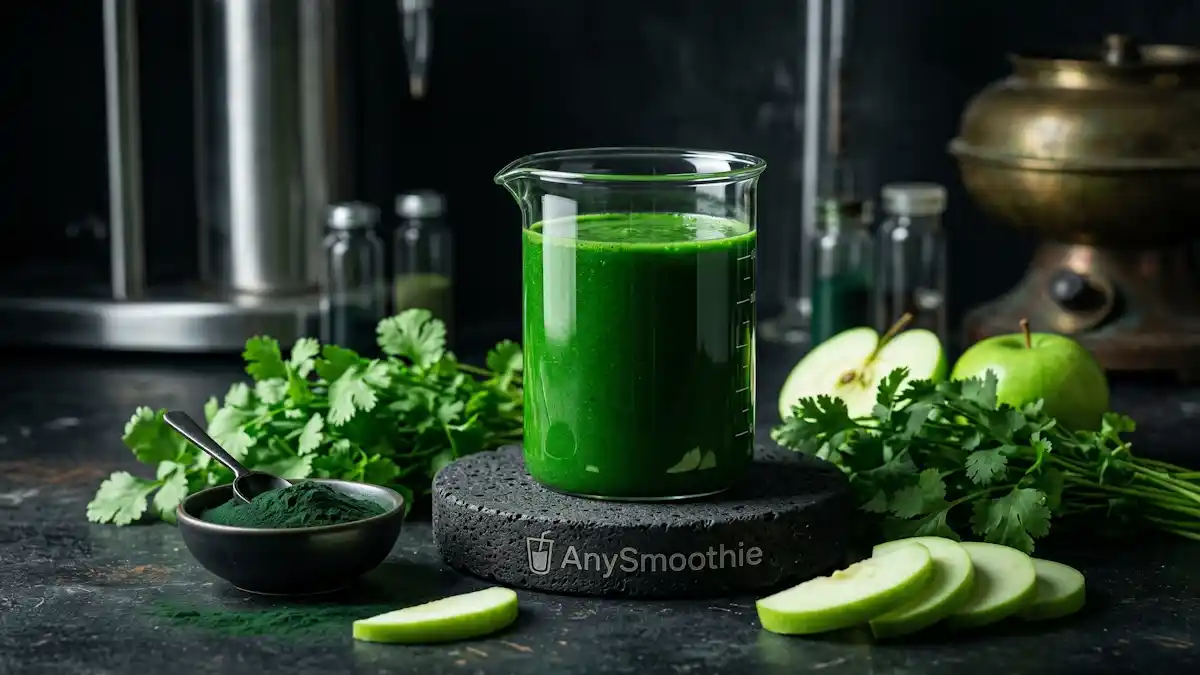
Bioactive smoothies for natural mold metabolization support can help the body handle what it already knows how to clear. They are not a replacement for medical care, and they are not a fix for ongoing exposure.
The point is simpler. Certain ingredients can support chlorophyll, pectin, sulfur compounds, and antioxidants, which may help with binding, bile flow, and cellular defense. When you build a smoothie with that in mind, you also support nutrient partitioning, mitochondrial support, and the body’s normal elimination routes.
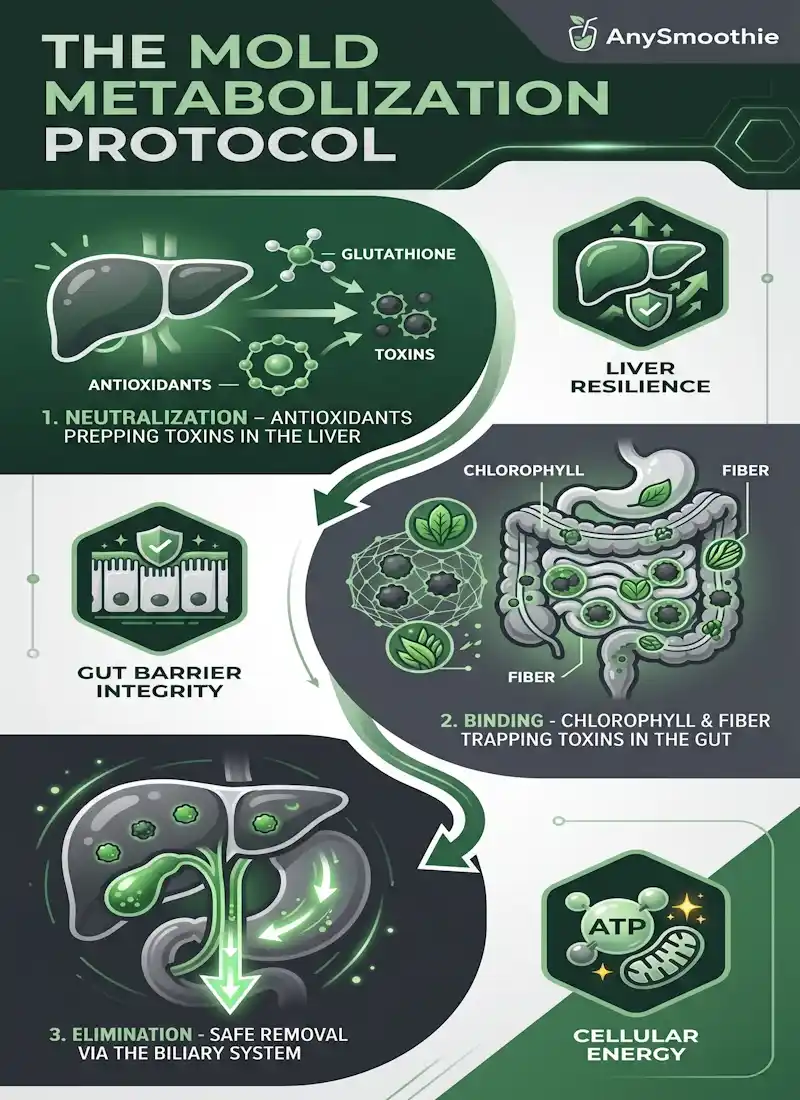
Mold-related compounds can enter the body through food, air, or dust. Once they’re in circulation, the liver gets involved fast. It sorts, transforms, and packages unwanted compounds so the body can move them out through bile, stool, and urine. A recent review on mycotoxin toxicokinetics breaks down this process in detail and shows how much depends on normal liver and gut traffic, not on any single ingredient or supplement. See the review on mycotoxin handling for a deeper look.
That is why a smoothie plan has to think about more than “detox.” It needs to support the path from recognition to exit.
Glutathione-S-Transferase helps neutralize unwanted compounds
Glutathione-S-Transferase, or GST, is a family of enzymes that helps tag compounds for removal. In plain terms, it makes certain byproducts easier to carry out of the body.
That matters because mold-related compounds can be stubborn. Supporting GST is more realistic than claiming a direct cure. Foods rich in sulfur compounds, polyphenols, and antioxidants can help the system do its own work with less strain.
Why bile flow and the gut matter for clearing metabolites
Once the liver packages waste, bile carries it into the gut. From there, the body still needs regular bowel movements to move it out.
If bile flow is sluggish, or if the gut is backed up, waste can sit longer than it should. That creates a bottleneck. Smoothies can’t force clearance, but they can support hydration, fiber intake, and normal bile movement.
A clean exit matters as much as a clean bind.
The best smoothie ingredients for natural mold metabolization support
The most useful ingredients do one of three things. They bind unwanted compounds, support antioxidant defenses, or help deliver nutrients where the body can use them.
Binder choice matters. A review on mycotoxin binders notes that adsorption can reduce exposure, but it can also affect nutrient status when used carelessly. The binder review on PubMed is a useful reference point if you want a more technical view.
Chlorella, modified citrus pectin, and clay or charcoal, compared
| Binder | Molecular target | Primary mechanism | Impact on nutrient absorption | Best smoothie pairing |
|---|---|---|---|---|
| Chlorella | Heavy metals, some mycotoxin load | Adsorption, plus support for the Phase III elimination pathway | Moderate if overused, better with food | Green smoothies with cilantro, lemon, and cucumber |
| Modified citrus pectin | Heavy metals, some circulating metabolites | Soluble binding in the gut | Usually gentler, lower impact when used modestly | Berry or citrus smoothies with fiber |
| Bentonite clay or activated charcoal | Broad binding of lipophilic compounds and mycotoxins | Strong adsorption in the gut | Higher risk of binding vitamins, minerals, and meds | Use in simple water-based blends, not nutrient-dense meals |
Chlorella is often the most flexible option in a smoothie because it can fit into a food-based routine. Clay and charcoal are stronger tools, but they need more spacing. They are usually best used thoughtfully, not in every smoothie.
Chlorophyll, pectin, and bitter greens can support biliary clearance
Chlorophyll-rich foods, pectin, and bitter greens can help a smoothie work with the gut instead of against it. Greens like arugula, dandelion, and cilantro bring bitter compounds that support bile signaling. Pectin adds soluble fiber that can help bind waste in the gut.
This matters for enterohepatic circulation, the loop where bile and its cargo can be reabsorbed and sent back to the liver. If you reduce reabsorption, you make room for normal clearance. For a clear explanation of bile recycling, the bile and enterohepatic circulation guide is helpful.
Nrf2-friendly add-ins that help cells handle oxidative stress
Mold exposure can raise oxidative stress, so the goal is to support the body’s own defense systems. Sulforaphane-rich powders, ginger, turmeric, berries, and citrus zest can help with that.
These ingredients support antioxidant response pathways and help cells deal with stress more efficiently. They also fit well into nutrient-dense smoothies, which makes them easier to use often. That matters more than chasing a dramatic one-time cleanse.
3 environmental-shield smoothie recipes that are easy to use
These recipes are built for different jobs. One supports binding, one supports recovery, and one works well for everyday use.
The Binden-Green blend with chlorella, cilantro, and optional activated charcoal
Use this when you want a stronger binder-focused smoothie.
Ingredients
- 1 cup unsweetened coconut water
- 1 cup cucumber
- 1 handful cilantro
- 1 cup spinach
- 1 teaspoon chlorella powder
- Juice of 1 lemon
- 1 tablespoon chia seeds
- Optional: activated charcoal only if appropriate for you and separated from medications and supplements
Blend until smooth. Keep charcoal optional, because it can bind nutrients and medications. A simple version with chlorella and cilantro is often easier to fit into daily life.
Estimated Nutrition per Serving
- Calories: ~145 kcal
- Protein: ~6 g
- Carbohydrates: ~25 g
- Fat: ~4 g
- Fiber: ~8 g
- Sugars: ~10 g
A berry-citrus recovery smoothie for antioxidant support and nutrient delivery
Use this after a higher-exposure day, or anytime you want steadier energy.
Ingredients
- 1 cup frozen blueberries
- 1/2 cup strawberries
- 1 small orange, peeled
- 1 tablespoon ground flaxseed
- 2 tablespoons hemp hearts
- 1/2 teaspoon turmeric
- 1/2-inch piece fresh ginger
- 3/4 cup unsweetened kefir
This blend supports nutrient partitioning because it pairs fruit with protein and fat. That helps blunt a sugar spike and supports metabolic efficiency.
Estimated Nutrition per Serving
- Calories: ~390 kcal
- Protein: ~18 g
- Carbohydrates: ~58 g
- Fat: ~13 g
- Fiber: ~13 g
- Sugars: ~36 g
A gentle green smoothie for daily use and bile support
Use this as a routine option when you want something light.
Ingredients
- 1 cup romaine or baby greens
- 1/2 cucumber
- Juice of 1/2 lemon
- 1 small green apple
- 1 tablespoon modified citrus pectin
- 1/2 avocado
- 3/4 cup cold water
- 1/2 cup ice
This version is easier on digestion. It supports hydration, fiber intake, and bile flow without pushing strong binder use every day.
Estimated Nutrition per Serving
- Calories: ~230 kcal
- Protein: ~4 g
- Carbohydrates: ~38 g
- Fat: ~8 g
- Fiber: ~14 g
- Sugars: ~21 g
I’d blend the greens, cucumber, and water first, then add the apple, avocado, and pectin. That keeps the leafy texture finer and makes the pectin easier to distribute evenly through the finished smoothie.
How to use binder smoothies without overdoing it
Binder smoothies work best when they fit around meals, supplements, and medications. That spacing matters because strong binders can catch things you meant to absorb.
Start small, then pay attention to digestion, energy, and bowel regularity. If a smoothie leaves you constipated or bloated, scale back. Hydration and regular elimination matter more than adding more binder.
Stronger is not better if it slows the exit.
Best timing, spacing, and frequency for binder use
Binder-heavy smoothies are usually best taken away from meals by at least an hour or two. They should also be spaced from medications and key supplements.
A few times per week is often enough for many people. Daily use can make sense for some blends, but only when the gut is moving well.
Who should be extra careful with clay, charcoal, and strong binders
People who are sensitive to fiber shifts, prone to constipation, or already struggling with low intake need extra caution. Clay and charcoal can be too aggressive if hydration is poor.
Pregnant or breastfeeding people, anyone on medications, and anyone with a complex health picture should be careful with binder use. Food-based support is usually the better starting point.
Conclusion
Bioactive smoothies for natural mold metabolization work best when they support the body’s own systems instead of trying to overpower them. Binding matters, but so do bile flow, gut motility, antioxidant defense, and mitochondrial support.
If you keep the formulas simple, use binders with care, and focus on regular clearance, the strategy becomes easier to maintain. Consistency beats intensity here, especially when the goal is steady support rather than a hard push.
⚠️ Safety Notes for Mold Metabolization Smoothies
Medication Binding: Strong binders like activated charcoal or bentonite clay are non-selective. They can bind and neutralize prescription medications (including birth control, heart meds, and antidepressants). Always space these smoothies at least 2 to 3 hours away from any medication.
Constipation and Re-absorption: If binders cause constipation, the toxins stay in the colon longer and can be re-absorbed. If your bowel movements slow down, stop the binders immediately and increase water and magnesium intake until regularity returns.
Hydration Necessity: Binders require significant water to move through the digestive tract. Failure to drink enough fluids can lead to bowel obstruction or severe bloating.
Nutrient Depletion: Long-term daily use of strong binders can lead to deficiencies in fat-soluble vitamins (A, D, E, K) and essential minerals. Use a “cycling” approach (e.g., 4 days on, 3 days off).
Herxheimer Reaction: Supporting the clearance of mold metabolites can sometimes trigger a “die-off” or Herxheimer reaction, causing temporary headaches, fatigue, or skin flare-ups. If this happens, reduce the intensity of the ingredients and proceed more slowly.
FAQ
How does Chlorella support the Phase III elimination pathway?
Chlorella supports the Phase III elimination pathway by acting as a non-systemic adsorbent within the gastrointestinal tract. Biochemically, its fibrous cell wall structure binds to lipophilic compounds excreted via bile, preventing their reabsorption through the enterohepatic circulation loop. By sequestering these metabolites, Chlorella optimizes the natural pathways of fecal excretion, ensuring that processed molecules are efficiently moved through the body’s natural elimination routes.
Why is Glutathione-S-Transferase (GST) essential for neutralizing mold-related compounds?
Glutathione-S-Transferase (GST) is a critical enzyme family that facilitates the conjugation of reduced glutathione to reactive metabolites. This biochemical mechanism increases the water solubility of these compounds, effectively tagging them for transport and removal. Supporting GST through sulfur-rich smoothie ingredients optimizes the physiological systems responsible for Phase II transformation, ensuring that stubborn molecules are safely prepared for biliary or renal clearance.
How do bitter greens influence biliary flow and metabolite exit?
Bitter greens, such as arugula and dandelion, contain phytochemicals that stimulate bitter taste receptors (T2Rs), triggering a reflex increase in bile secretion. This biochemical signaling supports the physiological systems involved in hepatic clearance by ensuring a steady flow of bile into the gut. Optimizing biliary movement prevents metabolic bottlenecks and supports the structural integrity of the “metabolic firewall,” facilitating the efficient transit of packaged waste.
What is the significance of Nrf2 activation in cellular defense against oxidative stress?
Nrf2 is a master transcription factor that, when activated by compounds like sulforaphane or curcumin, triggers the Antioxidant Response Element (ARE) within the nucleus. This biochemical process upregulates the production of endogenous antioxidants and Phase II enzymes. Supporting the Nrf2 pathway in a smoothie supports the physiological systems of cellular resilience, ensuring that cells maintain genomic stability while handling the oxidative load associated with environmental metabolites.
How does Modified Citrus Pectin (MCP) optimize systemic nutrient partitioning?
Modified Citrus Pectin (MCP) is a low-molecular-weight polysaccharide that can enter the systemic circulation to bind specific inflammatory markers, such as Galectin-3. By modulating these signaling molecules, MCP supports the physiological systems involved in maintaining a balanced metabolic environment. This optimization ensures that nutrient partitioning remains focused on cellular repair and mitochondrial support, preventing the diversion of resources into chronic inflammatory pathways.

Medical Disclaimer: AnySmoothie content is for educational purposes only and is not a substitute for professional medical advice. Consult a healthcare provider for personalized guidance. See our full Disclaimer & Terms of Use. AI Transparency: AnySmoothie may use AI to support content development. All content undergoes human editorial review for accuracy, clarity, and editorial quality. See our full AI Transparency.