
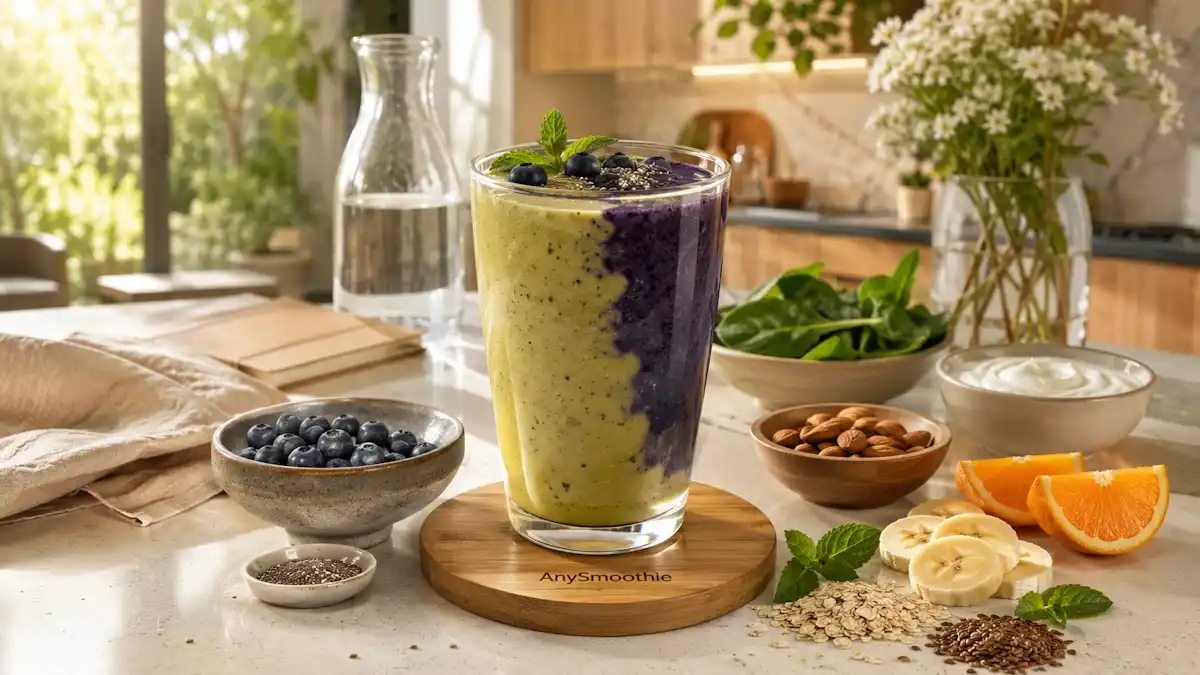
Caregivers often put their own meals last, especially when a morning appointment becomes an all-day responsibility. A balanced smoothie offers a practical way to combine fluids, protein, fiber, healthy fats, and micronutrients when sitting down for lunch feels impossible.
These blends can support normal energy metabolism, hydration, and steady nourishment without requiring much cooking. The recipes below use flexible ingredients, simple swaps, and safe preparation habits that fit real caregiver schedules.
Why Smoothies Can Support a Caregiver Wellness Routine
Caregiving rarely follows a neat meal schedule. A smoothie takes only a few minutes to blend, travels in an insulated bottle, and can be consumed during a short break. You can also adjust the texture, portion size, sweetness, and ingredients based on appetite, budget, and dietary needs.
Caregiver organizations also emphasize that regular meals, hydration, and practical nutrition habits help caregivers maintain their own health while supporting someone else.
The ingredients work through different physiological pathways. Carbohydrates from fruit, oats, or milk are broken down into glucose, which cells use as fuel during normal activity. Protein from yogurt, tofu, milk, or protein powder supplies amino acids used in tissue maintenance and other body processes.
Fiber from berries, oats, chia seeds, and leafy greens adds bulk and supports normal digestion. It can also slow digestion and nutrient absorption, which may make the smoothie feel more substantial. Fats from nut butter, avocado, seeds, and dairy add flavor and help create a satisfying texture. Water, milk, or fortified plant milk contributes fluid, while fruits and vegetables provide vitamins, minerals, and plant compounds.
A smoothie should complement regular meals rather than replace every meal. Whole foods, sleep, water, movement, medical care, and reliable breaks still matter. For more ideas on balancing carbohydrates, protein, and fat, explore this energy boosting smoothie recipe.
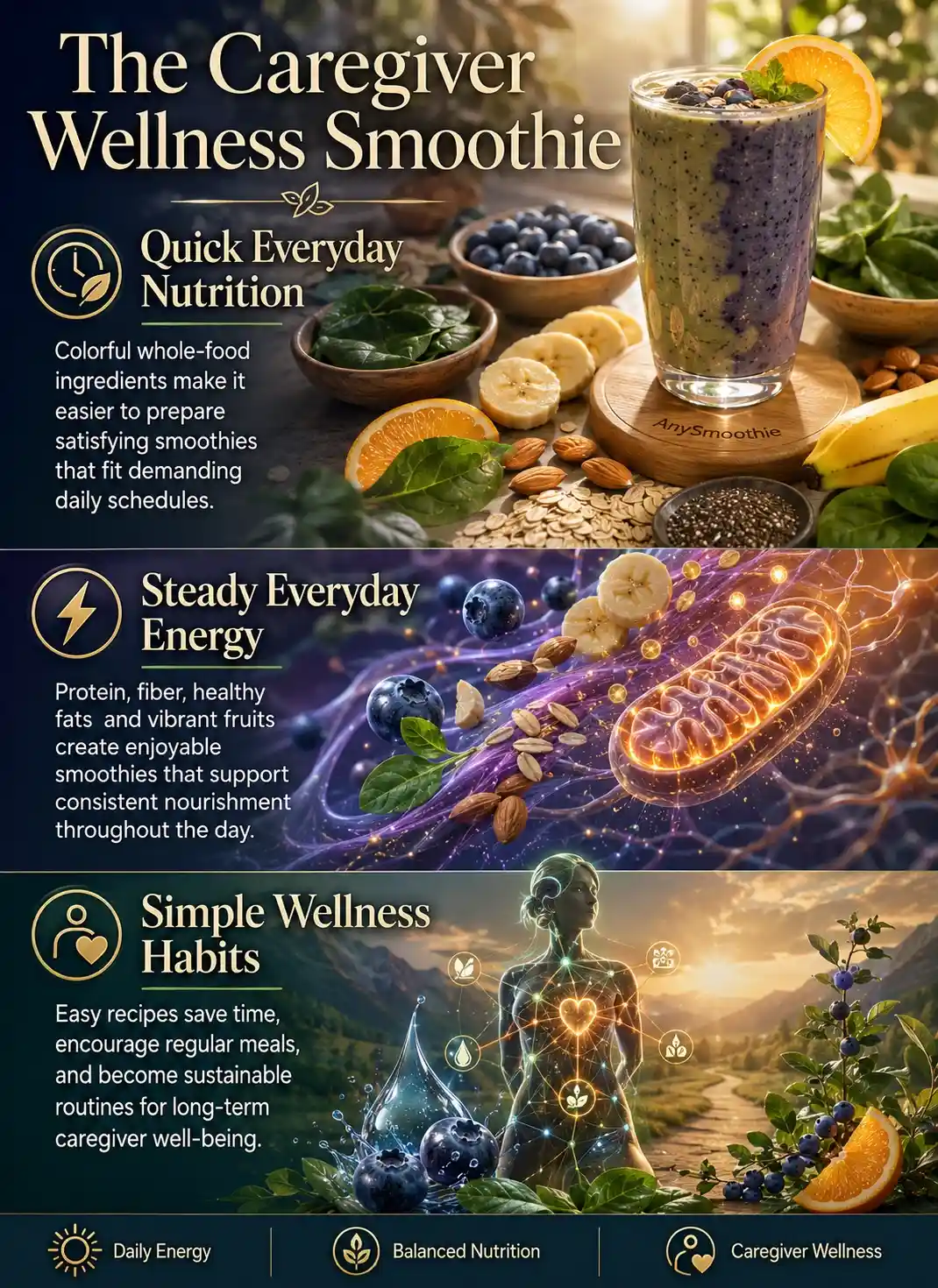
3 Smoothies for Caregiver Wellness
These recipes are flexible formulas, not strict prescriptions. Use plain yogurt instead of flavored yogurt, frozen produce instead of fresh, or a dairy-free alternative when needed.
| Smoothie | Liquid base | Protein source | Produce and fiber | Best fit |
|---|---|---|---|---|
| Berry Oat | 1 cup milk | 3/4 cup Greek yogurt | 1 cup berries, 1/4 cup oats | A filling morning blend |
| Green Banana | 1 cup unsweetened soy milk | 1/2 cup silken tofu | 1 banana, 1 cup spinach | A mild, portable option |
| Cocoa Peanut | 1 cup milk | 2 tablespoons peanut butter | 1 banana, 1 tablespoon cocoa | A rich afternoon snack |
How to Make Caregiver Smoothies Safer, Faster, and More Balanced
A dependable smoothie usually starts with four parts: a liquid, produce, a protein source, and an optional fiber or healthy fat. This structure keeps the drink more balanced than a blend made mostly from juice and fruit.
To limit added sugar, choose plain yogurt, unsweetened milk, and whole fruit. Juice, sweetened plant milk, flavored yogurt, honey, and syrups can raise sweetness quickly without adding much texture or protein. Frozen berries, ripe bananas, and unsweetened cocoa can provide plenty of flavor.
Preparation matters when your schedule changes by the hour. Wash produce during a calm period, portion fruit into freezer bags, and label each bag with the recipe name. Prepare two freezer packs at once, then add the contents to a blender with your liquid and protein source. Measure oats, seeds, or nut butter ahead of time so the next blend requires less decision-making.
The USDA also recommends planning meals ahead, storing foods safely, and refrigerating perishable foods promptly to reduce food safety risks.
A Clean Blender is Part of Food Safety
Rinse and wash the pitcher, blade assembly, lid, and utensils promptly after use. Refrigerate a prepared smoothie in a sealed container, follow package instructions for dairy and nondairy products, and don’t leave a perishable blend at room temperature for an extended period.
Personal needs can change the recipe. Check labels for common allergens, including milk, soy, peanuts, tree nuts, and seeds. Anyone with swallowing difficulties should ask a qualified clinician about safe textures. Diabetes, kidney disease, food allergies, and medication or treatment-related diet restrictions may also require personalized guidance from a clinician or registered dietitian.
Keep shelf-stable options such as single-serve protein powder, powdered milk, or sealed nut butter packets available. With two freezer packs ready and a few pantry ingredients nearby, caregiver nutrition becomes easier to maintain on demanding days.
Conclusion
The most useful smoothie for caregiver wellness is one that’s easy to prepare, enjoyable to drink, and balanced for your needs. Start with one recipe, make one small preparation change, and notice which combination keeps you satisfied and consistent.
Smoothies can support regular nourishment during a crowded day, but they don’t replace complete meals, rest, medical care, or help from other people. Your own food and water deserve a place in the caregiving routine, even when the schedule keeps changing.
🛡️ Safety Notes & Dietary Interactions
- Build Around Real Meals: Smoothies are a practical way to support nutrition during busy caregiving days, but they should complement regular meals whenever possible rather than becoming the only source of nourishment day after day.
- Adapt to Individual Needs: If you have diabetes, kidney disease, food allergies, digestive conditions, or follow a medically prescribed diet, adjust ingredients such as fruit, dairy, plant milks, protein powders, and seeds with guidance from a qualified healthcare professional.
- Practice Safe Food Handling: Refrigerate smoothies promptly, use pasteurized dairy or fortified plant alternatives, and avoid leaving perishable blends at room temperature for extended periods. Clean your blender thoroughly after each use to reduce food safety risks.
- Support Yourself Too: Hydration, regular meals, restorative sleep, physical activity, and accepting help from others remain essential parts of caregiver wellness. A smoothie can make nutrition easier, but it cannot replace rest, recovery, or ongoing healthcare when needed.
FAQ
Why are smoothies helpful for caregivers with unpredictable schedules?
Smoothies can be prepared in just a few minutes and provide protein, fiber, healthy fats, fluids, and carbohydrates in one portable meal. They are especially useful when appointments, caregiving responsibilities, or unexpected interruptions make sitting down for a traditional meal difficult.
How can I make a smoothie more filling without adding lots of sugar?
Combine a protein source such as Greek yogurt, kefir, silken tofu, or protein powder with fiber-rich ingredients like oats, chia seeds, flaxseed, or berries. Healthy fats from avocado or nut butter also improve satiety while keeping the smoothie balanced without relying on added sweeteners.
Can I prepare caregiver smoothies ahead of time?
Yes. Portion frozen fruit, vegetables, oats, and seeds into freezer bags, then add your preferred liquid and protein source when you’re ready to blend. Keeping pre-measured ingredients available reduces preparation time on busy caregiving days and helps maintain a consistent routine.
Which ingredients are easiest to keep on hand?
Frozen berries, bananas, oats, plain yogurt, fortified soy or dairy milk, peanut butter, chia seeds, flaxseed, silken tofu, spinach, and unsweetened cocoa are practical staples. Shelf-stable protein powder and single-serving nut butter packets are also convenient for busy schedules or travel.
Can a smoothie replace every meal during stressful caregiving periods?
It’s generally better to use smoothies as one part of a balanced eating pattern rather than replacing every meal. Whole foods, adequate hydration, regular meals, restorative sleep, and opportunities to rest all contribute to caregiver wellness and support long-term health more effectively than relying on smoothies alone.

Medical Disclaimer: AnySmoothie content is for educational purposes only and is not a substitute for professional medical advice. Consult a healthcare provider for personalized guidance. See our full Disclaimer & Terms of Use. AI Transparency: AnySmoothie may use AI to support content development. All content undergoes human editorial review for accuracy, clarity, and editorial quality. See our full AI Transparency.